Expense records
Track costs by client and project with receipts attached to the record they explain.
Finance & Accounting
Track the costs around client work and keep each expense close to the client, project, invoice, receipt, payment, and report that explains it.
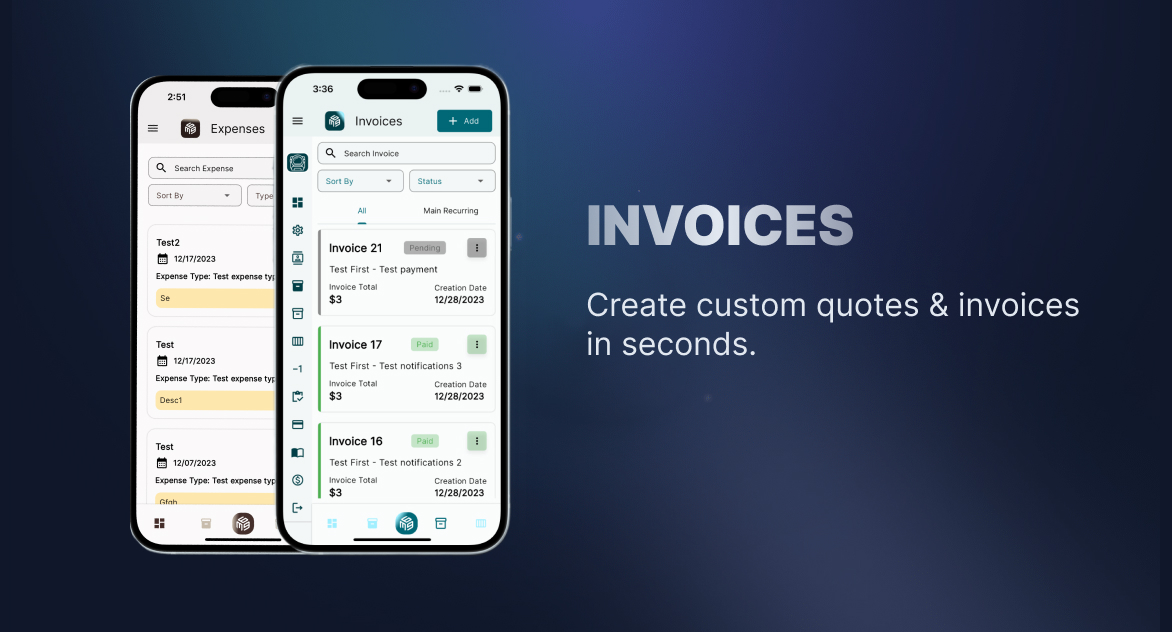
expense management software
Expense management software records, organizes, and reports the costs of doing business. Workspace369 keeps expenses connected to clients, projects, receipts, invoices, payments, products, inventory, accounts receivable, and profitability reporting so costs retain their operating context.
Reviewed August 30, 2026 by the Workspace369 Product Team. Availability can vary by plan, region, and workspace configuration.
Read the finance workflow documentationWhat it covers
Expense management in Workspace369 keeps each cost close to the client, project, invoice, receipt, payment, and report that explains it.
Track costs by client and project with receipts attached to the record they explain.
Scan a photo, PDF, or HEIC receipt and get a prefilled expense with currency, line items, and tax. On iPhone, share the receipt from the share sheet. Each scan uses AI Tokens.
Keep billable expenses marked so they can flow into the right invoice with context.
Manage products, services, stock adjustments, and low-stock alerts alongside expenses.
Review accounts-receivable aging and accounting activity in one place.
Connect expense and revenue context to project profitability and business reporting.
Built into the operating flow
Finance data connects to clients, projects, invoices, payments, products, inventory, and reports.
Manage expenses, products, services, stock adjustments, and low-stock alerts.
Track AR aging, project profitability, and accounting activity.
Give finance and operations a clearer view of what work actually costs.
Inside Workspace369
Track the costs around client work and keep each expense close to the client, project, invoice, receipt, payment, and report that explains it.
Finance data connects to clients, projects, invoices, payments, products, inventory, and reports.
See the financial shape of work while it is still moving.
Examples
These examples show how expense activity moves through connected client work. They are product workflows, not promised business outcomes.
Common operating scenarios
These examples describe how the feature fits into connected client work. They are product workflows, not promised business outcomes.
Record an expense near the client and project that caused it so teams can review the cost beside delivery activity, invoices, and related files.
Keep receipts, expense details, products, services, stock activity, and billing records organized so the right costs can inform invoicing and reporting.
Bring expense, revenue, payment, project, and accounts-receivable activity together to support a clearer view of profitability and cash collection.
Where it connects
Finance data connects to clients, projects, invoices, payments, products, inventory, and reports.
Google Workspace workflow
Google Workspace centers on collaboration through Gmail, Drive, Sheets, Docs, and Calendar. For a sourced breakdown of where those tools help and where a connected expense workflow begins, read the Google Workspace expense management guide.
Read the Google Workspace expense guideCommon questions
Yes. Workspace369 is designed to keep expense records near client, project, invoice, payment, product, inventory, and reporting context.
Expense and revenue context can support project profitability, accounts-receivable, inventory, and broader business reporting workflows.
No. Expense management is part of a connected workspace for CRM, projects, invoices, payments, inbox, files, AI, automation, accounting, inventory, and reporting.
Yes. Upload a photo, PDF, or HEIC receipt and AI fills in an expense with the currency, line items, and tax it finds. Each scan uses AI Tokens. Expense tracking and receipt capture start at Specialist ($149).
Yes. Share the receipt to Workspace369 from the iPhone share sheet and choose to create an expense. AI reads it and prefills the expense for you.
Yes. Workspace369 keeps expense records near client, project, and receipt context, so billable costs can flow into invoices and profitability reporting.
Work from one connected system
Start free and bring this workflow into the rest of your workspace.