Best CRM for Accountants and Bookkeepers 2026: Retainers
Best CRM for accountants and bookkeepers: six tools compared on monthly retainers, engagement letters, document requests, price per seat and a trial test.
We make Workspace369, which is on this list. Weigh our ranking with that in mind.

By Simon Dziak, Founder, Workspace369 · LinkedIn
The best CRM for accountants & bookkeepers selling monthly retainers is usually an accounting practice tool: Financial Cents, TaxDome and Karbon list the most recurring-work, engagement-letter and document-request features. Workspace369 ranks fourth: it covers proposals, contracts, deposits, retainers, time against budgets and invoices on one client record, without month-end checklist templates (see the bookkeeping practice view). Ignition covers engagement letters and billing, and Jetpack Workflow covers recurring workflow only. To price a fixed monthly fee first, use the free retainer pricing calculator.
Disclosure and method: Workspace369 publishes this guide and is one of the options, and we rank it below the three accounting practice tools. It is a documentation-based shortlist, not a hands-on benchmark. Official vendor pages were reviewed on October 21, 2026; where a page did not show a price, we say See site. Check current plans with each vendor before you buy.
Key takeaways
- Accounting practice tools such as Financial Cents, TaxDome and Karbon list more of the monthly-close paperwork than a general client-work tool: recurring work, engagement letters, document requests and time against budgets.
- Financial Cents Solo is $19 a month billed yearly for one user and Team is $49 per user per month billed yearly; both list retainers, proposals and engagement letters, and a 14-day trial with no credit card, on a 12-month agreement.
- Karbon Team is $59 per user per month billed yearly ($79 monthly, teams of 4 or more only); TaxDome prices per seat per year by commitment length, so see its site for current figures.
- Workspace369 Cadet is $29 a month ($23.25 billed yearly) for one seat and 5 active projects; retainers, recurring invoices, deposits, time tracking and hours budgets are on every plan, but it has no month-end checklist templates and does not touch your clients' books.
- Test one fictional retainer client for a second month: engagement letter, deposit, recurring invoice, a late document, and hours logged against the fixed fee.
What's inside?
What a CRM for accountants and bookkeepers is (and what it is not)How we compared these toolsThe best CRM for accountants and bookkeepers in 2026Side-by-side comparisonWhich tool fits your firm?Run a month-two test during the trialWhen to keep it simple
What a CRM for accountants and bookkeepers is (and what it is not)
For a firm of one to ten people, a CRM is the client-facing layer around the books: who the client is, the engagement letter they signed, which month's documents are still missing, how many hours the work took against the fixed fee, and what is unpaid. It is not ledger software, and none of the tools below replaces QuickBooks, Xero or whatever holds your clients' books. This guide covers the retainer workflow: engagement letter, recurring invoice, document request, time against fee. The bookkeeping practice management page shows the Workspace369 view. For the wider category, including tax-season tools, see our accounting practice management software guide.
How we compared these tools
Best CRM for Bookkeepers & Accountants 2026: Run the Client Work

We compared each tool on the same six points, using only the vendor's own pages:
- Entry price at one seat, and at three seats where the page allows it, labelled by billing basis (billed yearly or monthly).
- Recurring work: recurring projects, retainer or recurring billing, as named on the page.
- Engagement letters: proposals or letters the client approves, and deposits where listed.
- Document requests: client portal, requests and automatic reminders, and which plan carries them.
- Time against fees: time tracking and time or hours budgets.
- Trial terms: length, and whether the vendor says a card is needed.
We did not test speed, support, security controls, ledger integrations or data import, and we used no third-party ratings. Order reflects documented fit for a small firm running monthly retainers, not commercial interest.
The best CRM for accountants and bookkeepers in 2026
1. Financial Cents, best for small-firm monthly workflow
Financial Cents lists Solo at $19 a month billed yearly for one user and Team at $49 per user per month billed yearly. Every paid plan lists workflow and to-do lists, workflow automations, client tasks and requests, a client portal, secure file sharing, time tracking, invoicing and billing, proposals and engagement letters, e-signatures, budgeting and reporting, project-based billing and retainers. Team adds integrated email. Scale ($69 billed yearly) adds auto-follow ups for client tasks, task dependencies and profitability reports. A Month-End Close add-on is $5 a month per client billed annually, for reviewing a client's books inside the tool. The trial is 14 days with no credit card.
Limitations: every plan is a 12-month agreement, Solo is one user only, and the automatic document chase sits on Scale, not Team. Monthly billing ($69 Team, $89 Scale, shown as an annual agreement billed monthly) needs at least 5 users. At three users Team is $147 a month billed yearly.
Best for: a one- to five-person firm that wants recurring work, retainers, portal and engagement letters in one accounting-specific tool.
2. TaxDome, best for a fuller portal and bookkeeping hub
TaxDome is priced per seat per year by commitment length, but its pricing page could not be fetched on October 21, 2026, so we show See site for current prices. Earlier reviews showed an entry plan for solo users only and a higher plan that adds account roles and general-ledger integrations for bookkeepers. TaxDome's feature comparison has listed a client portal with a mobile app, document request lists, client requests, automated reminders, recurring invoices, proposals and engagement letters, time tracking, time budgeting and unbilled-time views. Check the site for billing terms and whether it offers a trial or only a demo.
Limitations: the entry plan has been solo only, so a team may need a higher plan, and the price depends on the commitment you choose. Confirm seat prices on the TaxDome site.
Best for: a firm that wants one portal for tax and bookkeeping clients and will commit to a year or more.
3. Karbon, best for email-driven teams
Karbon lists Team at $59 per user per month billed yearly ($79 monthly, monthly billing for teams of 4 or more only) and Business at $89 ($99 monthly). Its compare table shows client requests, client file uploads, time tracking, work budgets, recurring billing, branded engagement letters and upfront payment collection in the Team column, and shared email triage on every plan. Automatic client reminders and task automation start at Business. The pricing page does not state trial terms, so ask the vendor.
Limitations: the reminders that chase late documents are a Business feature. At three users Team is $177 a month billed yearly, and a monthly bill needs four users or more ($316).
Best for: a team of three to ten that coordinates client work through shared email.
4. Workspace369, best for retainers sold by proposal and contract
Workspace369 puts the client record, Proposals the client approves online, Contracts with e-signature, deposits, a client portal, public intake forms and invoices in one place. Retainers and recurring invoices and time tracking with timesheets, billable time, per-project hours budgets and time-to-invoice are on every plan. Cadet is $29 a month for one seat ($23.25 billed yearly). Voyager is $74 a month ($59.25 billed yearly) with two seats, and each extra seat is $10 a month. From Specialist ($149, ten seats), AR aging and customer profitability show which fixed-fee clients earn their keep. Workflow Automations can create tasks and send reminders. The screenshot below is demo data, not a customer result.
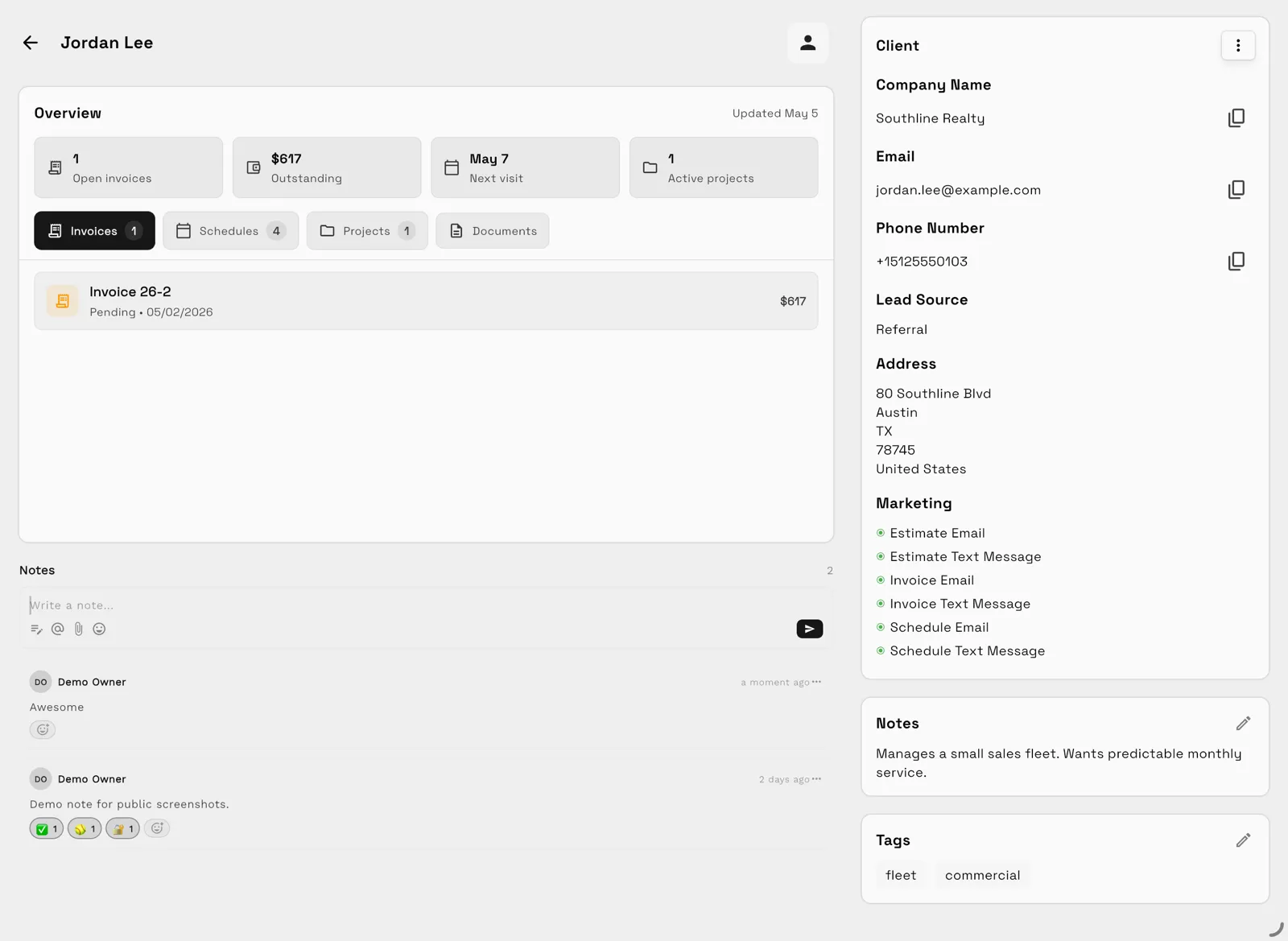
Limitations: it has no month-end checklist or recurring-project templates, no ledger or bank-feed connection, and it does not review or reconcile your clients' books. Cadet allows one seat and 5 active projects, so a firm with many retainer clients needs Voyager or above. The portal shares invoices, payments, files and project status, but there is no document-request checklist, so missing items are tracked as tasks. Financial Cents lists a lower price for one user billed yearly ($19 against $23.25). The 14-day trial needs a card.
Best for: a one- to ten-person firm that sells retainers or fixed-fee engagements by proposal, wants a signed contract and deposit up front, and tracks the month's close in its own checklist.
5. Ignition, best for engagement letters and billing
Ignition is a proposal, engagement letter and billing tool. Its pricing page offers monthly and annual views, but plan prices and active-client limits did not load when we checked on October 21, 2026, so see the site for them. Pricing has scaled with active clients. Earlier reviews of the comparison table listed automated engagement letters, flexible billing that includes recurring, hourly and quarterly billing, and automated payment collection. The pricing page advertises a 14-day trial and says no credit card is needed to start.
Limitations: pricing scales with active clients, so a firm with many small retainers pays more as it grows. It lists no client portal, task workflow or time tracking, so you would pair it with a workflow tool.
Best for: a firm whose weak spot is signed engagements and collecting monthly fees on schedule.
6. Jetpack Workflow, best for recurring monthly-close checklists only
Jetpack Workflow is workflow software for accounting and bookkeeping firms. Its bookkeeper page describes recurring projects for monthly closes, reconciliations and payroll, set up from templates. Starter is $49 per seat monthly or about $40 a month billed yearly and lists unlimited projects and clients, templates and automation. Premium is $59 monthly or about $50 a month billed yearly and adds time tracking, budget and actuals reports and capacity management. A free trial is advertised; trial length is not stated.
Limitations: its pricing and home pages list no client portal, invoicing, engagement letters or document requests. A firm still needs separate tools for the paperwork and billing around each close.
Best for: a bookkeeping team whose main problem is that monthly close steps slip, and that already bills elsewhere.
Side-by-side comparison
| Tool | Entry price | Retainers and recurring billing | Engagement letters | Document requests | Trial |
|---|---|---|---|---|---|
| Financial Cents | $19 per month (Solo), billed yearly | Retainers and project billing listed | Proposals and engagement letters | Portal and client requests; auto-follow ups on Scale | 14 days, no card |
| TaxDome | See site (priced per seat per year) | Recurring invoices listed | Proposals and engagement letters | Document request lists and reminders listed | Demo; trial not stated |
| Karbon | $59 per user per month, billed yearly ($79 monthly) | Recurring billing on Team | Branded engagement letters on Team | Client requests; reminders on Business | Not stated |
| Workspace369 | $29 per month ($23.25 billed yearly), 1 seat | Retainers and recurring invoices on every plan | Proposals and Contracts with deposits | Portal and intake forms; no request checklist | 14 days, card required |
| Ignition | See site | Recurring billing listed | Automated engagement letters | None listed | 14 days, no card |
| Jetpack Workflow | About $40 per seat a month billed yearly; $49 monthly | Recurring projects, no billing | None listed | None listed | Free trial; card not stated |
Which tool fits your firm?
| If you mostly need | Start with | Why |
|---|---|---|
| Recurring work, retainers and portal for a small team | Financial Cents | Listed on every paid plan from $19 or $49 per user |
| One portal for tax and bookkeeping clients | TaxDome | Document requests, reminders and ledger integrations from Pro |
| Team email tied to client work | Karbon | Shared email triage on every plan |
| Retainers sold by proposal and contract with deposits | Workspace369 | Proposals, Contracts, deposits, retainers and time budgets on every plan |
| Signed engagements and scheduled monthly billing | Ignition | Engagement letters and recurring billing focus |
| Month-end checklists without billing | Jetpack Workflow | Recurring project schedules from about $40 per seat a month billed yearly |
Run a month-two test during the trial
Use one fictional client on a $600 monthly bookkeeping retainer, with demo data and never real financial records:
- Send the engagement letter or proposal with the fee and a deposit, and have the client approve it.
- Set up the monthly invoice and check that month two appears without retyping.
- Ask for the month's bank statements through the portal or a task, with a due date.
- Let one item go late and check that a reminder goes out and the overdue item shows in one view.
- Log five hours against the client and compare them with the hours you priced into the fee.
- Export the client's records and check what comes out.
The best tool keeps letter, invoice, document request and time on one client record. Any step you retype between screens is the leak this test finds.

When to keep it simple
If you run a handful of retainers, a shared folder, a checklist and an invoice template can carry you. Move to a client-work tool when you chase the same statements every month, or when you cannot say whether a client's hours are inside the fee. Workspace369 communications, Workflow Automations and the pricing page show what each plan includes. Tax-season firms should also read our CRM guide for tax preparers.
Before importing real clients, run one full cycle on demo data and check that your records can be exported.
Sources reviewed for this guide
- Workspace369 pricingPlan matrix reviewed October 21, 2026 for seats, retainers, recurring invoices, time tracking and accounting gates.
- Financial Cents pricingOfficial pricing page reviewed October 21, 2026 for Solo, Team and Scale prices, the monthly view, features, add-ons and trial terms.
- TaxDome pricingOfficial pricing page could not be fetched on October 21, 2026 (access blocked), so prices are shown as See site.
- TaxDome home pageOfficial home page reviewed October 18, 2026 for the demo-first sign-up and bookkeeping positioning.
- Karbon pricingOfficial pricing page reviewed October 21, 2026 for Team and Business prices, the compare table and included features.
- Ignition pricingOfficial pricing page reviewed October 21, 2026 for the 14-day no-card trial; plan prices did not load, so they are shown as See site.
- Jetpack Workflow pricingOfficial pricing page reviewed October 21, 2026 for Starter and Premium per-seat prices and add-ons; the yearly-billed rates appear only in the page structured data.
- Jetpack Workflow for bookkeepersOfficial page reviewed October 18, 2026 for recurring-project and monthly-close positioning.
Workspace369 publishes this documentation-based comparison and is one of the options. It is not an independent ranking or a hands-on benchmark.
Run client follow-up in one workspace.
CRM, inbox, voice, invoicing, payments, projects, files, AI, and workflow automations — connected instead of exported.
14-day free trial. Card required. After the trial: from $29/month. Renews automatically every month until you cancel. Cancel anytime in Settings → Billing.