Learning center
Practical guides for running client work well.
Evergreen playbooks for the parts of the business that decide whether client work stays healthy: getting paid, running the operation, and keeping every client relationship in one place.
Browse by topic
Curated collections of our short guides, templates, and tools by subject.
Looking for evidence? Explore our statistics, benchmarks and downloadable research.
Getting paid
Invoices, payment terms, reminders, and the habits that keep cash moving without chasing clients.
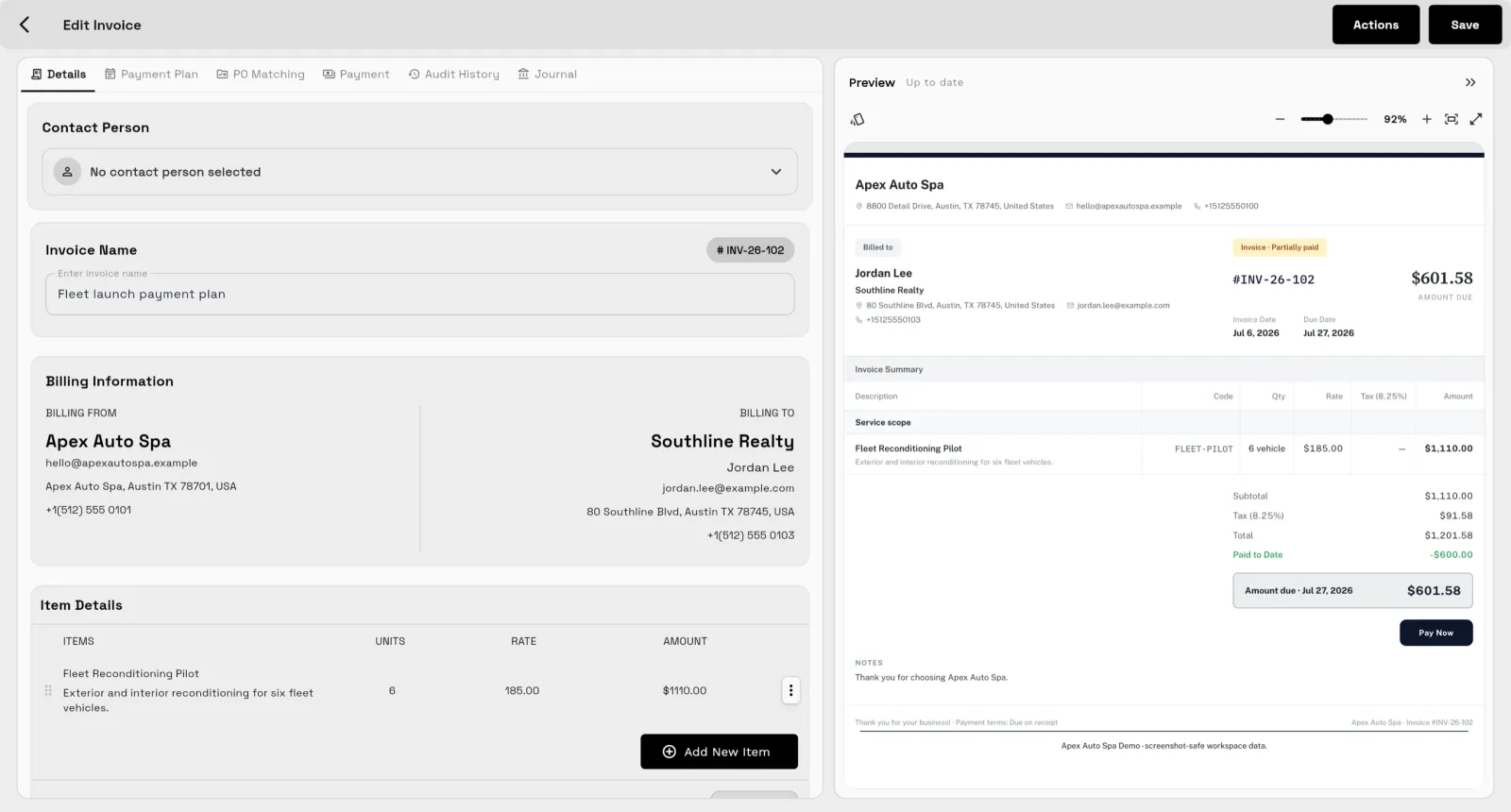
How to write an invoice clients can pay without questions.
A guide to writing an invoice: what to include, how to structure line items, payment terms, and how to send it so clients pay without follow-up questions.
Read the guide ->Getting paidInvoice email templates that get answers without awkward follow-up.
Copy-ready invoice email templates: the send, a friendly reminder, an overdue nudge, and a final notice — plus when to send each one.
Read the guide ->Getting paidHow to get paid faster without chasing clients.
Practical ways to get paid faster: deposits, clear terms, easy payment options, scheduled reminders, and invoicing habits that remove friction before it starts.
Read the guide ->Agency operations
Pricing, profitability, and intake — the operating discipline behind healthy client work.
Agency profit basics: know what every client actually costs you.
Agency profitability explained: revenue vs delivery cost, utilization, scope creep, and how to see which clients and projects actually make money.
Read the guide ->Agency operationsThe client intake checklist: start every engagement with the same information.
A complete client intake checklist: what to collect before work starts, how to structure the intake form, and how to hand it off into the project without re-asking.
Read the guide ->Client work & CRM
The fundamentals of keeping every client, conversation, and commitment in one place.
Go deeper
Turn the playbook into the workspace.
Each guide maps to the part of Workspace369 built for it — explore the solution pages when you are ready to put the system in place.
Ready when you are
See where Workspace369 fits into your client-work flow.
Start with the modules you need today, then turn on AI, automations, accounting, inventory, requests, and reporting as the operation grows.