Cadet
Regular price$29$14.50 / month
Founding price for your first 12 months
1 seat included
- Public proposal approval & signing
- Deposit on acceptance
- Proposal-to-invoice conversion
- Billable time tracking
- Public intake forms
Getting paid
Slow payment is usually a process problem, not a client problem. These habits remove the friction that delays invoices — before, during, and after the work.
Reviewed
In short
Get paid faster by making payment expected and easy: take deposits, put terms in the proposal, invoice on a schedule, itemize clearly, offer one-step payment options, and automate reminders so follow-up happens even when you are busy delivering.
Payment speed is decided before the work starts. Put the deposit, the schedule, and the due dates in the proposal and get explicit approval. An invoice that matches an approved proposal reads as a formality, not a negotiation.
Recurring work bills on a rhythm — deposit upfront, milestones or monthly for ongoing work, balance on delivery. Invoicing late teaches clients to pay late.
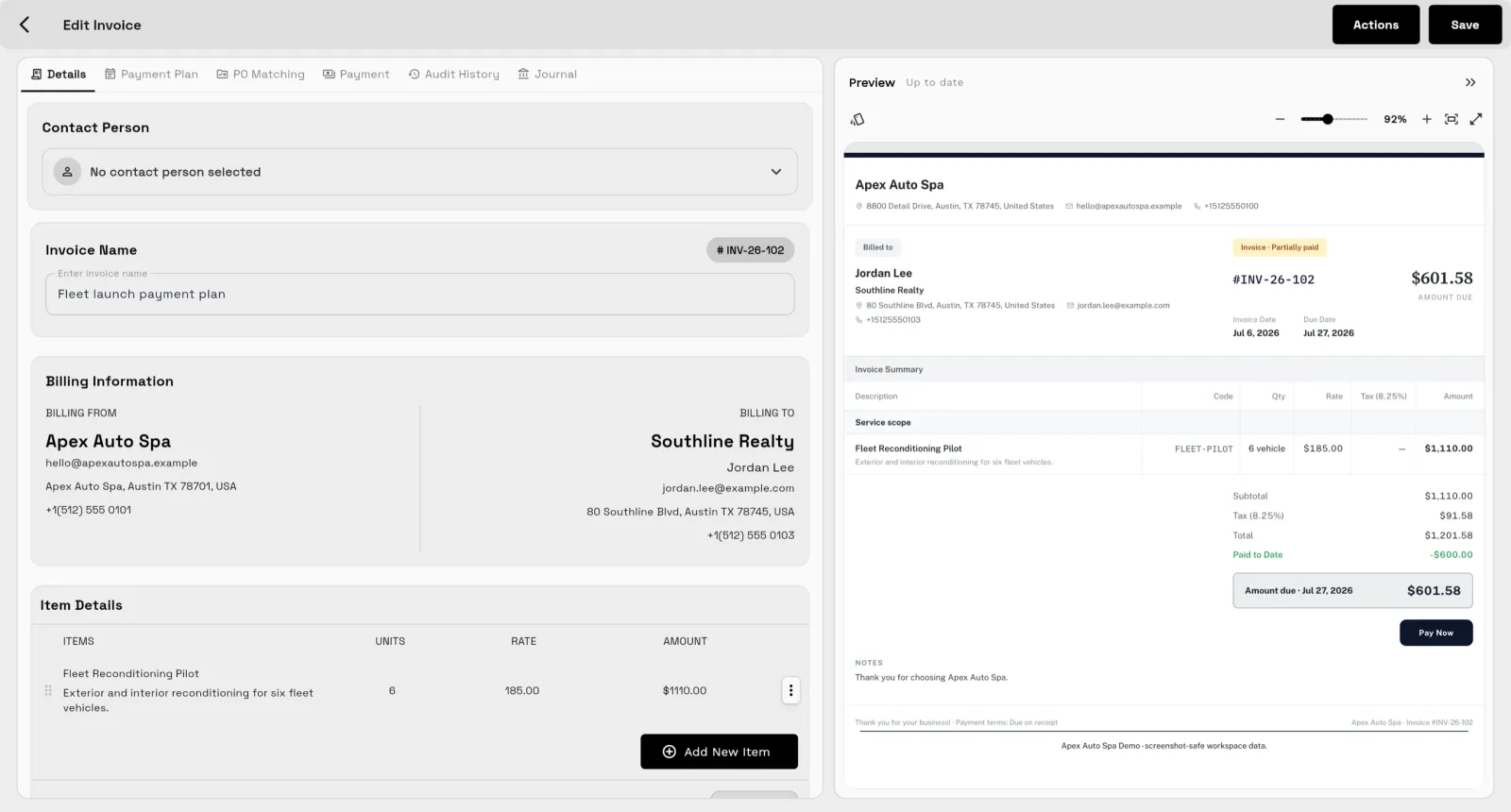
Every extra step — finding the invoice, asking how to pay, mailing a check — adds days. Send the invoice with a direct Pay Now option so the client pays in the same minute they open it. Workspace369 invoices include the payment link and update status automatically when paid.
Reminders work because they are consistent, not because they are forceful. A short pre-due note, an overdue nudge, and a final notice cover most late invoices without a phone call. Workflow automations in Workspace369 run this sequence for you — email and SMS, branching on paid status, with a task created when a person should step in.
FAQ
Yes. Deposits are standard practice across agencies and service businesses — commonly 25–50% upfront. Clients expect it when the proposal states it clearly, and it changes the cash-flow shape of every engagement.
Shorter is better for small service businesses: due on receipt or Net 7–14 keeps cash moving. Whatever you choose, print the exact due date on the invoice itself.
Follow the documented sequence: reminders, final notice referencing the agreed terms, pause on remaining work, then a direct call. Consistent terms and deposits mean a true non-payer costs you far less than full-project exposure.
Plans for freelancers
Regular price$29$14.50 / month
Founding price for your first 12 months
1 seat included
Regular price$74$37 / month
Founding price for your first 12 months
2 seats included
Everything in Cadet, plus
Regular price$149$74.50 / month
Founding price for your first 12 months
10 seats included
Everything in Voyager, plus
Founding member offer: 50% off your first 12 months, for the first 100 customers who join by Oct 31. 14-day trial with a card, USD monthly billing. Compare all plans.
Switch & Save
Our team sets up your workspace with you and helps move your clients and invoices from the tools you use now.
Export your data as a spreadsheet and AI Import maps the columns for you. Support can help with anything unusual.
Offer ends .
After signup, claim free setup in your workspace.
Ready when you are
Start with the modules you need today, then turn on AI, automations, accounting, inventory, requests, and reporting as the operation grows.
Watch