Best CRM for Growth Programs in 2026
Best CRM for business scaling and growth programs: six tools compared on price, application forms, contracts, staged billing and cohort delivery.
We make Workspace369 and list it first here. Weigh our ranking with that in mind, and if another tool fits you better, use it.

By Simon Dziak, Founder, Workspace369 · LinkedIn
The best CRM for growth programs keeps the application, the written scope, the signed agreement, the staged invoices and each scope-change request on one record, so a business owner who expects done-for-you implementation meets a document, not a dispute. For advisory programs that bill in stages, we pick Workspace369. HighLevel fits operators who want funnels, calendars and courses under one subscription, and Kajabi fits hosted cohort courses. See the Workspace369 growth-program CRM page and pricing; Proposals and contracts hold the written scope. To price an out-of-scope request first, use the free scope-change request builder. For the wider comparison across trades, see the best CRM for freelancers.
Disclosure and method: Workspace369 publishes this guide and is one of the options. It is a documentation-based shortlist, not a hands-on benchmark. Vendor pricing pages were reviewed on October 22, 2026, except Pipedrive, whose page could not be read that day and keeps its October 19, 2026 figures; confirm current terms with each vendor first. No software guarantees a participant's growth, income or results.
Key takeaways
- A growth-program CRM should keep the application, the written scope, the signed agreement, the staged invoices and every scope-change request on one record, so a participant who expects hands-on implementation meets a document, not an argument.
- Workspace369 Cadet is $29 a month ($23.25 billed yearly) for one user. It lists intake forms, a hosted funnel that captures leads into the CRM, Proposals with deposit on acceptance, contracts with e-signature, retainers and payment schedules on every plan; change orders and online booking start at Specialist ($149 a month), and Cadet allows 5 active projects.
- HighLevel Starter is $97 a month ($970 a year) and is the broadest single subscription: pipelines, forms, booking calendars, funnels, courses, communities and invoicing are on its feature list. Its pricing page does not name proposals, contracts or payment plans.
- Dubsado Starter ($35 a month, $335 a year) names invoicing with payment plans and forms; scheduling, workflows and public proposals need Premier ($55 a month, $525 a year). Kajabi lists live cohort courses from Growth ($249 a month, $199 billed yearly).
- Pipedrive and HubSpot are sales-pipeline tools. Pipedrive Premium lists contracts and e-signatures at $79 per seat monthly; HubSpot Sales Hub Starter is $20 per seat at list price and its pricing page names no contracts or invoices.
What's inside?
What a CRM for growth programs is (and what it is not)How we compared these toolsThe best CRM for growth programs in 2026Side-by-side comparisonWhich tool matches your program?Run a scope-boundary test during the trialWhen to keep it simple
What a CRM for growth programs is (and what it is not)
A growth program sells structured help to owners of existing businesses over several months: a strategy sprint, a monthly advisory call, a cohort or a done-with-you build. The CRM is the business side of that arrangement. It holds who applied, what they were promised, what they signed, which stages are invoiced and paid, and which requests went past the agreement. It does not host lessons, run a community, open a video room or measure results. Keep lessons and group calls in tools built for them, and use the CRM so the paperwork behind them is findable the day a participant says, "I thought you would set this up for me."
How we compared these tools
Every tool was read against the same five questions, using the vendor's own pricing page and nothing else:
- Entry price, shown monthly and billed yearly, with per-seat tools priced at one seat.
- Enrollment chain on the entry plan: forms or funnels, proposals, contracts and deposits, as named on the page.
- Staged billing: payment plans, schedules or installments, and which plan lists them.
- Delivery and scope control: project stages, scheduling, cohort or course features, and anything that records a scope change.
- Trial terms: length, and whether the vendor says a card is needed.
Speed, support, reliability, mobile apps and third-party ratings were out of scope. Order reflects documented fit for an operator who sells advisory programs and bills in stages. Workspace369 is first because its matrix names deposit on acceptance, optional add-on lines, contracts with e-signature, payment schedules, project stages, intake forms and a lead-capturing funnel on its $29 plan, a combination that the other five pricing pages name only in part. Dubsado Starter costs $35 and names payment plans, forms and portals, but public proposals and scheduling start at $55; HighLevel names more breadth for $97 but no proposals, contracts or payment plans. Workspace369 lists no course hosting or community, so it ranks below HighLevel and Kajabi for readers who need those.
The best CRM for growth programs in 2026
1. Workspace369, best for staged billing with a written scope on one record
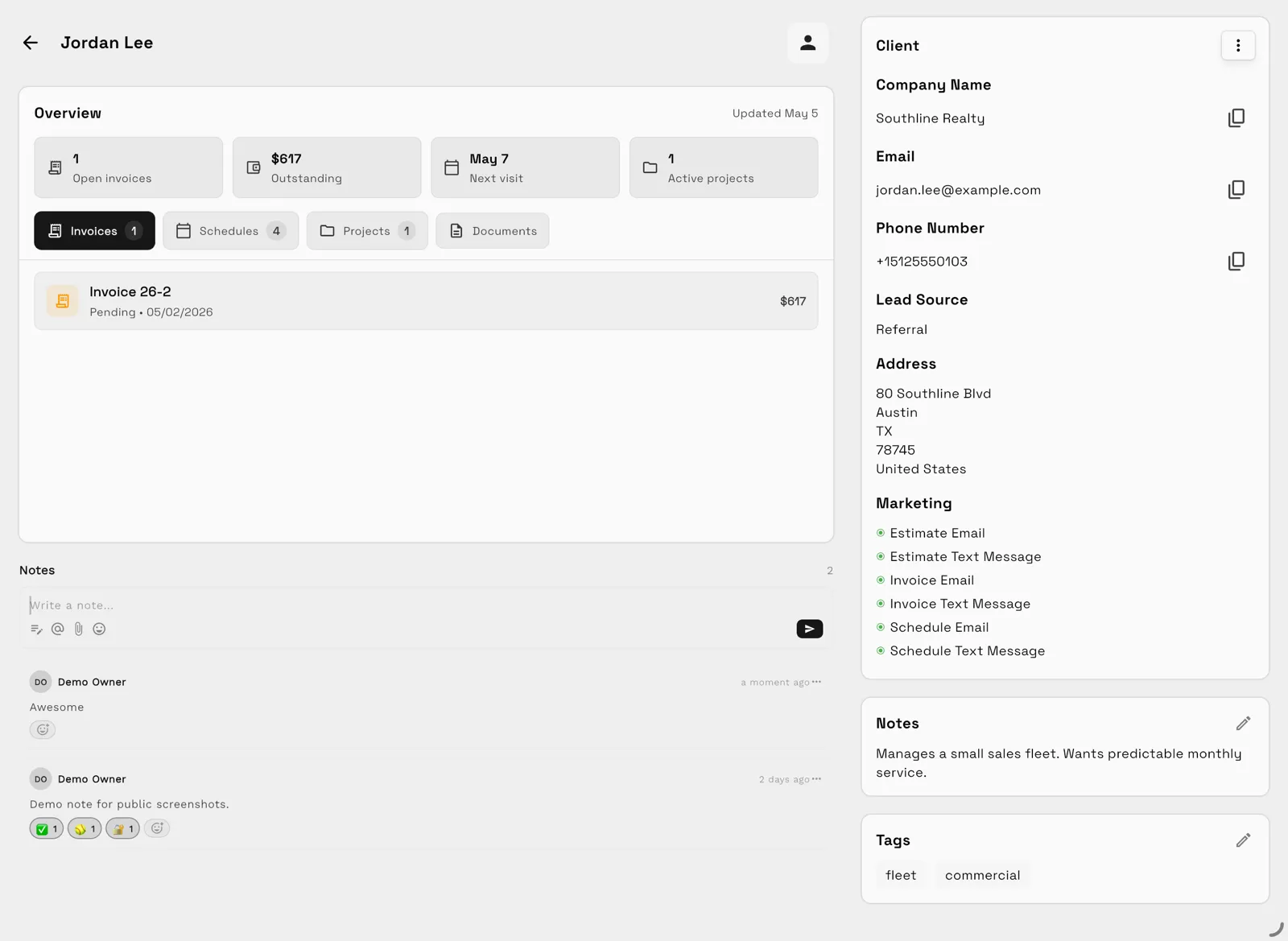
Workspace369 lists public intake forms, request-to-client conversion and a hosted funnel feeding leads into the CRM on every plan; Cadet includes 1 live funnel and 100 funnel leads a month. Proposals carry optional add-on lines and a deposit on acceptance, and contracts with e-signature are on Cadet, priced at $29 a month for one user ($23.25 with yearly billing). Retainers, payment schedules and recurring invoices are also listed on every plan, so a three-stage program can be invoiced as written. Project stages, subtasks and a client portal are included. The screenshot is demo data, not a customer outcome.
Limitations: Cadet is capped at 5 active projects and one seat; Voyager ($74 a month, $59.25 billed yearly) adds a second seat and a timeline view. Change orders, proposal revision history, online booking and the separate payment-plans row begin at Specialist ($149 monthly, $119.25 with yearly billing), so on Cadet you book calls through your own calendar and handle an out-of-scope request by sending a new Proposal. The matrix lists no course hosting, community or video-call room. Its 14-day trial asks for a card.
Best for: advisory programs with a small number of live participants that bill in stages and want the scope, signature and invoices together.
2. HighLevel, best for funnels, calendars and courses in one subscription
HighLevel Starter costs $97 monthly or $970 yearly and includes 3 sub-accounts (each sub-account is a separate business workspace). The feature list names CRM and pipelines, forms, surveys and quizzes, booking calendars, a website and funnel builder, workflow automation, email and SMS, payments and invoicing, courses and communities. The page says the 14-day free trial gives full access to the chosen tier; HighLevel's CRM page says a credit card is required and billing starts automatically unless you cancel.
Limitations: the pricing page does not name proposals, contracts, e-signatures or payment plans, so confirm the agreement and installment flow in a trial. Texts, calls, email sends and AI are billed by usage on top of the subscription, and a branded client portal app costs $49 a month for each sub-account.
Best for: operators who run applications, calls, nurture messages and a members area in one place, and will configure it themselves.
3. Dubsado, best for onboarding forms and installment invoices on a low plan
Dubsado has two plans, each with a monthly view and an annual view on the pricing page. Starter costs $35 monthly or $335 a year and Premier $55 monthly or $525 a year. Starter names unlimited clients and projects, invoices with payment plans, templates for forms and emails, client portals and a single active lead form. Premier adds scheduling, automated workflows, public proposals and several lead captures at once. A 21-day trial opens Premier, and the page notes that no credit card info is required.
Limitations: booking a discovery call and sending a public proposal both need Premier, which costs $525 a year before extra users; three extra users are free, then bands start at $25 a month. The pricing table does not list project stages, a funnel, courses or a community.
Best for: solo advisors who want a form-led onboarding path and installment invoices, and will pay Premier for calendars and workflows.
4. Kajabi, best for hosted cohort courses with checkout
Kajabi Basic costs $179 monthly, or $143 a month on yearly billing ($1,716 charged once a year). It lists courses, coaching and memberships, a website, a community, unlimited emails, landing pages and funnels, and checkout with payments, with 5 products, 2,500 contacts and 2 admin users. Growth is $249 a month ($199 billed yearly) and adds live cohort courses, advanced automations and 50 products. Pro is $499 a month ($399 billed yearly). The page shows a Start Free Trial button but states no trial length or card terms; its FAQ offers a 30-day money-back guarantee.
Limitations: proposals, contracts, e-signatures and payment plans are absent from the pricing page, and cohort courses need Growth. Card processing fees for Kajabi Payments apply and vary by country.
Best for: programs whose core product is a scheduled cohort with lessons and a community, where the agreement paperwork stays in another tool.
5. Pipedrive, best for a call-driven deal pipeline
Pipedrive prices per seat: Lite is $24 a month ($14 billed yearly), Growth $49 ($39), Premium $79 ($59) and Ultimate $99 ($79). Growth lists email sync, automations, a meeting scheduler and products billed as subscriptions or installments with forecasts. Premium lists contracts and e-signatures; the Smart Docs add-on, with e-signatures, is priced separately from $32.50. The 14-day trial said no credit card was required (the page could not be read on October 22, 2026, so these figures are from October 19, 2026).
Limitations: it is a sales pipeline, so the page names no project stages or client portal, and the Projects add-on and the LeadBooster add-on are paid extras. The contract feature sits on Premium, and delivering the program happens elsewhere.
Best for: sales teams who book many enrollment calls and track deals to close before a delivery tool takes over.
6. HubSpot, best for a free pipeline and outreach at scale
HubSpot's free tools cover up to 2 users with no credit card. Sales Hub Starter is $20 per seat a month at list price; the page also shows a lower promotional starting rate, which we do not use. The Starter column lists meeting scheduling and one-to-one email. The Sales Hub pricing page text names no contracts, invoices or payment plans, and the site describes billing and payments as a separate Revenue Hub product.
Limitations: the pricing page states no Starter trial length, and billing and contract features sit outside Sales Hub. Higher tiers are priced per seat, so cost climbs with the team.
Best for: operators who want to start free, track enrollment conversations and add outreach later.
Side-by-side comparison
| Tool | Entry price (monthly) | Billed yearly | Sign-up chain on entry plan | Delivery side | Main entry-plan limit | Trial |
|---|---|---|---|---|---|---|
| Workspace369 | $29 (Cadet, one user) | $23.25 a month | Forms, funnel, Proposals with deposit, contracts with e-signature, payment schedules | Project stages, client portal; change orders from Specialist | 5 active projects, 1 seat | 14 days, card required |
| HighLevel | $97 (Starter) | $970 a year | Forms, funnels, invoicing; proposals and contracts not named | Courses, communities, booking calendars | 3 sub-accounts; usage charges | 14 days, card required |
| Dubsado | $35 (Starter) | $335 a year | Forms, invoicing with payment plans; public proposals on Premier | Client portals; scheduling on Premier | 1 active lead form | 21 days, no card |
| Kajabi | $179 (Basic) | $143 a month | Checkout and payments; contracts and payment plans not named | Courses, community; cohort courses on Growth | 5 products, 2,500 contacts | Free trial; length and card not stated |
| Pipedrive | $24 (Lite, per seat) | $14 per seat a month | Pipeline and email; installments on Growth; contracts on Premium | None named; Projects is an add-on | Per seat; contracts on Premium | 14 days, no card |
| HubSpot | $20 per seat (Sales Hub Starter, list) | See site (toggle shows promo rates) | Pipeline and meetings; contracts and invoices not named | None named | Free tools: 2 users | None stated for Starter |
Which tool matches your program?
| Your main need | Start with | Reason |
|---|---|---|
| A written advisory scope, signature and staged invoices on one record | Workspace369 | Deposit, contracts with e-signature and payment schedules on every plan |
| Funnel, calendar, messages and courses in one subscription | HighLevel | Widest feature list at $97 a month, with usage charges on top |
| Form-led onboarding and installment invoices at a low price | Dubsado | Payment plans and forms on Starter, $35 a month |
| A scheduled cohort with lessons and a community | Kajabi | Live cohort courses from Growth, checkout built in |
| Many enrollment calls tracked as deals | Pipedrive | Per-seat pipeline with installments on Growth, contracts on Premium |
| A free place to start tracking conversations | HubSpot | Free tools for up to 2 users, no card |
Run a scope-boundary test during the trial
Use one made-up participant and the steps below in every shortlisted tool. The scenario is a drill, not a customer story.
- Capture the application through a form or funnel and confirm it lands on a participant record.
- Send a proposal that states the program is advisory, with a deposit, and ask the participant to sign the agreement.
- Create three staged invoices tied to the program's dates, and send the first.
- Log a message in which the participant asks you to run their marketing setup yourself. Send a priced change request or a new Proposal for that work.
- Open the participant record and confirm the application, scope wording, signature, staged invoices and change request all hang off it.
The strongest candidate holds all five steps in one place and surfaces the original terms fast. Two free helpers fit this drill: the scope-change request builder writes the out-of-scope message for step 4, and the deposit calculator sets the figure for step 2.

When to keep it simple
A single cohort a year with a dozen participants can run on a signed agreement template, a payment link and a shared spreadsheet. Step up to a client-work tool when participants start in different months, when staged invoices drift from the dates you promised, or when you cannot find what a participant agreed to six months ago. The business scaling and growth programs product page explains how Workspace369 covers Proposals, communications and invoices, and the pricing page lists current plans. For stage-based billing, see retainers and recurring billing; from Specialist, change orders attach any later scope change to the agreement it amends. Keep lessons and group calls in the tools built for them.
Before moving real participants over, run one whole program on sample data and confirm you can export the records.
Sources reviewed for this guide
- Workspace369 pricingPlan matrix reviewed October 22, 2026.
- HighLevel pricingOfficial pricing page reviewed October 22, 2026 for monthly and yearly prices, sub-accounts, feature list, add-ons and trial terms.
- Dubsado pricingOfficial pricing page reviewed October 22, 2026 for monthly and yearly prices, plan features, extra users and trial terms.
- Kajabi pricingOfficial pricing page reviewed October 22, 2026 for monthly and yearly prices, plan limits, cohort courses and trial terms.
- Pipedrive pricingOfficial pricing page could not be read on October 22, 2026 (bot protection blocked it); figures are from the October 19, 2026 review of monthly and yearly per-seat prices, plan features and trial terms.
- HubSpot Sales Hub pricingOfficial pricing page reviewed October 22, 2026 for the free tools, the Starter list price and the features named on the page.
Workspace369 publishes this documentation-based comparison and is one of the options. It is not an independent ranking or a hands-on benchmark.
Run client follow-up in one workspace.
CRM, inbox, voice, invoicing, payments, projects, files, AI, and workflow automations — connected instead of exported.
14-day free trial. Card required. After the trial: from $29/month. Renews automatically every month until you cancel. Cancel anytime in Settings → Billing.