Best CRM for Executive Coaches 2026: Sponsor Billing
Best CRM for executive coaches: six tools compared for sponsor-paid coaching on price, company billing, scheduling, private notes and a sponsor-split test.
We make Workspace369, which is on this list. Weigh our ranking with that in mind.

By Simon Dziak, Founder, Workspace369 · LinkedIn
The best CRM for executive coaches holds two relationships on separate records: the sponsor who signs and pays, and the coachee who owns the confidential conversation. CoachAccountable documents the closest match, with companies, company invoicing and private notes; Delenta and Simply.Coach document sponsor features on higher or business plans. Workspace369 suits proposals, retainers and invoices. To price a multi-month engagement first, use the free retainer pricing calculator. For the broader category, start with the best coaching software guide.
Disclosure and method: Workspace369 publishes this guide and is one of the options. It is a documentation-based shortlist, not a hands-on benchmark. Official vendor pages were reviewed on October 21, 2026. Check current plans with each vendor before you buy.
Key takeaways
- An executive coaching CRM has to separate two relationships: the sponsor who signs and pays, and the coachee who owns the confidential conversation. Check how each tool handles that split before price.
- CoachAccountable documents the closest match: companies, clients organized by company, invoices to organizations, personnel access for the sponsor and private and shared notes. It prices by active client, from $20 a month for 2 clients.
- Delenta lists corporate clients on Premium ($79 a month, $699 billed yearly), but its comparison table puts roles and access permissions on the Teams plan, which is quote-only.
- Workspace369 Cadet ($29 a month, $23.25 billed yearly) covers proposals, retainers, deposits and invoices for the sponsor, but it is one seat with 5 active projects and has no documented sponsor view of coachee progress.
- Paperbell does not create traditional invoices or add VAT or tax lines, which matters when a corporate accounts-payable team needs a formal invoice.
What's inside?
What a CRM for executive coaches is (and what it is not)How we compared these toolsThe sponsor and coachee split, step by stepThe best CRM for executive coaches in 2026Side-by-side comparisonWhich tool fits your engagement?Test the sponsor split before you commit
What a CRM for executive coaches is (and what it is not)
A CRM for executive coaches is the business side of a sponsored engagement: which company hired you, who the billing contact is, how many sessions and months you agreed, who the coachees are, when each session happens and what has been invoiced. It is not a place for session content you promised to keep private, a clinical record system or a course platform. This guide covers the sponsor and coachee split, and the CRM for executive coaches overview shows the Workspace369 setup. For business owners paying for themselves, see the best CRM for business coaches.
How we compared these tools
We compared each tool on the same five points, using only the vendor's own pages:
- Sponsor and company handling: whether the page documents company records, company invoicing or a sponsor login.
- Notes and privacy: private notes, shared notes or role-based access.
- Engagement packages and corporate billing: contracts or proposals, invoices, recurring or scheduled billing and tax lines.
- Entry price and limits: prices as listed on October 21, 2026 (where a page does not label monthly versus yearly billing, we say "See site"), plus caps on coachees, projects or seats.
- Trial terms: length, and whether the vendor says a card is needed.
We did not test speed, support, reliability or data export, and did not use third-party ratings. Order reflects documented fit for a coach with a handful of sponsored coachees. Where a tool states a sponsor feature only on a quote-only plan, we say so.
The sponsor and coachee split, step by step
A typical sponsored engagement runs on one agreement with the company and several one-to-one relationships. Set it up in this order:
- Sponsor record. Company name, billing contact, purchase-order number and the signed agreement, with the scope, number of sessions, term and fee.
- Coachee records. One per executive, with the session schedule, actions between sessions and your notes.
- Sponsor visibility rule. Decide what the sponsor receives (attendance, a progress summary at the midpoint, invoices) and write it into the agreement.
- Billing. Invoice the company on a schedule, with a deposit or monthly retainer, not each coachee.
- Review point. A three-way check-in at the midpoint and the end, scheduled up front.

The best CRM for executive coaches in 2026
1. CoachAccountable, best for coaches who invoice the employer and report to a sponsor
CoachAccountable's product tour describes a Companies feature: organize individual clients by company, invite personnel to have their own access, invoice organizations rather than individuals, and manage company-wide engagements and agreements with designated personnel. Its client management list names private and shared notes, action plans, digital contracts and a client portal, and the pricing page says every plan is the complete system. Pricing follows active clients: $20 a month for 2, $40 for 5 and $70 for 10, shown as monthly prices with no billing toggle. Team members and administrators are unlimited at no extra cost. The trial is 30 days with no card required.
Limitations: each coachee is a separate client, so five executives in one company means five active clients, and the bill grows with the roster. The page does not state yearly prices. The security page states it is not HIPAA compliant.
Best for: executive coaches whose sponsor wants a live window into progress and a formal invoice, with a roster of up to about ten active coachees.
2. Delenta, best for coaches who want corporate clients and billing models built in
Delenta's pricing page lists "work with corporate clients" under Premium, and its FAQ describes sponsor handling directly: corporate clients can receive read-only reports, executives can self-manage sessions and payments, and HR or multi-stakeholder clients can have an extra login to oversee billing while session notes stay private. Starter is $29 a month ($229 billed yearly), Pro $49 ($469) and Premium $79 ($699). Automated client invoicing and payments, a booking calendar and e-sign contracts are listed on every plan. The header says a 14-day trial with no credit card required, while the FAQ says 7 days, so confirm the length at sign-up.
Limitations: the comparison table ticks roles and access permissions, the admin panel and assign-and-share-clients only for Teams, which is quote-only, so the sponsor login with private notes may need that plan. Starter caps client portals at 10.
Best for: coaches who want one platform with billing models and corporate roles and are willing to talk to sales if they need the sponsor login.
3. Simply.Coach, best for ICF-style tracking with a low entry price
Simply.Coach lists session notes, action plans, goal and development planning, stakeholder management and digital contracts with signature on every plan. Its page describes stakeholder management as an outside-in view for better coaching outcomes, which is feedback from stakeholders rather than a sponsor portal. The page lists Starter at $9 for 3 coachees, Essentials at $29 for 7, Growth at $49 for 30 and Leap at $69 for unlimited, with a Paid Annually or Paid Monthly toggle and no separate monthly figures, so confirm the monthly price at checkout (See site). The trial is 14 days with no card. Automated invoices are marked as coming soon, and payments tracking and collection is ticked on all plans.
Limitations: sponsor features sit on the business plans for coaching firms, where Surge lists 5 HRBP and client sponsors at $159, 25 clients per coach and 2 program managers; the page does not label that price as monthly or yearly (See site). The FAQ lists no refunds for accounts cancelled mid-month.
Best for: solo executive coaches who want coaching-native tracking and notes, and will bill the sponsor from a separate tool.
4. Workspace369, best for proposal-led engagements and corporate invoicing
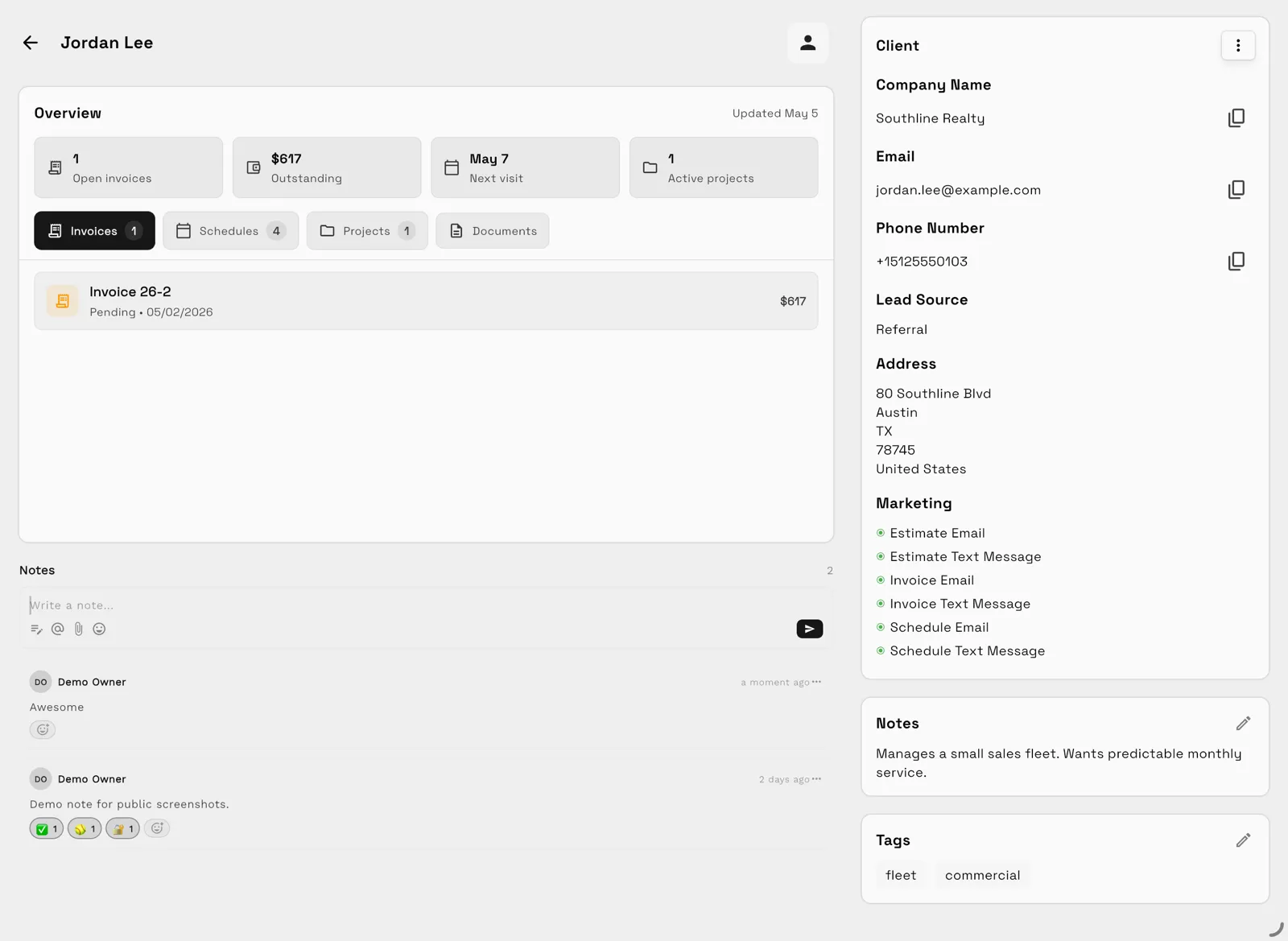
Demo data, not a customer outcome.
Workspace369 keeps the sponsor and each coachee as client records, with companies, a proposal with deposit on acceptance, contracts, retainers and payment schedules, invoices, a calendar, notes and a client portal. Cadet is $29 a month for one person ($23.25 a month billed yearly) and lists all of these plus time tracking and email automations, with up to 3 active workflows. Use client-scoped access so an assistant sees assigned clients only; client-scoped access is on every plan, but an assistant needs a second seat, which starts at Voyager ($74 a month, 2 seats).
Limitations: Cadet allows one seat and 5 active projects, so a sponsor project plus five coachees can reach the cap. Workspace369 does not document a sponsor view of coachee progress, session tracking or action plans, so CoachAccountable and Delenta fit that part better. Online booking and payment plans start at Specialist ($149 a month). The 14-day trial needs a card.
Best for: executive coaches who sell a defined engagement through a proposal and want the agreement, retainer and invoice on one record.
5. Paperbell, best for packages with scheduling and payment in one checkout
Paperbell is one plan at $97 a month or $970 billed yearly, with unlimited clients, packages and contracts. It lists scheduling, a client portal, secure client notes, payment plans and intake surveys, and a free account with no card required. Clients pick a package, book, sign and pay in one checkout, which suits individuals who pay for themselves. Payment goes to the coach's own payment-gateway account, the page says there are no extra transaction fees, and support is by email on weekdays. The scheduler detects time zones for coach and client, which helps with executives who travel.
Limitations: the FAQ says Paperbell eliminates traditional invoices and does not add VAT or tax lines, which a corporate accounts-payable team may require. Each account is for one coach, and it lists no company or sponsor feature.
Best for: coaches who sell packages directly to executives paying personally.
6. HoneyBook, best for a polished proposal-to-payment flow
HoneyBook Starter is $29 a month billed yearly (the page shows no separate monthly price: See site), with unlimited clients and projects, invoices and payments, proposals and contracts, a calendar and a client portal. The FAQ gives a 30-day trial with no credit card required. A proposal with a contract and a staged invoice fits a three-month engagement sold to a company. The pricing page also lists a 60-day money-back guarantee, which lowers the risk of testing it on a real sponsor engagement, and HoneyBook also lists payment plans and a scheduler on its plans. For a fuller feature-by-feature look, see the Workspace369 vs HoneyBook comparison.
Limitations: it has no coaching tools such as action plans or session tracking, and Starter allows up to 2 live lead forms. Team members start at Essentials ($49 a month billed yearly, up to 2).
Best for: coaches who want a polished client experience for proposals and invoices and track coaching content elsewhere.
Side-by-side comparison
| Tool | Entry price (monthly where labelled) | Billed yearly | Sponsor or company handling | Main limit | Trial |
|---|---|---|---|---|---|
| CoachAccountable | $20 (2 clients); $40 (5 clients) | Not shown | Companies, invoices to organizations, personnel access | Each coachee is an active client | 30 days, no card |
| Delenta | $29 (Starter); $79 (Premium) | $229 a year; $699 a year | Corporate clients on Premium; roles on Teams | Roles and access ticked for Teams only | 14 days per header, 7 per FAQ; no card |
| Simply.Coach | $9 (Starter); $29 (Essentials), billing not labelled | See site | Stakeholder management; sponsors on business plans | 3 or 7 coachees; invoices coming soon | 14 days, no card |
| Workspace369 | $29 (Cadet) | $23.25 a month | Client and company records; no sponsor view documented | 1 seat, 5 active projects | 14 days, card required |
| Paperbell | $97 | $970 a year | None listed; no traditional invoices | One coach per account | Free account, no card |
| HoneyBook | See site | $29 a month (Starter) | Invoices, proposals and contracts only | 2 live lead forms | 30 days, no card |
Which tool fits your engagement?
| If you mostly need | Start with | Why |
|---|---|---|
| A sponsor who sees progress and gets an invoice | CoachAccountable | Companies, company invoicing and private and shared notes |
| Corporate roles and billing models | Delenta | Corporate clients on Premium; sponsor login described in the FAQ |
| Coaching tracking at a low entry price | Simply.Coach | Notes, action plans and goal planning on every plan |
| Proposal, retainer and invoice on one record | Workspace369 | Proposals, deposits, retainers and invoices from Cadet |
| Self-pay executives and package checkout | Paperbell | Scheduling, contracts and payment in one flow |
| A polished proposal-to-invoice flow | HoneyBook | Proposals, contracts and invoices on Starter |
Test the sponsor split before you commit
In each trial, set up one fictional sponsor and two fictional coachees. Add the agreement, one proposal or contract and a monthly invoice to the company. Book a session for each coachee and write a private note. Then open the sponsor's view and check what it shows: invoices and agreement only, with no session notes. If you cannot restrict that view, keep the sponsor out of the tool and send summaries yourself. Check that the invoice names the company, carries the purchase-order number and shows tax if your client needs it. Keep anything your policy classes as highly sensitive in a system that policy allows; Workspace369 does not claim HIPAA compliance.
Before you pay, see Workspace369 pricing and compare seats and plan gates. The trial lasts 14 days and needs a card.
Sources reviewed for this guide
- Workspace369 pricingPlan matrix reviewed October 18, 2026.
- CoachAccountable securityOfficial security page reviewed October 18, 2026; it states CoachAccountable is not HIPAA compliant.
- CoachAccountable pricingOfficial pricing page reviewed October 21, 2026 for per-client prices, team accounts and trial terms.
- CoachAccountable tourOfficial product tour reviewed October 21, 2026 for companies, company invoicing, notes and agreements.
- Delenta pricingOfficial pricing page reviewed October 21, 2026 for monthly and yearly prices, plan features, the client-type FAQ and trial terms.
- Simply.Coach pricingOfficial pricing page reviewed October 21, 2026 for listed prices, coachee limits, stakeholder management and trial terms.
- Simply.Coach pricing for businessesOfficial pricing page reviewed October 21, 2026 for the coaching-firm plans and client sponsor limits.
- Paperbell pricingOfficial pricing page reviewed October 21, 2026 for the plan price and included features.
- Paperbell FAQOfficial FAQ reviewed October 21, 2026 for invoices, VAT and tax lines, contracts and the free account.
- HoneyBook pricingOfficial pricing page reviewed October 21, 2026 for the yearly-billed Starter price, plan features and trial terms.
Workspace369 publishes this documentation-based comparison and is one of the options. It is not an independent ranking or a hands-on benchmark.
Run client follow-up in one workspace.
CRM, inbox, voice, invoicing, payments, projects, files, AI, and workflow automations — connected instead of exported.
14-day free trial. Card required. After the trial: from $29/month. Renews automatically every month until you cancel. Cancel anytime in Settings → Billing.