Cadet
Regular price$29$14.50 / month
Founding price for your first 12 months
1 seat included
- Public proposal approval & signing
- Deposit on acceptance
- Proposal-to-invoice conversion
- Billable time tracking
- Public intake forms
Getting paid
Net 30 means the client must pay the full invoice within 30 days of the issue date. It is the default term for business-to-business invoicing — but default is not always best. Shorter terms get you paid sooner; longer terms cost you cash flow.
Reviewed
In short
Net 30 is a payment term requiring full payment within 30 days of the invoice date. Variants include net 7, net 14, net 45, and net 60 — the number is simply the days allowed. Small service businesses usually benefit from net 14 or due-on-receipt for new clients, net 30 for established accounts, and a stated late fee to make the term credible. The term only works when it is printed on the invoice and enforced with a reminder cadence.
The number is the days the client has to pay, counting from the invoice issue date:
Choose the term by relationship, not by habit:
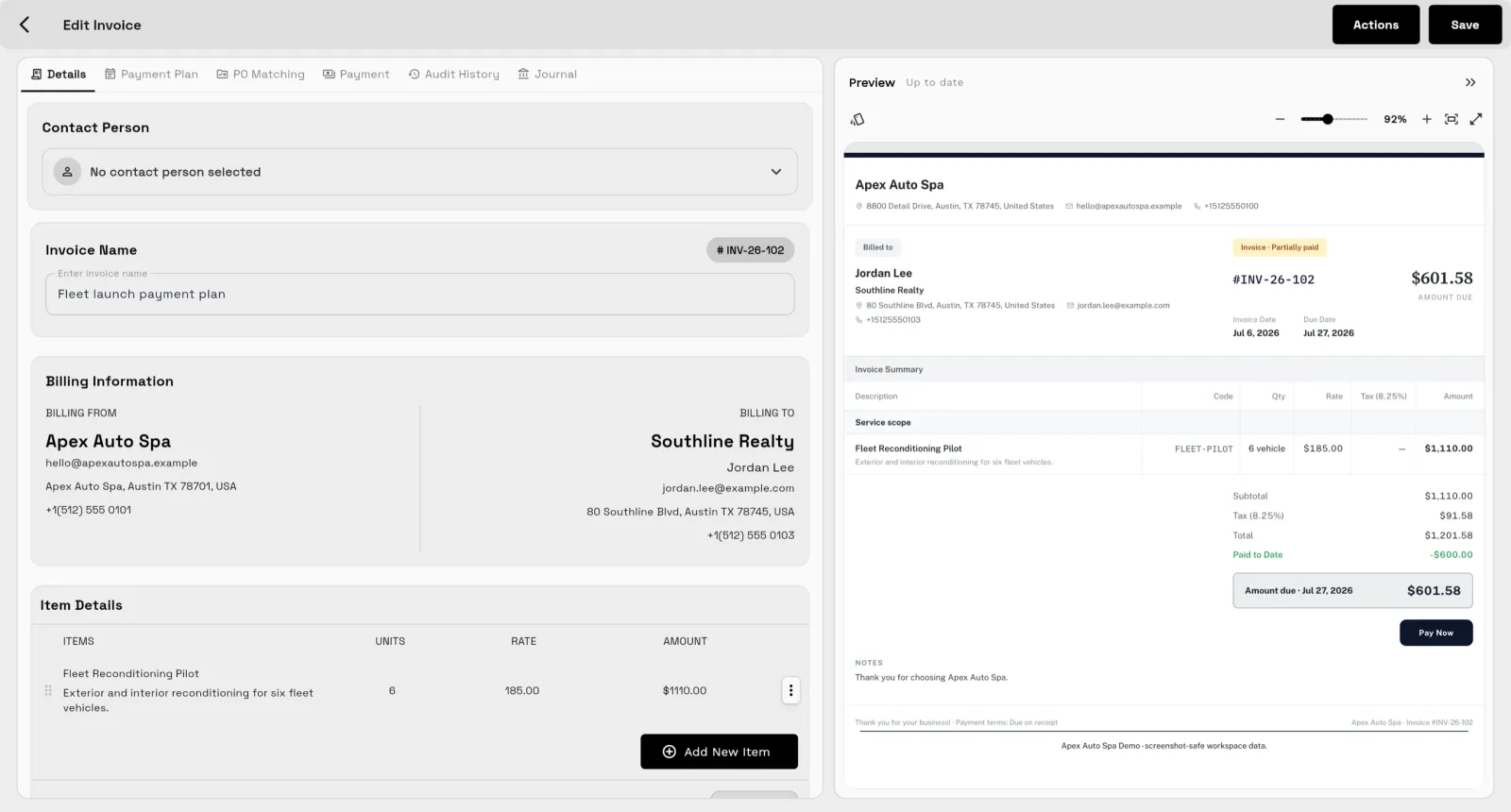
A term without enforcement is a suggestion. Print the specific due date on the invoice ("Payment due September 12, 2026" — not just "net 30"), state the late fee, and run a reminder cadence: friendly note one day after the due date, second at three days, firm note at ten. In Workspace369, that cadence runs automatically as invoice automations.
FAQ
Yes — net terms count calendar days, not business days, unless the agreement says otherwise. A net 30 invoice issued August 12 is due September 11 regardless of weekends.
Net 14 is usually better: you get paid 16 days sooner per invoice, which compounds across a year of billing. Use net 30 only when the client expects it or the relationship supports it.
Yes, if the late fee is stated in the agreement and printed on the invoice. Unannounced late fees get disputed; disclosed ones get paid.
Plans for freelancers
Regular price$29$14.50 / month
Founding price for your first 12 months
1 seat included
Regular price$74$37 / month
Founding price for your first 12 months
2 seats included
Everything in Cadet, plus
Regular price$149$74.50 / month
Founding price for your first 12 months
10 seats included
Everything in Voyager, plus
Founding member offer: 50% off your first 12 months, for the first 100 customers who join by Oct 31. 14-day trial with a card, USD monthly billing. Compare all plans.
Switch & Save
Our team sets up your workspace with you and helps move your clients and invoices from the tools you use now.
Export your data as a spreadsheet and AI Import maps the columns for you. Support can help with anything unusual.
Offer ends .
After signup, claim free setup in your workspace.
Ready when you are
Start with the modules you need today, then turn on AI, automations, accounting, inventory, requests, and reporting as the operation grows.