Invoicing & billing.
Learn the fundamentals of invoicing — from writing your first invoice to retainers, reminders, and getting paid on time.
Invoicing is how you turn finished work into money: you send a clear request for payment, agree when it is due, and follow up until it lands. The short answer is to put the same few things on every invoice, bill on a schedule instead of from memory, and automate the reminders. The guides below cover each step, from your first invoice to retainers, deposits and late payments.
Getting started with invoicing
Getting paid on time
Invoice software
Invoicing basics in five steps
- Agree the terms before the work startsPut the price, the payment schedule and the due date in the proposal or contract. An invoice should never be the first time a client sees your terms.
- Take a deposit where the work is largeMany freelancers ask for a quarter to half of the fee up front. It confirms the client is committed and covers your first stretch of time.
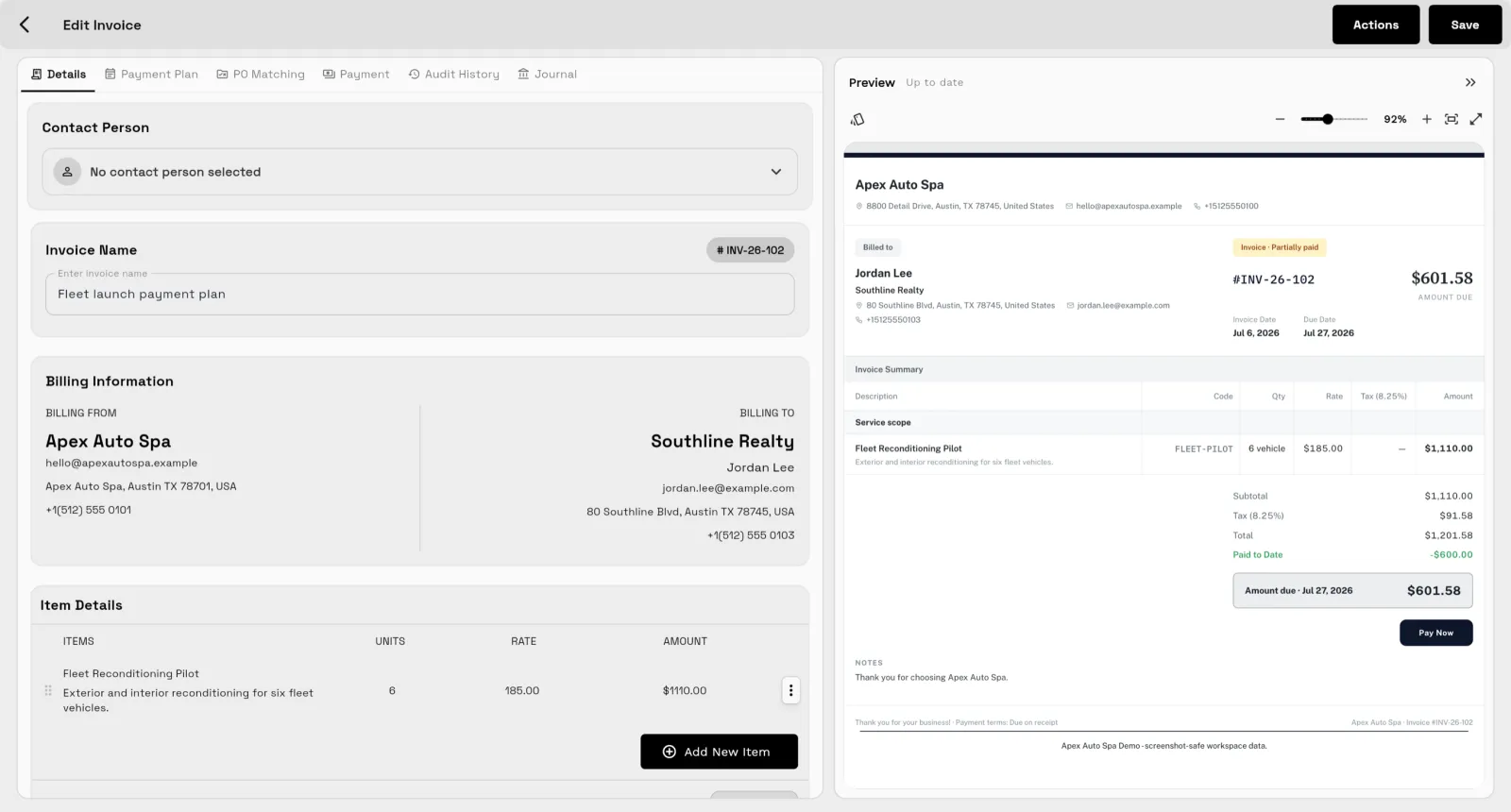
- Write a complete invoiceInclude your details, the client, a unique invoice number, issue and due dates, itemized lines with quantity and rate, the total, and a clear way to pay.
- Send it on a scheduleInvoice at the milestone, month end or retainer date you agreed, and send it the same day. Late invoices are paid late.
- Follow up on a cadenceRemind before the due date, on it, and after it, using short messages that name the invoice number. Escalate politely, and add a late fee only if your terms say so.
Key terms
- Invoice number
- The unique ID that ties a payment and a conversation to one invoice. Keep it sequential and never reuse one.
- Payment terms
- The days allowed to pay, such as due on receipt, net 14 or net 30, counted from the invoice date.
- Deposit invoice
- An invoice for an upfront part of the fee, credited against the final invoice.
- Retainer
- A recurring payment that reserves your time or covers an agreed scope each month.
- Kill fee
- What a client pays if they cancel a project partway through.
Common questions
What should every invoice include?
Your business and client details, a unique invoice number, the issue and due dates, itemized line items with quantity, rate and amount, any taxes, the total due, the payment terms and a clear way to pay. The how to write an invoice guide walks through each part.
What payment terms should I use?
New clients and small jobs usually suit due on receipt or net 14. Established business clients often expect net 30. Whatever you choose, print it on the invoice and agree it in advance, because a term only works when it is stated and followed up.
How do I get paid faster?
Make payment expected and easy. Take deposits, state terms in the proposal, invoice on a schedule, itemize clearly, offer one-step payment options and send reminders automatically so follow-up happens even when you are busy delivering.
See where Workspace369 fits into your client-work flow.
Start with the modules you need today, then turn on AI, automations, accounting, inventory, requests, and reporting as the operation grows.
14-day free trial. Card required. After the trial: from $29/month. Renews automatically every month until you cancel. Cancel anytime in Settings → Billing.