Best CRM for Fractional Executives in 2026: Retainers, Sponsors
Six client-work tools for fractional CMOs, CFOs and COOs compared on price, plan gates, proposals, portals and time tracking, plus a sponsor-visibility test.
We make Workspace369 and list it first here. Weigh our ranking with that in mind, and if another tool fits you better, use it.

By Simon Dziak, Founder, Workspace369 · LinkedIn
The best CRM for fractional executives keeps each client company, its sponsor, the signed scope, the monthly retainer, the logged time and the invoice on one record, and shows a sponsor nothing from your other clients. For a solo CMO, CFO or COO selling retainers, our pick is Workspace369. Bonsai suits executives who want contracts and invoices priced per user, Moxie the lowest entry price among plans that can send an invoice, and Pipedrive or HubSpot new-engagement pipelines. For the wider field, see the best CRM for consultants; price a retainer first with the free consulting rate calculator.
Disclosure and method: Workspace369 publishes this guide and is one of the options. It is a documentation-based shortlist, not a hands-on benchmark. Official vendor pages were reviewed on October 23, 2026. Examples are fictional. Check current plans with each vendor before you buy.
Key takeaways
- A fractional executive CRM should keep each client company, its sponsor, the signed scope, the monthly retainer, the logged time and the invoice on one record, with nothing from another client visible to a sponsor.
- Workspace369 Cadet is $29 a month ($23.25 billed yearly) for one seat and 5 active projects; it lists proposals with deposit on acceptance, retainers, time tracking and a client portal on every plan, and extra seats ($10 a month) start at Voyager.
- Bonsai Essentials ($25 a month, $19 billed yearly per user) and Moxie Starter ($12 a month, $10 billed yearly) have lower entry prices; Bonsai documents more of the contract-and-invoice paperwork per user, and Moxie keeps its white-labeled portal for Pro.
- HoneyBook Starter ($36 a month, $29 billed yearly) suits packaged engagements; Pipedrive and HubSpot suit business development and need other tools for delivery, time and billing.
- Test each trial with one fictional sponsor who should see only their own project, files and invoice, and a second client that must stay invisible to them.
What's inside?
What a CRM for fractional executives is (and what it is not)How we compared these toolsThe best CRM for fractional executives in 2026Side-by-side comparisonWhich tool fits your practice?The sponsor-visibility test for any trialInspect the fractional executive client recordConfigure the handoff and follow-upPlan and setup costs
What a CRM for fractional executives is (and what it is not)
A fractional executive CRM is the business side of a part-time leadership role: who the sponsor is at each company, what advisory and execution work you agreed, how many days or hours a month, what you logged and what is unpaid. It is not a board portal, a data room or the client's own finance or marketing system. Board papers, cap tables and ledgers belong in the client's approved systems. If a tool tracks deals but not time or invoices, the retainer lives in a spreadsheet and the first scope dispute with a sponsor has no record behind it.
How we compared these tools
We compared each tool on the same five points, using only the vendor's own pricing and product pages:
- Entry price for one person, monthly and billed yearly, as listed on October 23, 2026.
- Retainer coverage on that plan: proposals or contracts, time tracking, recurring or retainer billing and invoices.
- Sponsor access: a client portal and the way team access is limited.
- Hard limits on the entry plan: active projects, seats, minimums or lead forms.
- Trial terms: length, and whether the vendor says a card is needed.
We did not test speed, support, reliability or mobile apps, and used no third-party ratings. Order reflects documented fit for a solo or two-person fractional executive running several retained clients. Pipedrive and HubSpot are sales tools and are placed last.
On October 23, 2026 we captured every vendor price again in a browser and compared it with the vendor's server-rendered page. Pipedrive and HubSpot build their prices in the browser, so for those two a second, separate browser session had to show the same figures. Every price, trial term and plan gate in this guide was unchanged from the October 18 check.
The best CRM for fractional executives in 2026
1. Workspace369, best for solo executives who sell retainers
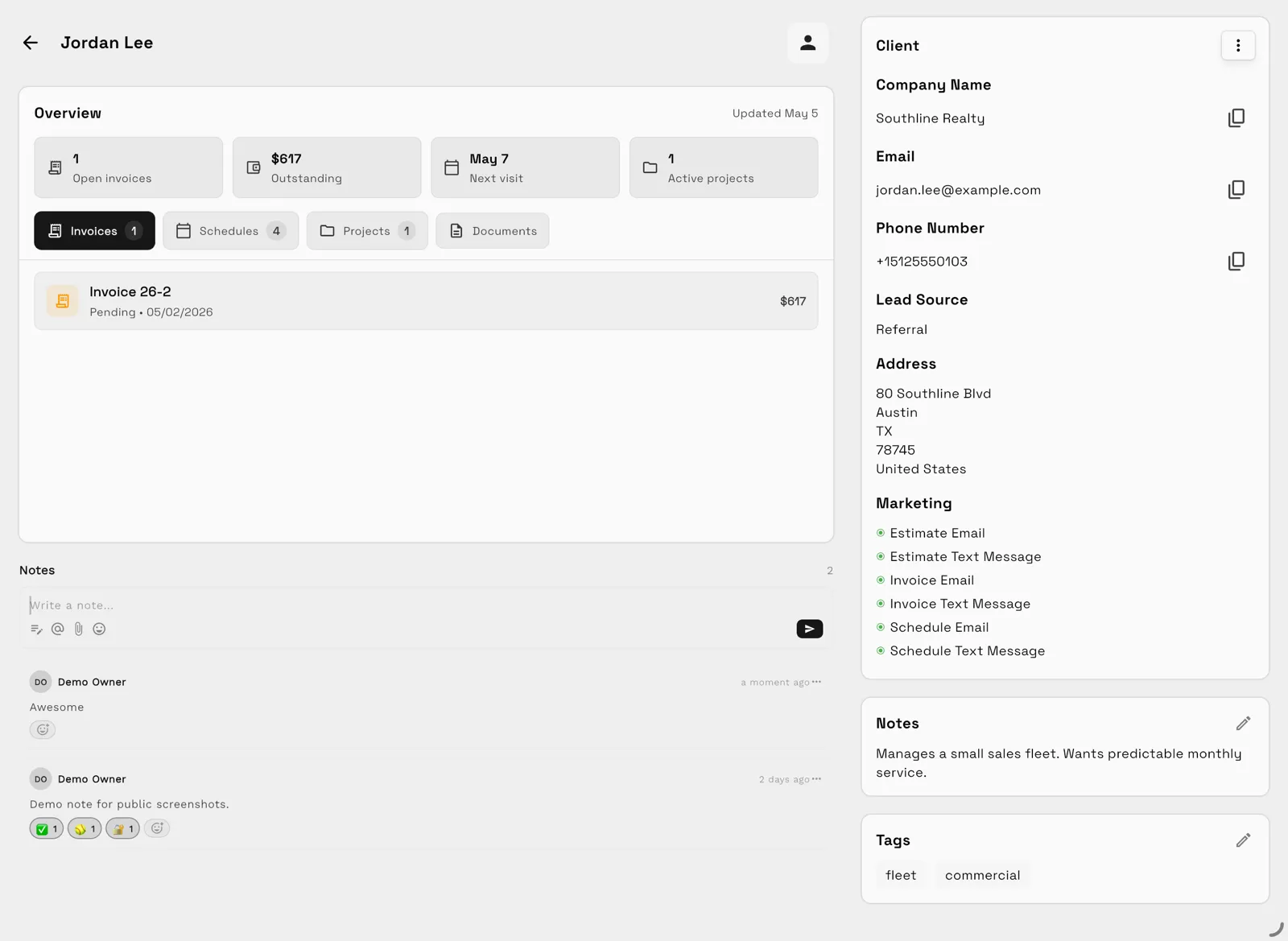
Workspace369 puts the client company, a proposal the sponsor approves and signs online with a deposit on acceptance, retainers and payment schedules, time tracking with timesheets, a private client portal and invoices on one record, and all of it is listed on every plan. Cadet is $29 a month ($23.25 billed yearly) for one seat. Custom fields hold the sponsor, renewal date and advisory-versus-execution split, and the Companies record keeps each client organization and its people together. The screenshot is a demo record, not a customer result.
Limitations: Cadet allows 5 active projects and one seat, so two tracks per client fills it after two or three clients; Voyager ($74 a month, $59.25 billed yearly) lifts the project cap and adds a second seat. Roles and client-scoped access are listed on every plan but only matter once a second person has a seat, and extra seats ($10 a month) start at Voyager. Bonsai Essentials and Moxie Starter have lower entry prices on both billing views. It has no compliance certification claim, so keep sensitive records elsewhere. The 14-day trial needs a card.
Best for: solo fractional executives, or a pair on Voyager, who bill retainers and want proposals, time, portal and invoices without extra apps.
We put Workspace369 first for a solo executive because custom fields and client-scoped access are on every plan, whereas Bonsai gates custom fields at Premium and custom permissions at Elite; Bonsai is the better pick if price per user and unlimited projects matter more.
2. Bonsai, best for per-user contracts and invoices
Bonsai prices per user. Basic is $15 a month ($9 billed yearly) with time tracking, tasks, unlimited projects and a CRM. Essentials is $25 a month ($19 billed yearly) and adds invoices and payments, proposals and contracts, forms, scheduling, a client portal and expense tracking. Premium is $39 a month ($29 billed yearly) and adds deals pipeline, custom fields, client tasks and messaging, profit and productivity reports and integrations. Elite is $59 a month ($49 billed yearly), needs three users, and adds custom permissions. The trial is 7 days, then Bonsai asks for card details to continue.
Limitations: Basic cannot send an invoice, so trial Essentials. Custom fields and client messaging start at Premium, which is a higher cost than Workspace369 Cadet on either billing view ($39 against $29 monthly, $29 against $23.25 yearly). Custom permissions start at Elite with its three-user minimum, so limiting a team's view of each client costs more.
Best for: fractional executives who want contracts, invoices and hourly tracking in one per-user plan and may add a contractor later.
3. Moxie, best for the lowest invoicing entry price
Moxie lists Starter at $12 a month ($10 a month, $120 charged annually, in the yearly view). Starter lists client and project management, invoicing and payments, proposals, quotes and contracts, time tracking, a sales pipeline, basic accounting, forms and meeting schedulers. Pro is $25 a month ($20 a month, $240 charged annually) and adds the white-labeled client portal, a custom domain, workflow automations and project collaborators. Teams is $40 a month ($32 a month, $385 charged annually) for up to five team members. The page title promises a 14-day free trial; card terms are not stated.
Limitations: the white-labeled portal sits on Pro, so a sponsor-facing view costs $25 monthly, close to Workspace369 Cadet at $29. Recurring billing is not named on the page; check it before planning a retainer. It is aimed at freelancers, so deeper client-company structure is thinner.
Best for: a new fractional executive with one or two clients who wants proposals, time and invoices at the lowest entry price among plans that can send an invoice and can send sponsor updates manually.
4. HoneyBook, best for packaged engagements
HoneyBook Starter is $36 a month ($29 a month billed yearly) and lists unlimited clients and projects, invoices and payments, proposals and contracts, a client portal and basic reports. Essentials is $59 a month ($49 billed yearly) and adds unlimited Scheduler sessions (Starter allows 1), automations and up to 2 team members. The FAQ gives a 30-day free trial with no credit card required, and the page lists a 60-day money-back guarantee.
Limitations: time tracking is not listed on the pricing page, so day-rate or hour-capped retainers need a separate tracker. Starter allows up to 2 live lead forms. Starter costs more than Workspace369 Cadet on both billing views ($36 against $29 monthly, $29 against $23.25 billed yearly).
Best for: fractional executives who sell fixed-fee diagnostics or packaged sprints rather than logged time.
5. Pipedrive, best for the new-engagement pipeline
Pipedrive is per seat. Lite is $24 a month ($14 a month, $168 per seat a year, billed annually) with lead, calendar and pipeline management. Growth is $49 ($39 yearly) and adds email sync, automations and subscriptions and installments. Premium is $79 ($59 yearly) and adds quotes, proposals and contracts with e-signatures. The trial is 14 days with no credit card required.
Limitations: no client portal, time tracking or invoicing is listed on the plans, so delivery and billing live elsewhere. Proposals and contracts start at Premium. A Projects add-on exists on the page, but check its price in the trial, since the page does not state which billing view the figure uses.
Best for: fractional executives who spend much of the week selling new engagements and already have separate delivery and billing tools.
6. HubSpot CRM, best as a free contact base
HubSpot's pricing page lists a free CRM for up to 2 users, no credit card required. Starter has a list price of $20 per seat a month, and promotions on that page show lower new-customer offers that should not be used for planning. The page lists Starter limits such as up to 15 pipelines and up to 50 workflows, but it does not list proposals, invoices, a client portal or time tracking.
Limitations: it does not replace delivery or billing, and Starter is priced per seat, so a second person adds a second seat charge. Treat any limited-time new-customer offer on the page as promotional rather than the price you will plan around, and confirm in the trial which Starter features you actually need. For a fractional executive, the useful role is the contact list and the deal pipeline of prospective engagements, with delivery, time and invoices handled by another tool on the same sponsor record.
Best for: a fractional executive who needs a free contact and deal list beside another tool for the work itself.
Side-by-side comparison
| Tool | Entry price (monthly) | Billed yearly | Time tracking on entry plan | Main entry-plan limit | Trial |
|---|---|---|---|---|---|
| Workspace369 | $29 (Cadet) | $23.25 a month | Yes | 5 active projects, 1 seat | 14 days, card required |
| Bonsai | $25 (Essentials; Basic $15 / $9 has no invoices) | $19 a month per user | Yes | Per user; Basic has no invoices | 7 days, card to continue |
| Moxie | $12 (Starter) | $10 a month | Yes | White-labeled portal on Pro | 14 days, no card |
| HoneyBook | $36 (Starter) | $29 a month | Not listed | 2 live lead forms | 30 days, no card |
| Pipedrive | $24 (Lite) | $14 a month per seat | Not listed | Proposals from Premium | 14 days, no card |
| HubSpot CRM | $0 (Free) | $0 (Free) | Not listed | Free for up to 2 users; Starter lists at $20 per seat | None stated, no card |
Which tool fits your practice?
| If you mostly need | Start with | Why |
|---|---|---|
| Retainers, time, portal and invoices on one record | Workspace369 | All listed on every plan, one seat on Cadet |
| Contracts and invoices priced per user | Bonsai | Essentials lists proposals, contracts, invoices and a portal |
| The lowest entry price among plans that can send an invoice | Moxie | $12 monthly, $10 billed yearly |
| Fixed-fee packaged engagements | HoneyBook | Proposals, contracts and payments on Starter |
| A pipeline of new engagements | Pipedrive | Per-seat deal pipeline; proposals from Premium |
| A free contact list | HubSpot CRM | Free for up to 2 users |
The sponsor-visibility test for any trial
Run the same fictional engagement in each trial. Create two client companies with a different sponsor each. Give the first an advisory project and an execution project with separate tasks. Send a proposal with a monthly fee and a deposit, log a few hours against the execution project and issue the first invoice. Then open the client portal as the first sponsor. The test passes only if that sponsor sees their own tasks, files and invoice and nothing from the second company. It fails if any cross-client data shows. If the tool cannot separate advisory from execution, a sponsor's update on a supply-chain task will bury the strategy conversation that renews the contract.
Inspect the fractional executive client record
Use the fractional executives (cmo/cfo/coo) product overview to see the agreement, responsible person, related work and invoice on one client. Prepare the scope with Proposals, keep follow-up in communications, and check the billing record under invoices. When a sponsor asks for extra work, the free scope-change request builder drafts the written change before you log more time. The retainer pricing calculator helps with the monthly fee.
Configure the handoff and follow-up
Workspace369 includes client custom fields and CSV client import on every plan, plus webhooks and the API from Specialist. Map your record types and fields before migration. Workflow Automations create tasks, send email, issue reminders and notify the right people; Cadet allows up to 3 active workflows, Voyager 10 and SMS steps start at Voyager. Run a simulated test before you switch a workflow on. Review Workflow Automations.
Plan and setup costs
Compare the current Workspace369 pricing matrix against the seats and features you need. Plans run from one seat on Cadet to 50 on Enterprise. Payment plans, expense tracking and online booking start at Specialist ($149 a month), which also adds AR aging and project and customer profitability. Cadet through Commander start with a 14-day free trial that requires a card. Recommendations here are conditional on the workflow described; Pipedrive and HubSpot are adjacent sales tools rather than direct delivery equivalents.
Sources reviewed for this guide
- Workspace369 pricingPlan matrix reviewed October 23, 2026.
- Bonsai pricingOfficial pricing page reviewed October 23, 2026 for per-user prices in both billing views, plan features and trial terms.
- Moxie pricingOfficial pricing page reviewed October 23, 2026 for monthly and yearly prices, plan features and the trial length in the page title.
- HoneyBook pricingOfficial pricing page reviewed October 23, 2026 for monthly and yearly prices, Starter features and trial terms.
- Pipedrive pricingOfficial pricing page reviewed October 23, 2026 for monthly and yearly per-seat prices, proposals and trial terms.
- HubSpot CRM pricingOfficial pricing page reviewed October 23, 2026 for the free plan and the Starter list price.
Workspace369 publishes this documentation-based comparison and is one of the options. It is not an independent ranking or a hands-on benchmark.
Run client follow-up in one workspace.
CRM, inbox, voice, invoicing, payments, projects, files, AI, and workflow automations — connected instead of exported.
14-day free trial. Card required. After the trial: from $29/month. Renews automatically every month until you cancel. Cancel anytime in Settings → Billing.