Best CRM for Management Consultants 2026: Intro to Retainer
Six tools for solo and boutique management consultants compared on price at five seats, relationship tracking, proposals, deposits and retainer billing.
We make Workspace369 and list it first here. Weigh our ranking with that in mind, and if another tool fits you better, use it.

By Simon Dziak, Founder, Workspace369 · LinkedIn
The best CRM for management consultants, per the Workspace369 solution page, follows your sales path: introduction, paid diagnostic, proposal, deposit, then an advisory retainer. Among these six, Workspace369 is the only one whose published pricing lists proposals, deposits, retainer schedules, time tracking and a portal together, so it ranks first for firms of one to ten. Folk and HubSpot are stronger for relationship tracking; Accelo suits firms that want forecasting and capacity planning and accept a custom quote. For the broader view, see the best CRM for consultants guide, compare Workspace369 pricing and price your retainer with the free retainer pricing calculator.
Disclosure and method: Workspace369 publishes this guide and is one of the options, and we rank it first only for the reader described above. It is a documentation-based shortlist, not a hands-on benchmark. Official vendor pricing pages were reviewed on October 22, 2026, except Pipedrive, whose page could not be read on October 22, 2026 and keeps its October 17, 2026 figures. Check current plans with each vendor before you buy.
Key takeaways
- Management consulting sells on introductions, so judge a tool on how it carries one introduction through a paid diagnostic, a proposal, a deposit and a retainer without re-keying the client.
- Workspace369 Cadet is $29 a month ($23.25 billed yearly) for one seat; Specialist is $149 a month for ten seats. Proposals, deposits, retainer payment schedules, time tracking and a client portal are on every plan.
- Folk Standard is $24 per member per month billed yearly and HubSpot Sales Hub Starter is $20 per seat per month at list price, but neither lists a retainer billing schedule on its pricing page.
- Pipedrive lists contracts and e-signatures only on Premium ($59 per seat per month billed annually); Copper Basic is $23 per seat per month paid annually with a 2,500 contact limit.
- Accelo publishes no price, only a custom quote, so budget by asking for a quote at your seat count.
What's inside?
What a CRM for management consultants is (and what it is not)How we compared these toolsThe best CRM for management consultants in 2026Side-by-side comparisonWhich tool fits your firm?Run an introduction-to-retainer test during the trialInspect the management consultants client recordPlan and setup costsSources and review scope
What a CRM for management consultants is (and what it is not)
A CRM for management consultants is the client-facing business layer of an advisory practice: who referred whom, which diagnostic is in flight, what was agreed, what is deposited and what is due on the retainer. It is not a project portfolio tool, a resource scheduler for fifty people or a data room for client analysis, and none of the six options replaces your modelling and document tools. Keep sensitive client data in the systems your engagement letters name, and check each vendor's security documentation yourself.
This guide covers the introduction-to-retainer path of a firm of one to ten. It does not repeat the scope-expansion test in CRM for cybersecurity consultants or the broader consulting firm software comparison, so read those if your problem is changing scope or running a larger delivery team.
How we compared these tools
We compared the six on five criteria, using each vendor's own pricing page and the Workspace369 plan matrix:
- Price at five seats, on the billing view named in each entry.
- Relationship tracking: can you record referrers and keep a contact history, or only deals?
- Proposal and deposit: does the plan list a way to send a proposal for approval and collect money upfront?
- Retainer billing: is there a documented recurring or scheduled invoice on the plan?
- Delivery: are time tracking, projects and a client portal listed, and on which plan?
We did not test any tool, measure speed or review security. Pricing pages that show conflicting toggle labels are reported as ranges, and any figure we could not read says See site.
The best CRM for management consultants in 2026
1. Workspace369, best for solo and boutique firms that sell by proposal and bill retainers
Workspace369 keeps the client record, lead capture, Proposals the client approves online, deposits on acceptance, retainers and payment schedules, time tracking, a client portal and invoices together. Cadet is $29 a month for one seat ($23.25 billed yearly) with 5 active projects; Voyager is $74 for two seats with unlimited projects; Specialist is $149 for ten seats and adds project and customer profitability reports. Extra seats are $10 a month from Voyager, so five seats on Voyager is $104 a month; Specialist at $149 includes ten.
Limitations: the plan matrix lists lead capture and request tracking on every plan, with each request's channel (form, funnel or page) recorded and UTM parameters captured in hidden form fields, and lead-source tagging on clients from Voyager, but no contact enrichment, email sequences or LinkedIn extension, which Folk and HubSpot document. Cadet is one seat. The 14-day trial needs a card. Online booking, expenses and payment plans start at Specialist, and SMS and calls start at Voyager.
Best for: a partner or small firm that wants one price covering proposal, deposit, retainer schedule, time and invoice.
2. Accelo, best for firms that want a full services platform and will take a quote
Accelo states that pricing is based on team size and growth goals, with a custom quote and no published plan prices. Its pricing page says plans include implementation guidance, onboarding support and the full platform, and describes revenue forecasts from pipeline and project data, capacity planning and live delivery health across projects. Most teams, it says, are running within weeks.
Limitations: no price is public, so you cannot budget from this guide, and a structured onboarding is more process than a two-person firm may want. Ask the vendor what a ten-person quote covers.
Best for: firms of five to ten that want revenue forecasts, capacity planning and delivery health in one platform, and will take a quote and a structured onboarding.
3. Folk, best for relationship-led selling
Folk lists Standard at $24 per member per month billed yearly ($288 a year) and Premium at $48 ($576 a year); Enterprise starts at $80. Standard lists pipeline management, email campaigns, contact enrichment, a LinkedIn extension, and email, calendar and WhatsApp sync. Premium adds custom objects and deals, email sequences, workspace roles, dashboards and API access. Prices are from the annual view; the page offers a monthly view too.
Limitations: the pricing page lists no proposals, time tracking or invoicing, so delivery needs a second tool. At five members Standard is $120 a month billed yearly before that tool.
Best for: partners whose pipeline is a web of introductions and who want warm-contact history in one place.
4. HubSpot, best for firms that already run marketing and want a forecasting pipeline
HubSpot Sales Hub lists a Free tier at $0, free for up to 2 users with no credit card required. Starter is $20 per seat per month at list price, with limited-time offers for new customers; Professional is $90 to $100 per seat per month and the page notes a required one-time Professional onboarding fee of $1,500. Professional lists deal progression, forecasting and sequences.
Limitations: the pricing pages reviewed list no proposals, retainer billing or time tracking, and Professional at five seats is $450 to $500 a month plus the onboarding fee. Free tiers cap at two users.
Best for: a boutique firm with a marketing function and several partners working the same accounts.
5. Pipedrive, best for a simple deal board with e-sign on Premium
Pipedrive lists Lite at $14, Growth at $39, Premium at $59 and Ultimate at $79 per seat per month billed annually (the annual view). Growth adds full email sync and automations. Premium lists contracts and e-signatures for quotes and proposals. A Projects add-on is sold separately, see site. The trial is 14 days with no credit card. Growth also lists subscription and installment tracking with forecast reports, which maps loosely to a recurring advisory fee. These figures were last read on October 17, 2026; the page could not be read on October 22, 2026.
Limitations: proposals with e-signatures need Premium, which is $295 a month at five seats billed annually. The page lists no time tracking, retainer billing or invoicing.
Best for: teams that want a clean deal board and will pair it with a separate billing tool.
6. Copper, best for firms that live in Google Workspace
Copper is positioned as a Google Workspace CRM. Basic is $23 per seat per month paid annually ($29 monthly) with a 2,500 contact limit, pipelines, task automation and project management; Professional is $59 ($69 monthly) and adds workflow automation, bulk email and reporting; Business is $99 ($134 monthly). The page says to start free, no credit card required. Professional lists 15,000 contacts and Business unlimited contacts, which matters only if you hold a large alumni or prospect list.
Limitations: the page lists no proposals, time tracking or invoices, and Basic caps contacts at 2,500. At five seats Basic is $115 a month billed annually.
Best for: firms that already work in Gmail and Calendar and want the CRM inside them.
Side-by-side comparison
| Tool | Entry price | At five seats | Proposal and deposit | Retainer billing | Time tracking |
|---|---|---|---|---|---|
| Workspace369 | $29/mo Cadet ($23.25 yearly), 1 seat | $104/mo Voyager plus 3 extra seats | Yes, every plan | Yes, every plan | Yes, every plan |
| Accelo | See site (custom quote) | See site | See site | See site | See site |
| Folk | $24/member/mo billed yearly | $120/mo billed yearly | Not listed | Not listed | Not listed |
| HubSpot | $0 Free (2 users); Starter $20/seat (list) | $100/mo Starter at list price | Not listed | Not listed | Not listed |
| Pipedrive | $14/seat/mo billed annually | $295/mo Premium for e-sign | Premium | Not listed | Not listed |
| Copper | $23/seat/mo paid annually | $115/mo Basic | Not listed | Not listed | Not listed |
"Not listed" means the pricing page reviewed does not name the feature, not that the product lacks it. Confirm with the vendor.
Which tool fits your firm?
| Your situation | Start with |
|---|---|
| Solo partner selling diagnostics and retainers | Workspace369 Cadet |
| Two to ten consultants who want one price for delivery and billing | Workspace369 Specialist or an Accelo quote |
| Pipeline is mostly introductions and warm contacts | Folk |
| Several partners, marketing function, forecasts matter | HubSpot |
| You only need a deal board and e-sign on proposals | Pipedrive Premium |
| Work runs inside Google Workspace | Copper |
Run an introduction-to-retainer test during the trial
Take one fictional referral through each trial and count the times you re-enter the client. Log the referrer, send a diagnostic proposal with a deposit, convert acceptance into a six-month retainer, record two weeks of time and issue the first invoice. If scope grows after kickoff, the scope-change request builder is a free way to document it.

Use demo data only. The tool passes if the referrer, proposal, deposit, retainer schedule, time and invoice all appear on one client record.
Inspect the management consultants client record
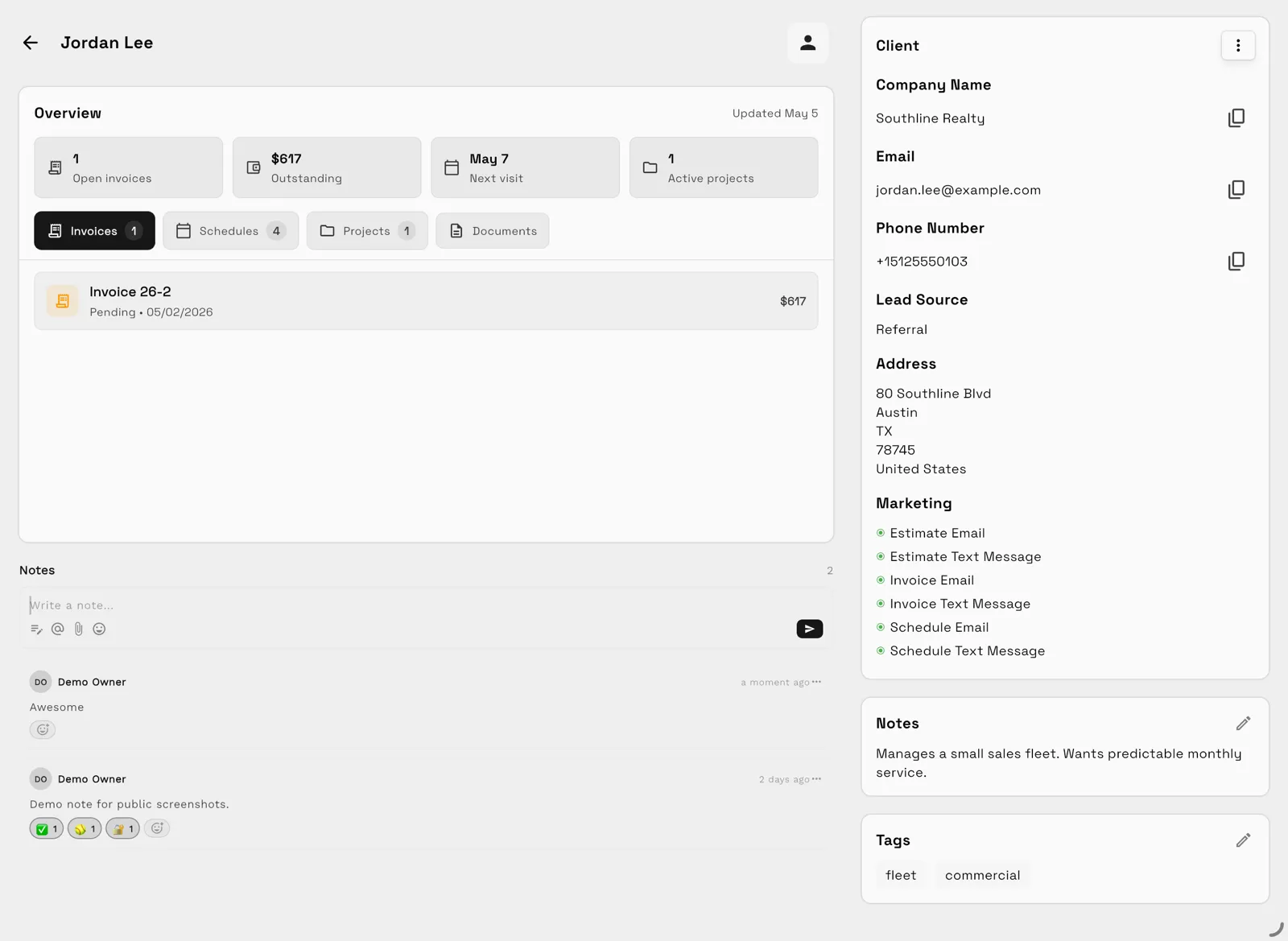
Demo data, not a customer outcome or specialist industry interface.
Use the management consultants product overview to locate the agreement, responsible person, related work and invoice, and check the consulting rate calculator before you set retainer fees.
Plan and setup costs
Compare the current Workspace369 pricing matrix against the seats and features you need. SMS and calls start at Voyager; online booking, expense tracking and payment plans start at Specialist. Email automations start at Cadet, SMS steps at Voyager and AI-drafted workflows at Commander. Plans run from one seat on Cadet to 50 on Enterprise, and Cadet through Commander start with a 14-day free trial that requires a card.
Sources and review scope
Official vendor pricing pages were reviewed on October 22, 2026, except Pipedrive (the page could not be read on October 22, 2026; figures are from October 17, 2026). Recommendations are conditional on the workflow described; some products are relationship or deal tools rather than delivery tools.
Sources reviewed for this guide
- Workspace369 pricingPlan matrix reviewed October 22, 2026.
- Accelo pricingOfficial pricing page reviewed October 22, 2026 for pricing model and onboarding terms; no plan prices are published, see site.
- Folk pricingOfficial pricing page reviewed October 22, 2026 for Standard, Premium and Enterprise prices and included features (annual view).
- HubSpot Sales Hub pricingOfficial pricing page reviewed October 22, 2026 for Free, Starter and Professional prices; billing toggle labels conflict, so ranges are given.
- Pipedrive pricingOfficial pricing page reviewed October 17, 2026 for Lite, Growth, Premium and Ultimate prices (annual view) and trial terms; the page could not be read on October 22, 2026 (access blocked), so these figures are from the earlier review.
- Copper pricingOfficial pricing page reviewed October 22, 2026 for Basic, Professional and Business prices (annual and monthly views) and trial terms.
Workspace369 publishes this documentation-based comparison and is one of the options. It is not an independent ranking or a hands-on benchmark.
Run client follow-up in one workspace.
CRM, inbox, voice, invoicing, payments, projects, files, AI, and workflow automations — connected instead of exported.
14-day free trial. Card required. After the trial: from $29/month. Renews automatically every month until you cancel. Cancel anytime in Settings → Billing.