Best CRM for Marketing Consultants 2026: Retainers & Scope
Best CRM for marketing consultants: six tools compared on price, retainer and hours coverage, proposals, pipeline, scope changes and portals.
We make Workspace369 and list it first here. Weigh our ranking with that in mind, and if another tool fits you better, use it.

By Simon Dziak, Founder, Workspace369 · LinkedIn
The best CRM for marketing consultants carries one engagement from lead to proposal to a monthly retainer, with hours and scope changes beside the agreement. Workspace369 fits consultants who sell projects and then retainers, Moxie fits a low entry price, Bonsai fits per-user hourly billing, HoneyBook fits fixed packages, and Pipedrive fits a pipeline-first sales process.
Choosing for a bigger firm? Start with the broader best CRM for consultants guide, then come back here for the solo and small-team workflow. To price a monthly package first, use the free retainer pricing calculator.
Disclosure and method: Workspace369 publishes this guide and is one of the options. It is a documentation-based shortlist, not a hands-on benchmark. Official vendor pages were reviewed on October 26, 2026; Pipedrive's page blocked automated access and HoneyBook's monthly prices render client-side, so those numbers say See site. Check current plans with each vendor before you buy.
Key takeaways
- A marketing consultant CRM should carry one engagement from pipeline to proposal to monthly retainer on a single client record, with logged hours and scope changes beside the original agreement.
- Workspace369 Cadet at $29 a month ($23.25 billed yearly) lists retainers with an hours bank on time entries, recurring invoices, deposits on proposal acceptance, timesheets and a client portal; it is capped at one seat and 5 active projects.
- Moxie Starter ($12 a month, $10 billed yearly) lists a sales pipeline, proposals, time tracking and invoicing, and Bonsai Essentials ($25 a month, $19 per user billed yearly) lists retainer invoices and hourly project budgets; both are cheaper than Cadet for one user. Workspace369 Cadet's 14-day trial covers Cadet through Commander and needs a card.
- The pipeline stage is where the tools differ most: Moxie lists a sales pipeline on Starter, Bonsai needs Premium ($39 a month, $29 billed yearly) for a deals pipeline, and Workspace369 tracks intake requests and project stages rather than a deals board.
- Run one fictional retainer through each trial, push the month past its hours, send a priced scope change and confirm the logged time and the invoice agree.
What's inside?
What a CRM for marketing consultants is (and what it is not)How we compared these toolsThe best CRM for marketing consultants in 2026Side-by-side comparisonWhich tool fits your consulting business?Workspace369 in action for a retainer monthRun a retainer-and-scope test during the trialWhen to keep it simple
What a CRM for marketing consultants is (and what it is not)
A CRM for a marketing consultant is the business side of the engagement: who the lead is, what you proposed, what the client agreed to, how many hours the month includes, what you logged and what is still unpaid. It is not an ad platform, an analytics suite or an email marketing tool. Campaign numbers stay where they are produced. If a tool keeps contacts but leaves proposals, hours and invoices to other apps, the retainer agreement lives in an email thread and every extra request becomes free work.
How we compared these tools
We compared each tool on the same five points, using only the vendor's own pricing and product pages:
- Price for one person of the cheapest plan that lists proposals, monthly and billed yearly, as listed on October 26, 2026, plus a monthly figure for three people where the page allows it.
- Proposal and retainer coverage on that plan: proposals, retainer invoices or retainers, time tracking and turning logged time into an invoice.
- Pipeline and client-facing pieces: deal pipeline, client portal and contracts.
- Hard limits on the entry plan: seats, active projects, lead forms or per-user minimums.
- Trial terms: length, and whether the vendor says a card is needed.
We did not test speed, support, reliability or mobile apps, and did not use third-party ratings. Order reflects fit for a solo consultant or small consultancy that sells projects and then retainers. HubSpot is a contact and pipeline tool whose current quotes tool starts at Revenue Hub Professional and which lists no time tracking, so it sits last.
The best CRM for marketing consultants in 2026
1. Workspace369, best for consultants who bill retainers and manage scope changes
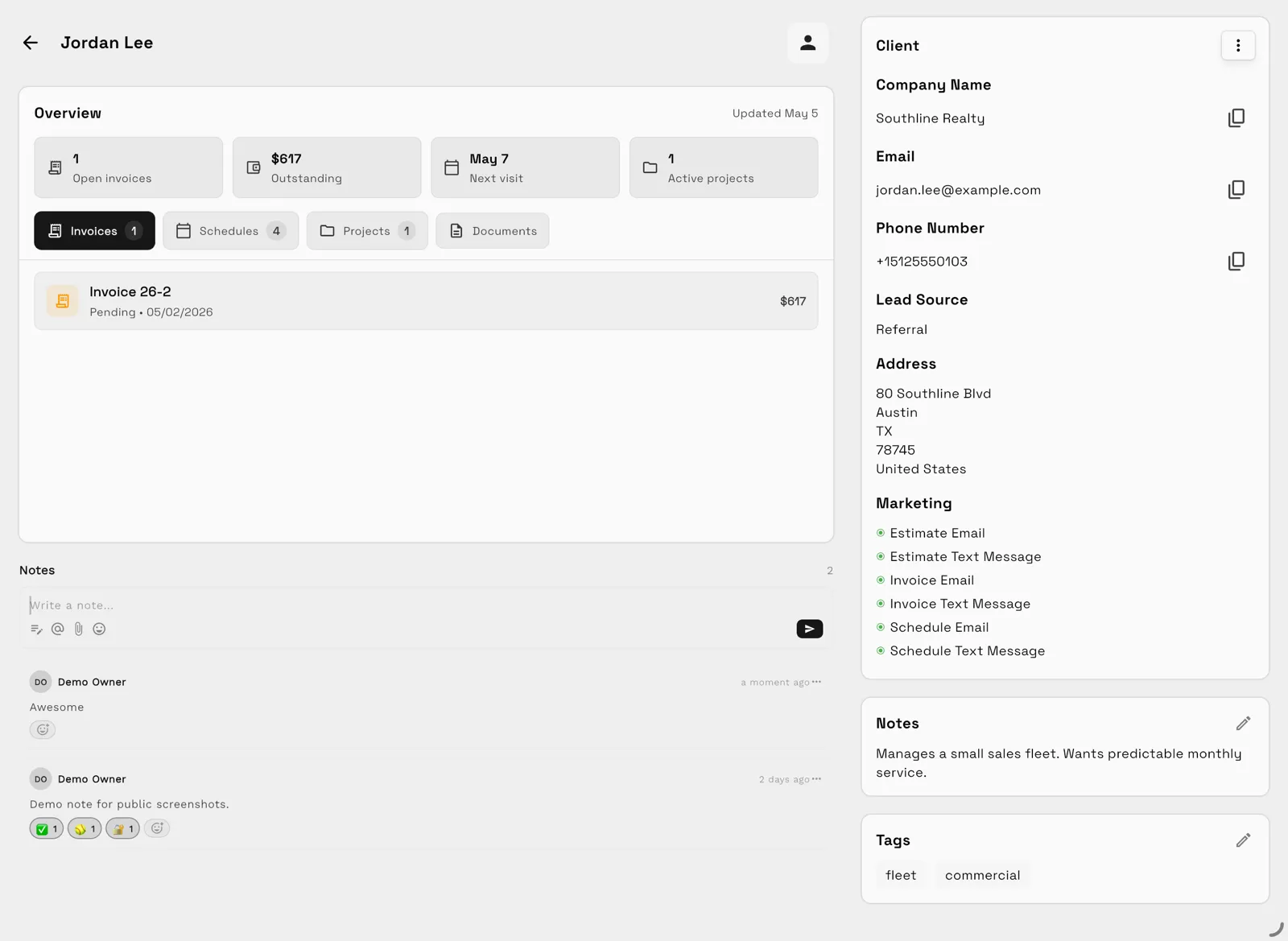
Workspace369 keeps the client record, a proposal the client approves online, retainers with an hours bank shown on each time entry, time tracking with timesheets, a private client portal and invoices in one place. Cadet is $29 a month for one person ($23.25 billed yearly) and lists retainers, recurring invoices, a deposit on proposal acceptance, billable time that turns into invoice lines and dashboards and reports. Change orders keep an accepted proposal locked and record each scope change as a versioned, client-approved addition; they start at Specialist ($149 a month, $119.25 billed yearly), so on Cadet and Voyager record a scope change as a new proposal. The screenshot is a demo record, not a customer result.
Limitations: Cadet allows one seat and 5 active projects, and Moxie and Bonsai are cheaper for one user. For a three-person consultancy Voyager is $74 a month with two seats plus $10 a month for the third ($84), and it is the first plan with lead-source tagging on clients, a shared inbox and texting (every request records whether it came from a form, funnel or page on every plan). There is no deals board: leads arrive through intake forms and request tracking and convert to clients. Dashboards cover invoices, payments and team activity (expense tracking starts at Specialist), not ad performance. Online booking starts at Specialist ($149 a month). The 14-day trial covers Cadet through Commander and needs a card.
Best for: solo consultants with up to five active engagements, or two-to-five-person consultancies on Voyager, who sell strategy projects and monthly retainers and want hours, portal and invoices in one record, with scope changes handled as new proposals on Cadet and Voyager and as change orders from Specialist.
2. Bonsai, best for hourly billing priced per user
Bonsai prices per user. Basic is $15 a month ($9 billed yearly) with time tracking, tasks, a CRM and unlimited projects. Essentials, at $25 a month ($19 billed yearly), adds invoices and payments, proposals and contracts, forms, scheduling and the client portal; its comparison table also ticks retainer invoices and hourly project budgets from Essentials. A deals pipeline starts at Premium ($39 a month, $29 billed yearly), which adds project insights, client tasks and messaging, and profit and productivity reports. Elite is $59 a month ($49 billed yearly) with a three-user minimum. For three people on monthly billing, Essentials is $75 a month, against $84 for Workspace369 Voyager.
Limitations: invoices, proposals and the portal are not in Basic, so the pipeline-to-retainer path needs Essentials, and the deal board needs Premium. Scope changes are not named as a feature on the pages we read. The 7-day trial asks for card details to continue.
Best for: consultants who bill by the hour or against project budgets and add collaborators one paid seat at a time.
3. Moxie, best for a low entry price
Moxie Starter is $12 a month, or $10 a month billed yearly ($120 charged annually). Its pricing page lists client and project management, invoicing and payments, proposals, quotes and contracts, time tracking, a sales pipeline, a custom form builder and meeting schedulers. That is the full pipeline-to-invoice path on the entry plan, and no other plan in this guide that lists proposals and invoicing has a lower monthly price. Pro is $25 a month ($20 billed yearly) and adds the white-labeled client portal, workflow automations, support ticketing and API integrations. Teams is $40 a month ($32 billed yearly, $385 charged annually) for up to five team members, so a small consultancy can stay on one flat price. The page title gives a 14-day free trial; card terms are not stated there.
Limitations: the white-labeled portal and automations start at Pro. Retainer billing, an hours cap and scope changes are not named on the page, so test a retainer month before you commit.
Best for: new consultants who want a pipeline, proposals, time and invoices at a low entry price and can handle retainers manually.
4. HoneyBook, best for packaged consulting offers
HoneyBook lists Starter at $29 a month billed yearly (the page's default view, labelled "save up to 18%"), with unlimited clients and projects, invoices and payments, proposals and contracts, a calendar, a client portal, basic reports and up to 2 live lead forms. Essentials ($49 a month billed yearly) adds a Scheduler (unlimited sessions; Starter allows 1), automations and up to 2 team members, and Premium ($109 a month billed yearly) adds unlimited team members. The Billed monthly prices render client-side, so we write See site for them, and the page shows percent-off promotional labels, which we do not use. The FAQ gives a 30-day free trial with no credit card required, and the page lists a 60-day money-back guarantee. If you sell fixed packages such as an audit or a strategy sprint, the inquiry-to-payment flow fits well.
Limitations: time tracking is not listed on the pricing page, so hours against a retainer need a separate tracker; confirm hours-to-invoice in the trial. Starter's comparison table lists a customizable pipeline and recurring invoice schedules. Automations and team members start at Essentials.
Best for: consultants who sell fixed-price packages rather than logged hours.
5. Pipedrive, best for a pipeline-first sales process
Pipedrive is a sales CRM priced per seat. Its pricing page blocked our automated request on October 26, 2026 (HTTP 403), so we could not re-read its plan prices, plan gates or trial terms, and every Pipedrive number here says See site. It is built around lead, calendar and pipeline management, which makes it the most pipeline-focused tool in this guide for a consultancy chasing many leads at once. Check which plan lists proposals and contracts before you buy.
Limitations: we could not confirm from the vendor's page whether it lists time tracking or invoicing, so assume the retainer and scope-change steps need other tools until you check.
Best for: consultancies with a steady stream of leads that value a deal board over delivery tools.
6. HubSpot, best as a free contact list
HubSpot's free tools are free for up to 2 users with no credit card required. Sales Hub Starter lists at a $20 per seat list price; the page also advertises a $7 offer for new customers for a limited time, which we do not use. The Starter list includes 500 calling minutes, up to 50 workflows with restricted triggers and actions, and task queues. Invoices can be created on every HubSpot plan, but the current quotes tool needs Revenue Hub Professional, and the pages list no time tracking, so HubSpot covers contacts and follow-up more than delivery.
Limitations: trial terms are not stated on the pricing page, and hours, retainers and scope changes would live in other tools, which splits the engagement across three places.
Best for: a consultant who needs only a free contact list and follow-up tasks beside separate billing and proposal tools.
Side-by-side comparison
| Tool | Price of the plan with proposals (monthly) | Billed yearly | Proposals and retainer coverage on that plan | Pipeline | Trial |
|---|---|---|---|---|---|
| Workspace369 | $29 (Cadet, 1 seat) | $23.25 a month | Proposals, retainers with hours bank, time tracking | Intake and request tracking, no deals board | 14 days on Cadet to Commander, card required |
| Bonsai | $25 per user (Essentials; Basic $15 has no proposals) | $19 per user a month | Proposals, retainer invoices, hourly budgets | Premium ($39 monthly, $29 yearly) | 7 days, card to continue |
| Moxie | $12 (Starter) | $10 a month | Proposals, time tracking, invoicing; retainers not named | Sales pipeline on Starter | 14 days, no card |
| HoneyBook | See site (Starter monthly) | $29 a month | Proposals, invoices and recurring schedules; time tracker: switched off Sep 8, 2026, restored Sep 15 | Customizable pipeline on Starter | 30 days, no card |
| Pipedrive | See site | See site | Not re-read: page blocked automated access | Lead, calendar and pipeline management | See site |
| HubSpot | $20 per seat (Starter list) | See site | Invoices on every plan; quotes need Revenue Hub Professional; no time tracking listed | Contacts, tasks and deal pipelines | Not stated; free tools need no card |
Which tool fits your consulting business?
| If you mostly need | Start with | Why |
|---|---|---|
| Retainer hours bank, scope changes, portal and invoices together | Workspace369 | Retainers and an hours bank on time entries on every plan; change orders from Specialist |
| Hourly or budget-based billing with collaborators | Bonsai | Retainer invoices and hourly budgets from Essentials, per-user pricing |
| A low entry price with a pipeline and proposals | Moxie | $12 a month, or $10 billed yearly, with a sales pipeline on Starter |
| Fixed-price packages with an easy inquiry flow | HoneyBook | Proposals, contracts and payments on Starter ($29 a month billed yearly) |
| Many leads and a deal board | Pipedrive | Pipeline-first; check plan gates on its site |
| Only a free contact list | HubSpot | Free tools for up to 2 users |
Workspace369 in action for a retainer month
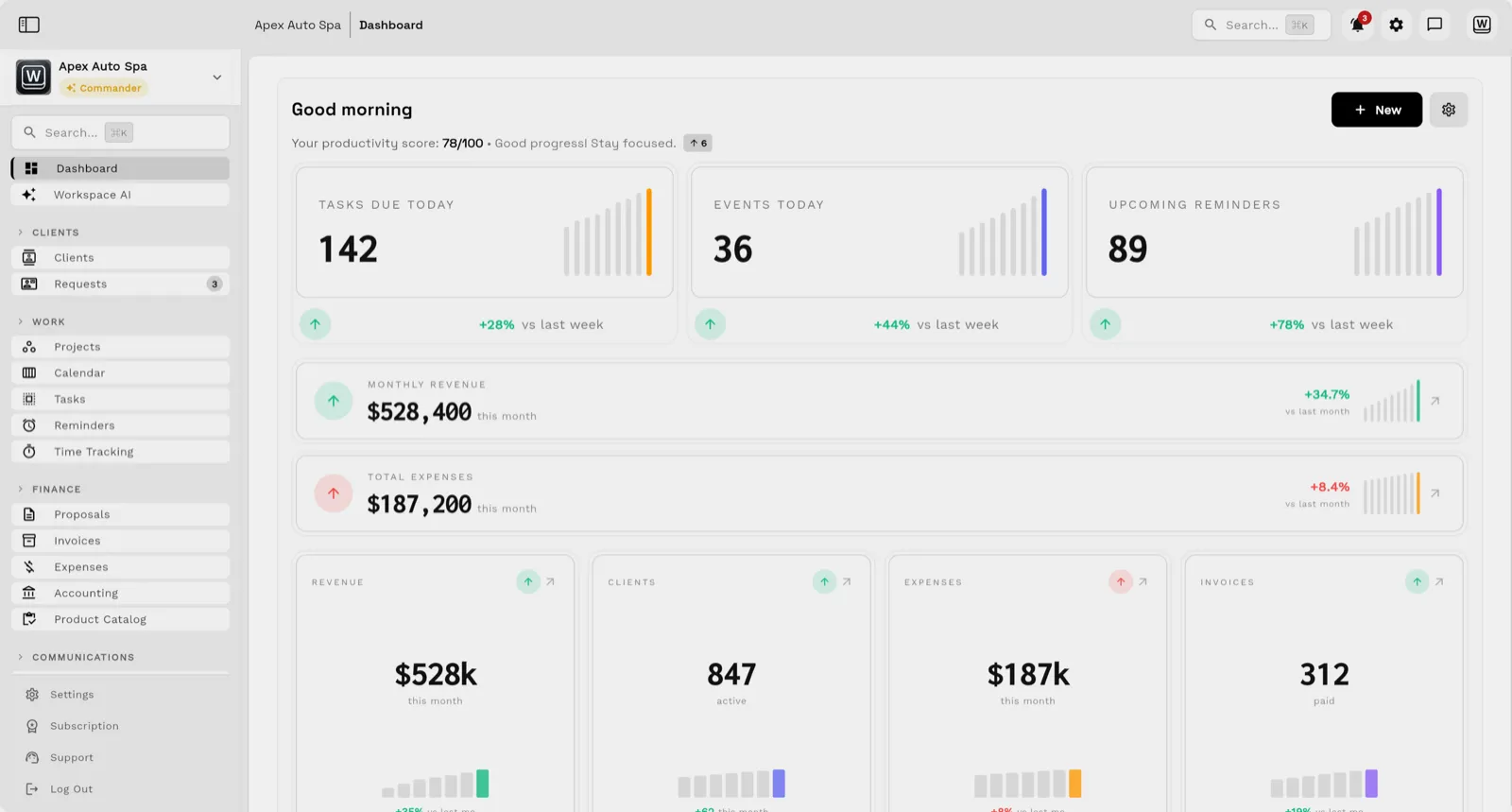
For a marketing consultant, a retainer month comes down to what was logged and what was billed. The first screenshot is the Workspace369 dashboard in a demo workspace with sample data (an auto-detailing business, not a consultancy). It shows tasks due, events and reminders, monthly revenue and expenses, and tiles for revenue, clients and invoices, with Time Tracking, Proposals and Invoices in the left menu. In your own setup, time tracking feeds the hours and the dashboards and reports show invoices, payments and activity; they do not show ad results, and the expenses figure needs Specialist or above.
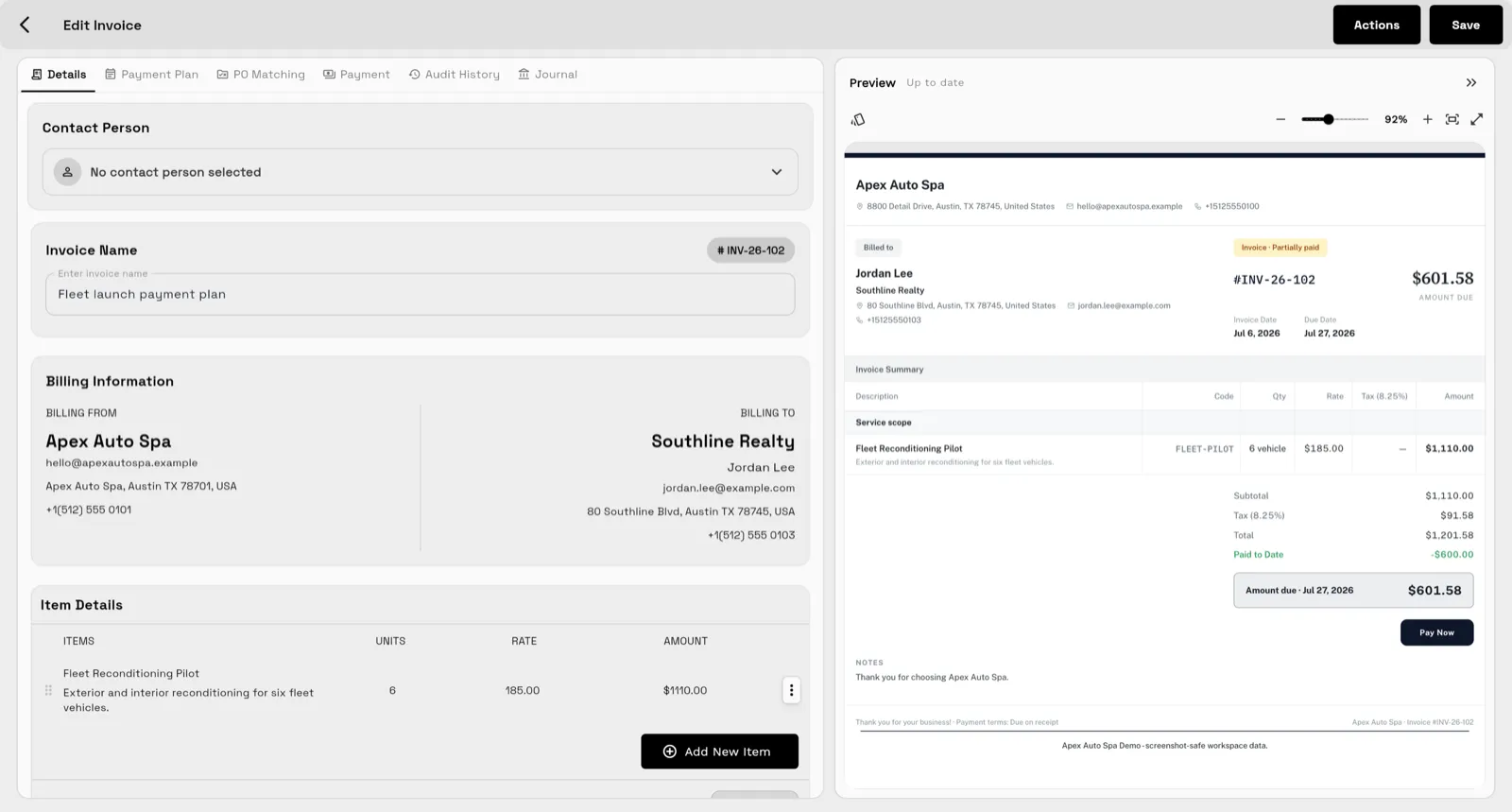
The second screenshot is the invoice editor in the same kind of demo workspace. It shows an invoice with one line item, a payment plan tab, an audit history tab and a live preview marked partially paid. A retainer invoice would carry the month's lines the same way, with logged time converted into lines. When the client asks for more, change orders record the approved addition beside the locked proposal from Specialist; on Cadet and Voyager, send a new proposal.
What it does not do: it does not pull in ad or analytics numbers, it has no deals board, and Cadet is capped at one seat and 5 active projects.
Run a retainer-and-scope test during the trial
Take one fictional client from first contact to a retainer month in each tool you shortlist:
- Create the lead and move it to proposal stage, or convert the intake request into a client.
- Send a strategy proposal with a deposit, and accept it as the client.
- Set up the monthly retainer with its included hours, then log time from two tasks.
- Push the month past the included hours and write the client a priced scope change.
- Turn the logged time and the approved change into an invoice.
- Export the client's records and check what comes out.
If you run the test, the best tool keeps the proposal, hours, scope change and invoice on one client record, and the invoice total matches your timesheet. Any mismatch is the leak this test is built to find. Draft the extra-work request first with the free scope-change request builder and set your day rate with the consulting rate calculator.

When to keep it simple
If you have two or three steady clients, a proposal template, a timer app and an invoice template can carry you a long way. Move to a client-work tool when two requests collide, when you cannot say what hours you agreed three months ago, or when you chase late payments by hand. The marketing consultants product page shows how Workspace369 handles proposals, communications and invoices, and the pricing page has current plans. Workspace369 also supports Workflow Automations for reminders and follow-ups, with email automations on every plan.
Before importing real clients, run one full month on demo data and check that your records can be exported.
Sources reviewed for this guide
- Workspace369 pricingPlan matrix reviewed October 26, 2026.
- Workspace369 retainers and recurring billingFeature page reviewed October 26, 2026 for retainer drawdown and the hours bank on time entries.
- Workspace369 change ordersFeature page reviewed October 26, 2026 for versioned scope changes and client approval by secure link.
- Moxie pricingOfficial pricing page reviewed October 26, 2026 for monthly and yearly prices, plan features and the 14-day trial in the page title.
- Bonsai pricingOfficial pricing page reviewed October 26, 2026 for per-user prices in both billing views, plan features, the retainer invoice and deals pipeline rows, and the 7-day trial.
- HoneyBook pricingOfficial pricing page reviewed October 26, 2026 for the yearly prices, plan cards, the comparison table and the 30-day trial in its FAQ. The Billed monthly prices render client-side and could not be read, so they are shown as See site.
- Pipedrive pricingOfficial pricing page requested October 26, 2026 and blocked automated access (HTTP 403), so prices, plan gates and trial terms could not be re-read and are shown as See site.
- HubSpot CRM pricingOfficial pricing page reviewed October 26, 2026 for the free tools limits, the Starter $20 list price and the new-customer offer (not used).
- HubSpot Sales Hub pricingOfficial pricing page reviewed October 26, 2026 for the Sales Hub Starter list price, Starter calling minutes, workflows and pipelines, and the Professional price and onboarding fee.
Workspace369 publishes this documentation-based comparison and is one of the options. It is not an independent ranking or a hands-on benchmark.
Run client follow-up in one workspace.
CRM, inbox, voice, invoicing, payments, projects, files, AI, and workflow automations — connected instead of exported.
14-day free trial. Card required. After the trial: from $29/month. Renews automatically every month until you cancel. Cancel anytime in Settings → Billing.