CRM for fractional executives (cmo/cfo/coo)

CRM for Fractional Executives with Dual Advisory and Execution Workflows

Fractional executives operate under a distinct model where they answer to an internal corporate sponsor while managing both high-level advisory strategy and day-to-day execution tasks. Running several engagements at once requires clear separation between companies. Workspace369 runs every engagement in one system, with client records, proposals, projects, a client portal and invoices for each company, so these multi-layered professional commitments never mix across clients.

Clientthe relationship and agreed brief
Worktasks with a responsible person
Billinginvoices and commercial context
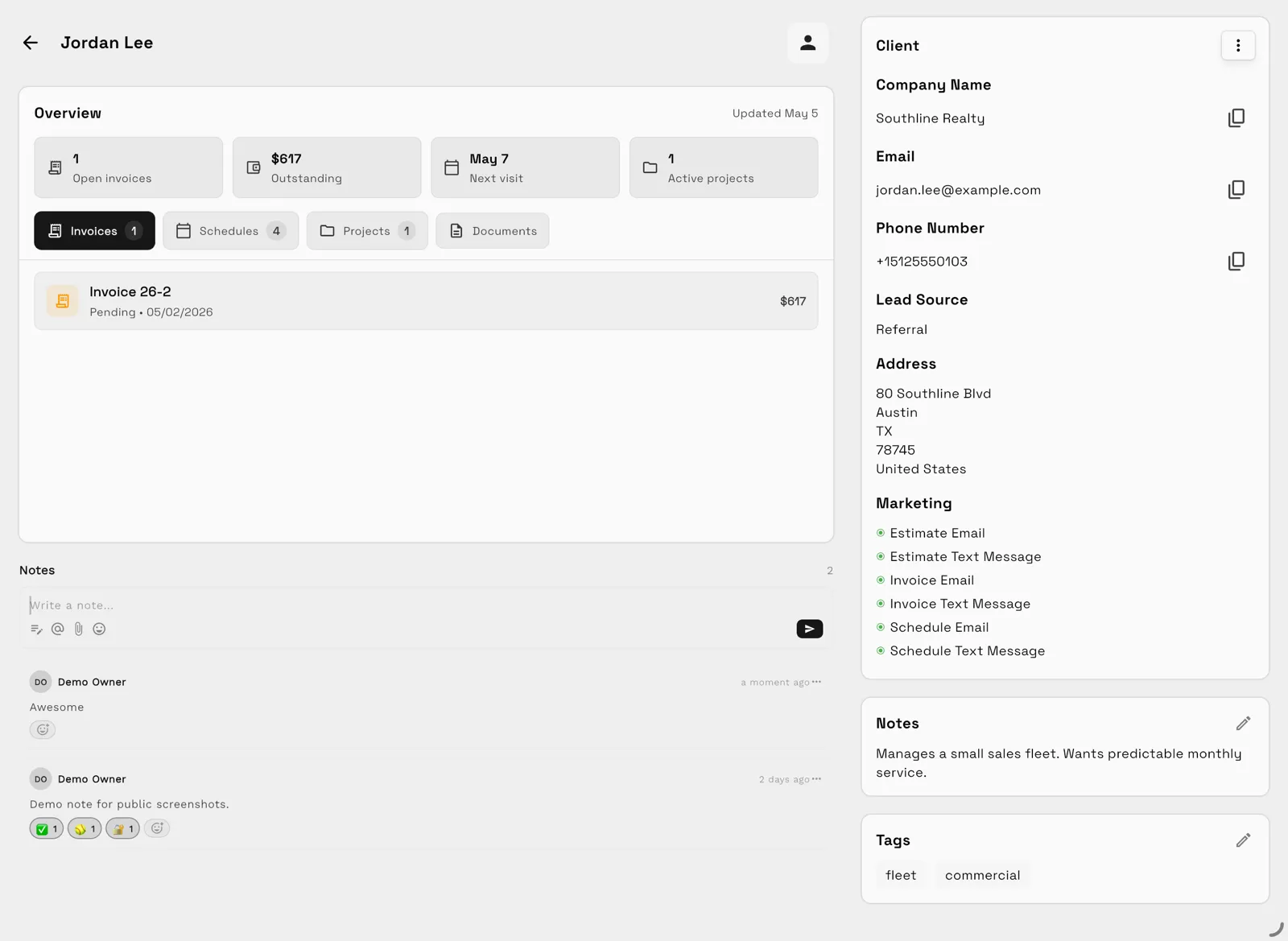
Workspace369 client record showing history, files, communication, and invoices in one profile

Key facts

CRM for fractional executives (cmo/cfo/coo) at Workspace369 covers 9 areas, including client records, proposals, projects and tasks.

The workflow runs in 5 steps, from "structuring client records and sponsors" to "scheduling reviews and issuing invoices".

Workspace369 starts at $29/mo for 1 seat, and the Commander plan includes 20 seats, 500 GB of storage, and 120,000 AI tokens per month at $299/mo.

Additional seats cost $10 each and 100 GB of additional storage costs $15; full pricing is public on the Workspace369 pricing page.

The problem

Operational Friction in Fractional Executive Engagements

Sponsor Alignment Disconnect

Sponsor Alignment Disconnect. A fractional executive needs to track specific corporate sponsors for every distinct advisory engagement. When client records fail to explicitly tie tasks and conversations to the primary internal sponsor, the executive risks executing initiatives that lack formal leadership backing, causing friction during regular governance reviews or strategy changes.
Mixed Advisory and Execution Deliverables

Mixed Advisory and Execution Deliverables. Fractional roles require delivering high-level strategy notes alongside concrete execution tasks. Mixing these distinct outputs without clear project boundaries makes it difficult to demonstrate the specific value delivered under each category, often leading corporate sponsors to question the allocation of fractional hours during monthly invoice reviews.

Unintentional Information Exposure

Unintentional Information Exposure. Board records, financial systems, and sensitive strategy documents require an intentional access model. Sharing them through loose folders and email threads can expose information across different client projects, violating non-disclosure agreements and damaging the fractional executive's professional standing and credibility.

Scope Creep in Invoicing

Scope Creep in Invoicing. Fractional CFOs and CMOs frequently perform tasks outside their original proposals due to urgent internal client requests. Without one system where a person can review active projects and tasks alongside the original approved proposals, invoicing becomes a manual reconciliation headache that delays payment and strains sponsor relationships.

The product

See the workspace your clients feel.

01

A portal clients actually check

Clients watch progress, files, and invoices in a branded portal instead of asking your team for updates.

Workspace369 client record showing history, files, communication, and invoices in one profile
02

Every channel in one inbox

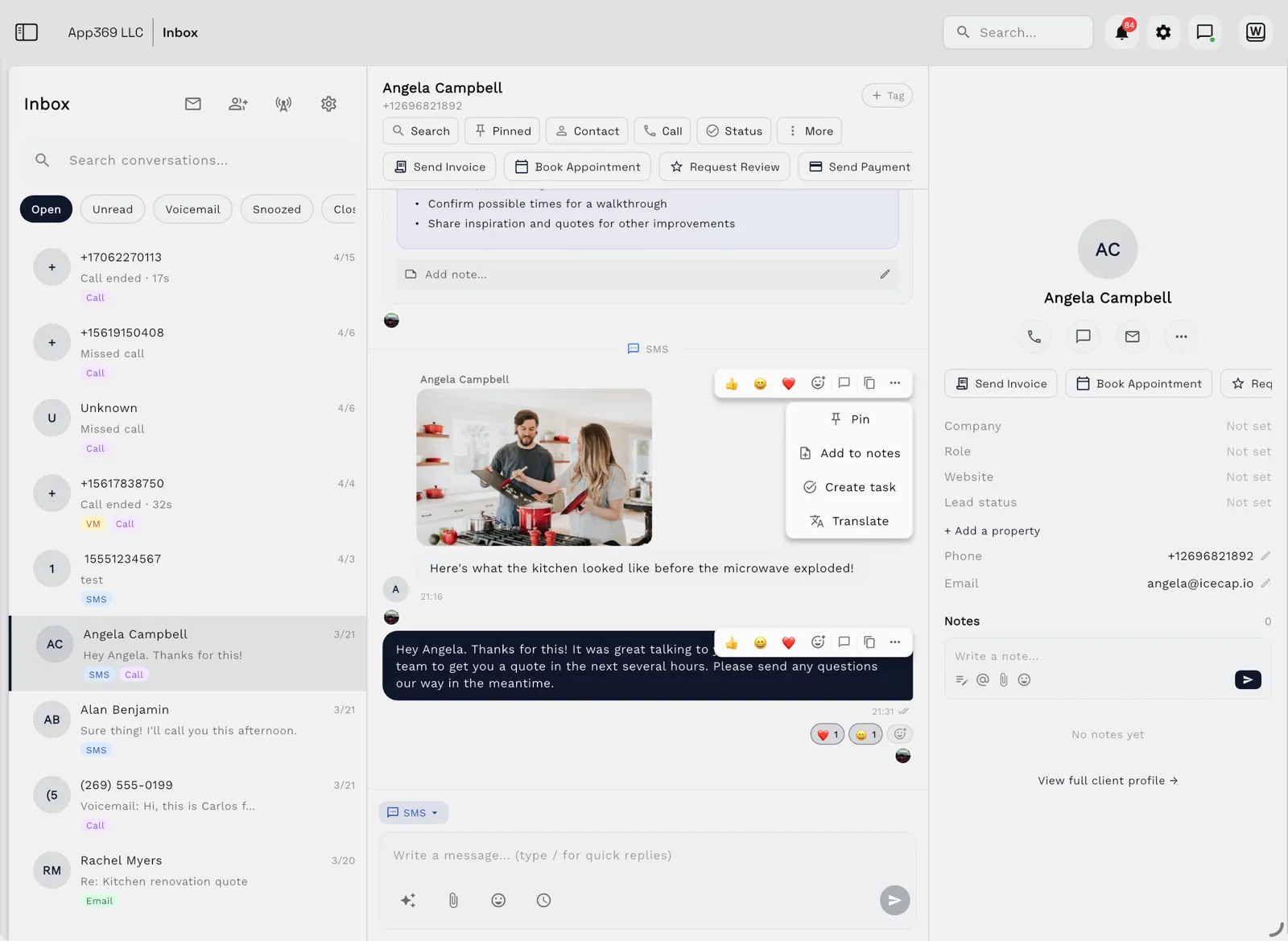
Email, SMS, calls, and voicemail land beside the client record — with AI summaries, so anyone on the team can reply with full context.

Workspace369 shared inbox showing email, SMS, and call history beside a client record
03

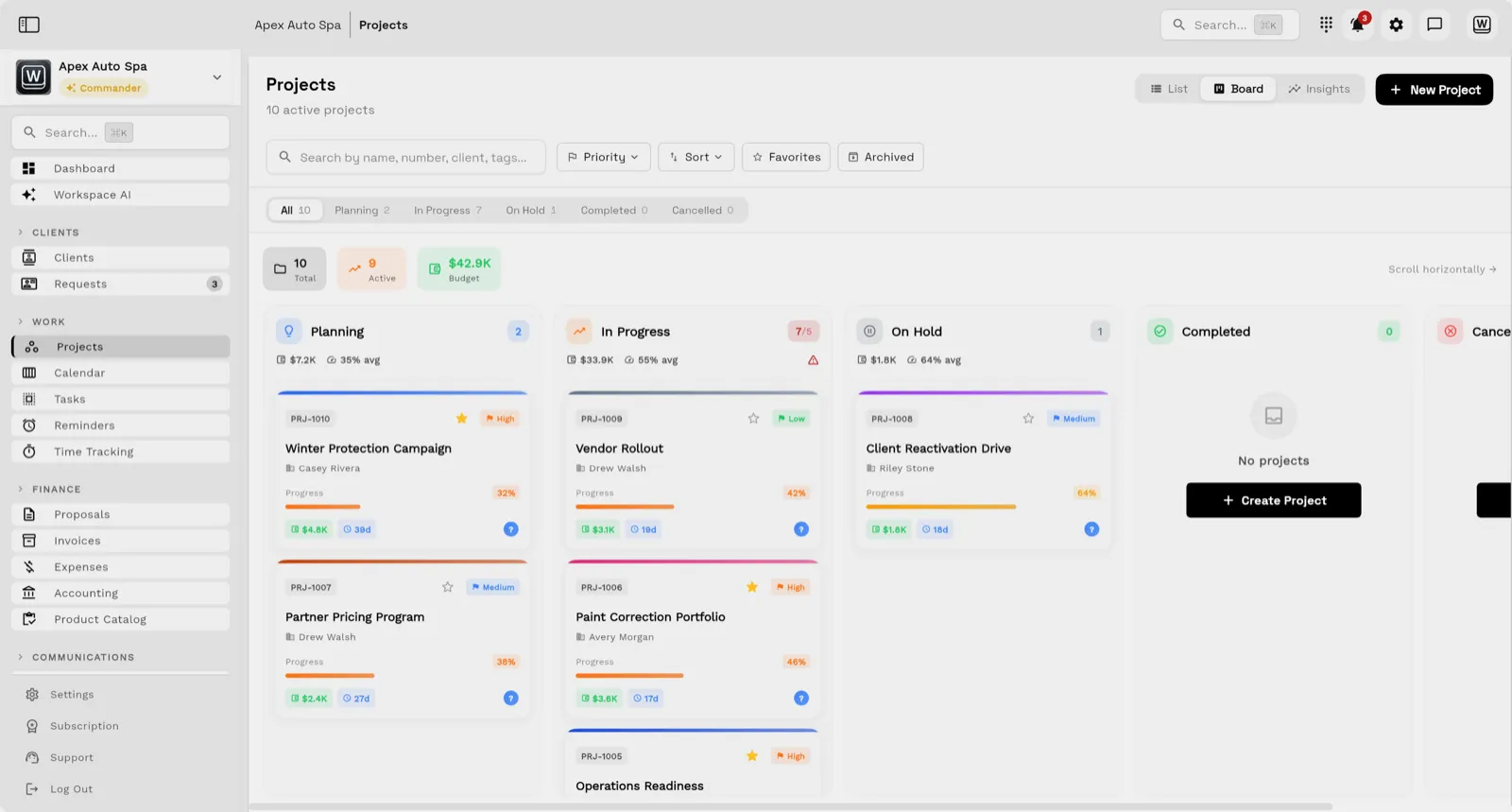
Client work, organized as projects

Tasks, files, and status for every engagement — visible to the team and, through the client portal, to the client.

Workspace369 project board showing client work organized into stages with owners and status
04

Proposals to paid invoices

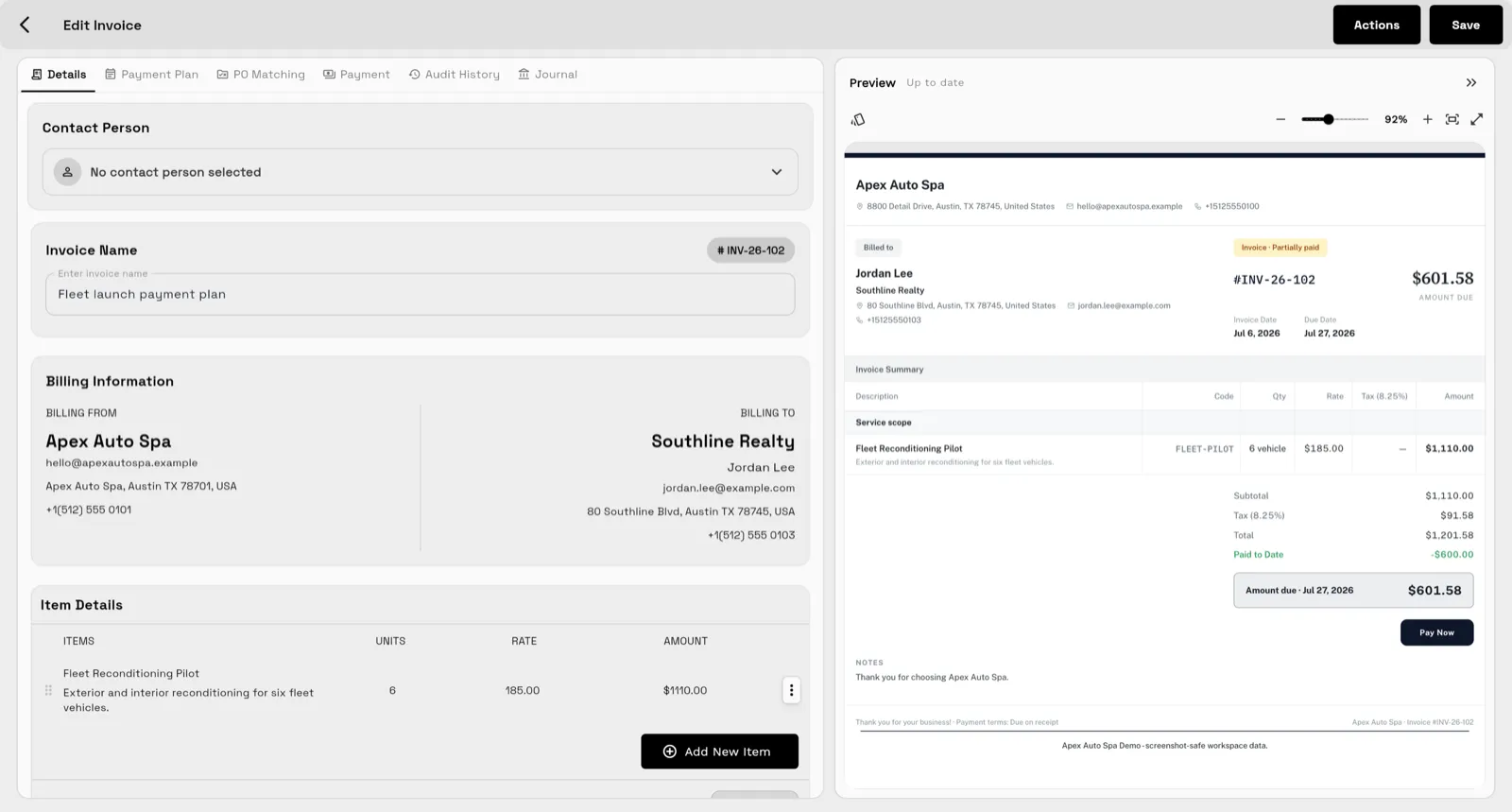
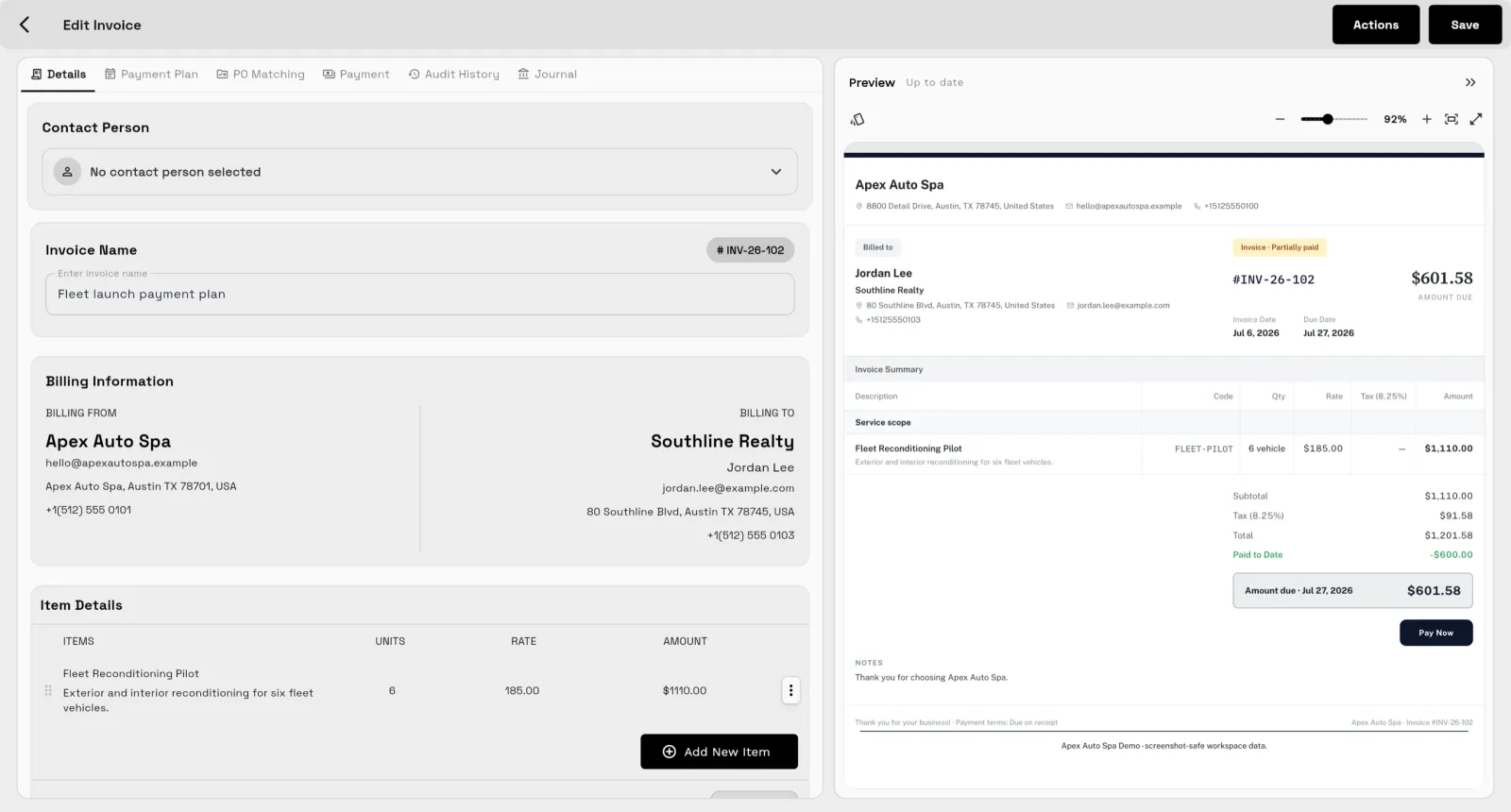
Send quotes, bill milestones or retainers, and let automated reminders chase anything outstanding.

Workspace369 invoice editor showing line items, payment terms, and client details

Workflow

The Fractional Engagement Workflow

01

Structuring Client Records and Sponsors

Structuring Client Records and Sponsors. The fractional executive initiates the engagement by creating comprehensive client records that explicitly name the internal corporate sponsor. A person must record in the brief the exact reporting lines and boundaries for both advisory and execution tracks. This foundational step ensures that all subsequent conversations and scheduled alignment sessions are tied to the correct corporate entity from day one.

02

Scoping Dual-Track Proposals

Scoping Dual-Track Proposals. The executive drafts detailed Proposals within Workspace369, clearly separating high-level advisory milestones from operational execution tasks. These Proposals define the scope, expected deliverables, and the invoicing schedule. Once the internal sponsor approves and e-signs the proposal, the executive sets up active projects based on these parameters to maintain alignment with the agreed-upon corporate strategy.

03

Executing Tasks and Tracking Conversations

Executing Tasks and Tracking Conversations. Operational tasks are assigned within specific projects, separating advisory research from execution duties. The fractional executive uses the conversations feature to log updates directly with the corporate sponsor. This manual documentation prevents communication fragmentation and ensures that tactical execution never overshadows the strategic advisory responsibilities outlined in the initial brief.

04

Managing Files and Portal Access

Managing Files and Portal Access. Operational files and corporate briefs are uploaded into designated project folders. The executive sets roles and client portal permissions for each company and tests them before anything is shared. The executive instructs the sponsor to verify they can only view their own corporate files.

05

Scheduling Reviews and Issuing Invoices

Scheduling Reviews and Issuing Invoices. The fractional executive uses the scheduling feature to set up monthly governance reviews with the corporate sponsor. Following the review, the executive creates invoices referencing the recorded project milestones. A person reviews the invoice against the completed tasks and files before transmitting it through the client portal, ensuring accurate billing for both advisory and execution tracks.

Product coverage

Client operations for fractional executives (cmo/cfo/coo)

  • A person must log into the client portal using a test sponsor credential and verify that project files from other client companies are completely inaccessible.
  • The client records must explicitly list the internal corporate sponsor and contain a manual record in the brief outlining the separate advisory and execution boundaries for the current quarter.
  • Invoices created within the system must accurately reflect the specific project tasks completed under the execution track while referencing the original approved proposals for advisory milestones.
Client records
Proposals
Projects and tasks
Files
Conversations
Scheduling
Invoices
Client portal
Workflow Automations

Loved on the App Store

Rated by the people running their client work on it.

★★★★★
Finally feels calm

Bounced between three or four all-in-one tools and always ended up in a mess of tabs. This is the first one that feels calm. Set up my client projects in ten minutes.

Justin R. · Solo founder · App Store review
★★★★★
Painless team rollout

Rolled it out to our eight-person team and adoption was painless — intuitive and polished. I'd love more integrations, but they keep shipping.

Samantha D. · Operations lead · App Store review
★★★★★
Hours back every week

Was juggling separate tools for notes, tasks, docs, and updates. Consolidating into one place has genuinely saved me hours each week. Support is responsive too.

Alicia N. · Agency founder · App Store review

Get started

See Workspace369 on your own client work.

Start a free trial or talk to sales — either way, you will see the whole loop: inbox, projects, portal, and billing.

FAQ

Evaluation and Acceptance Criteria for Fractional Workspaces

How do I handle separate advisory and execution tasks for the same corporate sponsor?

You create two distinct projects under a single client record. Name one project for strategic advisory deliverables and the other for operational execution tasks. This clear separation allows you to map tasks, files, and conversations accurately, ensuring the sponsor can review progress across both responsibilities during scheduled governance meetings.

Where should I store sensitive board records and corporate financial data?

Keep board records and corporate financial data in the client's own approved systems, such as their board portal and finance stack. Upload project files into the specific project folder within Workspace369 and set the client portal permissions for each sponsor. Test the portal access with a sample user account to ensure the corporate sponsor only sees authorized files.

Can I manage multiple fractional engagements simultaneously without mixing client data?

Yes. Workspace369 isolates data by individual client records. Each corporate engagement has its own dedicated proposals, projects, tasks, files, and conversations. Roles, permissions and per-client portal access keep each company's data partitioned; check the portal settings for each new sponsor before sharing anything.

How do I ensure my invoices match the work approved by my corporate sponsor?

You create invoices that reference completed project milestones and tasks. Before sending, a person should check the original proposals to confirm that the execution tasks align with the agreed scope. The invoice is then published to the client portal, allowing the sponsor to review the detailed billing items clearly.

Ready when you are

See where Workspace369 fits into your client-work flow.

Start with the modules you need today, then turn on AI, automations, accounting, inventory, requests, and reporting as the operation grows.