Cadet
Regular price$29$14.50 / month
Founding price for your first 12 months
1 seat included
- Public proposal approval & signing
- Deposit on acceptance
- Proposal-to-invoice conversion
- Billable time tracking
- Public intake forms
Getting paid
Every deduction you cannot prove is a deduction you lose. Expense tracking for taxes is really one habit: capture everything, weekly, with the receipt attached — and let tax time become an export, not an excavation.
Reviewed
In short
Track every business expense when it happens: amount, vendor, date, category, and the receipt. Common freelancer categories include software and subscriptions, home office, travel and mileage, phone and internet, professional services, insurance, marketing, and contractor payments. A weekly 15-minute review keeps the record complete.
Most freelancer deductions fall into a short list. Capture each expense under one of these as it happens:
A bank line says you spent money; a receipt says what it was. Deductions survive questions on documentation, not memory. Attach the receipt at capture time — a photo taken the day of the expense beats a folder you swear you will sort later.
The system that works is the one small enough to keep:
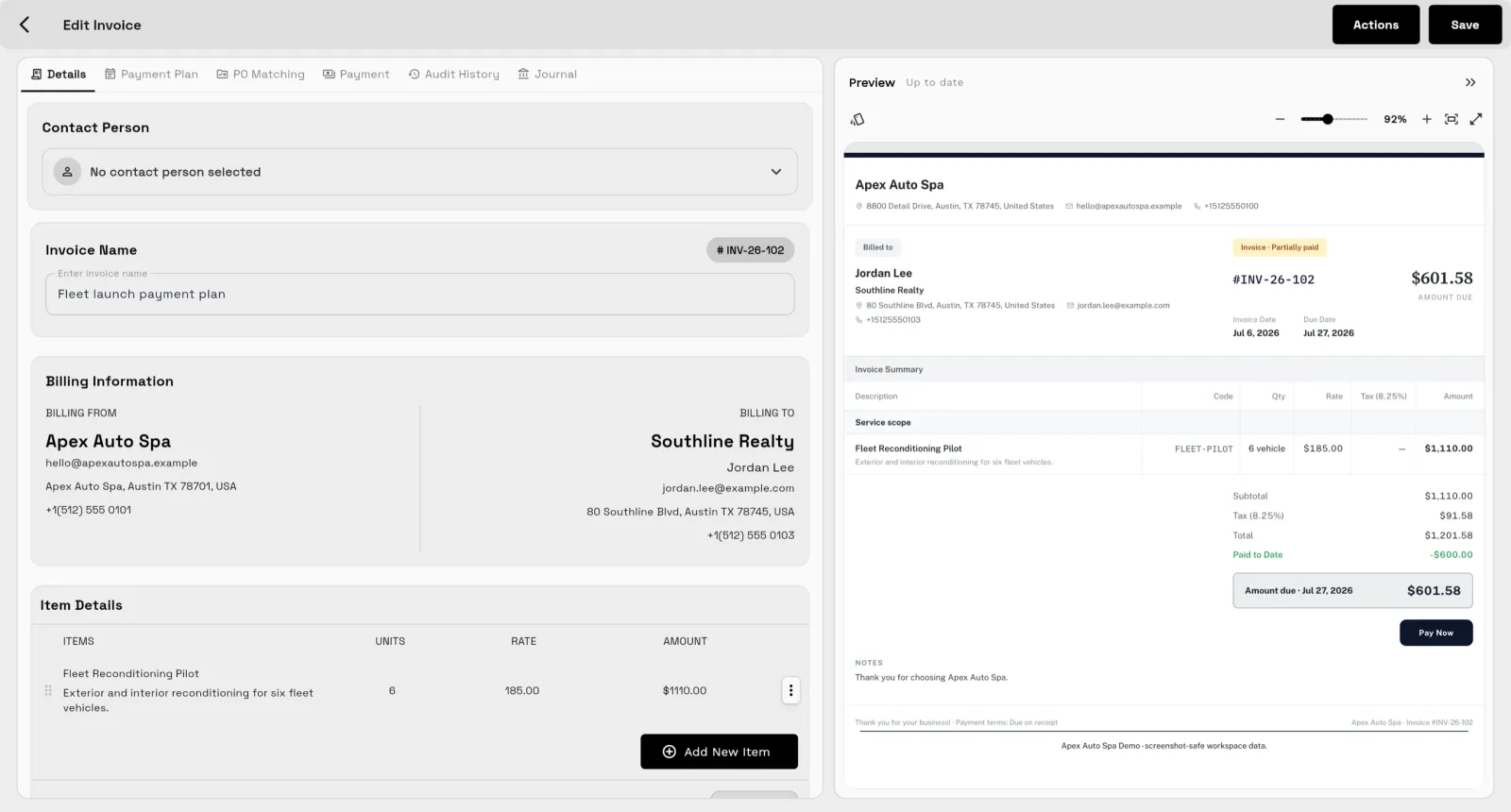
Some expenses belong on a client’s invoice; others are your deductions. Mixing them up costs money both ways. Workspace369 tracks expenses beside invoices and clients, so billable expenses can flow into the next invoice while the rest stay categorized for reporting — keeping tax records and client billing in the same system. This is an operations guide, not tax advice.
FAQ
Common categories are software, home office share, travel and mileage, phone and internet, professional services, insurance, marketing, and contractor payments. What qualifies depends on your jurisdiction and situation — confirm with a tax professional.
Keep them for several years — the exact retention window depends on jurisdiction. Digital copies attached to the expense record are far easier to keep than paper.
It works until volume or multiple people get involved. The failure mode is always the same: expenses logged late, receipts missing, categories inconsistent. A system that captures at the point of spend prevents all three.
Plans for freelancers
Regular price$29$14.50 / month
Founding price for your first 12 months
1 seat included
Regular price$74$37 / month
Founding price for your first 12 months
2 seats included
Everything in Cadet, plus
Regular price$149$74.50 / month
Founding price for your first 12 months
10 seats included
Everything in Voyager, plus
Founding member offer: 50% off your first 12 months, for the first 100 customers who join by Oct 31. 14-day trial with a card, USD monthly billing. Compare all plans.
Switch & Save
Our team sets up your workspace with you and helps move your clients and invoices from the tools you use now.
Export your data as a spreadsheet and AI Import maps the columns for you. Support can help with anything unusual.
Offer ends .
After signup, claim free setup in your workspace.
Ready when you are
Start with the modules you need today, then turn on AI, automations, accounting, inventory, requests, and reporting as the operation grows.