Cadet
Regular price$29$14.50 / month
Founding price for your first 12 months
1 seat included
- Public proposal approval & signing
- Deposit on acceptance
- Proposal-to-invoice conversion
- Billable time tracking
- Public intake forms
Getting paid
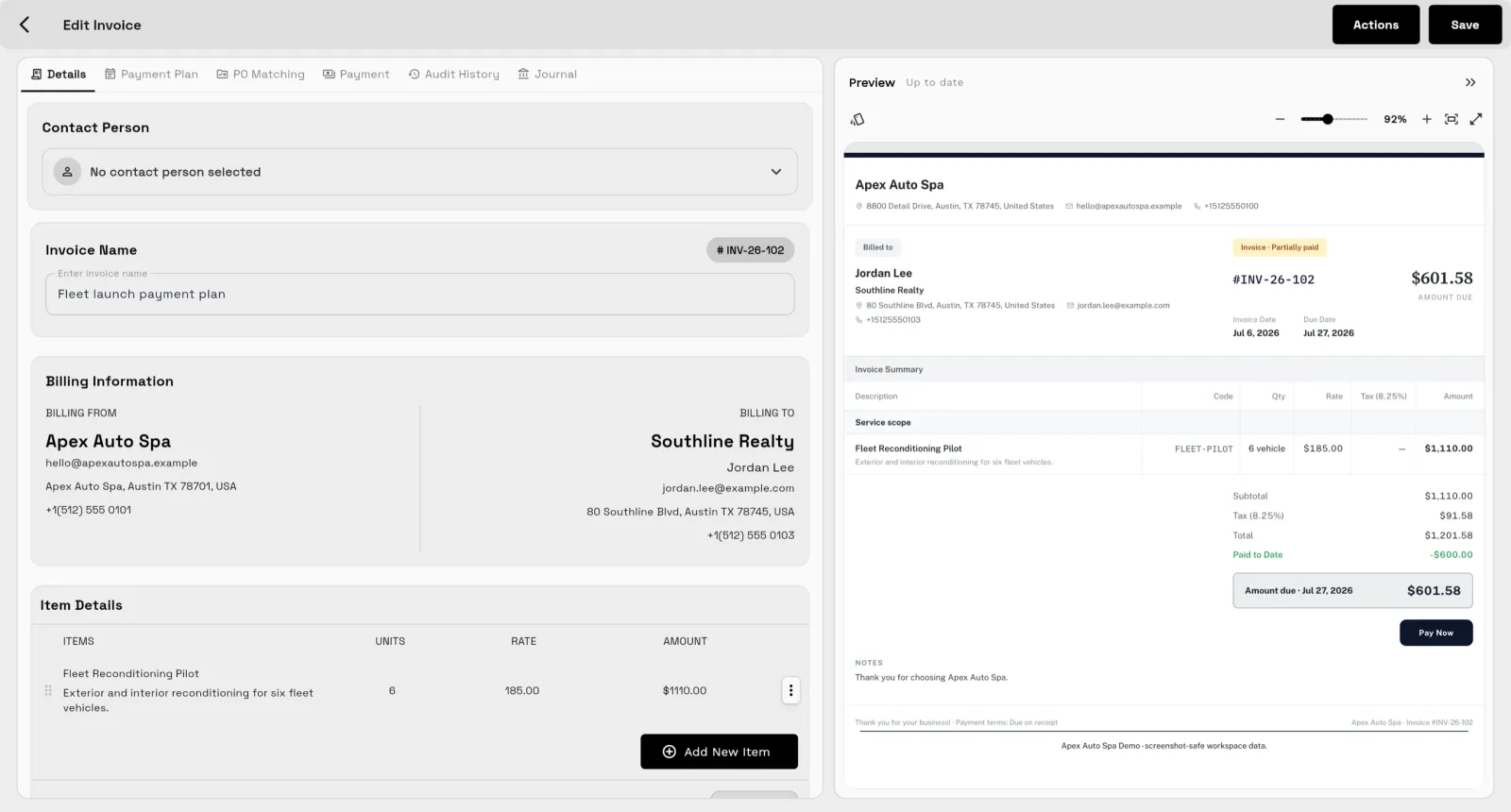
Consulting invoices fail in predictable ways: vague line items, a missing PO number, no due date, sent a week late. This guide covers the format accounts payable actually processes, the terms to set, and the follow-up rhythm that turns invoices into payments.
Reviewed
In short
A consulting invoice should identify you and the client (including their AP contact and PO number if they use one), carry a unique invoice number and issue date, state a specific due date, list the work in plain-language line items with dates, hours, and rates, show subtotal, taxes, and a bold total, and end with direct payment instructions. Send it the day the work or milestone completes, and follow a fixed reminder cadence: day 1 after the due date, day 3, day 10.
AP teams pay invoices that need zero interpretation. Every consulting invoice should carry these blocks:
Consulting has four billing shapes — structure the invoice for the one in the agreement:
Set these in the agreement, then repeat them on every invoice:
Most late invoices are process delays, not refusals. A calm, fixed rhythm resolves almost all of them:
The goal is an invoice that goes out the same way every time, on time, without being rebuilt. Recurring invoices in Workspace369 bill on schedule on every plan (payment plans start at Specialist), automated email reminders run the follow-up cadence for you, and the client portal keeps the invoice, the files, and the payment link in one place — so accounts payable pays instead of asking questions.
FAQ
Your details, the client and their AP contact, their PO number if used, a unique invoice number, issue and due dates, plain-language line items with hours and rates, subtotal, taxes, a bold total, and direct payment instructions. Anything missing becomes a reason to delay.
The day the work or milestone completes, or on a fixed monthly cadence for ongoing engagements. Sending a week late signals payment is not urgent — and the client treats it that way.
With a fixed cadence: friendly reminder one day after the due date, a second at three days asking what they need to process payment, and a firm note at ten days referencing the agreement and late fee. Automations in Workspace369 run this sequence on schedule.
For fixed-fee project work, yes — 30–50% up front, credited on the final invoice. For hourly or retainer work, a recurring schedule with clear terms usually covers the risk instead.
Plans for freelancers
Regular price$29$14.50 / month
Founding price for your first 12 months
1 seat included
Regular price$74$37 / month
Founding price for your first 12 months
2 seats included
Everything in Cadet, plus
Regular price$149$74.50 / month
Founding price for your first 12 months
10 seats included
Everything in Voyager, plus
Founding member offer: 50% off your first 12 months, for the first 100 customers who join by Oct 31. 14-day trial with a card, USD monthly billing. Compare all plans.
Switch & Save
Our team sets up your workspace with you and helps move your clients and invoices from the tools you use now.
Export your data as a spreadsheet and AI Import maps the columns for you. Support can help with anything unusual.
Offer ends .
After signup, claim free setup in your workspace.
Ready when you are
Start with the modules you need today, then turn on AI, automations, accounting, inventory, requests, and reporting as the operation grows.