Cadet
Regular price$29$14.50 / month
Founding price for your first 12 months
1 seat included
- Public proposal approval & signing
- Deposit on acceptance
- Proposal-to-invoice conversion
- Billable time tracking
- Public intake forms
Getting paid
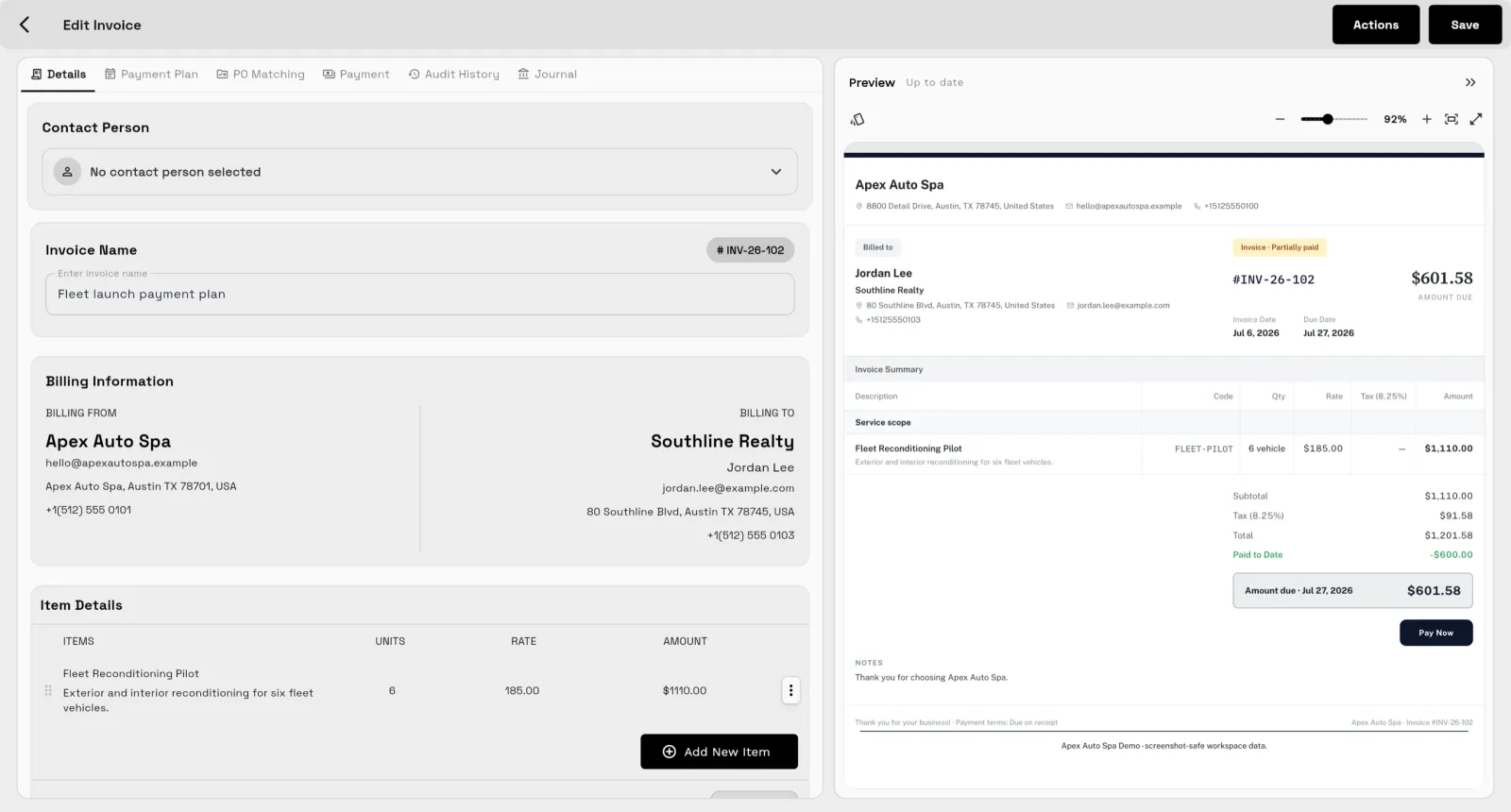
An invoice number is the unique ID that ties a payment, a reminder, and a client conversation to one specific invoice. Get it right and every follow-up is easy; get it wrong — duplicates, gaps, restarts — and accounts payable stalls on every invoice.
Reviewed
In short
An invoice number is a unique identifier assigned to each invoice so you and the client can reference it for tracking, payment, and disputes. Use a simple sequential format (INV-0001), a dated format (2026-0001), or a client-prefixed format (ACME-0001) — but keep it unique, sequential, and consistent. Invoicing software assigns numbers automatically; duplicate or missing numbers are a top cause of silent payment delays.
Pick one format and stay with it for the life of the business:
Accounts payable and auditors both check the numbering. Follow these rules from day one:
Manual numbering breaks the moment two people create invoices or one bad week of admin happens. In Workspace369, invoice numbers are assigned automatically and sequentially, tied to the client record, the payment, and every reminder — so the ID you reference in a follow-up is always the ID the client sees on the invoice.
FAQ
Yes — for practical purposes, always. Clients use it to match your invoice to their purchase order and payment, you use it for follow-up and reconciliation, and auditors expect a sequential trail. In many jurisdictions a sequential invoice number is a legal requirement for tax invoices.
INV-0001 for simple sequencing, or 2026-0001 if you want the year embedded. Keep it unique, sequential, zero-padded, and consistent for the life of the business.
Accounts payable typically flags or quietly stalls both. The client cannot match payment to a single document, so payment pauses until you clarify — which is why duplicates are a top cause of delayed payment.
Plans for freelancers
Regular price$29$14.50 / month
Founding price for your first 12 months
1 seat included
Regular price$74$37 / month
Founding price for your first 12 months
2 seats included
Everything in Cadet, plus
Regular price$149$74.50 / month
Founding price for your first 12 months
10 seats included
Everything in Voyager, plus
Founding member offer: 50% off your first 12 months, for the first 100 customers who join by Oct 31. 14-day trial with a card, USD monthly billing. Compare all plans.
Switch & Save
Our team sets up your workspace with you and helps move your clients and invoices from the tools you use now.
Export your data as a spreadsheet and AI Import maps the columns for you. Support can help with anything unusual.
Offer ends .
After signup, claim free setup in your workspace.
Ready when you are
Start with the modules you need today, then turn on AI, automations, accounting, inventory, requests, and reporting as the operation grows.