Cadet
Regular price$29$14.50 / month
Founding price for your first 12 months
1 seat included
- Public proposal approval & signing
- Deposit on acceptance
- Proposal-to-invoice conversion
- Billable time tracking
- Public intake forms
Getting paid
A good invoice answers every question before the client asks it. This guide covers what to include, how to structure it, and how to send it so payment is the easy next step.
Reviewed
In short
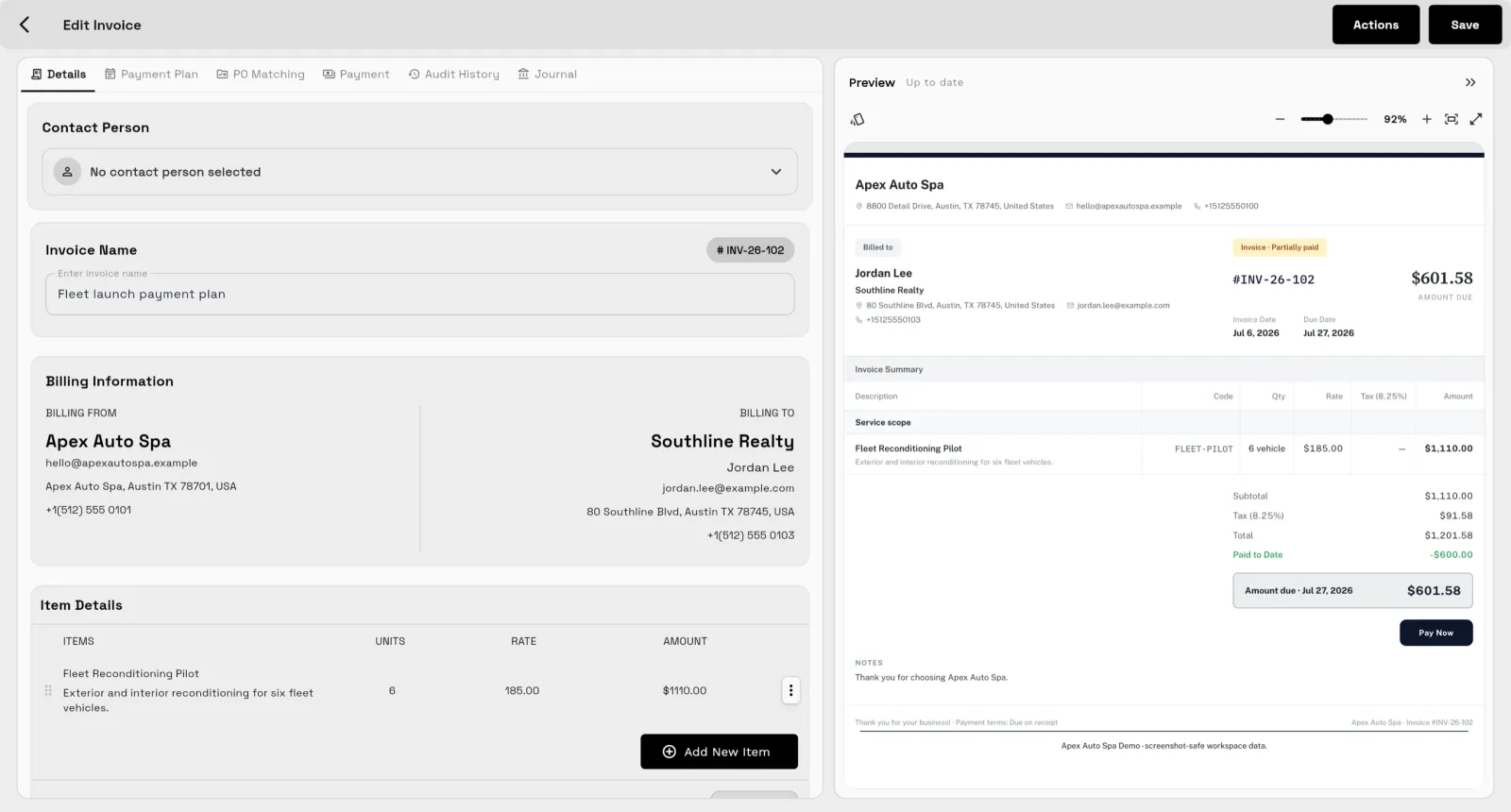
An invoice should identify who is billing whom, what was delivered, what it costs, when payment is due, and how to pay. Include your business details, the client, an invoice number, dates, itemized line items with rates and quantities, totals, taxes where relevant, payment terms, and a clear way to pay.
Clients pay faster when nothing on the invoice needs an explanation. Every invoice should carry these basics:
Write line items the way the client remembers the work. Group by phase or deliverable instead of listing hours alphabetically, and keep each line specific enough that the value is obvious. “Website redesign — homepage concepts (2 rounds)” gets fewer questions than “Design work, 6 hours”.
Terms are easier to honor when the client sees them before work starts — in the proposal or quote — and again on the invoice. State the due date explicitly (“Due July 31, 2026”), not just “Net 14”. If you charge late fees or offer early-payment discounts, say so in plain language on the invoice itself.
The easier payment is, the sooner it happens. Send the invoice with a short, specific message — what the invoice covers and when it is due — and include a direct way to pay. In Workspace369, invoices go out with a payment link and a Pay Now option, and status updates to paid automatically when the client pays.
FAQ
A proposal (or quote) proposes the price before work starts and becomes the agreement once the client approves it. An invoice requests payment for delivered or scheduled work. In Workspace369, proposals and invoices live in the same record, so an approved proposal can convert into the invoice.
Both patterns work — many service businesses invoice a deposit upfront and the balance on delivery or on a schedule. Whatever you choose, put the schedule in the proposal first so the invoice never surprises the client.
Use a simple sequential scheme that never repeats — for example 26-1, 26-2 through the year. Consistent numbering keeps records searchable and makes conversations with clients and accountants unambiguous.
Plans for freelancers
Regular price$29$14.50 / month
Founding price for your first 12 months
1 seat included
Regular price$74$37 / month
Founding price for your first 12 months
2 seats included
Everything in Cadet, plus
Regular price$149$74.50 / month
Founding price for your first 12 months
10 seats included
Everything in Voyager, plus
Founding member offer: 50% off your first 12 months, for the first 100 customers who join by Oct 31. 14-day trial with a card, USD monthly billing. Compare all plans.
Switch & Save
Our team sets up your workspace with you and helps move your clients and invoices from the tools you use now.
Export your data as a spreadsheet and AI Import maps the columns for you. Support can help with anything unusual.
Offer ends .
After signup, claim free setup in your workspace.
Ready when you are
Start with the modules you need today, then turn on AI, automations, accounting, inventory, requests, and reporting as the operation grows.
Watch