CRM for video editors

CRM for Video Editors with a Specific Workflow

Video editors often face administrative friction when handling raw footage assets and multi-stakeholder revisions. Workspace369 logs client records, tracks projects and revision rounds, and sends invoices. It runs your business operations alongside your post-production tools, ensuring that client communications regarding project scope and revision limits remain documented in one place.

Clientthe relationship and agreed brief
Worktasks with a responsible person
Billinginvoices and commercial context
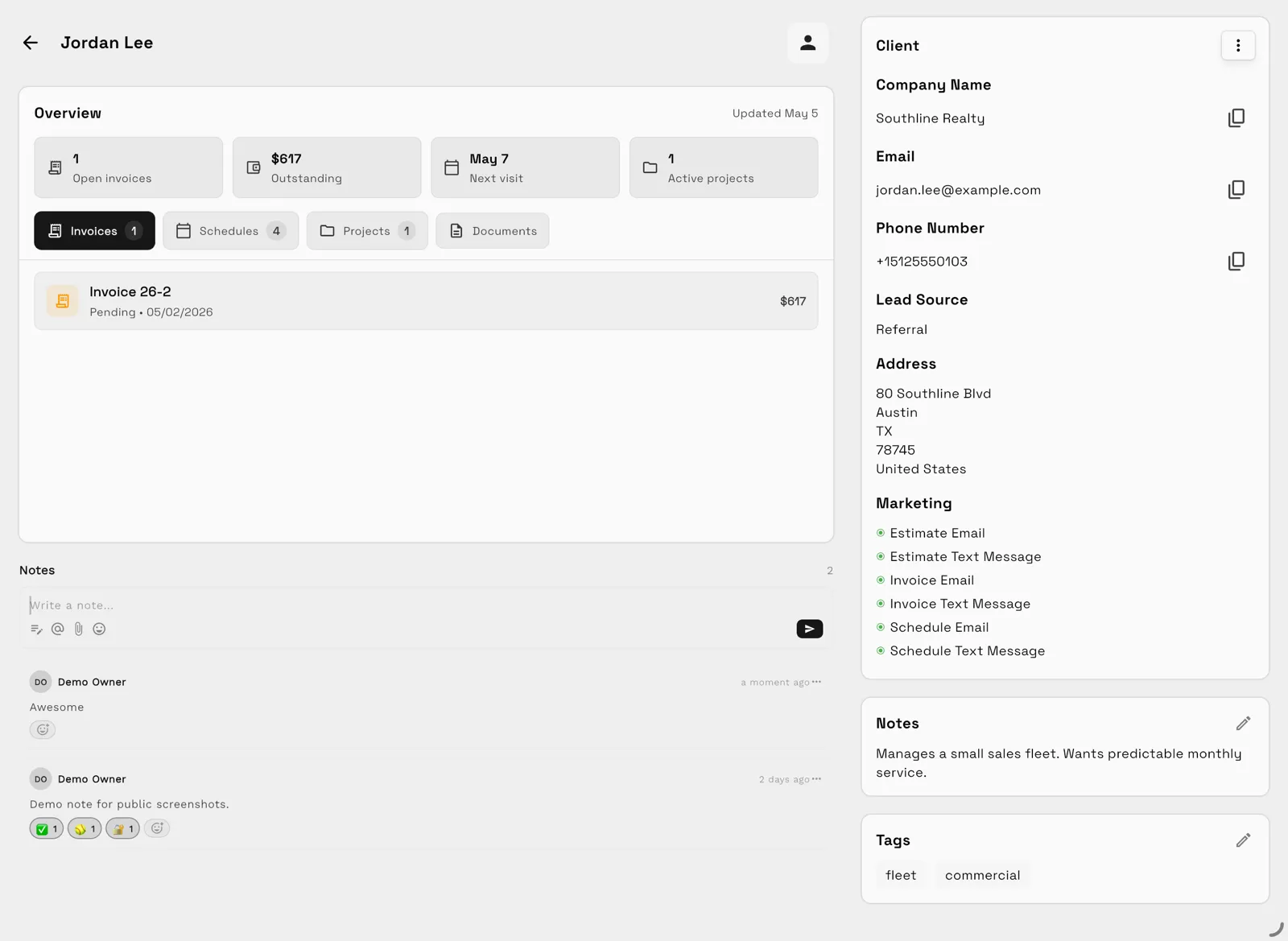
Workspace369 client record showing history, files, communication, and invoices in one profile

Key facts

CRM for video editors at Workspace369 covers 9 areas, including client records, proposals, projects and tasks.

The workflow runs in 5 steps, from "establishing the proposal and scope boundaries" to "issuing final invoices and closing the project".

Workspace369 starts at $29/mo for 1 seat, and the Commander plan includes 20 seats, 500 GB of storage, and 120,000 AI tokens per month at $299/mo.

Additional seats cost $10 each and 100 GB of additional storage costs $15; full pricing is public on the Workspace369 pricing page.

The problem

Operational friction in post-production management

Contradictory stakeholder feedback after final revision rounds

When an edit receives contradictory feedback from two stakeholders after the included revision rounds, video editors struggle without clear documentation. Without a structured log of conversations and files, resolving which director or brand manager has final authority becomes difficult. Workspace369 allows you to document specific scope boundaries within client records and projects, ensuring that any extra revision work is tracked separately before an invoice is issued.
Misaligned project scope and extra editing hours

Video editors frequently perform unbilled work when post-production requests expand beyond the original agreement. When revision limits are not clearly connected to administrative files and proposals, scope creep occurs unnoticed. Tracking hours and adjustments manually outside your primary client records leads to missed billing opportunities. You need a clear system where projects, tasks, and proposals explicitly define the boundary of included edit iterations.

Scattered files and asset tracking confusion

Managing rough cuts, audio stems, and project briefs across multiple disconnected platforms causes delivery delays. Video editors often lose time searching for the specific feedback file or asset version sent by a client. Storing general project files and conversations separately from client records makes it hard to verify previous directions. A client system must link files directly to active tasks and projects to maintain order.

Invoicing delays after multi-stakeholder delays

When project delivery stalls due to internal client disagreements, invoicing gets delayed indefinitely. Video editors require a clear schedule and milestone structure to request payments regardless of stakeholder friction. Without linked scheduling and invoices, tracking down payments for completed editing milestones becomes a manual burden. Billing workflows must connect project milestones directly to invoices to secure studio cash flow when edits stall.

The product

See the workspace your clients feel.

01

A portal clients actually check

Clients watch progress, files, and invoices in a branded portal instead of asking your team for updates.

Workspace369 client record showing history, files, communication, and invoices in one profile
02

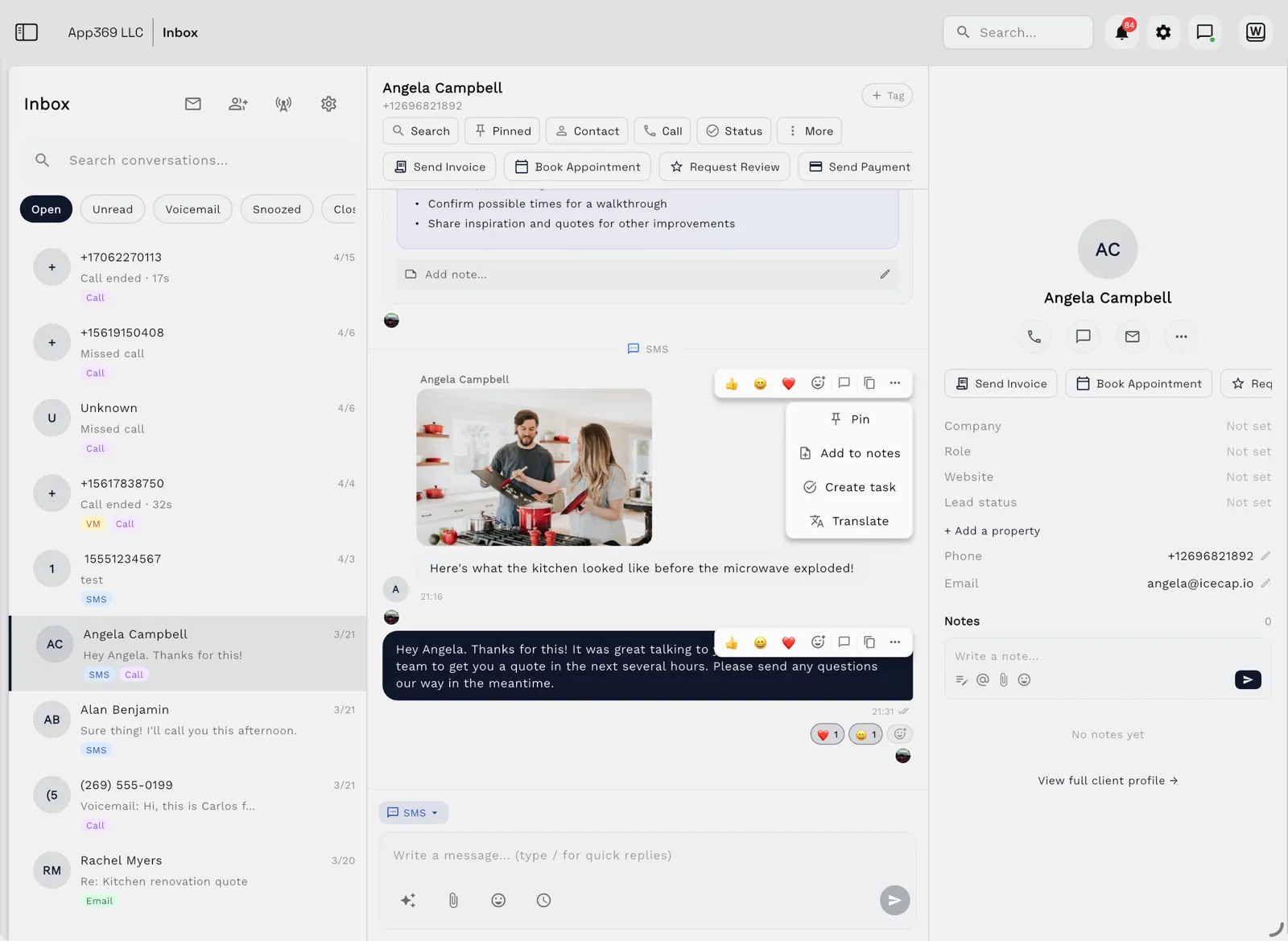
Every channel in one inbox

Email, SMS, calls, and voicemail land beside the client record — with AI summaries, so anyone on the team can reply with full context.

Workspace369 shared inbox showing email, SMS, and call history beside a client record
03

Client work, organized as projects

Tasks, files, and status for every engagement — visible to the team and, through the client portal, to the client.

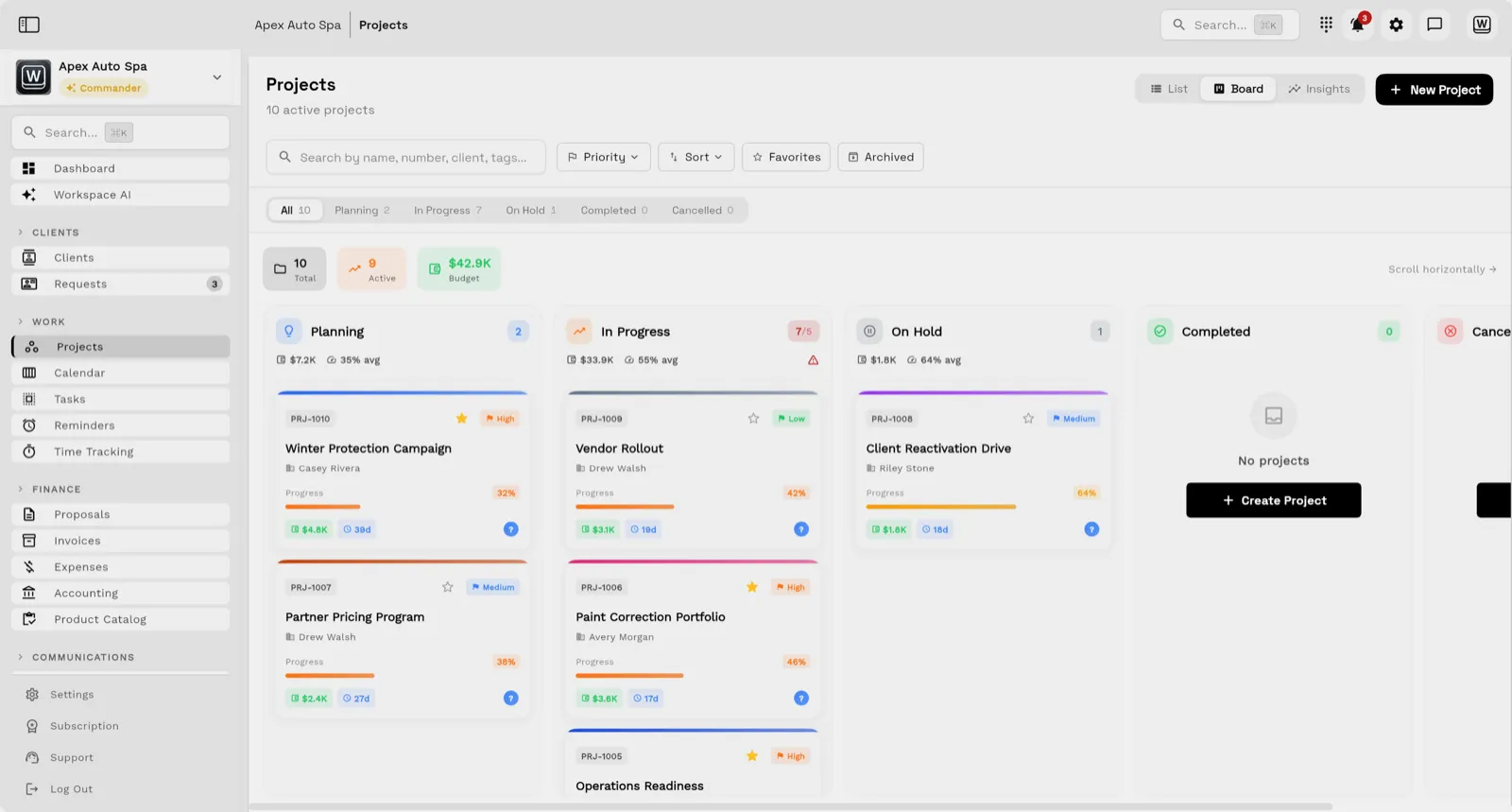
Workspace369 project board showing client work organized into stages with owners and status
04

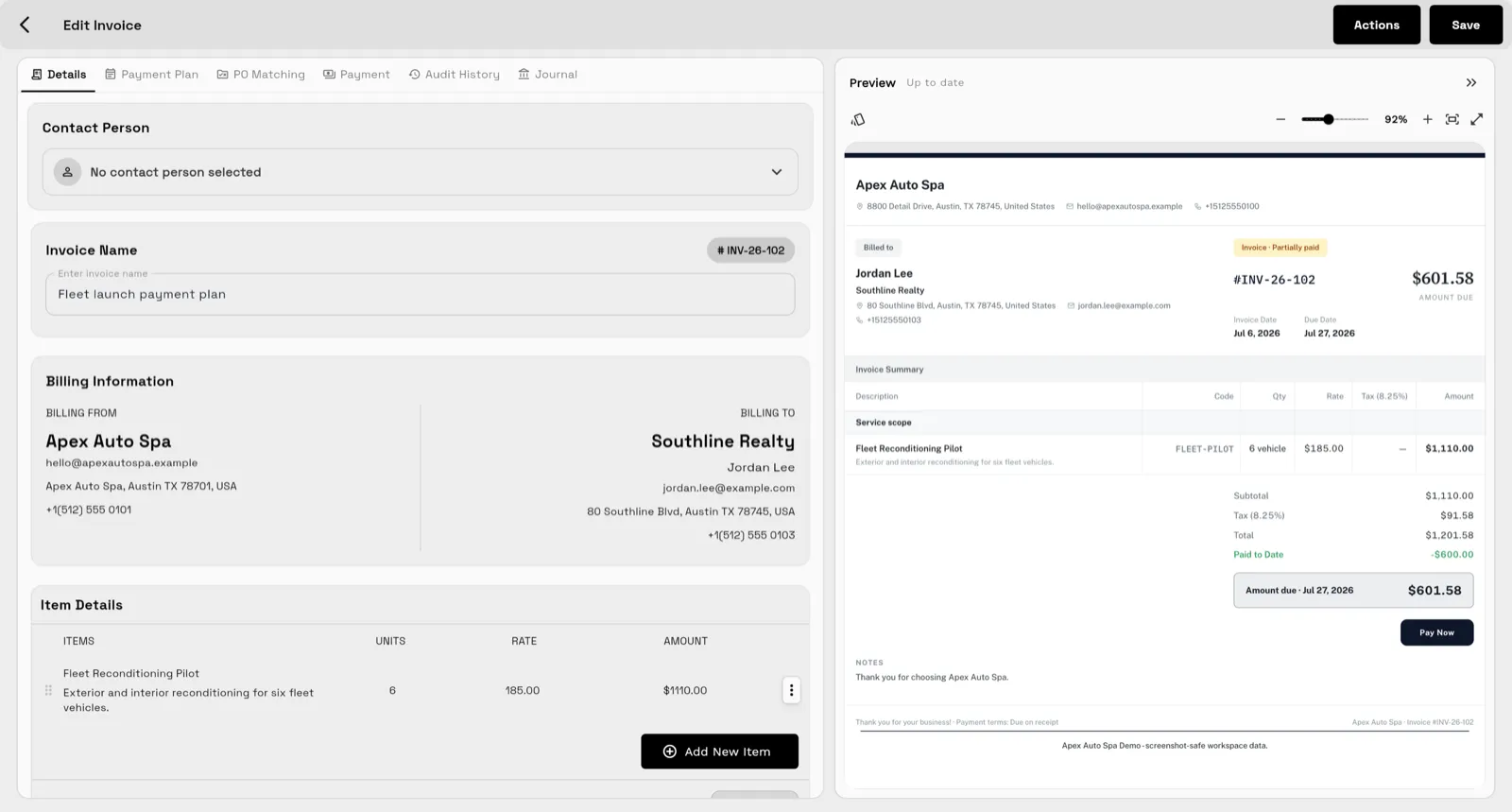
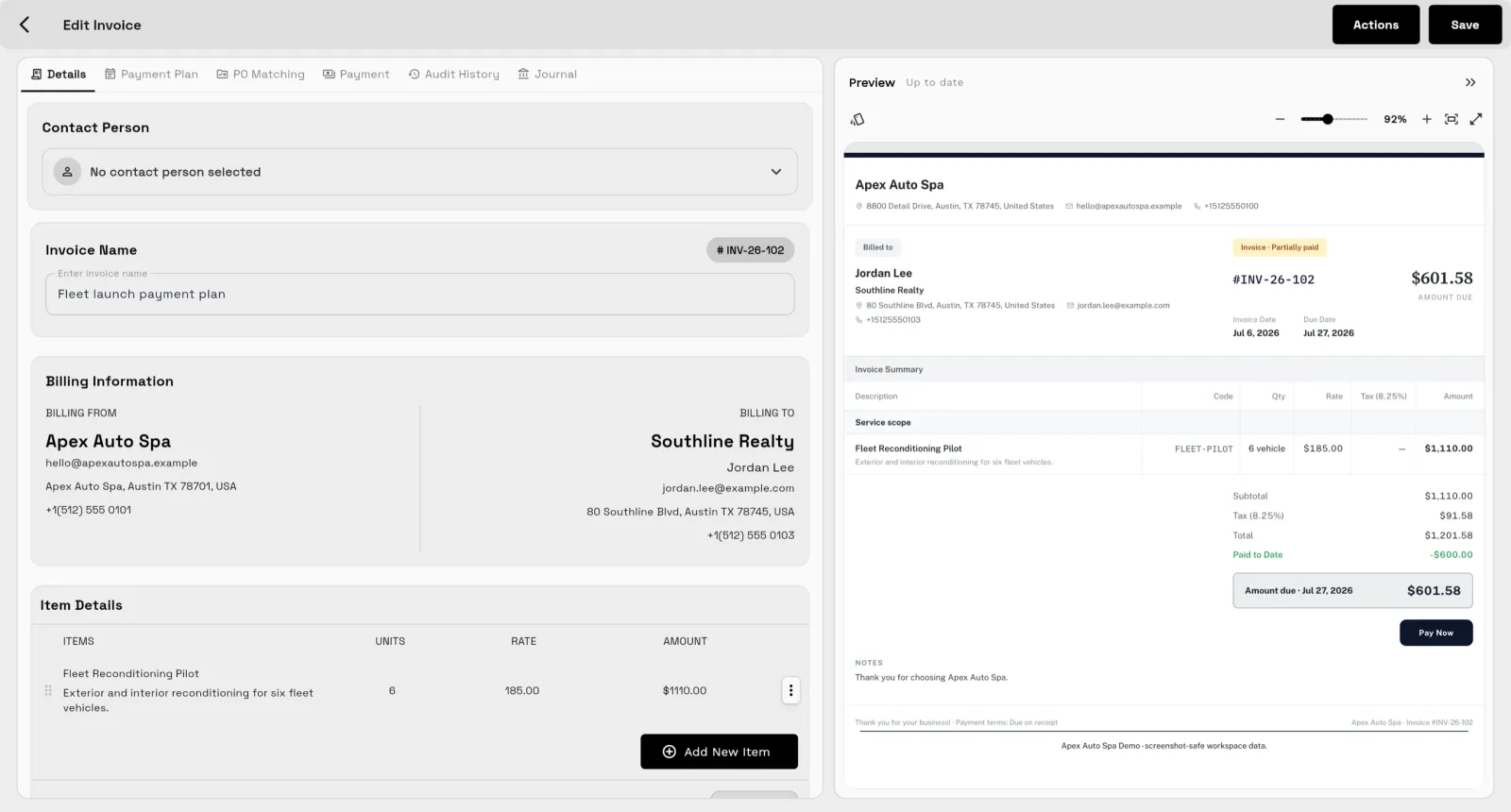
Proposals to paid invoices

Send quotes, bill milestones or retainers, and let automated reminders chase anything outstanding.

Workspace369 invoice editor showing line items, payment terms, and client details

Workflow

Step-by-step client workflow for video editors

01

Establishing the proposal and scope boundaries

The workflow begins by creating detailed Proposals linked to new client records. Video editors use these proposals to outline the exact number of included revision rounds, delivery formats, and stakeholder roles. A human operator records the names of authorized decision-makers directly in the project brief. This ensures that when the project initiates, the agreed boundaries are visible to both parties within the client portal, preventing future scope confusion.

02

Scheduling milestones and setting up tasks

Once the proposal is accepted, the editor configures the project within Workspace369 by mapping out specific tasks and scheduling delivery milestones. Tasks are created for rough cuts, sound mixing, and final color grading. These tasks are associated with timeline files and client conversations. By scheduling deadlines explicitly, the editor establishes a clear timeline that clients can view, ensuring everyone knows when feedback is due.

03

Managing multi-stakeholder conversations and files

During the review phase, the video editor uploads project files and initiates conversations regarding the current edit. When an edit receives contradictory feedback from two stakeholders after the included revision rounds, the editor uses the conversations history to reference the original agreement. The editor manually logs the conflicting notes within the client records, keeping all communication together alongside the active project files for clear visibility.

04

Resolving feedback exceptions and updating tasks

To resolve the stakeholder contradiction, the editor creates a new task for additional revision hours and sends an updated proposal or change order. The editor communicates the scope and cost impact via the client portal, asking the primary contact to confirm the direction. This step keeps scope changes, costs and approvals on the client record.

05

Issuing final invoices and closing the project

After the final edit is completed and the stakeholder feedback is resolved, the editor generates and sends final invoices based on the project milestones. Any additional tasks created for extra revision rounds are manually added to the billing line items. Once the client pays the invoice, the project is marked as complete, and the final delivery files are archived within the client records for long-term reference.

Product coverage

Client operations for video editors

  • A human operator can successfully log contradictory stakeholder feedback within client records and verify that the conversation history remains accessible to all primary project contacts.
  • The system allows a user to link an additional invoice directly to a newly created revision task when a project exceeds its pre-defined scope boundaries.
  • A client can access the client portal to view scheduled milestones and download project files without needing access to your editing or transcoding tools.
Client records
Proposals
Projects and tasks
Files
Conversations
Scheduling
Invoices
Client portal
Workflow Automations

Loved on the App Store

Rated by the people running their client work on it.

★★★★★
Finally feels calm

Bounced between three or four all-in-one tools and always ended up in a mess of tabs. This is the first one that feels calm. Set up my client projects in ten minutes.

Justin R. · Solo founder · App Store review
★★★★★
Painless team rollout

Rolled it out to our eight-person team and adoption was painless — intuitive and polished. I'd love more integrations, but they keep shipping.

Samantha D. · Operations lead · App Store review
★★★★★
Hours back every week

Was juggling separate tools for notes, tasks, docs, and updates. Consolidating into one place has genuinely saved me hours each week. Support is responsive too.

Alicia N. · Agency founder · App Store review

Get started

See Workspace369 on your own client work.

Start a free trial or talk to sales — either way, you will see the whole loop: inbox, projects, portal, and billing.

FAQ

Evaluation criteria for post-production client systems

How does Workspace369 handle conflicting feedback from multiple client stakeholders?

When an edit receives contradictory feedback from two stakeholders after the included revision rounds, a human operator records the details in the conversations section. You can manually create a new task to address the conflict and use the client portal to request clarification from the primary contact, ensuring every step is documented.

Where do frame-accurate video reviews fit?

Keep timeline editing, frame-accurate review and transcoding in your post-production tools. Workspace369 runs the client work around them: proposals, revision tasks, client conversations, portal approvals and invoices.

How are extra editing revisions billed to the client?

You can create a new proposal or add a task for the extra revision hours, and from Voyager log them with timers as billable time. Once the work is completed, you manually generate an invoice that includes these additional line items, referencing the conversation history stored within the client records to justify the extra charges.

Can clients upload raw video files to the client portal?

Clients can upload project files and briefs directly through the client portal. Keep large raw video assets and high-resolution transcodes in dedicated media storage, and use Workspace369 for the briefs, conversations, tasks and invoices around them.

Ready when you are

See where Workspace369 fits into your client-work flow.

Start with the modules you need today, then turn on AI, automations, accounting, inventory, requests, and reporting as the operation grows.