CRM for podcast producers

CRM for Podcast Producers with Guest and Project Tracking

Podcast producers manage complex communication across production schedules, audio files, and client records. When administrative details are tracked in isolated email threads, critical milestones slip. Workspace369 manages proposals, projects, tasks, scheduling and invoices in one place. By organizing client conversations and files alongside concrete task deadlines, your production team can maintain visibility over client records and production schedules without relying on separate, disconnected communication channels.

Clientthe relationship and agreed brief
Worktasks with a responsible person
Billinginvoices and commercial context
Workspace369 client record showing history, files, communication, and invoices in one profile

Key facts

CRM for podcast producers at Workspace369 covers 9 areas, including client records, proposals, projects and tasks.

The workflow runs in 5 steps, from "establish client records and proposals" to "issue invoices and track payments".

Workspace369 starts at $29/mo for 1 seat, and the Commander plan includes 20 seats, 500 GB of storage, and 120,000 AI tokens per month at $299/mo.

Additional seats cost $10 each and 100 GB of additional storage costs $15; full pricing is public on the Workspace369 pricing page.

The problem

Operational Bottlenecks in Podcast Production

Delayed Guest Approvals and Missed Slots

A podcast episode misses its release slot because the guest approval arrives late. Without a structured location to track guest conversations and files, follow-ups remain buried in individual email inboxes. Producers cannot easily verify whether a guest has signed off on the final audio file before the scheduled distribution deadline. This lack of administrative visibility stalls the entire publication pipeline and disrupts your production calendar.
Scattered Production Files and Feedback

Audio assets, show notes, and client records often end up scattered across multiple personal storage links and email threads. When client feedback or raw audio files are not tied directly to specific projects or tasks, producers waste time searching for the correct version. This disorganization delays editing schedules, increases administrative overhead, and makes it difficult to track historical project assets for recurring clients.

Disconnected Scheduling and Booking

Managing interview recording dates through separate calendars leads to scheduling conflicts and missed sessions. When scheduling is isolated from client records and project tasks, producers must manually copy dates across systems. This manual transfer increases the risk of scheduling errors, leaving hosts and guests uncoordinated. Without scheduling tied to client records, tracking pre-production milestones and recording deadlines becomes an administrative burden for the studio.

Inconsistent Billing and Unsigned Proposals

Sending proposals and invoices through disconnected tools delays project kickoff and client payments. When a client delays reviewing proposals or paying invoices, the production timeline stalls before recording even begins. Producers need a clear way to track the status of proposals, invoices, and client records in one place to ensure that production work is fully funded and contractually authorized before studio time is utilized.

The product

See the workspace your clients feel.

01

A portal clients actually check

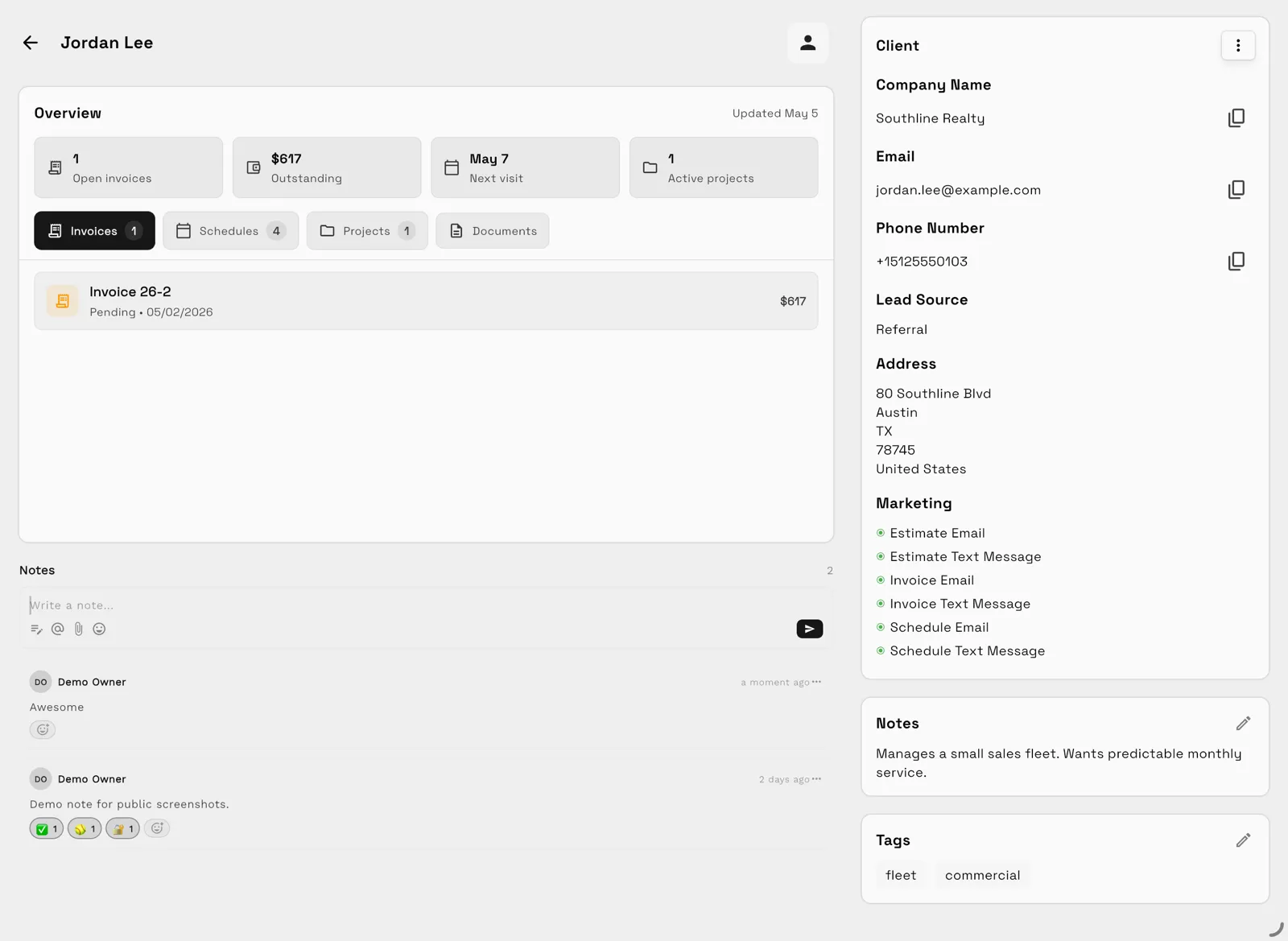
Clients watch progress, files, and invoices in a branded portal instead of asking your team for updates.

Workspace369 client record showing history, files, communication, and invoices in one profile
02

Every channel in one inbox

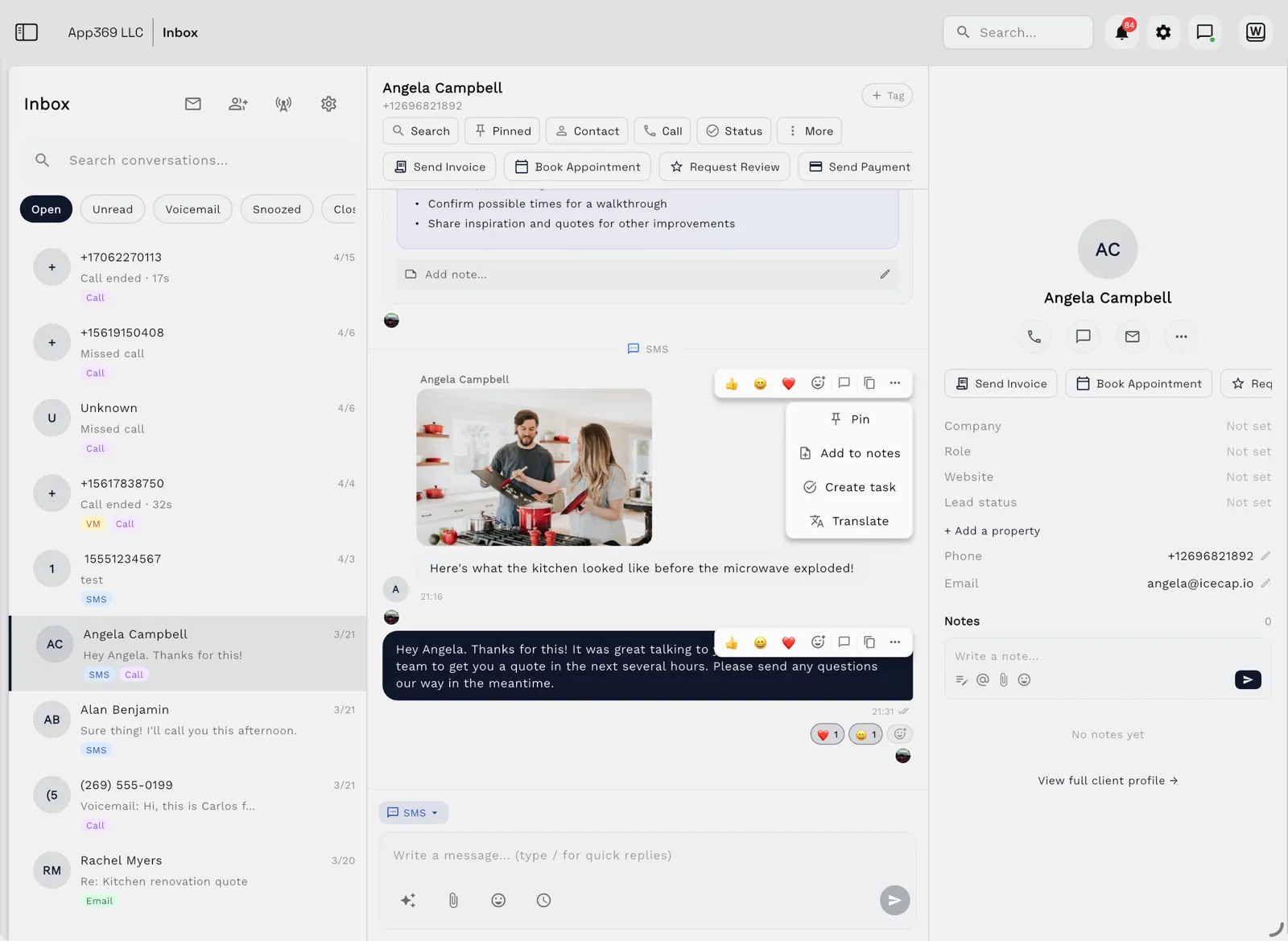
Email, SMS, calls, and voicemail land beside the client record — with AI summaries, so anyone on the team can reply with full context.

Workspace369 shared inbox showing email, SMS, and call history beside a client record
03

Client work, organized as projects

Tasks, files, and status for every engagement — visible to the team and, through the client portal, to the client.

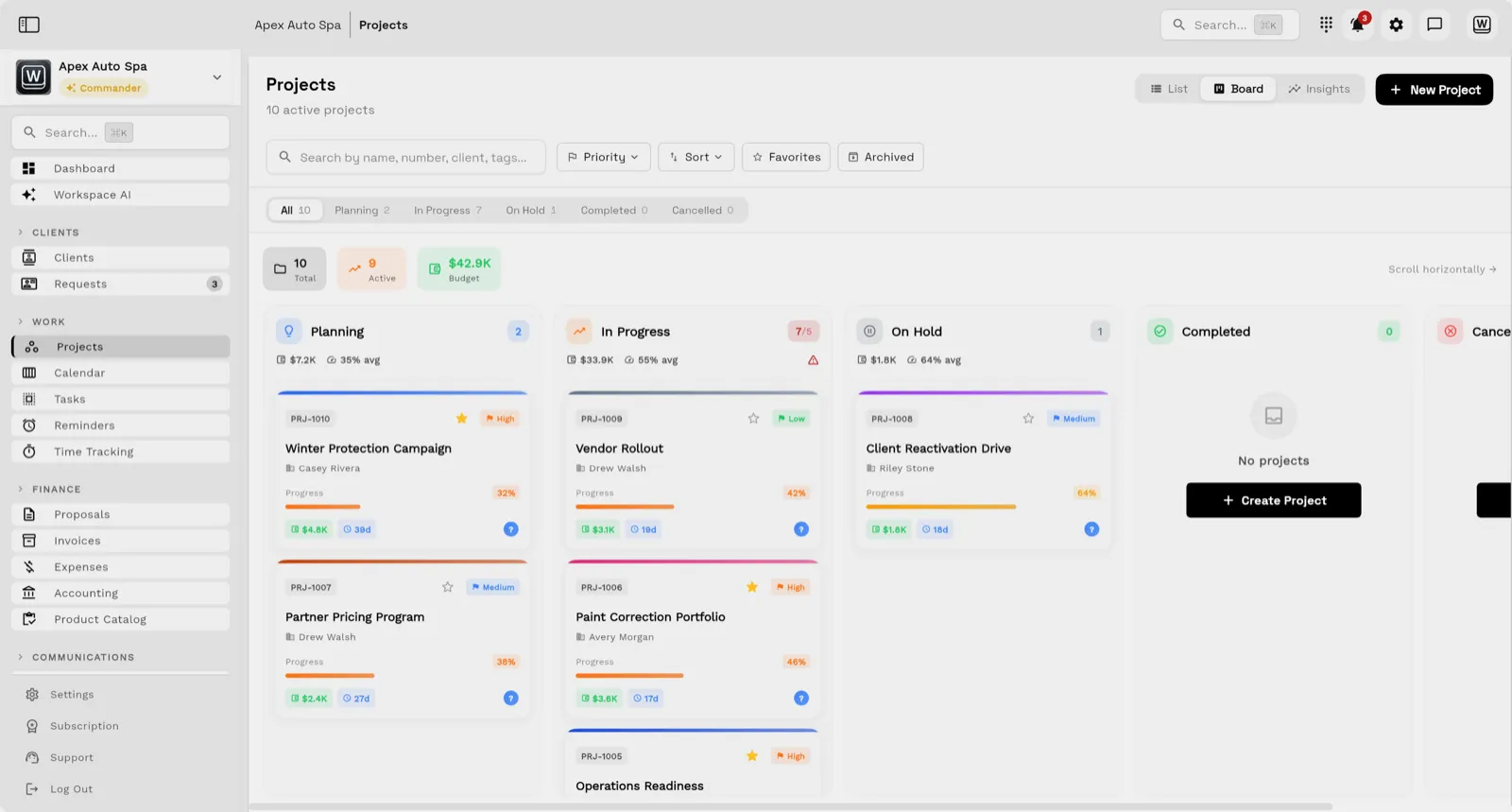
Workspace369 project board showing client work organized into stages with owners and status
04

Proposals to paid invoices

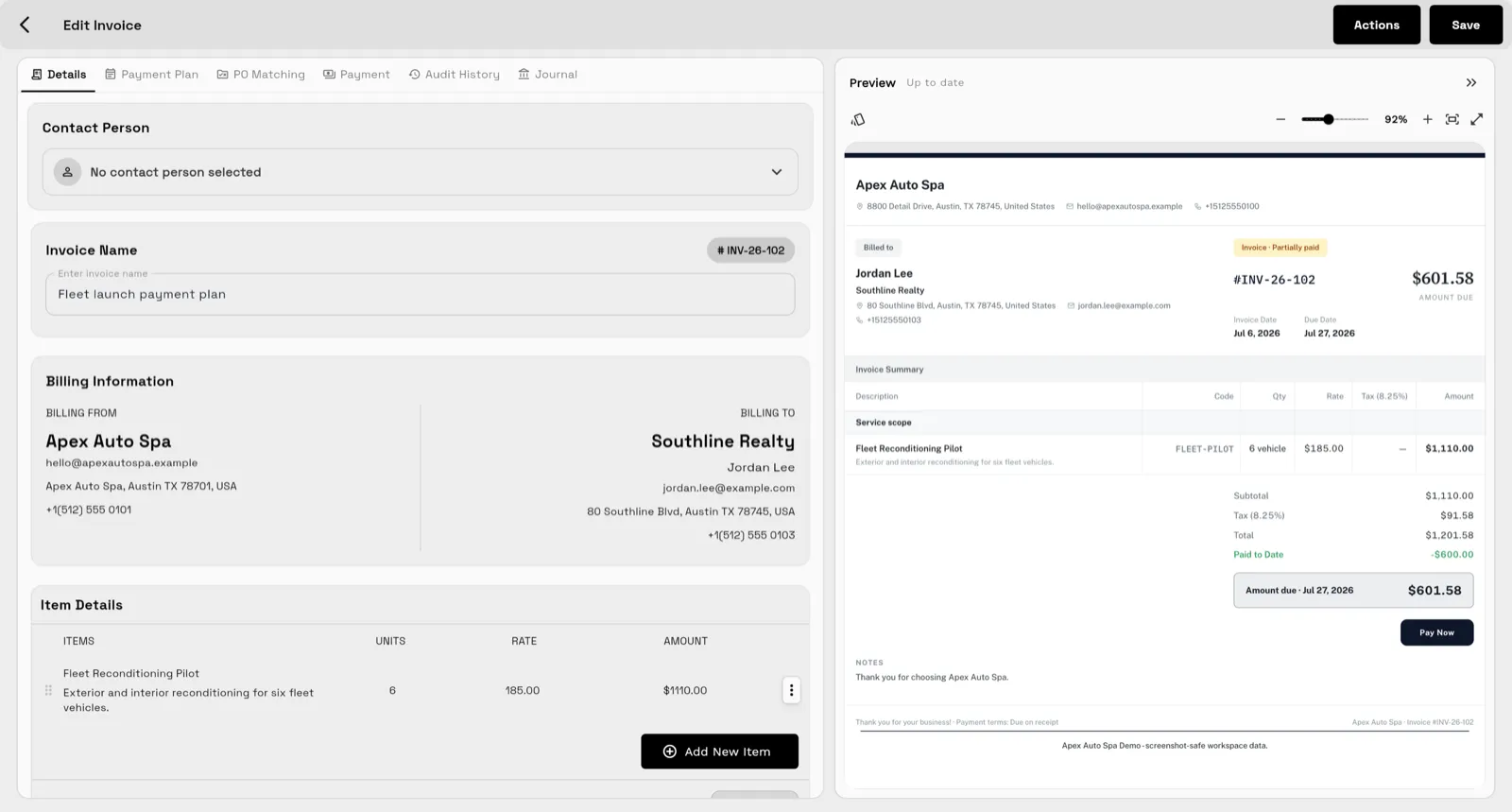
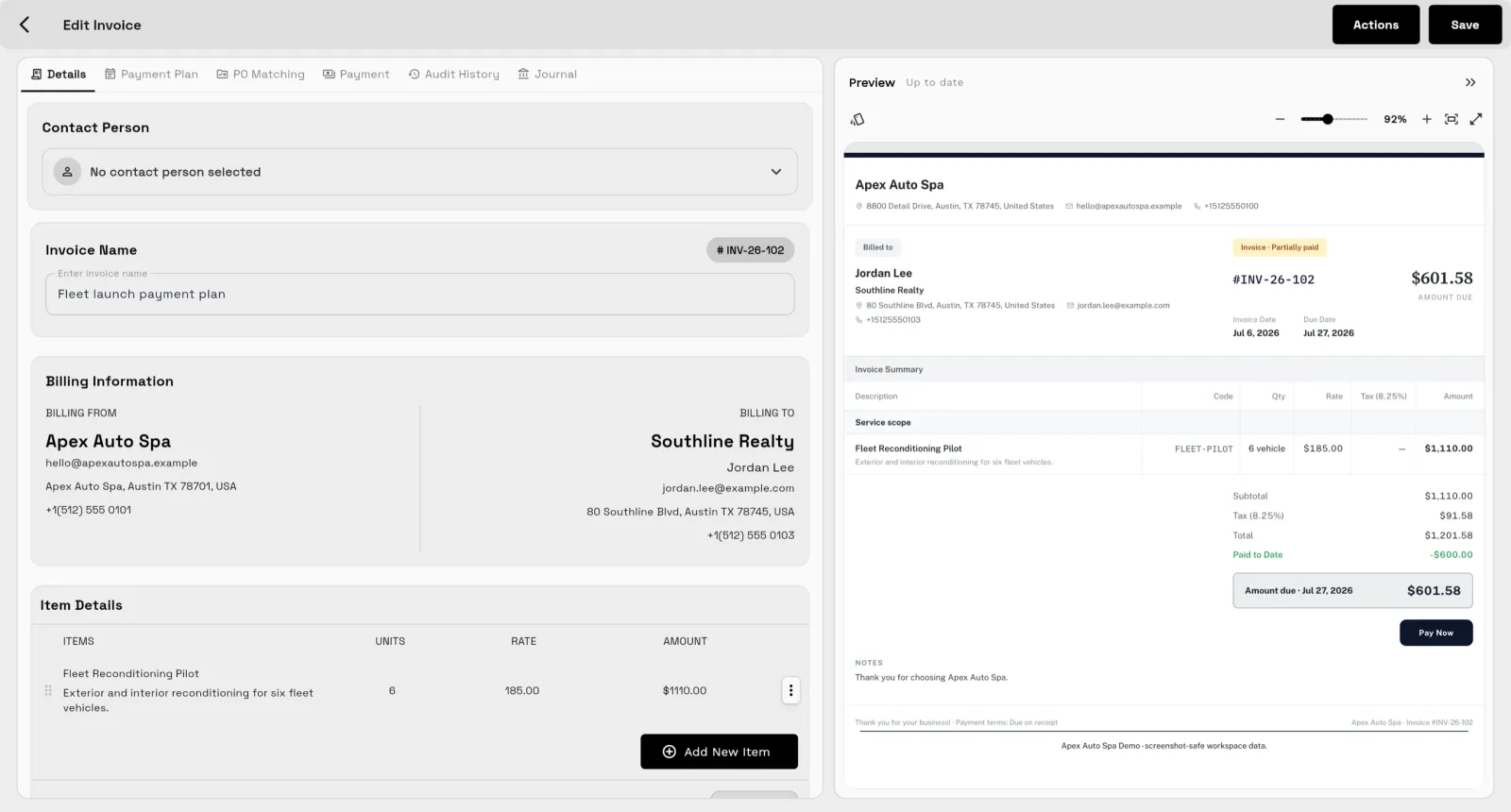
Send quotes, bill milestones or retainers, and let automated reminders chase anything outstanding.

Workspace369 invoice editor showing line items, payment terms, and client details

Workflow

A Structured Production Workflow

01

Establish Client Records and Proposals

The workflow begins by creating detailed client records for the podcast series. Producers build and send comprehensive proposals detailing the episode count, release schedule, and commercial terms. These proposals are linked directly to the client profile, ensuring that everyone can review the agreed scope. Clients use the client portal to access their specific records, keeping early-stage client communication organized before any audio tracking or scheduling takes place.

02

Initialize Production Projects and Tasks

Once a proposal is accepted, the producer initializes a dedicated project for the podcast season or specific episode block. Within this project, the team creates structured tasks for pre-production, guest booking, audio editing, and final review. Assigning explicit deadlines to these tasks helps the team check that each team member knows when show notes, raw files, and guest confirmations must be completed to meet the distribution timeline.

03

Coordinate Recording via Scheduling

Producers use the scheduling feature to coordinate recording sessions with hosts and guests. These calendar entries link back to the primary project and client records, providing immediate context for the production team. By organizing recording dates within the same system as the project tasks, the studio can track pre-production deadlines leading up to the session, ensuring all background research files are prepared.

04

Manage Conversations and File Approvals

All communication regarding episode edits, show notes, and guest approvals is handled through structured conversations. Producers upload draft files directly to the project (file attachments start on Specialist), allowing clients to review assets. To prevent situations where a podcast episode misses its release slot because the guest approval arrives late, producers use tasks to track the exact status of guest verification, keeping all relevant files and sign-offs visible.

05

Issue Invoices and Track Payments

Upon completing production milestones or delivering final files, producers generate and issue invoices directly from the platform. These invoices are tied to the client records and project history, allowing for clear tracking of outstanding balances. Clients can view their billing history and outstanding invoices within the client portal, keeping the studio's finances transparent and organized throughout the contract lifecycle.

Product coverage

Client operations for podcast producers

  • Verify that a human operator can log into the client portal, access a specific podcast project, and view the associated audio files and conversations without errors.
  • Confirm that a human operator can trace a guest approval task from pending status to complete, ensuring the verification text is recorded in the project brief.
  • Check that scheduling entries for recording sessions populate the project calendar and link correctly to the corresponding client records and outstanding invoices for verification.
Client records
Proposals
Projects and tasks
Files
Conversations
Scheduling
Invoices
Client portal
Workflow Automations

Loved on the App Store

Rated by the people running their client work on it.

★★★★★
Finally feels calm

Bounced between three or four all-in-one tools and always ended up in a mess of tabs. This is the first one that feels calm. Set up my client projects in ten minutes.

Justin R. · Solo founder · App Store review
★★★★★
Painless team rollout

Rolled it out to our eight-person team and adoption was painless — intuitive and polished. I'd love more integrations, but they keep shipping.

Samantha D. · Operations lead · App Store review
★★★★★
Hours back every week

Was juggling separate tools for notes, tasks, docs, and updates. Consolidating into one place has genuinely saved me hours each week. Support is responsive too.

Alicia N. · Agency founder · App Store review

Get started

See Workspace369 on your own client work.

Start a free trial or talk to sales — either way, you will see the whole loop: inbox, projects, portal, and billing.

FAQ

Evaluation and Verification Criteria

Where do podcast hosting and distribution fit?

Keep hosting, distribution and audio production in your podcast host and editing tools. Workspace369 runs the client side of each show: proposals, episode projects, guest approval tasks, recording schedules, client messages and invoices.

How do we track guest approvals to avoid late releases?

You can record the guest approval status inside the project brief or track it via explicit tasks. By keeping all conversations and files related to guest verification within the project record, your team can manually check the status before the scheduled release slot to ensure all necessary clearances are documented.

Can clients upload raw audio files to the platform?

Yes, clients can upload files and communicate via conversations within the client portal. This allows producers to gather raw audio assets, show notes, and feedback directly within the specific project record, keeping production files organized alongside tasks and scheduling without relying on scattered email attachments.

Can we manage our studio billing and project invoicing here?

Yes, you can generate and issue invoices directly linked to client records and projects. Clients can access these invoices through the client portal, allowing your team to track payments and outstanding balances alongside ongoing production tasks and scheduling milestones to ensure proper financial tracking.

Ready when you are

See where Workspace369 fits into your client-work flow.

Start with the modules you need today, then turn on AI, automations, accounting, inventory, requests, and reporting as the operation grows.