Cadet
Regular price$29$14.50 / month
Founding price for your first 12 months
1 seat included
- Public proposal approval & signing
- Deposit on acceptance
- Proposal-to-invoice conversion
- Billable time tracking
- Public intake forms
Getting paid
A kill fee is what a client pays if they cancel a project after you have started. It turns “we’ve decided not to go ahead” from a loss into a fair settlement for the time you spent. Here is how to set one and write it into your agreement.
Reviewed
In short
A kill fee is a payment a client agrees to make if they cancel commissioned work before it is finished or published. It is usually a percentage of the agreed fee — in freelance writing often 25% to 50% — or payment for work completed to date. Write the amount and when it applies into the contract before work starts, then invoice it if the project is cancelled.
The contract sets the kill fee in advance. If the client cancels after the agreed point (for example after work starts, or after the first draft), you send a final invoice for the kill fee instead of the full fee. The client usually keeps no rights to the unfinished work unless the contract says otherwise, so you may be free to use or sell it elsewhere.
There is no standard, but these are common starting points:
A deposit is paid upfront and credited to the final invoice. A kill fee is paid only if the client cancels mid-project. A cancellation fee usually applies to bookings — a session, event or appointment — cancelled at short notice. Many freelancers use a deposit and a kill fee together.
“If the Client cancels this project after work has started, the Client will pay a kill fee of 50% of the total fee, or the fees for work completed to date at $90 per hour if that is higher, up to the full fee. Any deposit paid is credited against the kill fee. Rights in unfinished work remain with the Freelancer.” Adjust the numbers to your work and have the clause checked for your location; this is not legal advice.
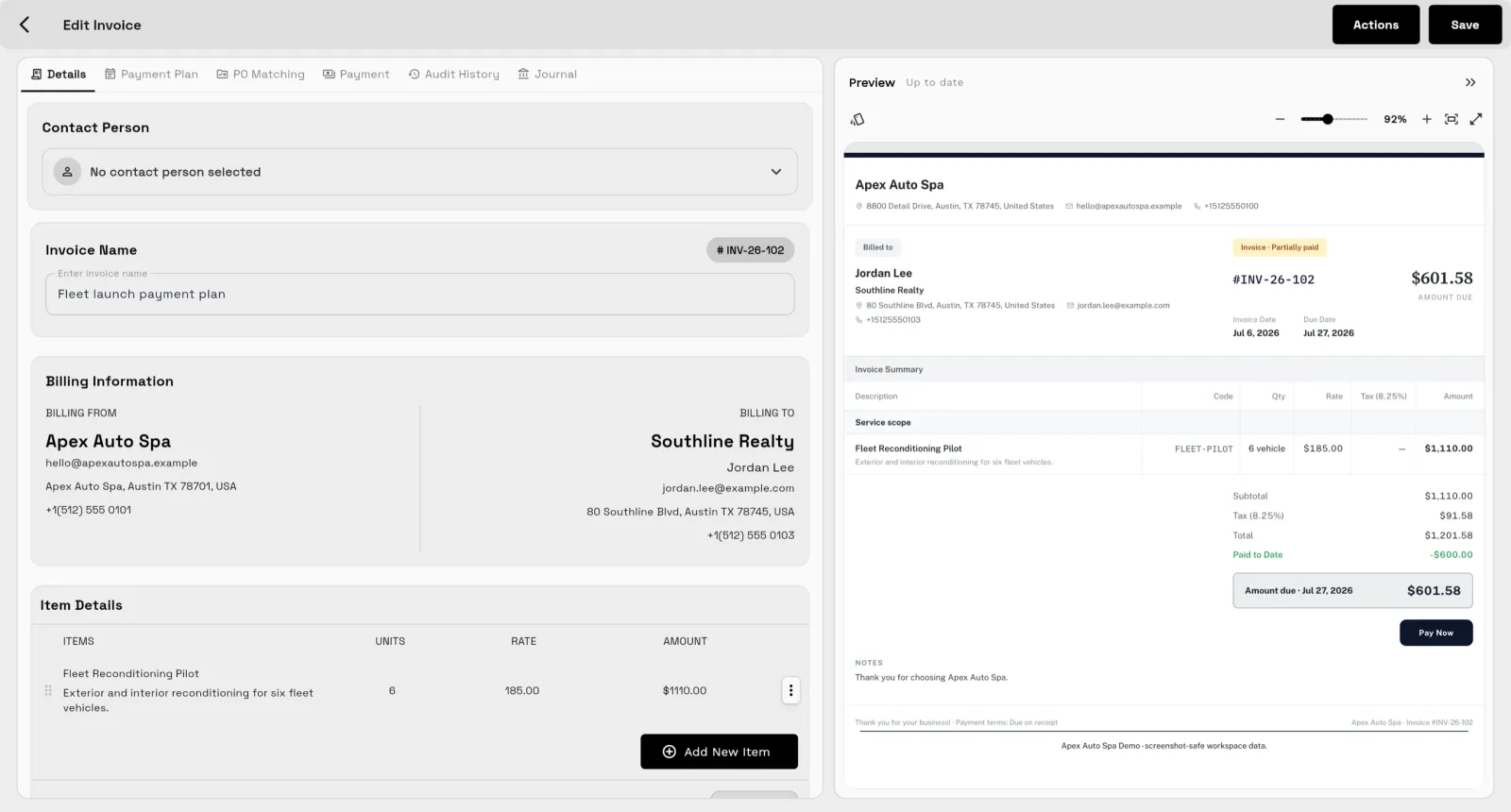
Send a final invoice that refers to the contract clause, shows the kill fee calculation, subtracts any deposit paid, and states the balance due. Keep the tone neutral and factual. In Workspace369, the contract, deposit and final invoice sit on the same client record, so the calculation is easy to show.
FAQ
It is an agreed payment the client makes if they cancel the project before it is finished. It compensates the freelancer for time already spent and for work they turned down to make room for the project.
Commonly 25% to 50% of the agreed fee, or payment for work done to date, whichever your contract specifies. Many freelancers raise the percentage as the project moves through stages.
It is much harder. Without an agreed clause you are negotiating after the fact, usually for the work you can show was done. Add a kill fee clause to every contract before work starts.
Whatever the contract says. Commonly the freelancer keeps the rights to unfinished work and may reuse or sell it, while the client keeps only what they paid for in full. Check the clause with a lawyer for your location.
Plans for freelancers
Regular price$29$14.50 / month
Founding price for your first 12 months
1 seat included
Regular price$74$37 / month
Founding price for your first 12 months
2 seats included
Everything in Cadet, plus
Regular price$149$74.50 / month
Founding price for your first 12 months
10 seats included
Everything in Voyager, plus
Founding member offer: 50% off your first 12 months, for the first 100 customers who join by Oct 31. 14-day trial with a card, USD monthly billing. Compare all plans.
Switch & Save
Our team sets up your workspace with you and helps move your clients and invoices from the tools you use now.
Export your data as a spreadsheet and AI Import maps the columns for you. Support can help with anything unusual.
Offer ends .
After signup, claim free setup in your workspace.
Ready when you are
Start with the modules you need today, then turn on AI, automations, accounting, inventory, requests, and reporting as the operation grows.