CRM for dog trainers

CRM for Dog Trainers with a Program Change Workflow

Dog trainers frequently encounter changes in client training paths, such as transitioning a handler from private behavioral consultations to structured group obedience classes. Workspace369 handles these adjustments without losing track of previous agreements. With client records, proposals, scheduling, projects and invoices in one place, trainers update every part of the program change systematically.

Clientthe relationship and agreed brief
Worktasks with a responsible person
Billinginvoices and commercial context
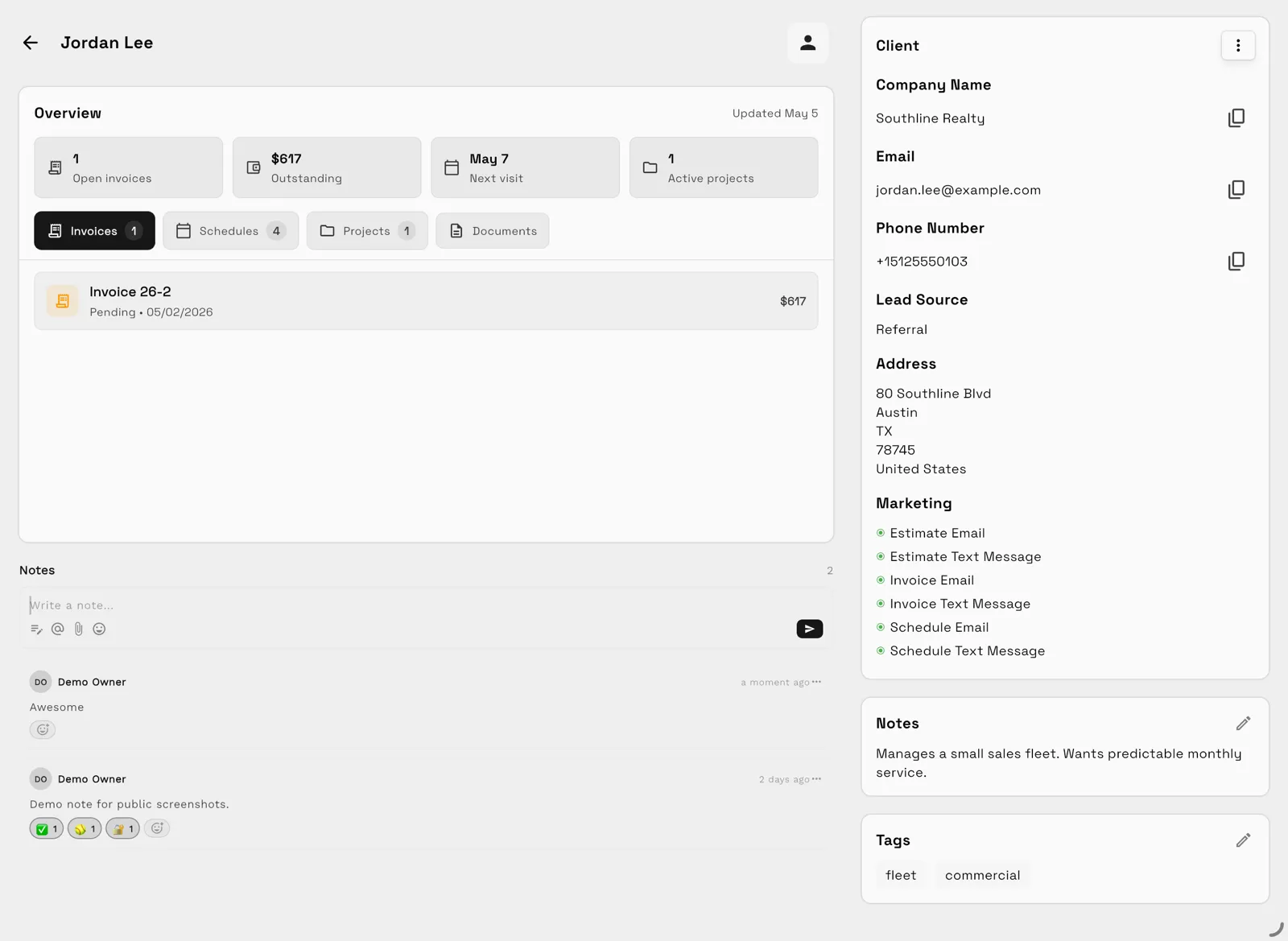
Workspace369 client record showing history, files, communication, and invoices in one profile

Key facts

CRM for dog trainers at Workspace369 covers 9 areas, including client records, proposals, projects and tasks.

The workflow runs in 5 steps, from "updating the client record" to "generating the transition invoice".

Workspace369 starts at $29/mo for 1 seat, and the Commander plan includes 20 seats, 500 GB of storage, and 120,000 AI tokens per month at $299/mo.

Additional seats cost $10 each and 100 GB of additional storage costs $15; full pricing is public on the Workspace369 pricing page.

The problem

Administrative Friction in Dog Training Operations

Misaligned Client Commitments

When a dog owner shifts from individual reactivity sessions to a group agility program, verbal agreements often conflict with active paperwork. Trainers lose track of original terms because administrative updates are handled across disjointed message logs. Without a clear mechanism to update the client records and issue a new proposal, administrative friction increases, leading to misunderstandings regarding what services the dog owner originally purchased.
Scattered Pet Administrative Files

Dog trainers must maintain vaccination records, liability waivers, and behavioral intake notes. When these items are saved across separate email threads or local drives, matching them to a specific client record becomes difficult. If a handler updates their program type, finding the original intake files requires hunting through old conversations, which delays the setup of the new training project.

Inconsistent Scheduling Coordination

Shifting a dog owner from a custom calendar slot to a fixed group timetable often causes booking conflicts. If scheduling updates are not manually checked against existing calendar entries, trainers risk overbooking their time or missing sessions entirely. This breakdown occurs when client-work tools fail to link calendar changes directly with the primary client records and ongoing tasks.

Disconnected Invoicing Procedures

Changing a training program mid-course complicates billing. Trainers must manually calculate the difference between individual session rates and group class fees, then issue updated invoices. When billing is disconnected from client records and proposals, tracking paid balances becomes prone to error, leaving outstanding balances uncollected while the dog is already participating in the new class.

The product

See the workspace your clients feel.

01

A portal clients actually check

Clients watch progress, files, and invoices in a branded portal instead of asking your team for updates.

Workspace369 client record showing history, files, communication, and invoices in one profile
02

Every channel in one inbox

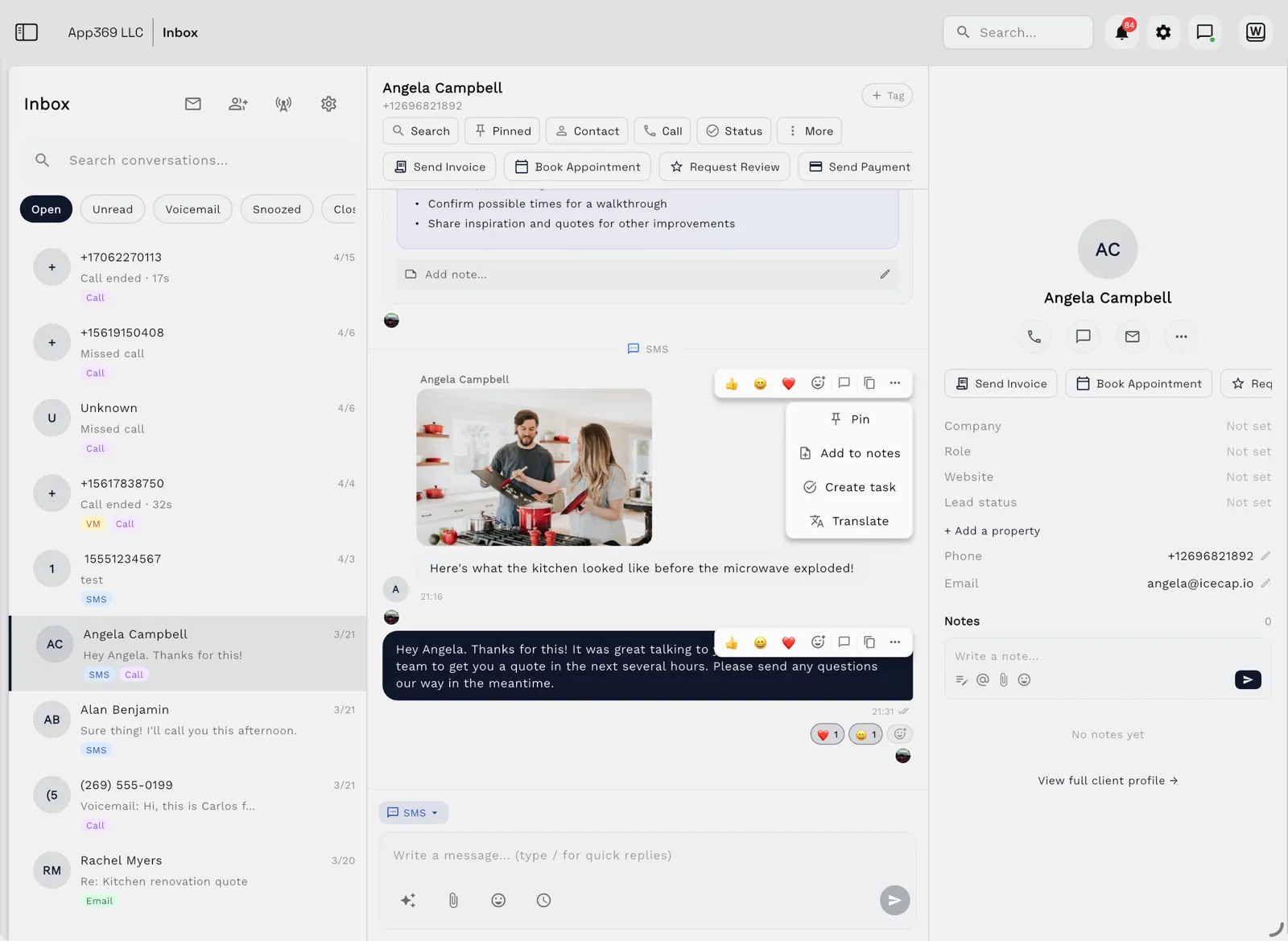
Email, SMS, calls, and voicemail land beside the client record — with AI summaries, so anyone on the team can reply with full context.

Workspace369 shared inbox showing email, SMS, and call history beside a client record
03

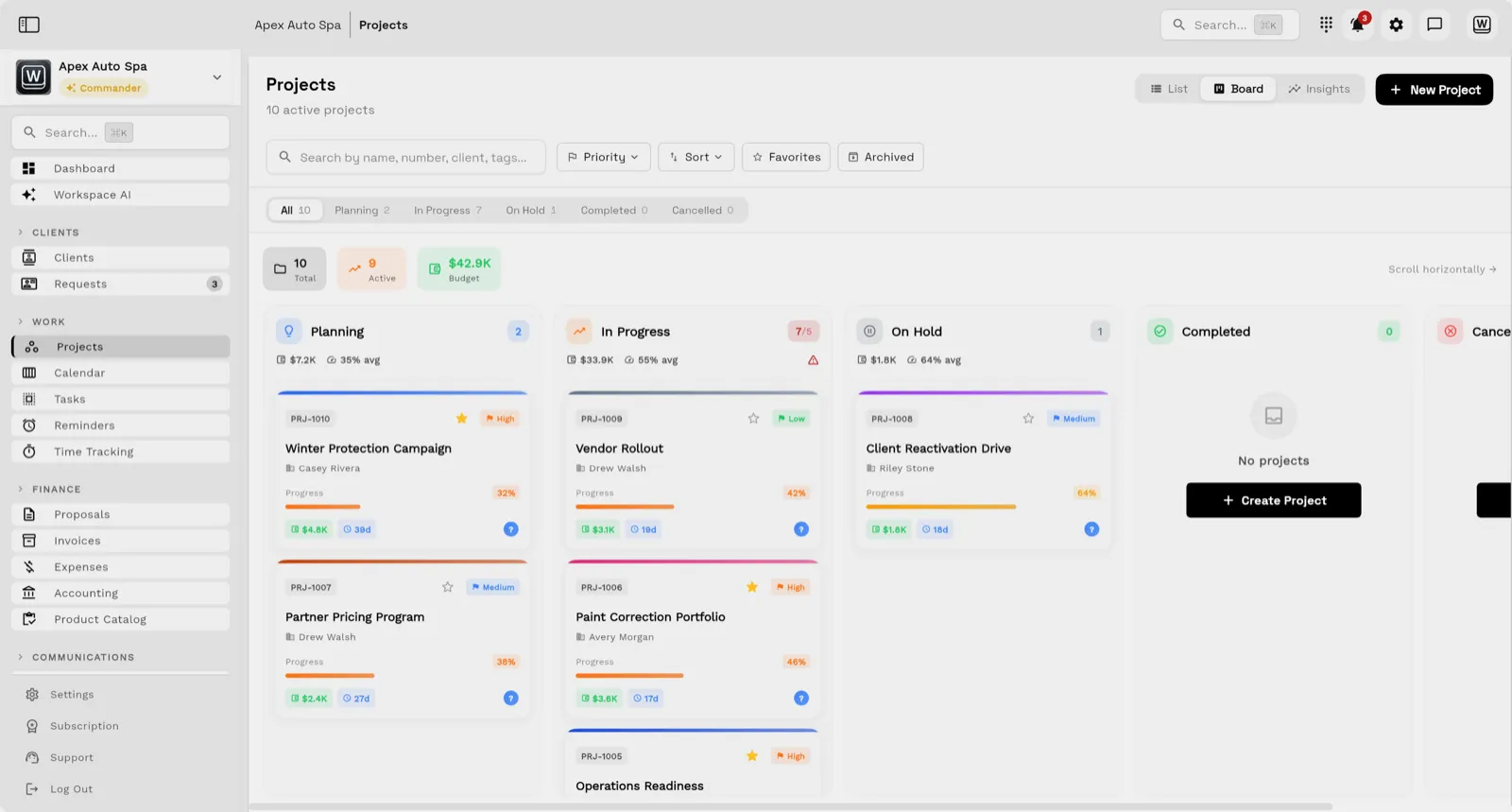
Client work, organized as projects

Tasks, files, and status for every engagement — visible to the team and, through the client portal, to the client.

Workspace369 project board showing client work organized into stages with owners and status
04

Proposals to paid invoices

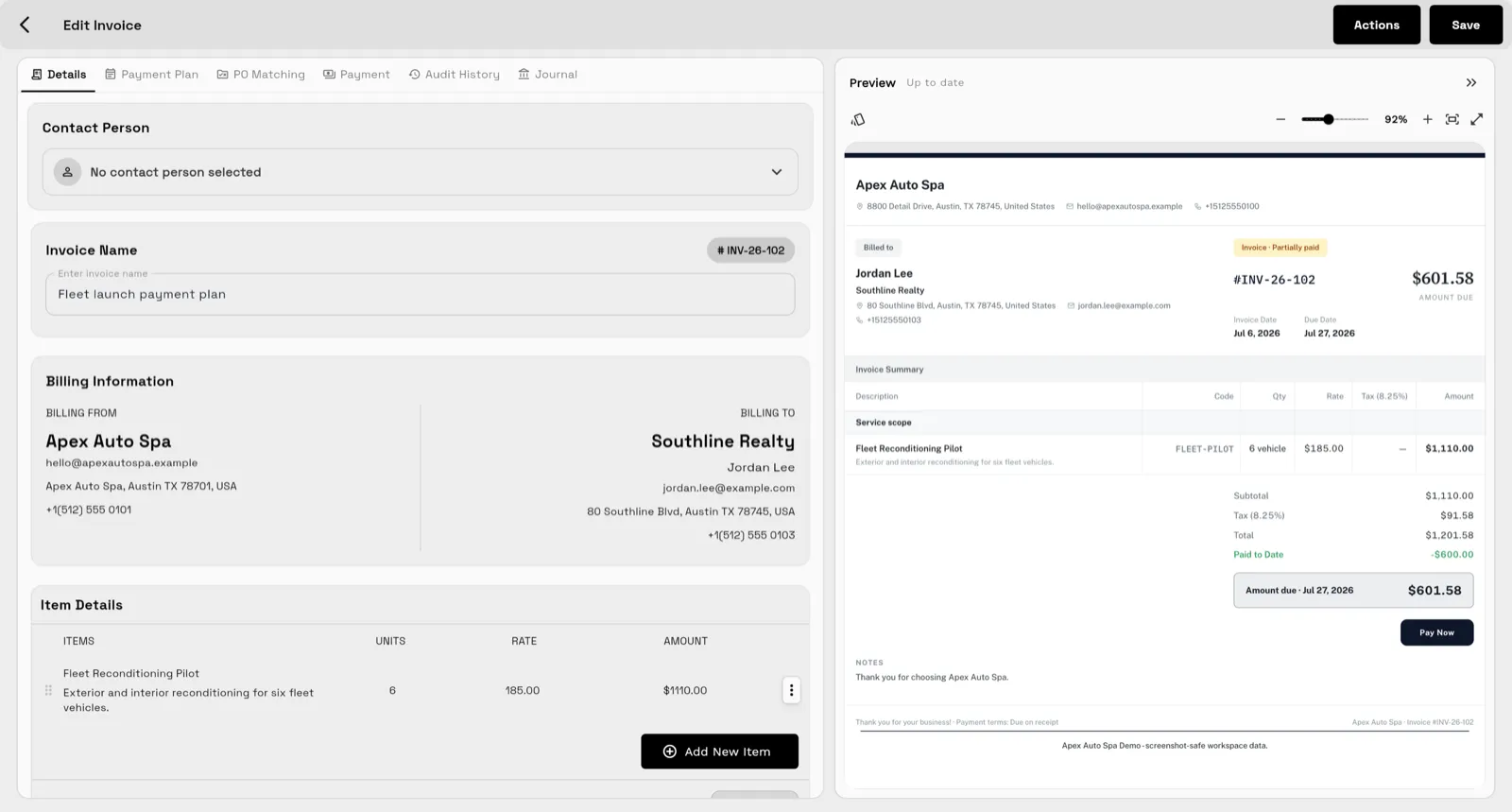
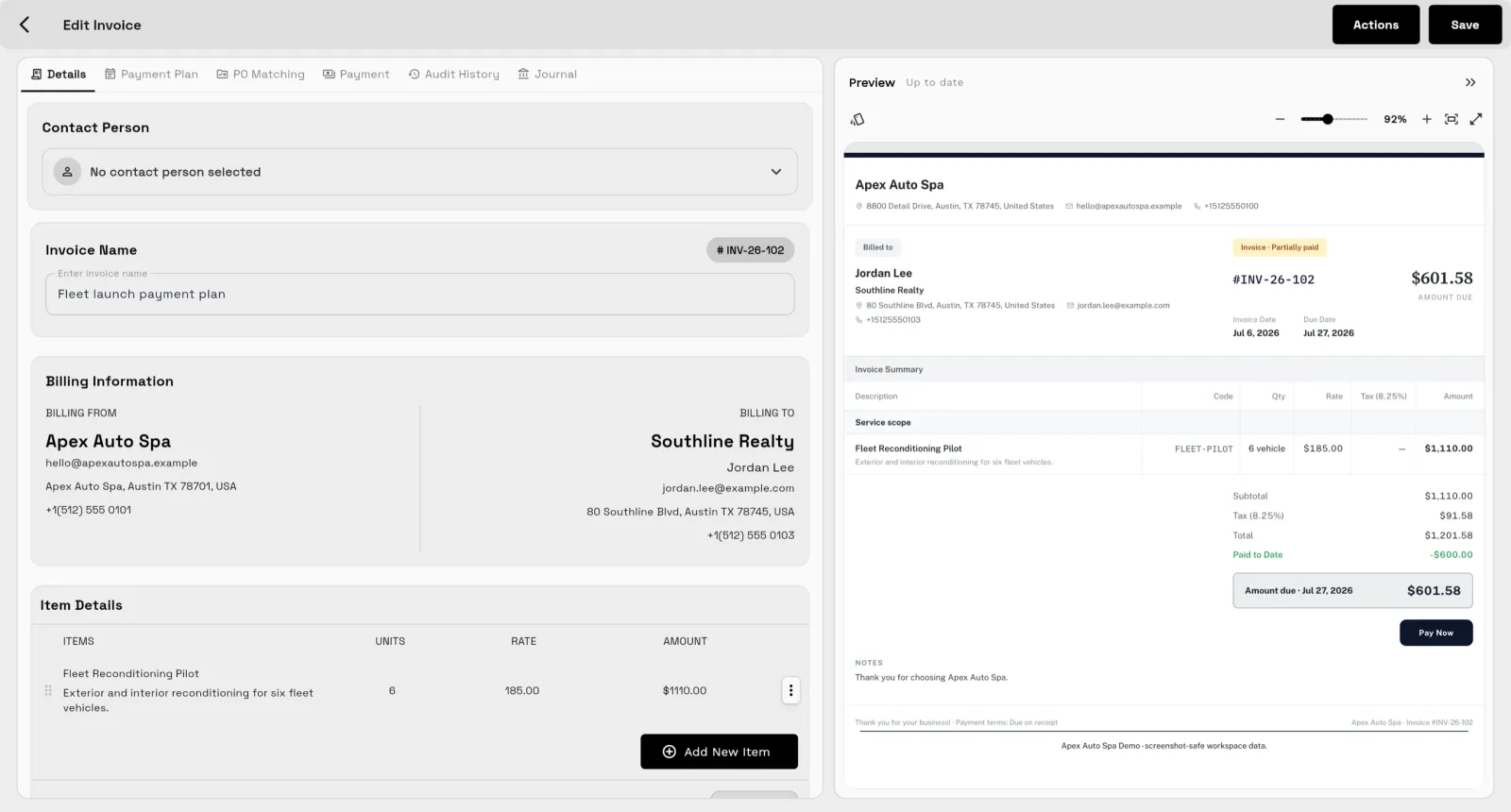
Send quotes, bill milestones or retainers, and let automated reminders chase anything outstanding.

Workspace369 invoice editor showing line items, payment terms, and client details

Workflow

Workflow for Program Transitions

01

Updating the Client Record

When a dog owner decides to change from individual sessions to a group program after an initial consultation, the trainer first opens the client records. The trainer notes the program change in the brief, updating the dog's current behavioral status and training path. This ensures that any team member reviewing the profile understands the current status of the handler and dog.

02

Issuing a Revised Proposal

The trainer generates a new proposal detailing the group program terms, fees, and schedule. This document outlines the scope of the new training track. The proposal is sent directly to the dog owner via the client portal, giving them a clear breakdown of the transition. The owner approves and e-signs the document before the trainer modifies any active schedules.

03

Adjusting Projects and Tasks

Once the proposal is accepted, the trainer creates a new project dedicated to the group program. Within this project, the operator establishes specific tasks for tracking program milestones, such as verifying updated vaccination files. Old tasks related to individual sessions are marked as complete or cancelled, keeping the operational view focused on the active group milestones.

04

Reconciling Scheduling and Calendars

The operator opens the scheduling module to remove the dog owner from individual session slots. The trainer then adds the client to the designated group program calendar times and checks that these new entries do not conflict with existing training commitments, so the calendar reflects the handler's new availability and class times.

05

Generating the Transition Invoice

The trainer reviews past payments in the invoicing module and calculates the balance adjustment for the group program. A new invoice is generated to reflect the updated pricing structure. The trainer sends this invoice to the client portal, where the dog owner reviews the billing adjustments and pays online by card before the first group session begins.

Product coverage

Client operations for dog trainers

  • Verify that the client record shows the note on the transition from individual sessions to the group program within the main brief.
  • Confirm that the updated invoice reflects the correct price difference and is visible to the dog owner inside the client portal before group sessions commence.
  • Check that the scheduling module displays the client on the new group timetable while completely removing previous individual calendar reservations without error.
Client records
Proposals
Projects and tasks
Files
Conversations
Scheduling
Invoices
Client portal
Workflow Automations

Loved on the App Store

Rated by the people running their client work on it.

★★★★★
Finally feels calm

Bounced between three or four all-in-one tools and always ended up in a mess of tabs. This is the first one that feels calm. Set up my client projects in ten minutes.

Justin R. · Solo founder · App Store review
★★★★★
Painless team rollout

Rolled it out to our eight-person team and adoption was painless — intuitive and polished. I'd love more integrations, but they keep shipping.

Samantha D. · Operations lead · App Store review
★★★★★
Hours back every week

Was juggling separate tools for notes, tasks, docs, and updates. Consolidating into one place has genuinely saved me hours each week. Support is responsive too.

Alicia N. · Agency founder · App Store review

Get started

See Workspace369 on your own client work.

Start a free trial or talk to sales — either way, you will see the whole loop: inbox, projects, portal, and billing.

FAQ

Evaluation and Verification Criteria

Can Workspace369 guarantee specific dog behavior outcomes?

No software can guarantee behavior outcomes; they depend on the trainer's methodology, the dog's temperament, and the handler's consistency. Workspace369 runs the business around the training: client records, proposals, scheduling, projects and invoices.

How does the system handle class capacity limits for group programs?

Trainers set each group’s safe handling number and check the calendar and client list against it before adding a dog. Workspace369 keeps the group schedule, the enrolled clients and their records in one place, so a full session is easy to spot.

Where are dog vaccination files stored during a program shift?

From Specialist, vaccination certificates and liability waivers are stored as file attachments on the specific client record. When a client changes programs, these files remain attached to their profile, allowing the trainer to check vaccination status before the dog enters a group environment with other animals.

Can clients view their updated invoices and proposals independently?

Yes, dog owners can access their active proposals, schedules, and invoices through the client portal. When a trainer updates a program after a consultation, the new documents are published to the portal, allowing the owner to review the changes and settle invoices without needing direct email exchanges.

Ready when you are

See where Workspace369 fits into your client-work flow.

Start with the modules you need today, then turn on AI, automations, accounting, inventory, requests, and reporting as the operation grows.