Best CRM for Dog Trainers 2026: packages, classes, notes
Best CRM for dog trainers: six tools compared on price, session packages, class rosters, client notes and billing, plus a board-and-train test for any trial.
We make Workspace369, which is on this list. Weigh our ranking with that in mind.

By Simon Dziak, Founder, Workspace369 · LinkedIn
The best CRM for dog trainers depends on how you sell. If you run group classes and sell session packages, start with a dog-business tool such as DogBizPro, Pawfinity or Gingr. If your income is board-and-train programs and private coaching sold by proposal with a deposit, Workspace369 covers the records, tasks and invoices around the training. Acuity and Square Appointments are general schedulers that can sell packages. To size a deposit before you quote a program, use the free deposit calculator.
Disclosure and method: Workspace369 publishes this guide and is one of the options, and we rank it below the dog-specific tools for class rosters and attendance. It is a documentation-based shortlist, not a hands-on benchmark. Official vendor pages were reviewed on October 23, 2026. Confirm current plans with each vendor before you buy.
Key takeaways
- DogBizPro is built for dog trainers: its features page lists class packages with remaining credits, printable class rosters, attendance, waivers, vaccine dates and private training, from $39.99 a month (Basic, 1 user and 4 employees).
- Pawfinity Groom & Train is $55 a month billed annually ($60 monthly) and its dog training page lists prepay credits and unlimited session notes; its trial is 7 days with no card.
- Gingr Spa, which Gingr describes as designed for groomers and trainers, is $100 a month billed annually ($109 monthly); it lists no trial, only a demo.
- Workspace369 Cadet is $29 a month ($23.25 billed yearly) for one seat and 5 active projects; it has no class rosters or attendance, and online booking starts at Specialist ($149).
- Acuity Scheduling sells packages from its Standard plan at $27 a month billed annually; Square Appointments has a $0 Free plan and Plus at $49 a month, but its pages do not confirm class booking or packages on any tier.
What's inside?
What a CRM for dog trainers is (and what it is not)How we compared these toolsThe best CRM for dog trainers in 2026Side-by-side comparisonWhich tool fits your training business?Workspace369 in action for a board-and-train programRun a board-and-train test during the trialWhen to keep it simple
What a CRM for dog trainers is (and what it is not)
A CRM for dog trainers is the business record behind your training: the owner, each dog, the package they bought, which class they are in, what homework you set and what is unpaid. It is not a training method, and no tool improves a dog's behavior. For the grooming side of pet work, see our dog grooming software guide, and for in-home visits see the guide for pet sitters and dog walkers. This guide stays on trainers: packages, class rosters, homework and progress notes. The CRM for dog trainers page shows the Workspace369 view.
How we compared these tools
We checked six tools on the same five points, using only each vendor's own pages:
- Entry price for one trainer, as listed on October 23, 2026, with billing terms.
- Packages and classes: session packages or credits, class scheduling, rosters and attendance.
- Client and dog records: notes, vaccine dates, waivers and files.
- Billing and deposits: online payment, invoices and proposals.
- Trial terms: length and whether a card is stated as needed.
We did not test speed, support, data import or how well any tool handles a full class. MoeGo is well known in pet software, but its pricing page lists Training as coming soon, so it is not ranked here. The order reflects fit for a trainer who sells packages and classes, not commercial interest.
The best CRM for dog trainers in 2026
1. DogBizPro, best for packages and class rosters
DogBizPro is online software for dog professionals with training, daycare and boarding modules. Its features page lists packages for private training, daycare and boarding with remaining and used credits, class scheduling with printable rosters, class notes and attendance, events and workshops, vaccine dates, client waivers, and online registration with payment through CardConnect, Authorize.NET or PayPal. Subscription plans are Basic at $39.99 a month or $399.99 a year (1 user, 4 employees), Intermediate at $69.99 or $699.99 (4 users, 14 employees) and Professional at $119.99 or $1,199.99 (no cap on logins or employees). The sign-up page lists no buy-in price. The product is still called DogBizPro on its site, which moved from dogbizpro.com to dogbusinessprogram.com.
Limitations: the features page names no proposals, project board or homework feature, so sales and follow-up happen elsewhere. It offers a shared demo system and a phone demo rather than a free trial, and its terms say fees are non-refundable.
Best for: trainers who run group classes and sell packages and want rosters and attendance built in.
2. Pawfinity, best for prepay credits and session notes
Pawfinity lists a dog training edition. Its page calls prepay credits a must-have for trainers: clients buy sessions in advance and use them as the course progresses, with volume discounts. It also lists unlimited session notes, subscriptions and memberships, a client dashboard, online booking and 2-way SMS. Pricing shows Groom & Train at $55 a month billed annually ($60 monthly), and the Royal package, which adds boarding and daycare, at $100 ($110 monthly). The trial is 7 days with no credit card. SMS is an add-on at $0.05 per text under 500 texts a month.
Limitations: the Groom & Train plan is aimed at grooming, training, nail or dental services, so some features you pay for will not apply to a training-only business. Its pages name no class roster feature, so ask about group classes in the trial.
Best for: trainers who sell prepaid session bundles and keep detailed notes per dog.
3. Gingr, best for trainers who also run day training or boarding
Gingr describes its Spa plan as designed for groomers and trainers offering appointment-based services, at $100 a month billed annually ($109 monthly). Play, for daycare and day training facilities with training session scheduling, is $142 annually ($169 monthly), and Stay, for boarding, is $154 annually ($179 monthly with integrated payments active). Every plan lists a customer portal, mobile app, integrated payments and automated notifications. Gingr lists no free trial; you request a demo.
Limitations: it is the most expensive entry plan here at one seat, and the pricing page does not name class rosters or session packages for the Spa plan. It suits a facility more than an independent trainer. It ranks above Workspace369 because its Play plan lists training session scheduling and it is built for pet-care businesses, with a customer portal and mobile app on every plan.
Best for: trainers whose business is moving toward a facility with daycare or boarding.
4. Workspace369, best for board-and-train and coaching sold by proposal
Workspace369 keeps the client record, Proposals the owner approves online, deposits, a private client portal, file attachments, intake forms, tasks and invoices in one place. A board-and-train program fits as one project: send a proposal with the program fee and deposit, track the stages and homework as tasks, share written notes through the portal and invoice the balance at pickup. Cadet is $29 a month for one seat ($23.25 billed yearly) and includes recurring invoices, retainers and payment schedules, time tracking, client custom fields and email automations. The screenshot below is a demo record, not a customer result.
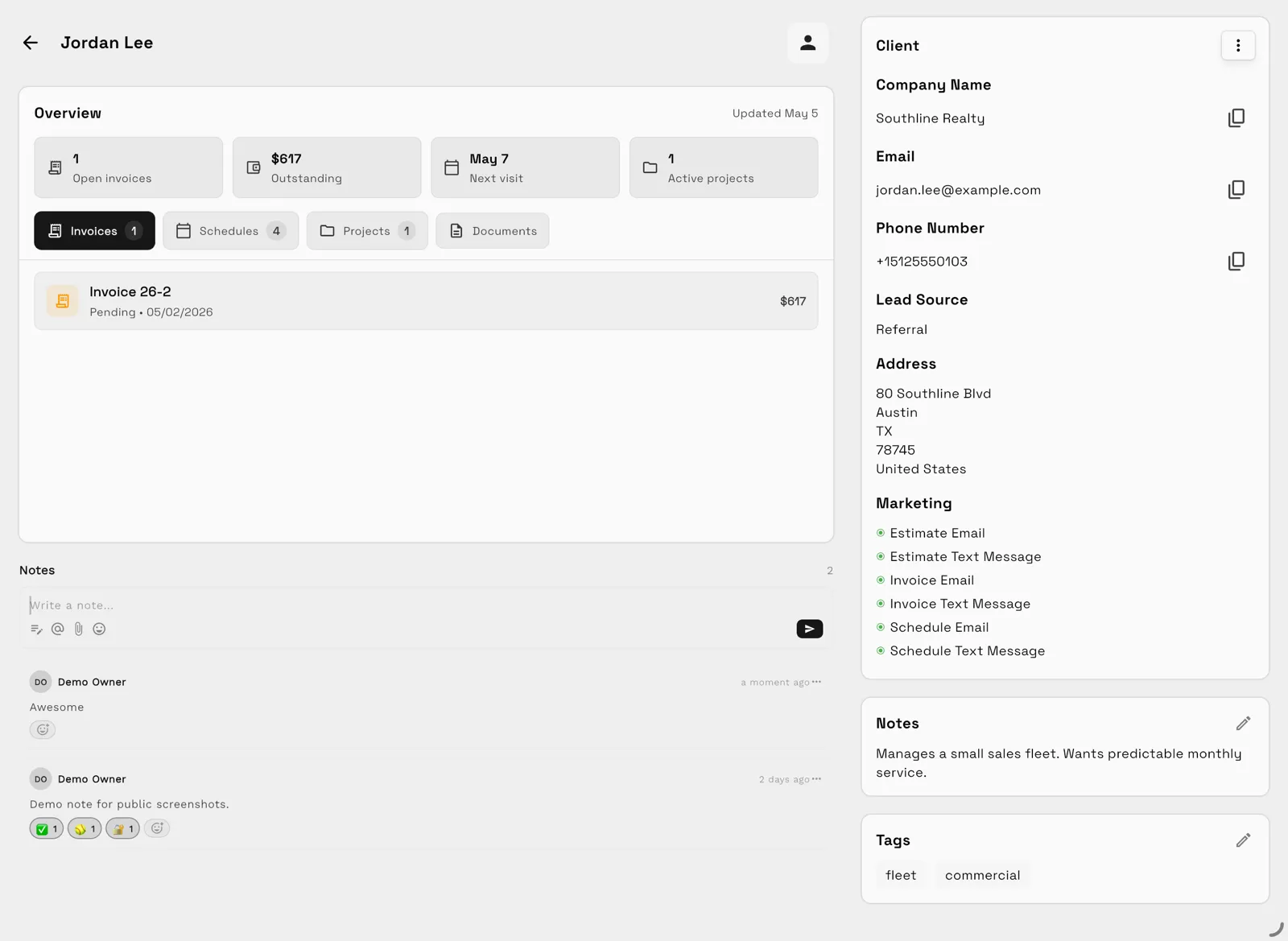
Limitations: it has no class rosters, attendance sheets or package credit counter, and no built-in vaccine-expiry tracking, so DogBizPro and Pawfinity fit class-based training better; Cadet's $29 is lower only because it lacks those tools. Online booking starts at Specialist ($149 a month, 10 seats); Cadet allows 5 active projects and Voyager ($74 a month, 2 seats) adds SMS. The 14-day trial needs a card.
Best for: a trainer who sells board-and-train programs or private coaching by proposal and wants deposits, tasks and invoices on one record.
5. Acuity Scheduling, best for selling packages through a booking page
Acuity Scheduling lists Starter at $16 a month billed annually ($20 monthly) for 1 calendar, and Standard at $27 ($34 monthly) for up to 6 calendars. Standard adds text reminders, memberships and packages, a waitlist and gift certificates. Premium is $55 ($69 monthly). Intake forms are on every plan, and the 7-day trial needs no credit card. For a trainer, the draw is a clean booking page where an owner picks a time and pays for a bundle of sessions up front, with email reminders cutting no-shows. Payments run through Stripe, Square or other listed providers, per the pricing page.
Limitations: it is a scheduler, not a dog-business tool. It has no dog profiles, vaccine records or progress notes, so you would keep those somewhere else. Starter has no packages.
Best for: a trainer who mainly needs a booking page that sells prepaid session packages.
6. Square Appointments, best for a $0 start with payments
Square Appointments lists Free at $0, Plus at $49 and Premium at $149 a month per location, with a 30-day trial on the paid tiers (checked October 23, 2026). Our Square Appointments comparison covers the differences with Workspace369. Free includes online booking, appointment reminders and unlimited staff calendars, which suits a trainer who wants owners to book without a phone call; the page we fetched did not show class booking or packages in its feature lists, so check before you plan around them.
Limitations: it is general appointment software with no dog records, rosters or training notes. Payment processing is charged on top of the plan.
Best for: a new trainer who wants online booking and card payments before paying for dog-specific software.
Side-by-side comparison
| Tool | Entry price | Packages and classes | Trial | Main limit |
|---|---|---|---|---|
| DogBizPro | $39.99 per month (Basic); $399.99 yearly | Packages with credits, rosters, attendance | Demo only | No proposals or homework feature listed |
| Pawfinity | $55 per month billed annually; $60 monthly | Prepay credits, session notes | 7 days, no card | Class rosters not named |
| Gingr | $100 per month billed annually; $109 monthly | Training session scheduling (Play plan) | Demo only | Highest entry price here |
| Workspace369 | $29 per month ($23.25 yearly) | Proposals, tasks, invoices; no rosters | 14 days, card required | 1 seat, 5 projects, booking at Specialist |
| Acuity Scheduling | $16 per month billed annually; $20 monthly | Packages from Standard ($27 yearly) | 7 days, no card | No dog records |
| Square Appointments | Free ($0); Plus $49 per month | Class booking and packages not confirmed | 30 days on paid tiers | No dog records |
Which tool fits your training business?
| If you mostly need | Start with | Why |
|---|---|---|
| Group classes, rosters and attendance | DogBizPro | Rosters, attendance and packages are named on its features page |
| Prepaid session bundles with detailed notes | Pawfinity | Prepay credits and unlimited session notes |
| A growing facility with daycare or boarding | Gingr | Play and Stay plans for facilities |
| Board-and-train by proposal with a deposit | Workspace369 | Proposals, tasks, portal and invoices on one record |
| A booking page that sells packages | Acuity Scheduling | Packages on Standard from $27 |
| A free-plan start with online booking and payments | Square Appointments | Free plan; Plus $49 per location |
Workspace369 in action for a board-and-train program
For the board-and-train route, the work lives on a project board and an invoice. The first screenshot below is the Workspace369 projects board in a demo workspace with sample data, where a program like "Board-and-train, week 2" would sit in a stage column with its progress and budget on the card. The second is an invoice editor with a live preview, also demo data. In a real program you would send the deposit through Proposals and invoice the balance through invoices, with the client seeing both in the portal.
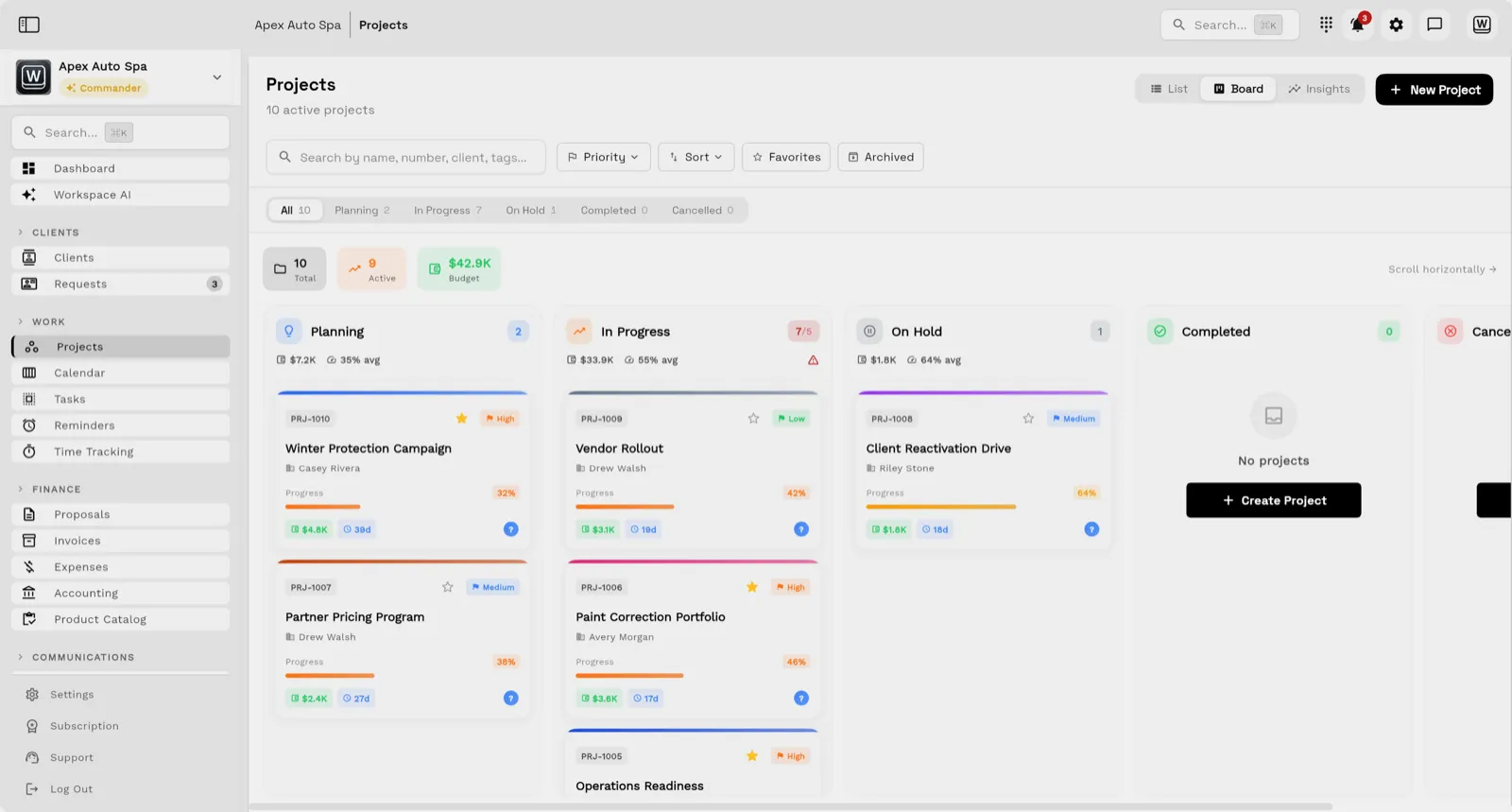
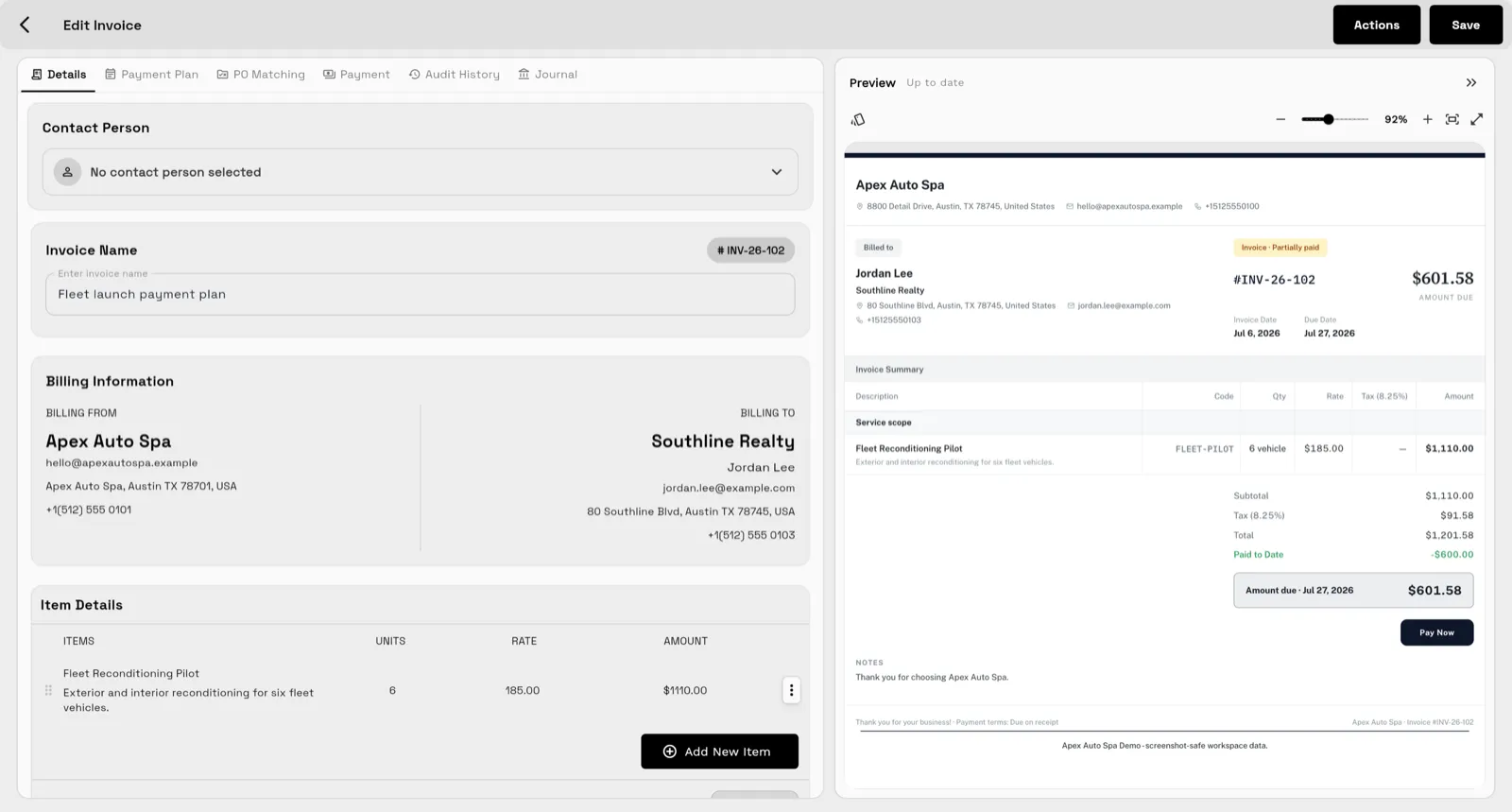
The demo workspace is not a dog business and shows no class roster, attendance sheet or package credit counter, because Workspace369 does not have them. Payment plans on an invoice start at Specialist.
Run a board-and-train test during the trial
Take one fictional client with a demo dog through each tool you shortlist:
- Record the owner, the dog, vaccine dates and a waiver or attached terms.
- Sell a program or package and take the deposit online.
- Enroll the dog in a group class, and print or view the roster.
- Add a homework item and a progress note after session two.
- Use one session from the package, and check the remaining balance.
- Invoice the balance, then export the client record and see what comes out.
The best tool keeps the package, class, notes and invoice on one record. Anything you retype between screens is the leak this test finds.

When to keep it simple
If you teach a handful of private clients, a calendar, a shared folder and an invoice template can carry you. Move to a client tool when you chase balances by text, lose track of who has sessions left, or cannot say which dogs are cleared for a group class. The dog trainers product page shows how Workspace369 handles communications, and the pricing page has current plans. Workflow Automations can send reminders, with email automations on every plan and SMS steps from Voyager.
Before importing real clients, run one full program on demo data and check that your records can be exported.
Sources reviewed for this guide
- Workspace369 pricingPlan matrix reviewed October 23, 2026.
- DogBizPro sign-up and plans (dogbusinessprogram.com)Official pricing page reviewed October 23, 2026 for Basic, Intermediate and Professional subscription prices; no buy-in plan price is listed there.
- DogBizPro featuresOfficial features page reviewed October 23, 2026 for packages, classes, rosters, attendance and records.
- Pawfinity pricingOfficial pricing page reviewed October 23, 2026 for annual plan prices, SMS pricing and trial terms; the monthly toggle could not be re-clicked that day, so monthly prices ($60 and $110) are from October 21, 2026.
- Pawfinity dog training softwareOfficial product page reviewed October 23, 2026 for prepay credits and session notes.
- Gingr pricingOfficial pricing page reviewed October 23, 2026 for Spa, Play and Stay prices; no trial is listed, only a demo.
- Acuity Scheduling pricingOfficial pricing page reviewed October 23, 2026 for Starter, Standard and Premium prices and trial terms.
- Square Appointments pricingOfficial pricing page reviewed October 23, 2026 for Free ($0), Plus ($49) and Premium ($149) per location and the 30-day trial on paid tiers; the tier with class booking and packages is not confirmed.
- MoeGo pricingOfficial pricing page reviewed October 23, 2026; its Training option is listed as coming soon.
Workspace369 publishes this documentation-based comparison and is one of the options. It is not an independent ranking or a hands-on benchmark.
Run client follow-up in one workspace.
CRM, inbox, voice, invoicing, payments, projects, files, AI, and workflow automations — connected instead of exported.
14-day free trial. Card required. After the trial: from $29/month. Renews automatically every month until you cancel. Cancel anytime in Settings → Billing.