CRM for insurance agents, from first prospect to renewal follow-up.

Independent insurance agents need a clear line between prospect relationships and policy underwriting. Workspace369 runs the relationship side of the agency: client records, scheduling, proposals, invoices, tasks and client messages.

14-day free trial. Card required. After the trial: from $29/month. Renews automatically every month until you cancel. Cancel anytime in Settings → Billing.

2 minutes: email, mobile number (code for US/Canada only), card. $0 for 14 days.

Clientthe relationship and agreed brief
Worktasks with a responsible person
Billinginvoices and commercial context
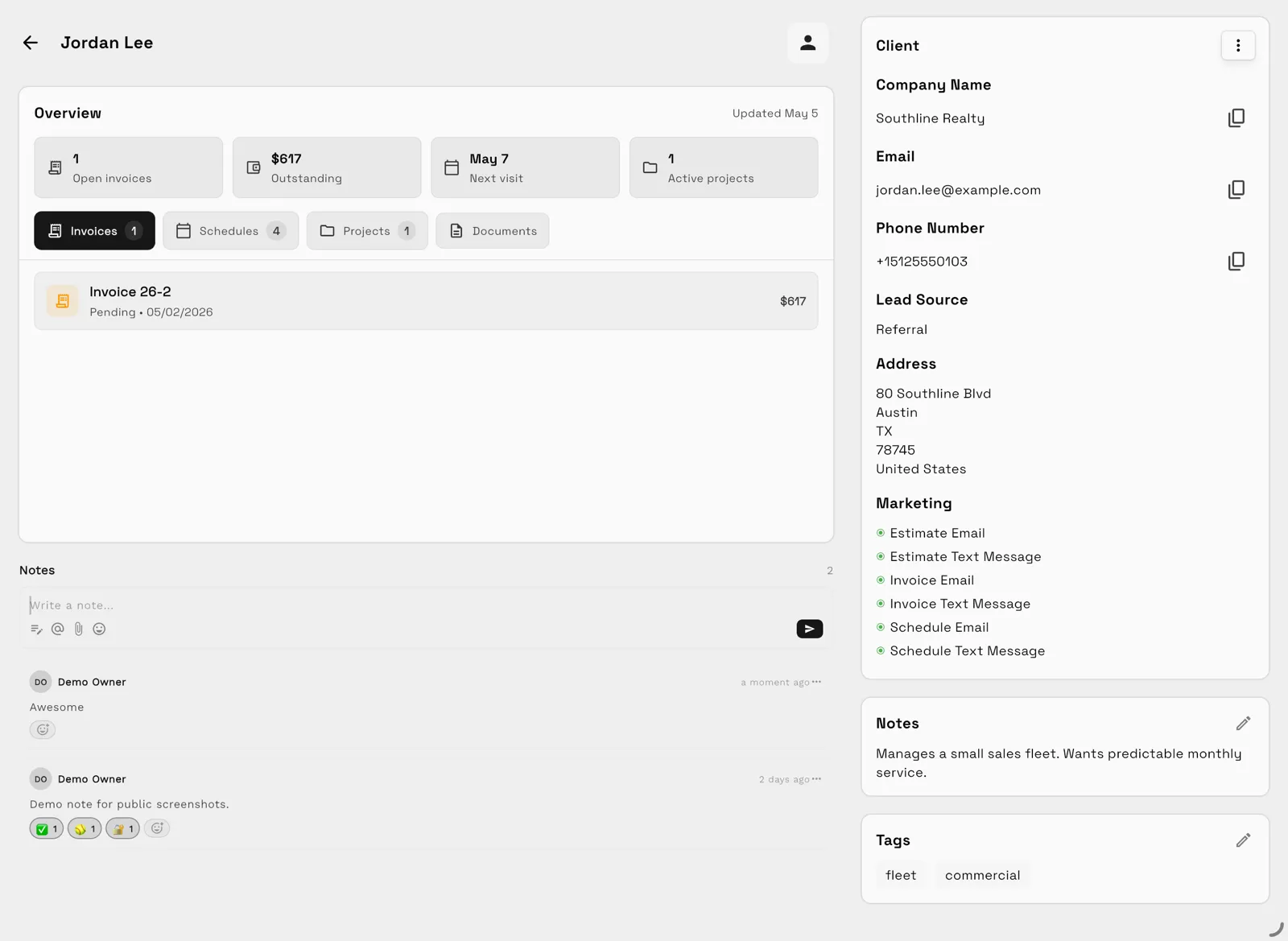
Workspace369 client record showing history, files, communication, and invoices in one profile

It guides prospective policyholders from initial inquiry through scheduled renewal reviews, with every conversation, document and follow-up on one client record.

Key facts

CRM for insurance agents at Workspace369 covers 9 areas, including client records, proposals, projects and tasks.

The workflow runs in 5 steps, from "initial prospect record creation" to "invoicing and task closure".

Workspace369 starts at $29/mo for 1 seat, and the Commander plan includes 20 seats and 12× Cadet usage at $299/mo.

Additional seats cost $10 each; full pricing is public on the Workspace369 pricing page.

CRM for insurance agents compared

Insurance CRMs lead for agents: AgencyZoom (Growth $199 a month, $159.20 billed yearly, up to 7 users) lists renewal automation and an AMS integration on top of your agency management system, Insureio ($25 a month) fits life, long-term care and annuity producers, and HubSpot offers free tools for 2 users. Workspace369 lists no rater, carrier or AMS link, so it fits only an agent who wants proposals, contracts and invoices for a side service on one record. Compliance rules vary by state and carrier, so check them with your own team.

ToolPlan pricedMonthlyBilled yearlyInsurance items at that planLimitsTrial
AgencyZoomGrowth (Independent tab)$199$159.20 a monthRenewal automation, AMS integration, two-way email and textingUp to 7 users included14 days
InsureioBasic$25 billed monthlyNot shownE-application and drop-ticket solution, quoting widgetsPrice basis not stated30 days
HubSpot Sales HubStarter$20 per seat$20 per seatGeneral CRM, calling, task queues; no insurance items namedFree tools for 2 usersFree tools, no card
Salesforce Financial Services CloudSales CoreNot shown$325 per user a monthIndustry data models; Insurance Brokerages from Advanced ($500)Per-user pricing30 days, no card
Workspace369Cadet$29$23.25 a monthNo rater, carrier or AMS link; webhooks and API from Specialist1 user, 5 active projects14 days, card required

Prices and limits from each vendor's official pricing page, checked October 19, 2026, in USD. Prices change, so confirm before you buy. Read the full buyer's guide.

Operational Bottlenecks in Independent Agencies

Scattered Renewal Communications

Insurance agents often lose track of prospect conversations when renewal dates approach. Because policy systems hold coverage metrics but lack flexible communication logs, agents bounce between platforms. This disconnect leads to missed follow-up appointments and unaddressed prospect questions. Tracking these interactions in Workspace369 client records helps staff organize check-ins before policy expiration dates, keeping renewals moving on schedule.
Unstructured Prospect Onboarding Tasks

Collecting preliminary client details frequently stalls without structured task assignments. Agents manually track who needs to supply vehicle identifiers or property details. Without clear administrative tasks linked to client records, follow-ups are delayed. Managing these operational steps within a dedicated task framework helps staff members track when to request documents before passing verified information into a separate underwriting or comparative rating engine.

Disconnected Administrative Scheduling

Booking annual policy reviews via disconnected calendars causes scheduling conflicts and missed retention opportunities. When consultation dates are not tied directly to client records or ongoing tasks, agents lack the context needed for the meeting. Integrating administrative scheduling with client files allows staff to view past conversations and outstanding proposals prior to the conversation, reducing preparation delays and improving client service efficiency.

Vague Proposal Tracking

Sending commercial or personal line coverage summaries without tracking capabilities leaves agents guessing about prospect intent. When an agent emails a summary, they cannot verify if the prospect reviewed the timeline. With Proposals, agents see when a prospect opens one (engagement tracking on every plan), attach standard files, and link the interaction to a client portal where prospects view service timelines without exposing internal policy management data.

See the workspace your clients feel.

01

A portal clients actually check

Clients watch progress, files, and invoices in a branded portal instead of asking your team for updates.

Workspace369 client record showing history, files, communication, and invoices in one profile
02

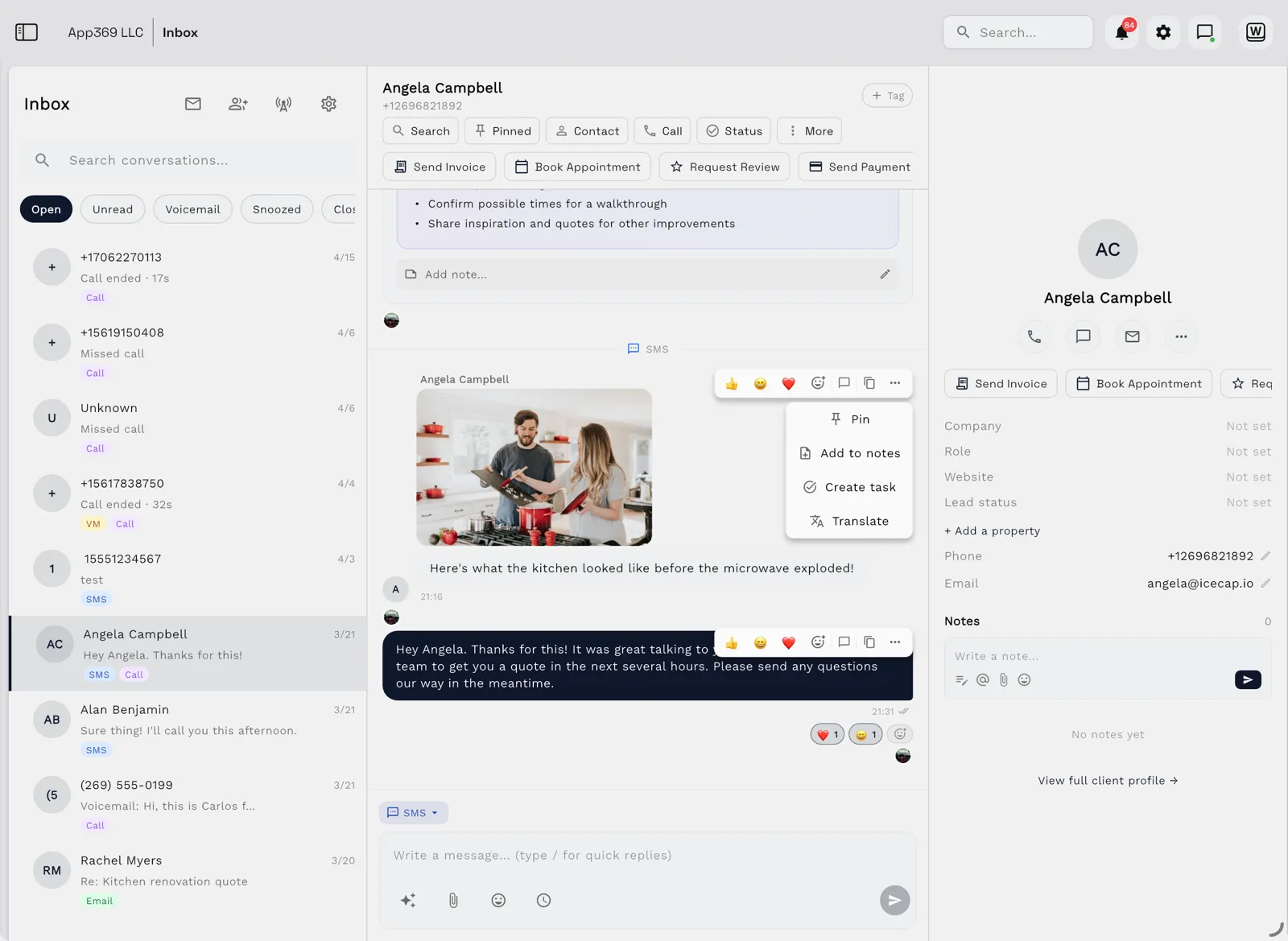
Every channel in one inbox

Email lands beside the client record on every plan; texts, calls and voicemail join it from Voyager, with AI call summaries from Specialist.

Workspace369 shared inbox showing email, SMS, and call history beside a client record
03

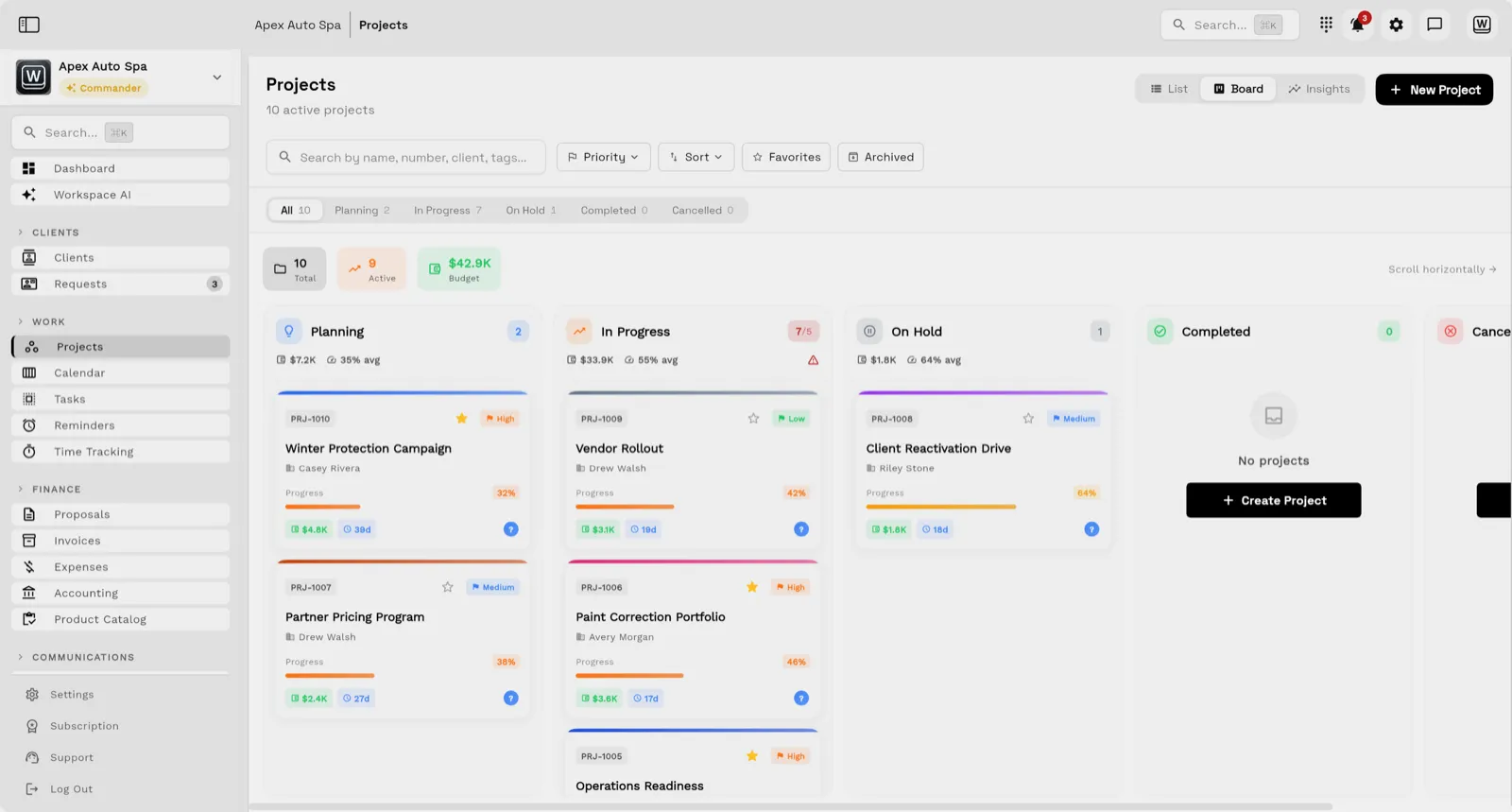
Client work, organized as projects

Tasks, files, and status for every engagement — visible to the team and, through the client portal, to the client.

Workspace369 project board showing client work organized into stages with owners and status
04

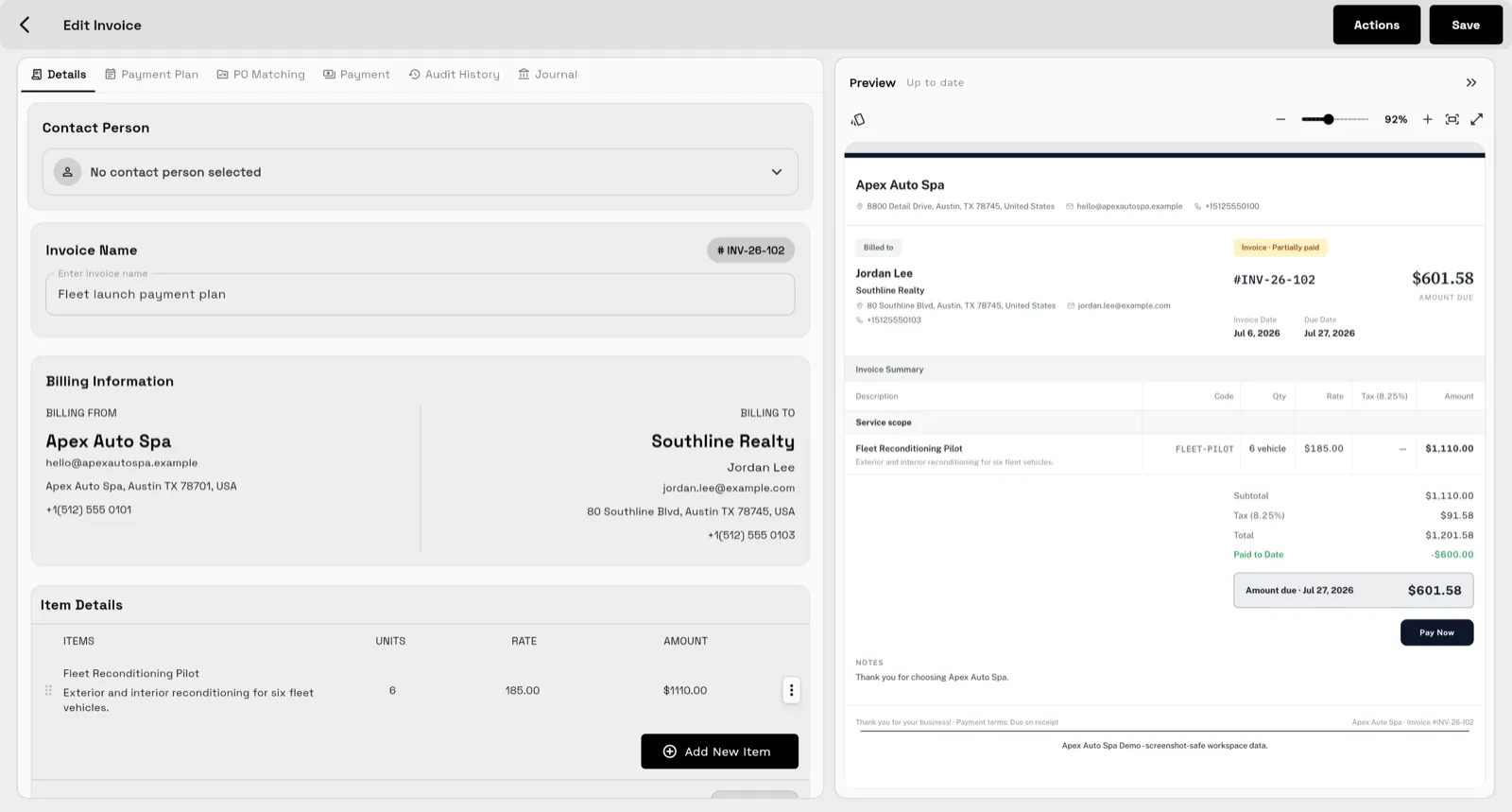
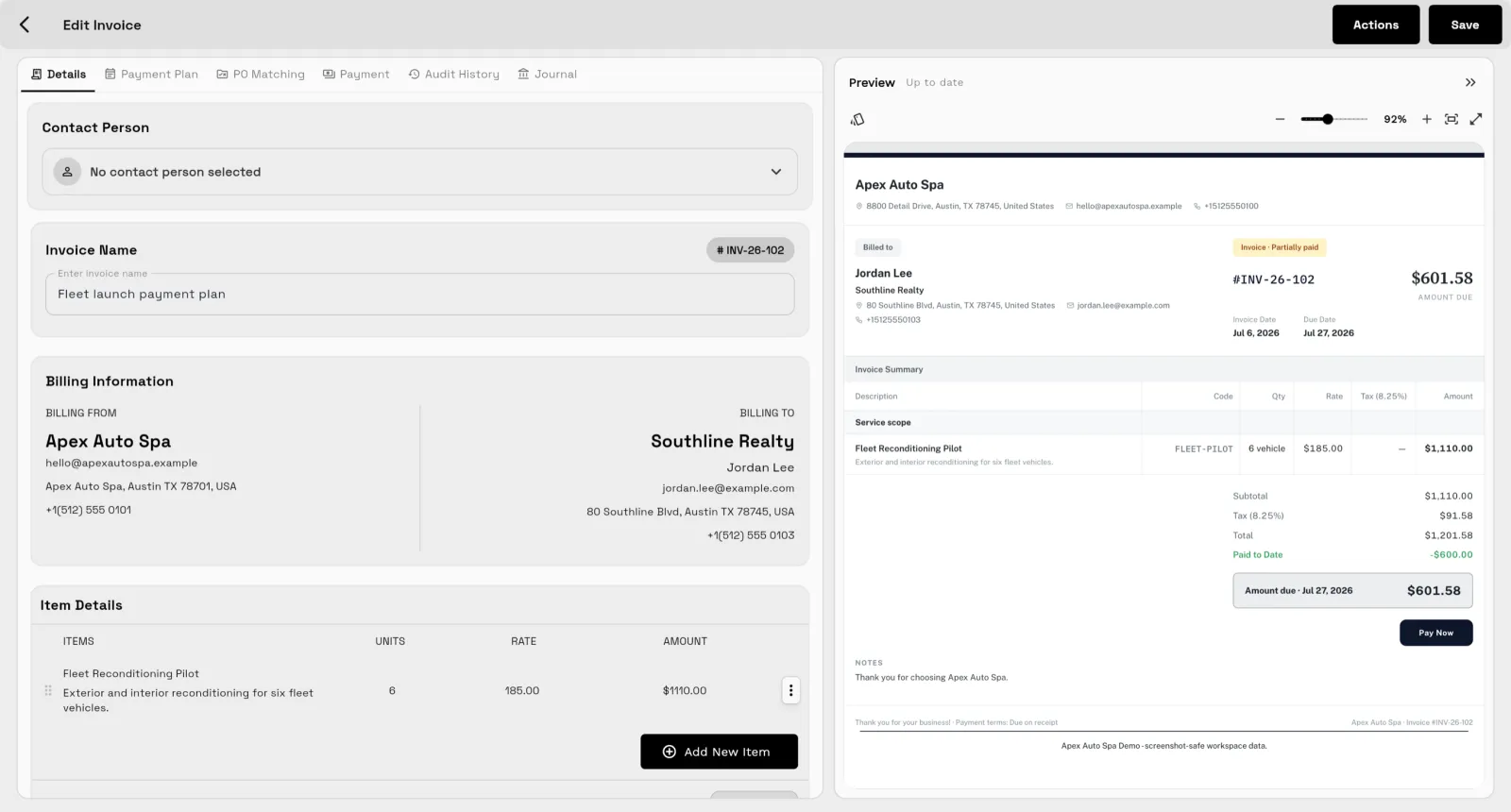
Proposals to paid invoices

Send quotes, bill milestones or retainers, and let automated reminders chase anything outstanding.

Workspace369 invoice editor showing line items, payment terms, and client details

The Client Workflow for Policy Renewals

01

Initial Prospect Record Creation

The workflow begins by entering basic contact information into the client records. Staff members record in the brief that a prospect requires a renewal follow-up in ninety days. The record holds communication details, contact phone numbers, and preferred scheduling times, so staff can reach the prospect the right way when the renewal window opens.

02

Scheduling the Renewal Review

An agent uses the scheduling module to book an initial coverage consultation with the prospect. This calendar entry links directly to the client record, allowing the agent to assign pre-meeting tasks to staff. Staff members verify the appointment details and use conversations to confirm the prospect's availability. This sets the renewal timeline well before formal quoting begins.

03

Gathering Preliminary Documentation

Staff members create specific tasks to collect non-sensitive documents from the prospect. The prospect uploads these items, which are stored within the files section of their profile. Agents review these documents to prepare for the consultation, noting completion status directly in the client records, so nothing is missing when the consultation starts.

04

Issuing Service Proposals

The agent generates a formal proposal outlining the service timelines, agency fees, and consultation schedules. The prospect reviews, approves, and e-signs it through its public link or the client portal, with full visibility of the agency's service commitments.

05

Invoicing and Task Closure

Once the service terms are accepted, the agent issues invoices for any applicable consulting or broker fees. Staff members track payment status within the invoices module. After confirmation, final tasks are marked complete, and a future renewal task is scheduled. The operator then moves the verified prospect information into the policy system for final underwriting and binding, by hand or through webhooks and the API from Specialist.

Client operations for insurance agents

  • A human operator must manually verify the scheduled renewal task and record the follow-up timeline in the agreed brief ninety days before the policy expiration date.
  • The client portal must allow a test prospect to log in, view an active service proposal, and access shared files without errors.
  • An operator must confirm that conversations linked to a specific client record remain visible alongside assigned onboarding tasks without displaying any policy underwriting fields.
Client records
Proposals
Projects and tasks
Files
Conversations
Scheduling
Invoices
Client portal
Workflow Automations

What reviewers say about Workspace369.

★ 5.0 from 12 ratings on the App Store (as of 2026-10-26)

★★★★★
SMB Modernization

Great tool for modernizing small businesses. Ability to leverage AI without technical background.

Foreman345 · · App Store review
★★★★★
True all-in-one system

It beautifully combined my CRM, team calendar, and billing tools so I could finally stop paying for a bunch of separate software subscriptions

samimonroe · · App Store review
★★★★★
Best app for my construction business

Great app. This app solved all my needs! Not only did it help, but it is cheaper than other apps. I highly recommend this app if you want to start organizing and automating your business on another level. Also love the design

SebastianBroco · · App Store review

Quoted exactly as written, in the reviewer’s own language. This is a selection of reviews, not all of them. Reviews from our own team are left out of the selection, but the overall rating includes their ratings.

See Workspace369 on your own client work.

Start a free trial or talk to sales — either way, you will see the whole loop: inbox, projects, portal, and billing.
Start free trial Talk to sales

14-day free trial. Card required. After the trial: from $29/month. Renews automatically every month until you cancel. Cancel anytime in Settings → Billing.

Operational Verification Criteria

Where do premium calculations and comparative quotes fit?

Run premium calculations and comparative quotes in a rating platform such as EZLynx, after checking that it supports your required carrier rates and policy administration details. Workspace369 runs the client relationship around those quotes: records, scheduling, tasks, proposals, client messages, and invoices.

How do we store specific policy coverage details for an active client?

Coverage details belong in your dedicated agency management system. Within Workspace369, record in the brief that a policy exists and schedule tasks for its renewal. Client records and files hold contact details and service documents, so every renewal conversation starts with full context.

Where do prospects sign binding insurance contracts?

Bind policies and execute carrier contracts in your policy administration software. The Workspace369 client portal covers the rest of the relationship: files, projects, invoices, messages, and approvals, with e-signing on agency service proposals.

How are agency consulting fees handled within the platform?

Agents use the invoices module to bill clients for consultations or broker service fees, with online card payments through Stripe. These invoices track payments independently of carrier premium billing, so agency revenue and client records never mix with policy premium accounting.

See where Workspace369 fits into your client-work flow.

Start with the modules you need today, then turn on AI, automations, accounting, inventory, requests, and reporting as the operation grows.

14-day free trial. Card required. After the trial: from $29/month. Renews automatically every month until you cancel. Cancel anytime in Settings → Billing.