Retainer drawdown
A retainer holds a balance that draws down as work is billed against it.
Retainers & Recurring
Bill ongoing work on a schedule. Track a retainer balance as hours are used, repeat invoices on a plan, and let clients approve card autopay.
retainer billing software
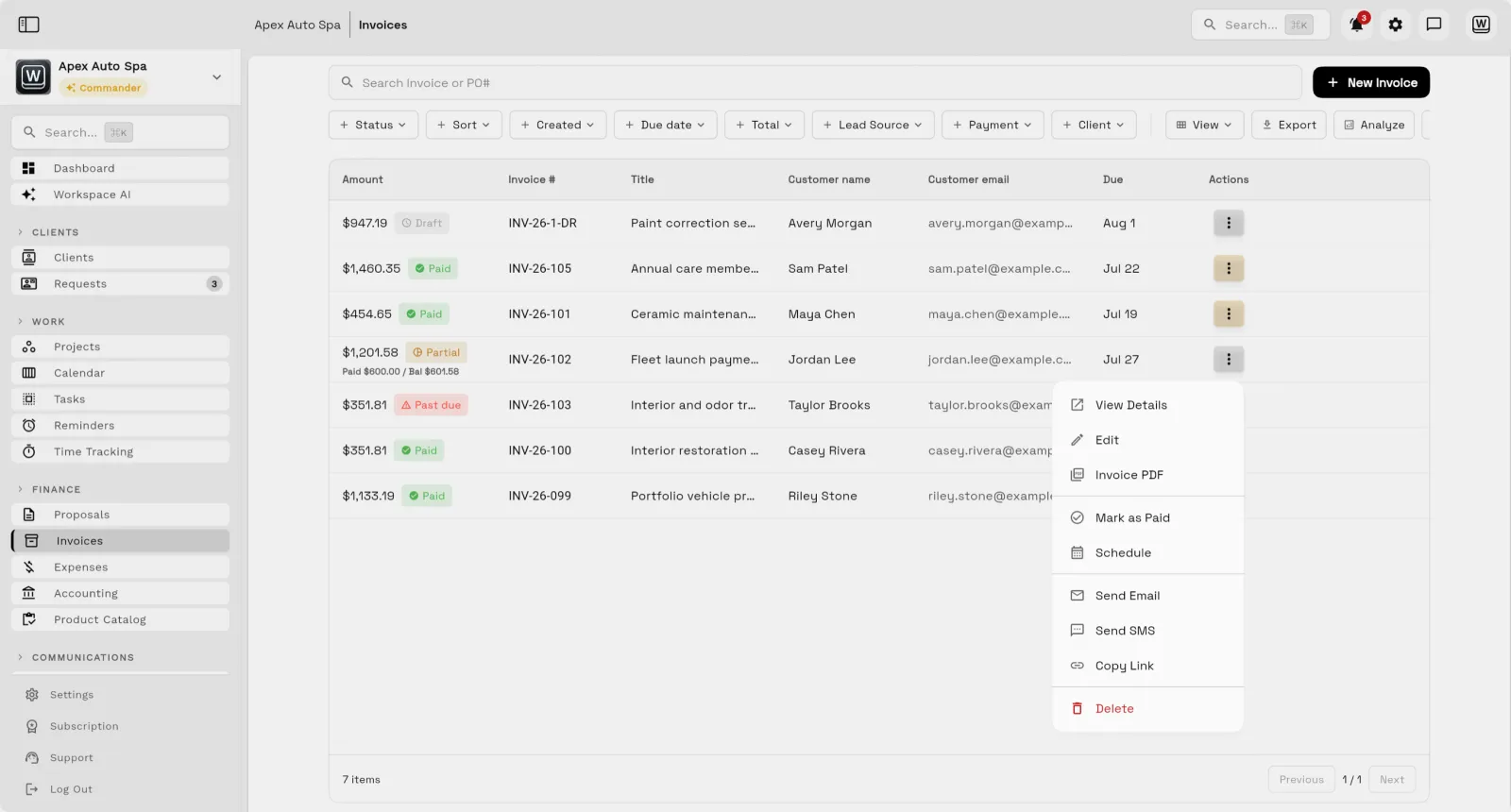
Retainer billing software manages money a client pays in advance and bills repeating work on a schedule. In Workspace369, a retainer holds a balance that draws down, time entries show the hours bank, recurring invoice plans repeat on a schedule, and card autopay needs the client's consent. Retainers, payment schedules, and recurring invoices are listed on every plan.
Reviewed October 12, 2026 by the Workspace369 Product Team. Availability can vary by plan, region, and workspace configuration.
Read the payment plans and retainers documentationWhat it covers
Retainer billing in Workspace369 keeps the balance, the schedule, and the payment method attached to the client.
A retainer holds a balance that draws down as work is billed against it.
Time entries show the hours bank for the retainer, so you see what is left while you log time.
Handle refunds of prepaid retainer balances from the same record.
Set up a plan once and the invoices repeat on the schedule you chose.
Charge a saved card automatically after the client agrees to autopay.
The client gets a notice 3 days before each automatic charge, or 7 days before a yearly one.
Built into the operating flow
Retainers and recurring plans connect to clients, time entries, invoices, payments, and the client's secure autopay page.
Choose the client, the amount, and whether you bill against a balance or repeat an invoice.
The client reviews and agrees to card autopay. They can manage it later from a secure page.
The client is told 3 days ahead of a charge (7 days for yearly plans), then the card is charged.
Draw down the retainer as work is billed and see the remaining hours on each time entry.
Inside Workspace369
Bill ongoing work on a schedule. Track a retainer balance as hours are used, repeat invoices on a plan, and let clients approve card autopay.
Retainers and recurring plans connect to clients, time entries, invoices, payments, and the client's secure autopay page.
Keep the balance, the plan, and the card in one place.
Examples
These examples show how retainer and recurring billing moves through connected client work. They are product workflows, not promised business outcomes.
Common operating scenarios
These examples describe how the feature fits into connected client work. They are product workflows, not promised business outcomes.
Take a prepaid balance, log time against it, and see the hours bank on each entry. Refund prepaid balances from the same record.
Set up a plan for hosting, maintenance, or a subscription service, and the invoice repeats on its schedule.
Clients agree to card autopay and manage it from a secure page. They get a notice before every automatic charge.
Where it connects
Retainers and recurring plans connect to clients, time entries, invoices, payments, and the client's secure autopay page.
Common questions
A retainer holds a balance that draws down as work is billed against it. Time entries show the hours bank, and prepaid balances can be refunded.
The client agrees to card autopay first. After that, the card is charged automatically on the invoice dates in the plan.
Yes. The client gets a notice 3 days before every automatic charge, or 7 days before for yearly plans.
Yes. Clients can manage autopay from a secure page.
The plan comparison lists retainers and payment schedules, recurring invoices, and saved payment methods on every plan, starting at Cadet ($29).
Work from one connected system
Start free and bring this workflow into the rest of your workspace.