Best CRM for Property Managers in 2026: Owners & Work Orders
Best CRM for property managers: six tools compared on price, owner-side workflow and gaps: Buildium, AppFolio, DoorLoop, TenantCloud, Hemlane, Workspace369.
We make Workspace369, which is on this list. Weigh our ranking with that in mind.

By Simon Dziak, Founder, Workspace369 · LinkedIn
The best CRM for property managers is often not a CRM at all: rent collection, leases, tenant screening and accounting live in property management software. Buildium suits most small and mid-size firms, AppFolio larger portfolios, and DoorLoop per-unit pricing with a minimum. Workspace369 is on this list last, as a companion for the owner and client side of a management or renovation business. To set owner payment terms, use the free invoice due date calculator.
Disclosure and method: Workspace369 publishes this guide and is one of the options. It is a documentation-based shortlist, not a hands-on benchmark. Official vendor pages were reviewed on October 22, 2026. Check current plans with each vendor before you buy; Workspace369 plans are on the pricing page.
Key takeaways
- Rent collection, leases, tenant screening and accounting belong in property management software such as Buildium, AppFolio, DoorLoop, TenantCloud or Hemlane; a general CRM does not replace them.
- Buildium lists plans from $62 a month and a 14-day trial with no card; DoorLoop is $2.50 per unit a month billed yearly with a $199 monthly minimum; AppFolio starts at $1.49 per unit with a 50-unit minimum.
- Hemlane has a free Starter plan and TenantCloud starts at $15 a month billed yearly, so both are inexpensive ways to start on the property side.
- Workspace369 ranks last here: it has no rent roll, tenant ledger, leases, screening or trust accounting. It fits the owner and client side, such as management proposals, onboarding tasks, messages and invoices.
- Test any tool with one fictional owner: inquiry, management proposal, onboarding tasks, a repair request and a monthly fee invoice, and note which steps need a second system.
What's inside?
What a CRM for property managers is (and what it is not)How we compared these toolsThe best CRM for property managers in 2026Side-by-side comparisonWhich tool fits your property management business?Run an owner-onboarding test during the trialWhen to keep it simple
What a CRM for property managers is (and what it is not)
A CRM for property managers covers the business side of the work: who the owner is, what the management agreement says, what you promised in the proposal, which repair requests and vendor jobs are open, and what fee you have billed. It is not a rent roll, a tenant ledger, a lease library, a screening service or trust accounting. Those jobs belong in property management software, and many firms run both: the platform for the buildings and a lighter tool for owner relationships and service billing. Keep tenant data out of any tool that was not built to hold it. The CRM for property managers page shows where Workspace369 fits, and the Proposals feature covers the management agreement the owner approves online.
How we compared these tools
We compared each tool on the same five points, using only the vendor's own pricing pages:
- Entry price, in the billing view shown on the page, with the unit or seat basis and any minimum.
- Property-side coverage: accounting, leasing, maintenance or work orders, and owner portals where the page names them.
- Owner-side coverage: proposals, tasks, messages and invoices for your own fees.
- Hard limits: unit minimums, platform fees and plan gates.
- Trial terms: length, and whether the vendor says a card is needed.
We did not test speed, support, reliability or mobile apps, and did not use third-party ratings. Order reflects fit for running managed properties, which is the core job, so Workspace369 comes last.
The best CRM for property managers in 2026
1. Buildium, best for small and mid-size management firms
Buildium's pricing page lists Essential from $62 a month, Growth from $192 a month and Premium from $400 a month, and a calculator prices by unit count with a Monthly and an Annual view (annual saves 10% when prepaid). Essential covers up to 40 units in the calculator and lists accounting, maintenance and leasing features, a resident portal, rental listing syndication and basic communications. Tenant screening and online payments are add-ons on all three plans, and eSignature is included only on Premium. The free trial is 14 days, and the page says no credit card is required.
Limitations: pricing grows with unit count, onboarding and add-ons are extra, and the page does not describe proposals or service invoicing for your own fees.
Best for: firms whose first need is accounting, leasing and maintenance in one platform.
2. AppFolio, best for larger portfolios
AppFolio lists three residential plans: Core from $1.49 per unit a month, Plus from $3.20 and Max from $5.00. Core names property accounting and reports, marketing and leasing, work order management, inspections and unit turns, and communication. Plus adds custom fields and advanced accounting; Max adds a leasing CRM and a dedicated customer success manager. Every plan is "Get a Quote", so the starting figures are not final prices, and the page lists add-ons separately from the included features.
Limitations: the footnote says a minimum spend and a 50-unit minimum apply on Core, so small portfolios may not fit. No trial is stated on the page, and the page does not list proposals for owners.
Best for: established firms with larger or mixed portfolios that want a quote-based platform.
3. DoorLoop, best for per-unit pricing with every feature on each plan
DoorLoop prices three plans per unit. In the yearly view, One is $2.50 per unit a month with a $199 monthly minimum, Connect is $4.00 ($299 minimum) and Multiply is $5.00 ($399 minimum). Units above 100 are $1.50 each a month on the yearly view. In the monthly view, One is $3.00 per unit with a $239 minimum, and units above 100 are $1.80. The page says every plan has the complete platform, including accounting, leasing, maintenance and payments, with owner and tenant portals, no per-user charge and a company website. No trial is stated on the pricing page.
Limitations: the monthly minimum means a very small portfolio pays more than its unit count suggests. The AI agents that run maintenance work orders sit on Multiply.
Best for: firms that want one platform with owner portals and a per-unit rate with a monthly minimum.
4. TenantCloud, best for a lower-cost start
TenantCloud's Starter is $25 a month, or $15 a month billed annually ($180 a year), with online rent payments, maintenance management, listings and applications. Growth is $35 monthly ($29 billed annually) and adds a lease builder and inspections. Pro is $60 monthly ($50 billed annually) and adds tax reports, bank reconciliation and a separate owner portal. Business starts at $100 a month with team and task management. Each plan has a 14-day trial; the page does not state card terms.
Limitations: the separate owner portal starts at Pro, and the tool is aimed at landlords and smaller managers, so check the fit if you manage for many owners.
Best for: small managers and landlords who want rent, maintenance and listings at a low monthly price.
5. Hemlane, best for a free start with optional repair services
Hemlane has a free Starter plan with no credit card, which lists listing syndication, tenant screening and rental accounting. Paid plans charge per unit plus a platform fee. In the annual view Basic is $2 per unit plus a $28 fee ($30 a month for one unit); in the monthly view it is $2.50 per unit plus $34. Essential adds repair coordination and work order management with your service professionals at $20 per unit (annual view) or $24 (monthly view). The 14-day trial asks for payment information only after the trial.
Limitations: fees scale per unit, tenant screening costs $40 and is paid by the tenant, and the Complete package depends on your location.
Best for: small portfolios that want to start on the free plan and add repair coordination later.
6. Workspace369, best for the owner and client side
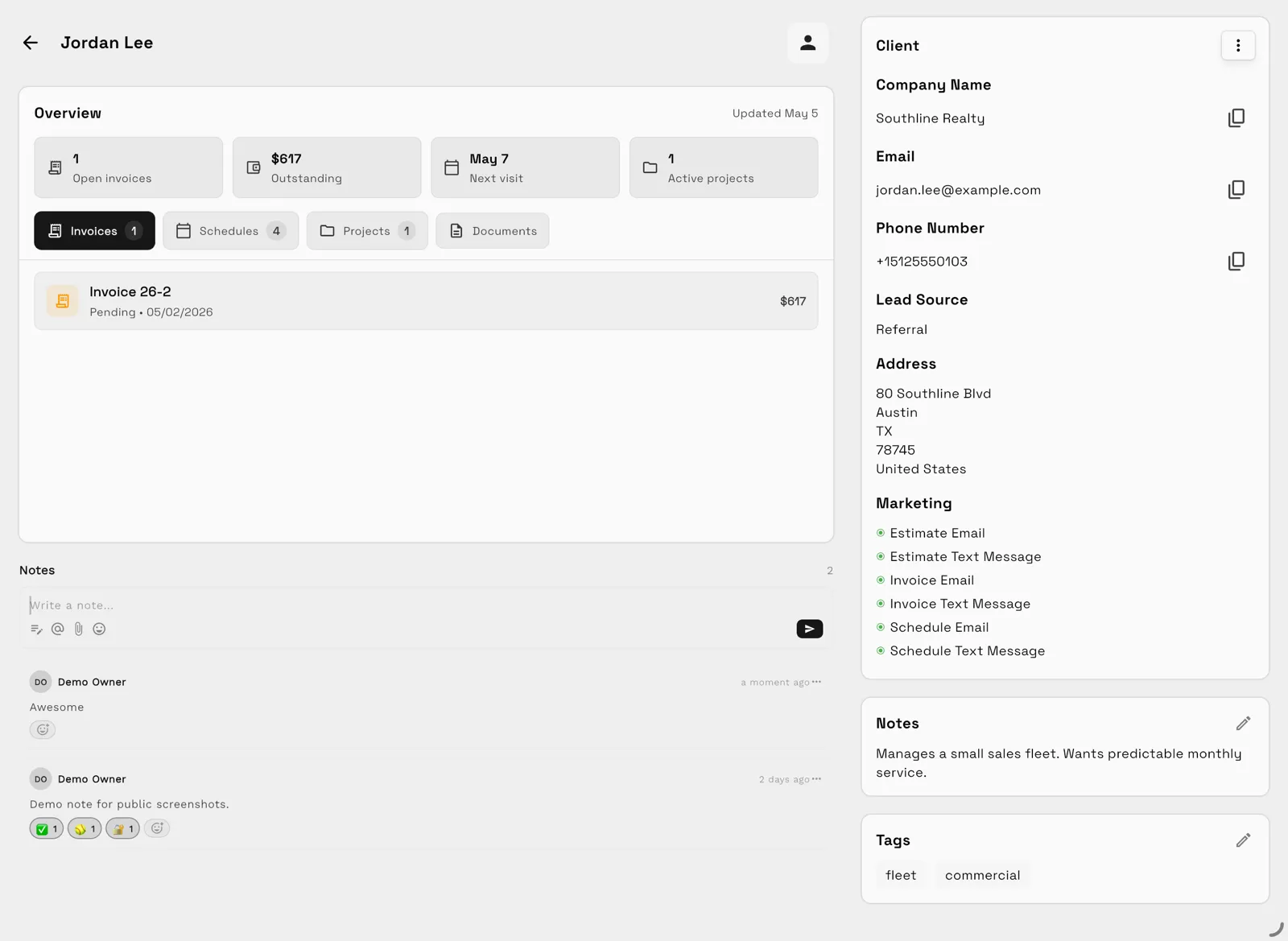
Workspace369 keeps client records, public intake forms, a Proposals feature the owner approves online, projects and tasks, a client portal, an email inbox and invoices in one place. Cadet is $29 a month for one person ($23.25 billed yearly) and includes retainers, recurring invoices, deposit on acceptance, time tracking and a monthly AI usage allowance. The screenshot is a demo record, not a customer result.
Limitations: it is not property management software. There is no rent roll, tenant ledger, lease management, tenant screening or trust accounting, and no owner statements or trust-account vendor payments (vendor bills are tracked from Commander). Cadet allows 5 active projects and one seat, and the shared inbox and SMS start at Voyager ($74 a month). Several tools above are more specialised for the property side, and two have a lower entry price: Hemlane has a free plan and TenantCloud is $15 a month billed yearly. The 14-day trial needs a card.
Best for: a small firm that sells management or renovation services to owners and wants proposals, onboarding tasks, messages and fee invoices in one place, alongside a property platform.
Side-by-side comparison
| Tool | Entry price | Billing view | Property-side coverage | Main limit | Trial |
|---|---|---|---|---|---|
| Buildium | From $62 a month (Essential) | Monthly; annual saves 10% | Accounting, leasing, maintenance | Unit-based; add-ons extra | 14 days, no card |
| AppFolio | From $1.49 per unit a month (Core) | Quote-based | Accounting, leasing, work orders | 50-unit minimum on Core | Not stated |
| DoorLoop | $2.50 per unit a month (One) | Yearly; $3.00 monthly | Full platform, owner portals | $199 monthly minimum | Not stated |
| TenantCloud | $15 a month (Starter) | Billed annually; $25 monthly | Rent, maintenance, listings | Owner portal from Pro | 14 days, card not stated |
| Hemlane | $0 (Starter) | Free; paid plans per unit | Screening, accounting; repairs on Essential | Platform fee plus per-unit fee | 14 days, payment info after trial |
| Workspace369 | $29 a month (Cadet) | $23.25 billed yearly | None: no rent, leases or trust accounting | 5 active projects, 1 seat | 14 days, card required |
Which tool fits your property management business?
| If you mostly need | Start with | Why |
|---|---|---|
| Accounting, leasing and maintenance for a small firm | Buildium | Plans from $62 a month with a no-card trial |
| A quote-based platform for a bigger portfolio | AppFolio | Per-unit plans with leasing CRM on Max |
| Owner portals and a per-unit rate | DoorLoop | Owner and tenant portals on every plan |
| A low-cost start for rent and maintenance | TenantCloud | $15 a month billed yearly |
| A free start with repair coordination later | Hemlane | Free Starter, work orders on Essential |
| Owner proposals, onboarding tasks and fee invoices | Workspace369 | Proposals, tasks, portal and invoices from Cadet |
Run an owner-onboarding test during the trial
Take one fictional owner with five units through each tool you shortlist:
- Log the inquiry and the owner's contact details.
- Send a management proposal with your fee terms and get it approved online.
- Create onboarding tasks: collect documents, set up vendors, schedule the first review.
- Record a repair request and assign the vendor job to a task or work order.
- Send a message to the owner and attach the quote.
- Issue the first fee invoice and note when a late-payment charge applies, using the free late fee calculator.
If you run the test, the best tool keeps the owner, the agreement, the job and the invoice on one record. Note every step that needs tenant, lease or ledger data: that step belongs in your property platform, not in a CRM.

When to keep it simple
If you manage a handful of doors for a few owners, a property platform alone may be enough, with proposals in a document template. Add a client-work tool when owner acquisition, renovation quotes or service billing outgrow it. The property managers product page shows how Workspace369 handles proposals, communications and invoices, and the pricing page has current plans. Workspace369 also supports Workflow Automations for reminders and follow-ups, with email automations on every plan. Keep tenant data, owner funds and statements in your property platform.
Before importing real owners, run one full test on demo data and check that your records can be exported.
Sources reviewed for this guide
- Workspace369 pricingPlan matrix reviewed October 22, 2026.
- Buildium pricingOfficial pricing page reviewed October 22, 2026 for plan prices, unit-based calculator and trial terms.
- AppFolio pricingOfficial pricing page reviewed October 22, 2026 for per-unit starting prices and minimums.
- DoorLoop pricingOfficial pricing page reviewed October 22, 2026 for monthly and yearly per-unit prices and minimums.
- TenantCloud pricingOfficial pricing page reviewed October 22, 2026 for monthly and annual prices, plan features and trial length.
- Hemlane pricingOfficial pricing page reviewed October 22, 2026 for annual and monthly views, platform fee and trial terms.
Workspace369 publishes this documentation-based comparison and is one of the options. It is not an independent ranking or a hands-on benchmark.
Run client follow-up in one workspace.
CRM, inbox, voice, invoicing, payments, projects, files, AI, and workflow automations — connected instead of exported.
14-day free trial. Card required. After the trial: from $29/month. Renews automatically every month until you cancel. Cancel anytime in Settings → Billing.