How to use Google Workspace as a CRM (and where it breaks)
A how-to guide to using Google Workspace as a CRM: the exact Sheets, Gmail, and Contacts setup to run, where it breaks, and when a real client-work system takes over.

By Simon Dziak, Founder, Workspace369 · LinkedIn
Yes, you can use Google Workspace as a CRM — for about a dozen clients.
Every small team tries it first: a Sheet for contacts, Gmail for conversations, Contacts for details, maybe a Tasks list for follow-ups. Here is how to make that setup work as long as it can — and the exact point where it stops working. For the bigger-picture read on whether the workaround makes sense at all, see the Google Workspace CRM guide.
What's inside?
Quick answerThe setup that works (briefly)Where the improvised CRM breaksWhat a real client-work system addsWhen to make the moveFinal recommendation
Quick answer
You can improvise a CRM with Google Sheets, Gmail, and Contacts: one sheet as the client list, columns for status and next step, and strict discipline. It breaks on shared history, follow-up, and everything past the contact stage — no requests, projects, invoices, or reminders. A client-work system like Workspace369 takes over when the relationship continues into delivery and billing — the CRM that works alongside Google Workspace is the version built for teams staying on Google's stack.
The setup that works (briefly)
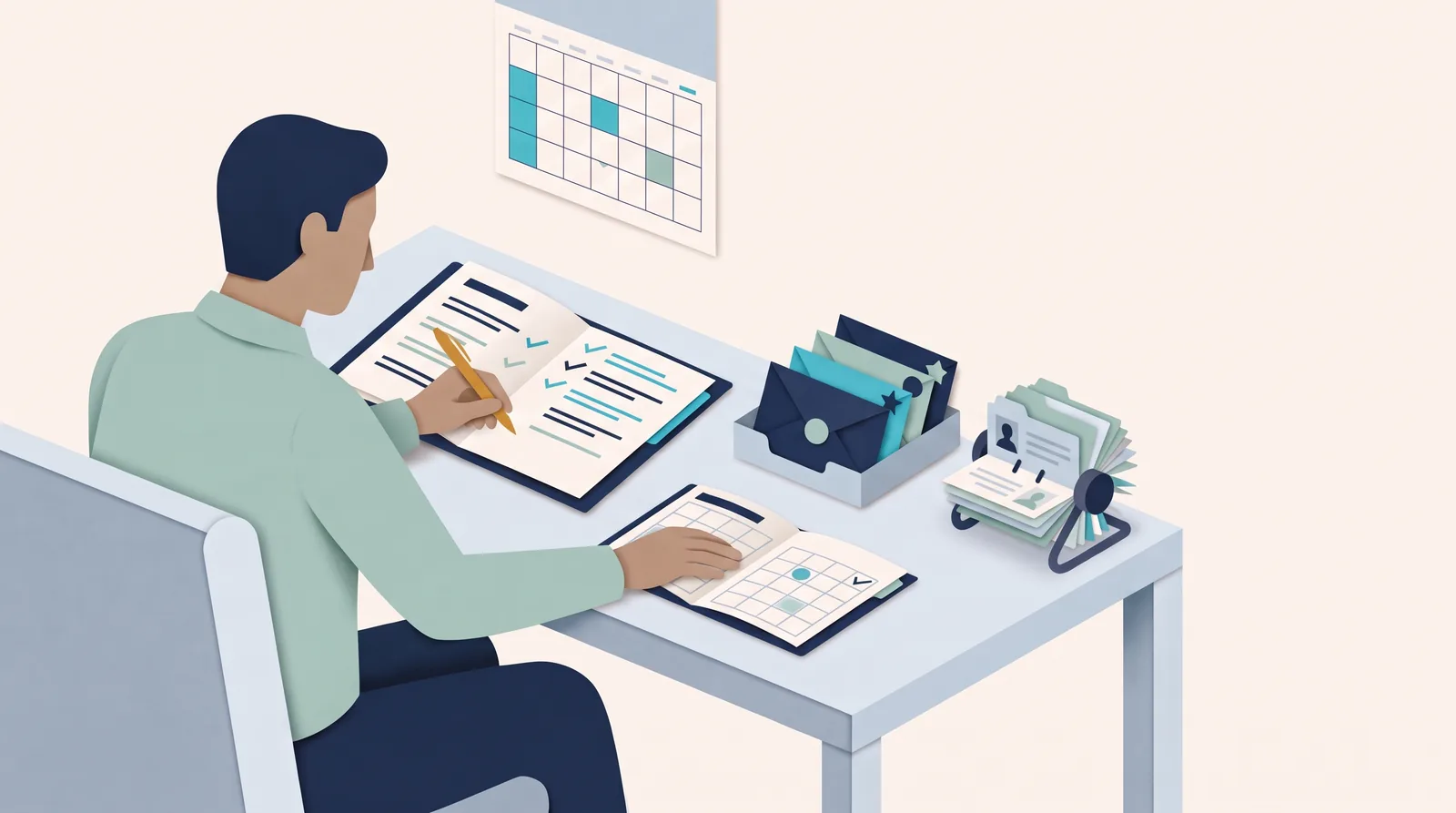
- One Sheet as the client list — name, company, email, phone, status, next step, last touch
- Labels in Gmail — one label per client or stage so threads are findable
- Contacts for details — the canonical email and phone record
- A weekly review — every Friday, update the sheet and set each next step
The discipline is the system. The moment the sheet goes stale, everything downstream goes with it.
Where the improvised CRM breaks
- No shared history — the record lives in per-person inboxes; a colleague cannot see what was said
- No follow-up system — "next step" is a cell someone must remember to read
- Nothing past the contact — no requests, projects, proposals, invoices, or payment status
- No reminders — overdue follow-ups and unpaid invoices surface by accident
- No reporting — revenue, open work, and client value need manual assembly every time
What a real client-work system adds
A proper system keeps the record alive after the contact: intake and requests, projects and files, every email and SMS in one inbox, proposals, invoices, payments, reminders, and reporting. That is what Workspace369 is — the workspace CRM hub shows the model in detail.
When to make the move
Move when any of these become daily: follow-ups depend on memory, two people give a client different answers, invoice status requires asking around, or a client voicemail becomes a sticky note. Most teams hit that within their first dozen active clients.
Final recommendation
Use the Sheets setup deliberately while it lasts — one list, weekly review, no exceptions. When the discipline starts costing more than the software, move to a system that keeps the record. Start with the workspace CRM software hub or the best CRM for Google Workspace comparison.
Put it into practice
Run client follow-up in one workspace.
CRM, inbox, voice, invoicing, payments, projects, files, AI, and workflow automations — connected instead of exported.