CRM for caterers

CRM for Caterers with Guest Count Revision Workflows

Caterers need clear records when clients change their guest counts after signing an initial menu agreement. Workspace369 runs each event in one system: client records, proposals with e-signing, projects, tasks, scheduling, and invoices with deposits. Operators track every revision, so updated figures reach project files and invoices before kitchen production begins. By maintaining clear documentation of revisions, catering teams can coordinate event details and billing updates effectively throughout the planning lifecycle.

Clientthe relationship and agreed brief
Worktasks with a responsible person
Billinginvoices and commercial context
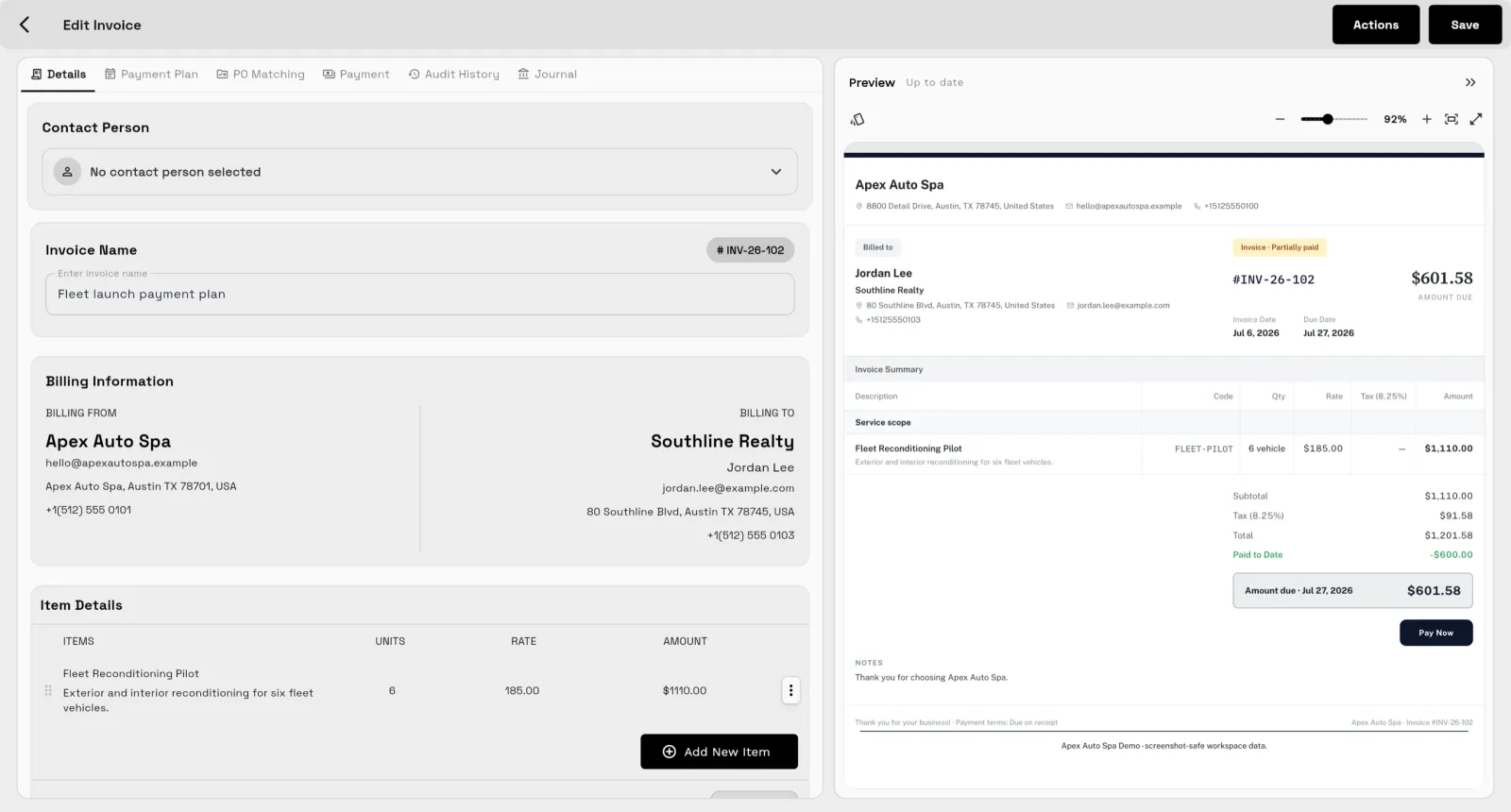
Workspace369 client record showing history, files, communication, and invoices in one profile

Key facts

CRM for caterers at Workspace369 covers 9 areas, including client records, proposals, projects and tasks.

The workflow runs in 5 steps, from "log the revision request in client records" to "issue the revised invoice for final payment".

Workspace369 starts at $29/mo for 1 seat, and the Commander plan includes 20 seats, 500 GB of storage, and 120,000 AI tokens per month at $299/mo.

Additional seats cost $10 each and 100 GB of additional storage costs $15; full pricing is public on the Workspace369 pricing page.

The problem

Operational Challenges in Catering Management

Untracked Guest Count Fluctuations

When a client revises their guest count after the menu is finalized, the update often gets lost in scattered messages. This creates discrepancies between the agreed proposal and the actual event execution. Without a structured way to update client records and project files, coordination fails, leading to inaccurate tracking and incorrect invoice generation for the event.
Disconnected Proposal and Invoice Revisions

Modifying an agreed menu scope requires immediate adjustments to the financial records. When guest counts drop or rise, manual updates to proposals and invoices must happen in tandem. If these updates are not managed within a single system, the client receives conflicting billing documents, which delays payments and causes administrative confusion during final event reconciliation.

Misaligned Task Assignment for Event Prep

A shift in guest count alters the preparation tasks for an event. Staff must manually adjust scheduling and task lists for linen counts, staff ratios, and equipment rentals. When conversations and tasks are disconnected from the primary client record, team members execute outdated instructions, resulting in costly errors before the event occurs.

Scattered Client Communications and Revisions

Catering clients frequently send count updates via multiple channels, including text messages and phone calls. If these conversations are not logged directly alongside project files and proposals, the administrative team lacks a historical record of the change. This absence of a clear communication history makes it difficult to verify client agreements during disputes.

The product

See the workspace your clients feel.

01

A portal clients actually check

Clients watch progress, files, and invoices in a branded portal instead of asking your team for updates.

Workspace369 client record showing history, files, communication, and invoices in one profile
02

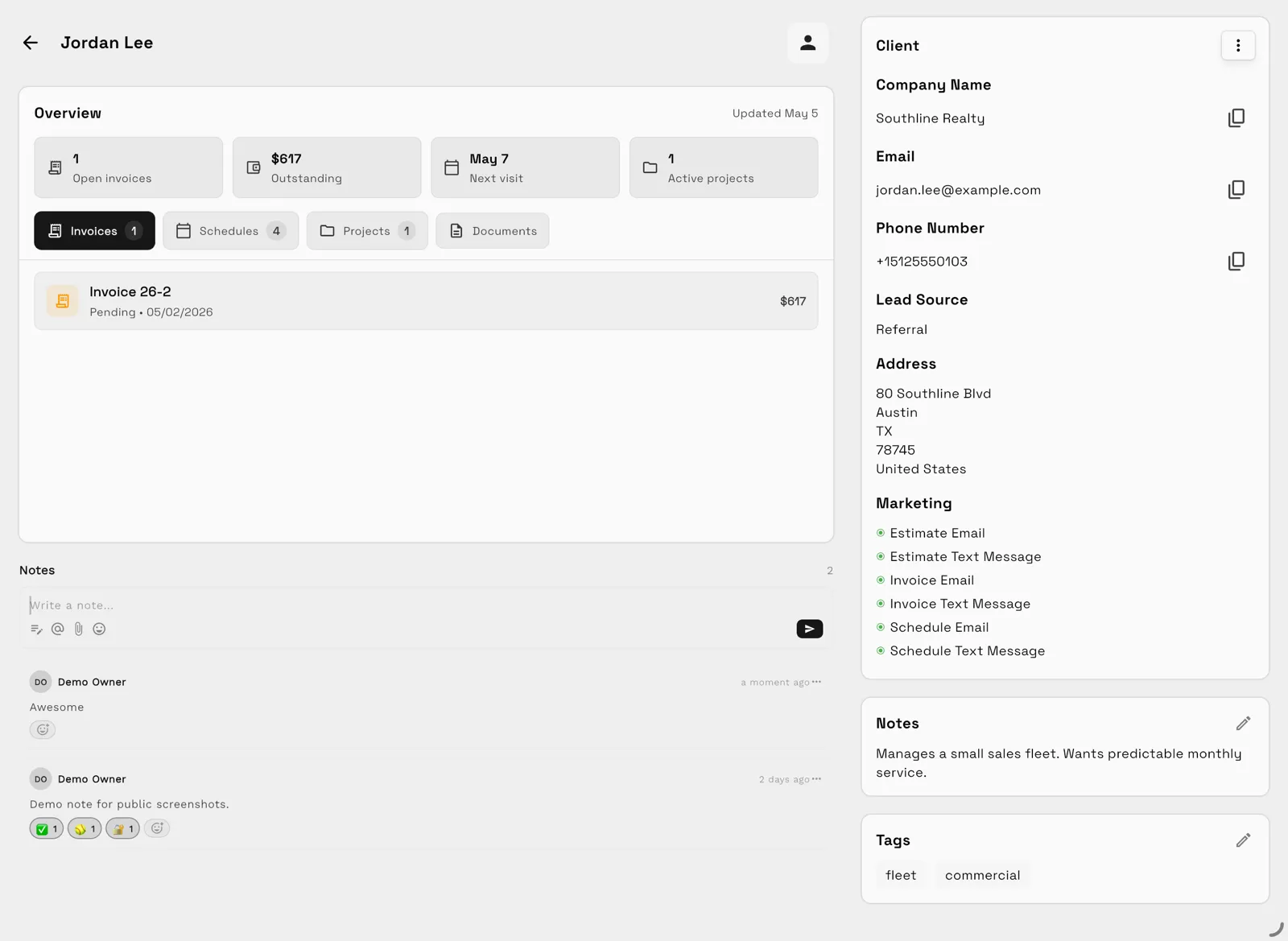
Every channel in one inbox

Email, SMS, calls, and voicemail land beside the client record — with AI summaries, so anyone on the team can reply with full context.

Workspace369 shared inbox showing email, SMS, and call history beside a client record
03

Client work, organized as projects

Tasks, files, and status for every engagement — visible to the team and, through the client portal, to the client.

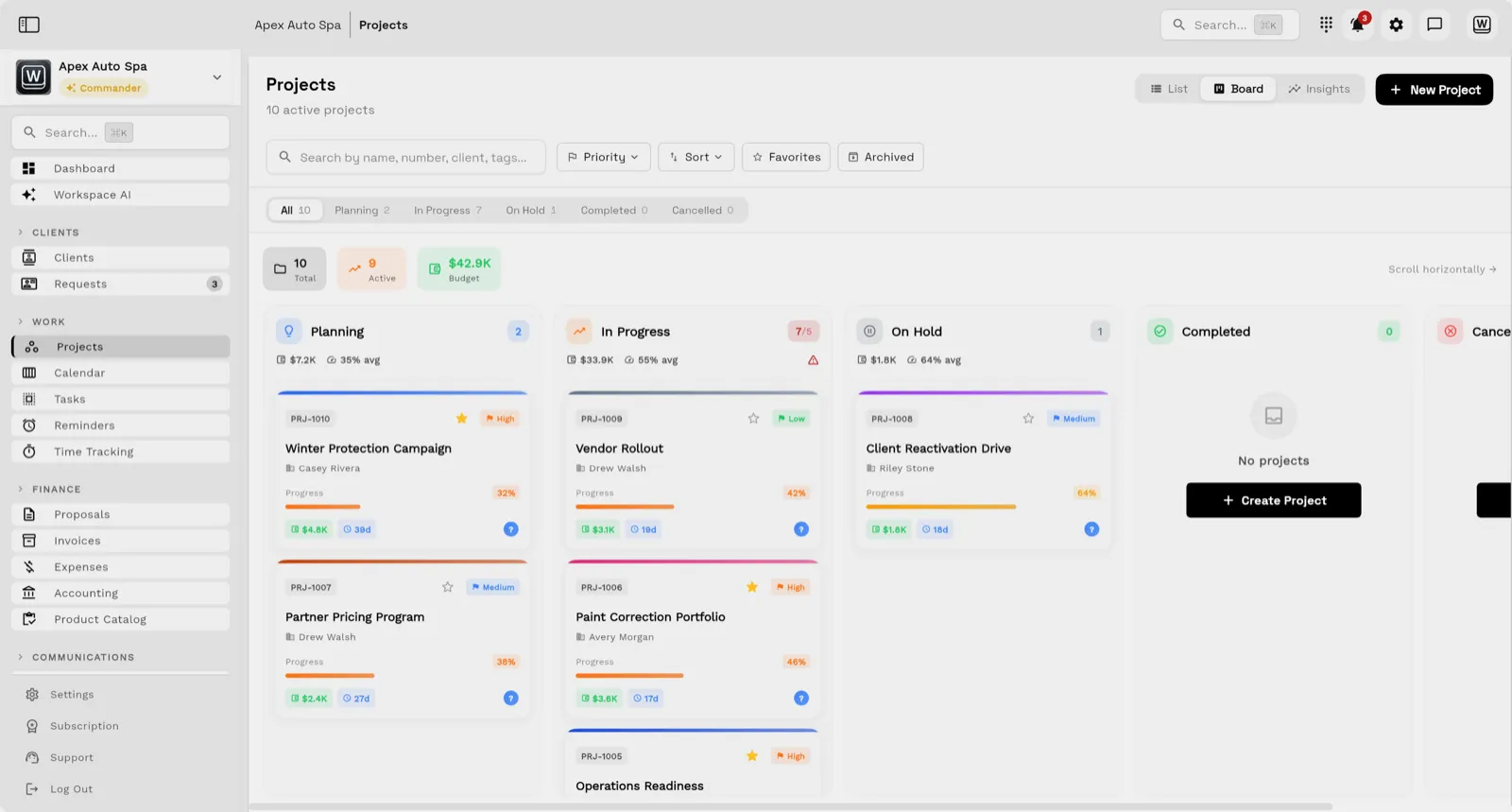
Workspace369 project board showing client work organized into stages with owners and status
04

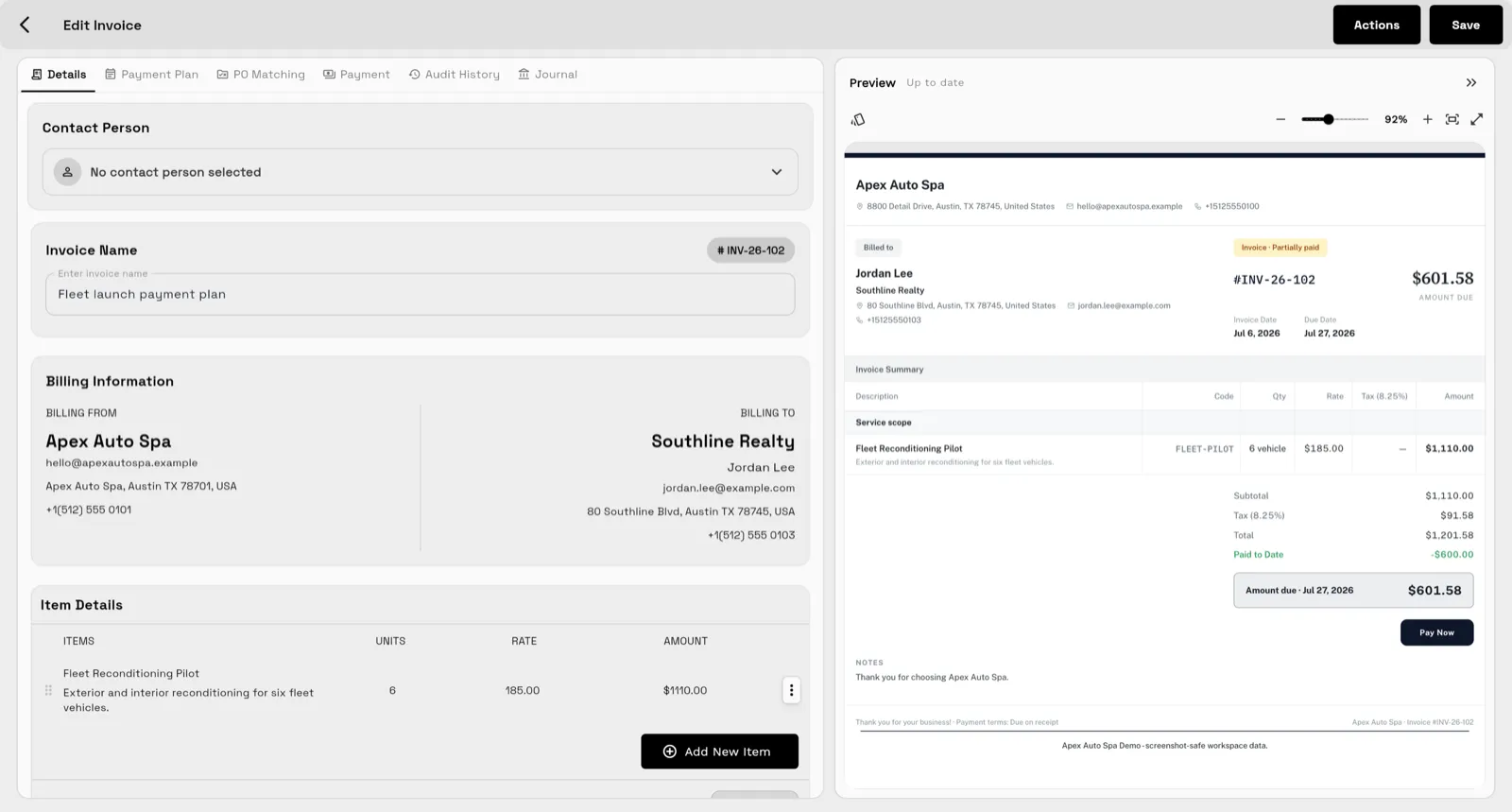
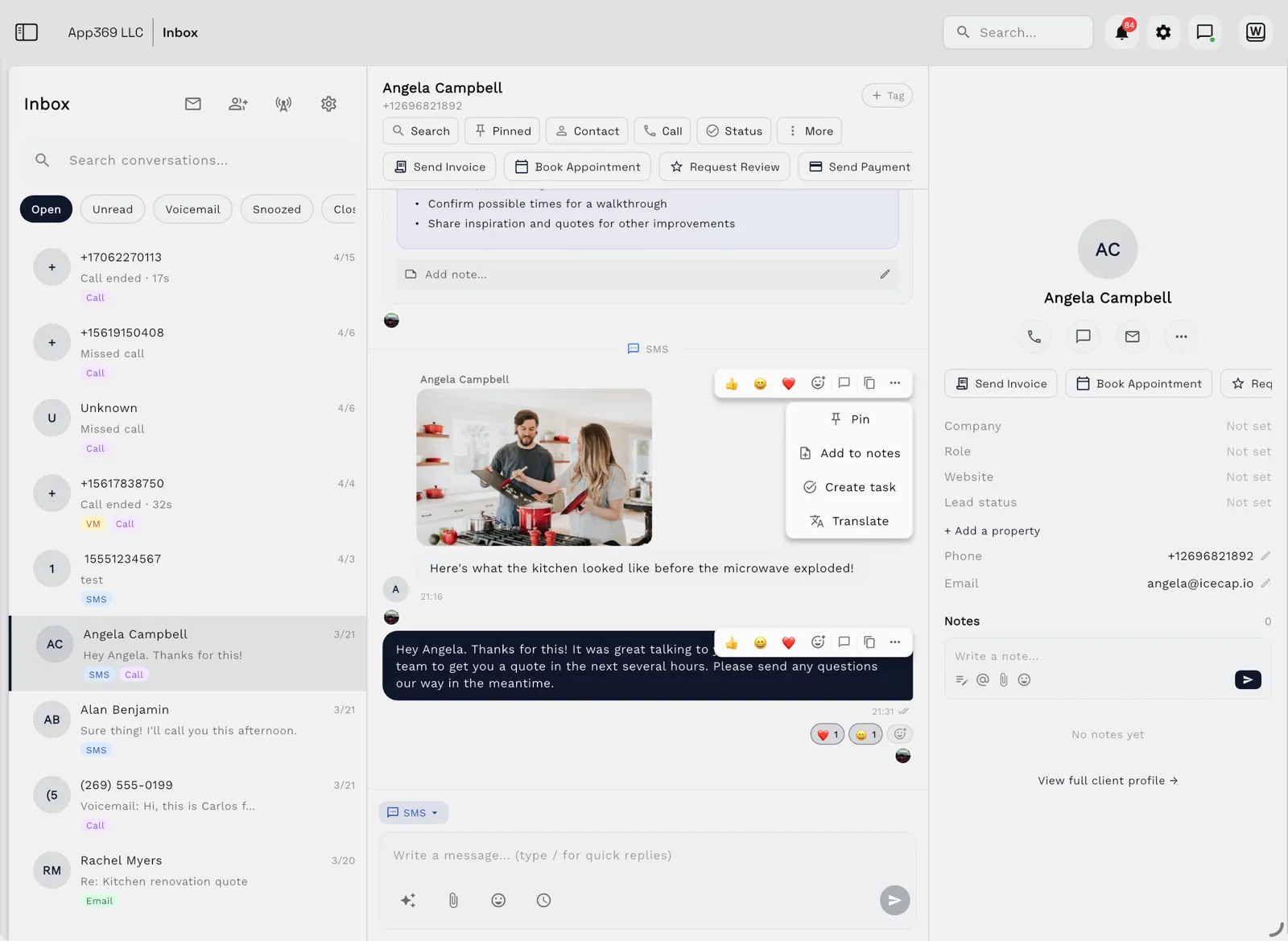
Proposals to paid invoices

Send quotes, bill milestones or retainers, and let automated reminders chase anything outstanding.

Workspace369 invoice editor showing line items, payment terms, and client details

Workflow

Step-by-Step Workflow for Guest Revisions

01

Log the Revision Request in Client Records

When a client requests a guest count change after menu agreement, an administrator opens the client records and files. The operator manually records the details of the conversation within the client records, noting the specific numbers in the agreed brief. This allows the operator to maintain a clear history of the modification before any changes are made to financial documents.

02

Update the Proposal and Project Scope

The administrator opens the existing proposal within the platform to adjust the guest count and associated service details. By modifying the proposal items to match the new guest count, the operator updates the project scope. This adjustment keeps the project files aligned with the client's new requirements, preparing the documentation for the next step of client review.

03

Publish Changes to the Client Portal

Once the proposal is updated, the operator shares the revised document through the client portal. The administrator schedules a task for the client to review the new terms. The client views the updated files in the portal, then approves and e-signs the revised proposal to confirm the guest count before billing adjustments occur.

04

Adjust Scheduling and Tasks for the Team

After client confirmation, the administrator updates the scheduling and task lists within the project. The operator manually adjusts tasks related to staff ratios and rental equipment based on the new guest count recorded in the brief. This helps the team coordinate the event preparation according to the updated metrics.

05

Issue the Revised Invoice for Final Payment

The final step converts the approved proposal into the revised invoice, so its lines reflect the adjusted guest count and the updated project files. The client pays online by card, concluding the workflow for managing guest count revisions within the system.

Product coverage

Client operations for caterers

  • The human operator successfully updates the guest count within the client records and records this change in the associated project brief without altering historical proposals.
  • The revised proposal is accessible via the client portal, allowing the human tester to verify that the client can view the updated event scope.
  • The corresponding invoice is updated to match the guest count in the project files, showing that billing and project records agree.
Client records
Proposals
Projects and tasks
Files
Conversations
Scheduling
Invoices
Client portal
Workflow Automations

Loved on the App Store

Rated by the people running their client work on it.

★★★★★
Finally feels calm

Bounced between three or four all-in-one tools and always ended up in a mess of tabs. This is the first one that feels calm. Set up my client projects in ten minutes.

Justin R. · Solo founder · App Store review
★★★★★
Painless team rollout

Rolled it out to our eight-person team and adoption was painless — intuitive and polished. I'd love more integrations, but they keep shipping.

Samantha D. · Operations lead · App Store review
★★★★★
Hours back every week

Was juggling separate tools for notes, tasks, docs, and updates. Consolidating into one place has genuinely saved me hours each week. Support is responsive too.

Alicia N. · Agency founder · App Store review

Get started

See Workspace369 on your own client work.

Start a free trial or talk to sales — either way, you will see the whole loop: inbox, projects, portal, and billing.

FAQ

Evaluation Criteria for Catering Workflows

Where do kitchen production and allergen tracking fit?

Keep kitchen production, allergen records, and food safety management in your kitchen management system. Workspace369 runs the client side of each event: client records, proposals, scheduling, tasks, and invoices. Pass final guest counts and menu details to the kitchen system by hand or, from Specialist, through webhooks and the API.

Can clients confirm guest count changes directly?

Yes, clients can view revised proposals and project files through the client portal. This lets the team share updated documents and keep clear conversations about the modifications. The client confirms by approving the revised proposal, and the operator checks that it matches the guest count recorded in the brief.

How are tasks adjusted when a guest count changes?

When a guest count is revised, the administrator updates the tasks and scheduling inside the project. The operator reviews the new record in the brief and sets staff numbers and rental counts in the individual tasks to reflect the correct scope.

Can I manage event invoices alongside proposals?

Yes. Workspace369 allows you to generate and manage invoices within the same project file as your proposals. When a guest count changes, the administrator updates the proposal and converts it into the revised invoice, so that client records and financial documents reflect the same figures.

Ready when you are

See where Workspace369 fits into your client-work flow.

Start with the modules you need today, then turn on AI, automations, accounting, inventory, requests, and reporting as the operation grows.