Best CRM for DJs in 2026: bookings, timelines, deposits
Best CRM for DJs: six booking tools for mobile and wedding DJs compared on price, plan limits, planning forms, music requests, deposits, portals and trials.
We make Workspace369, which is on this list. Weigh our ranking with that in mind.

By Simon Dziak, Founder, Workspace369 · LinkedIn
The best CRM for DJs holds the inquiry, the agreement, the deposit, the music and timeline details and the final invoice on one record, so a late request such as ceremony audio becomes a priced update. For wedding and mobile DJs, our pick is Check Cherry, with DJ Event Planner close behind on price and music tools. Workspace369 ranks third: it fits DJs who want Proposals, a portal and invoices in one general tool, with plans on the pricing page. To size a deposit first, use the free deposit calculator.
Disclosure and method: Workspace369 publishes this guide and is one of the options. It is a documentation-based shortlist, not a hands-on benchmark. Official vendor pages were reviewed on October 22, 2026. Check current plans with each vendor before you buy.
Key takeaways
- A DJ CRM should hold the inquiry, the signed agreement, the deposit, the music and timeline details and the final invoice on one record, so a late change such as ceremony audio becomes a priced update instead of a favour.
- DJ Event Planner ($20 a month, 30-day trial, no card) and Check Cherry ($29 a month billed yearly, $39 billed monthly, 14-day trial, no card) are built for event DJs and list music requests, planning forms and timelines or song lists that general tools do not.
- Workspace369 Cadet ($29 a month, $23.25 billed yearly) covers Proposals, deposits, a client portal, intake forms, projects and invoices, but it has no music request or playlist tool and caps active projects at 5.
- HoneyBook Starter is $29 a month billed yearly, Dubsado Starter $335 a year and 17hats $60 a month ($600 a year); none lists DJ-specific music tools on its pricing page.
- Run one fictional wedding through each trial, add ceremony audio two weeks out, and check that the timeline, the proposal and the invoice all change together.
What's inside?
What a CRM for DJs is (and what it is not)How we compared these toolsThe best CRM for DJs in 2026Side-by-side comparisonWhich tool fits your DJ business?Run a late-change test during the trialWhen to keep it simple
What a CRM for DJs is (and what it is not)
A CRM for DJs is the business side of a booking: who the client is, which date and venue are held, what package and add-ons were agreed, what is paid and what the client still owes you in music choices and timeline answers. It is not your music library, your DJ playback software or a licensing tool, so keep those where they are. If a tool stores contacts but leaves the agreement, the song list and the invoice in different places, a late change gets fixed in one and forgotten in the others. This guide stays on DJ bookings; for planners and venues, see best event planning software.
How we compared these tools
We compared each tool on the same five points, using only the vendor's own pricing and feature pages:
- Entry price for one DJ, monthly and billed yearly, as listed on October 22, 2026.
- DJ-specific pieces on the page: music requests or song lists, planning forms, timelines and equipment.
- Booking basics: proposals or contracts, deposits, a client portal and invoices.
- Hard limits on the entry plan: staff, upcoming bookings, projects or lead forms.
- Trial terms: length, and whether the vendor says a card is needed.
We did not test speed, support, reliability or mobile apps, and did not use third-party ratings. Order reflects documented fit for wedding and mobile DJs, which puts the two DJ-built tools first.
The best CRM for DJs in 2026
1. Check Cherry, best for wedding DJs who want online booking
Check Cherry has a dedicated wedding DJ page. It describes planning forms for must-play and do-not-play lists, ceremony details and pronunciation guides, playlist links from Spotify, Apple Music and YouTube Music, curated song lists per moment, and online booking where the client signs, pays a deposit and is booked. Standard is $29 a month billed annually ($348 a year); billed monthly it is $39, and the page says annual saves $120. It allows 30 upcoming bookings, 2 admin accounts and unlimited staff accounts, and the trial is 14 days with no card.
Limitations: Standard caps upcoming bookings at 30 (Growth, at $59 a month billed annually, allows 100). Automated texting needs your own Twilio account and extra fees apply.
Best for: wedding and event DJs who want clients to book, sign, pay and fill in song details without back-and-forth.
2. DJ Event Planner, best for the lowest price and music-request tools
DJ Event Planner is aimed at DJs. Its feature list names a music request system, a built-in music database, timelines, planning forms, a client portal, equipment and package availability, expense and mileage tracking, e-signature documents and employee logins. StandAlone is $20 a month for up to 10 employees or performers with unlimited events; Premium is $35 and Premium Plus $50. The 30-day trial needs no card and is limited to 3 employees and 500 events.
Limitations: the pricing page does not list a yearly rate, a mobile app or a proposal-acceptance flow, so check them in the trial. Test it on your phone, since you will use it at venues.
Best for: mobile DJs and small DJ companies that want music requests, timelines and equipment in one low-cost tool.
3. Workspace369, best for DJs who also run projects, a portal and invoices
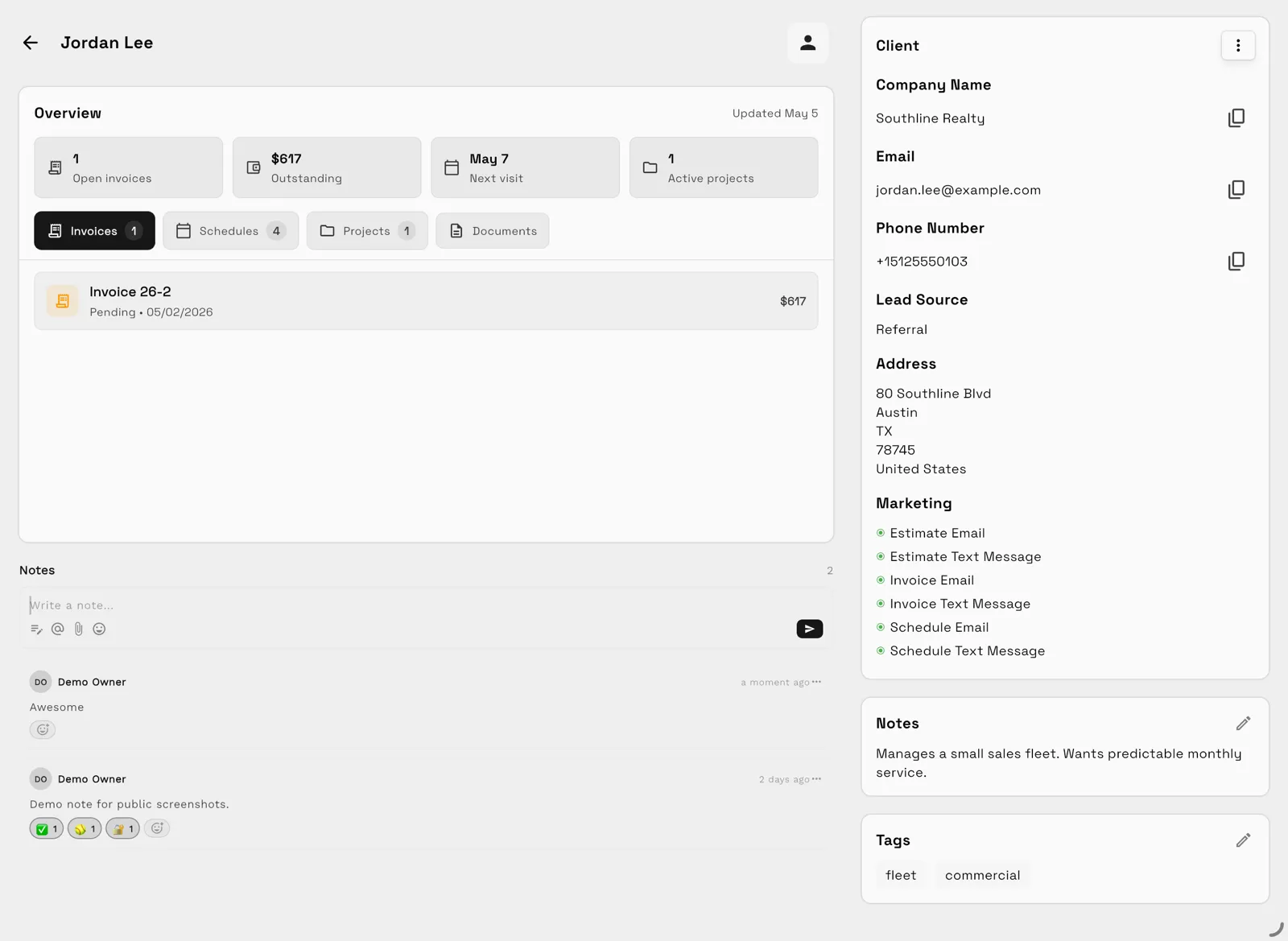
Workspace369 puts the client record, Proposals that clients review and sign through a public link, deposits and payment schedules, public intake forms, a private client portal, projects with tasks, a team calendar with two-way Google Calendar sync, and invoices in one place. Cadet is $29 a month for one person ($23.25 billed yearly). The screenshot is a demo record, not a customer result.
Limitations: it has no music request, playlist or timeline-form tool, so you build the planning questionnaire yourself. Cadet allows 5 active projects and one seat (archived projects do not count), which a busy wedding season can reach. Online booking, payment plans and inventory tracking start at Specialist ($149 a month); calls and texts start at Voyager ($74). DJ Event Planner ($20 a month) costs less for a solo DJ. Check Cherry is $29 a month billed yearly against Cadet's $23.25, so with Check Cherry you pay a little more for DJ-specific tools rather than saving money. The 14-day trial needs a card.
Best for: solo DJs with a handful of live events at a time, or DJ companies on Specialist, who want proposals, portal, tasks and invoices in one place.
4. HoneyBook, best for DJs who sell packages like a creative studio
HoneyBook Starter is $29 a month billed yearly ($36 billed monthly) and lists unlimited clients and projects, invoices and payments, proposals and contracts, a calendar, a client portal and basic reports, with up to 2 live lead forms. Essentials, at $49 a month billed yearly ($59 monthly), adds the Scheduler, automations, SMS reminders, up to 2 team members and up to 10 lead forms. The trial is 30 days with no card, per the vendor's trial terms.
Limitations: no music request or song-list tool appears on the page, and Starter is capped at 2 live lead forms. The Scheduler and automations need Essentials.
Best for: DJs who already sell fixed packages and want a polished inquiry-to-payment flow, and handle music details elsewhere.
5. Dubsado, best for DJs with a repeatable onboarding questionnaire
Dubsado Starter is $35 a month or $335 a year, and Premier is $55 a month or $525 a year. Both list unlimited clients and projects, invoicing and payment plans, form and email templates, client portals and a mobile app. Starter has one active lead capture form; scheduling, automated workflows and public proposals need Premier. The trial is 21 days with full Premier access and no card.
Limitations: no music-specific tools are listed, and you build every form yourself. Billed yearly, Starter works out to about $28 a month and Premier about $44 a month; monthly billing is $35 and $55.
Best for: DJs who will invest an afternoon in building one wedding questionnaire and workflow, then reuse it.
6. 17hats, best as a single all-inclusive plan
17hats sells one all-inclusive plan: $60 a month, $600 a year or $800 for two years, with a 7-day trial that can be restarted once it ends. Its feature list includes quotes, contracts, invoices, questionnaires, payment schedules, a client portal, scheduling, lead capture forms and a calendar. Some payment features require Stripe or Square.
Limitations: it has the highest entry price here at $60 a month, and no music or timeline tools are listed. The page does not say whether the trial needs a card.
Best for: DJs who want one plan with every business module and do not need DJ-specific music tools.
Gigwell was reviewed and left out: its pricing page targets artists and booking agencies, with products starting at $33 a month, rather than client-facing wedding and event bookings.
Side-by-side comparison
| Tool | Entry price (monthly) | Billed yearly | DJ music tools on page | Main entry-plan limit | Trial |
|---|---|---|---|---|---|
| Check Cherry | $39 (Standard) | $29 a month ($348) | Planning forms, song lists, playlists | 30 upcoming bookings | 14 days, no card |
| DJ Event Planner | $20 (StandAlone) | Not stated | Music requests, database, timelines | 10 employees or performers | 30 days, no card |
| Workspace369 | $29 (Cadet) | $23.25 a month | None | 5 active projects, 1 seat | 14 days, card required |
| HoneyBook | $36 (Starter) | $29 a month (Starter) | None listed | 2 live lead forms | 30 days, no card |
| Dubsado | $35 (Starter) | $335 a year (Starter) | None listed | 1 lead form, no public proposals | 21 days, no card |
| 17hats | $60 | $600 a year | None listed | One plan | 7 days, card not stated |
Which tool fits your DJ business?
| If you mostly need | Start with | Why |
|---|---|---|
| Online booking, deposits and song details from wedding clients | Check Cherry | Planning forms, playlists and booking with a deposit |
| The lowest price and music-request tools | DJ Event Planner | $20 a month with requests, timelines and equipment |
| Proposals, portal, tasks and invoices in one tool | Workspace369 | Cadet at $29 a month, projects and portal on every plan |
| A polished package-selling flow | HoneyBook | Proposals, contracts and payments on Starter |
| Custom questionnaires and workflows | Dubsado | Forms on Starter, workflows on Premier |
| One flat plan with every module | 17hats | One all-inclusive plan |
Run a late-change test during the trial
Take one fictional wedding through each tool you shortlist:
- Create the inquiry, send the package as a proposal or quote, and take the deposit.
- Send the client the planning questions: must-play songs, do-not-play songs and timeline.
- Two weeks before the date, add ceremony audio at a second location with an earlier setup time.
- Update the timeline, the agreement or proposal, and the invoice for the extra gear and hours.
- Check what the client sees in the portal and what your second DJ or helper sees.
- Export the client's records and check what comes out.
If you run the test, the best tool changes the timeline, the paperwork and the invoice together, and the original reception details stay intact. Price the add-on with the free scope-change request builder.

When to keep it simple
If you play a few events a month, a shared calendar, a contract template and an invoice template can carry you a long way. Move to a booking tool when you chase deposits by hand, when song lists arrive in texts, or when a late change leaves the invoice out of step with the plan. The DJ product page shows how Workspace369 handles Proposals, communications and invoices, and the pricing page has current plans. Email appointment reminders and two-way Google Calendar sync work on every plan, SMS reminders need Voyager, and Workflow Automations send follow-ups, with email automations on every plan.
Before importing real clients, run one full booking on demo data and check that your records can be exported.
Sources reviewed for this guide
- Workspace369 pricingPlan matrix reviewed October 22, 2026.
- DJ Event Planner pricingOfficial pricing page reviewed October 22, 2026 for plan prices, staff limits and trial terms; feature list at https://www.djeventplanner.com/fullfeatures.php.
- Check Cherry pricingOfficial pricing page reviewed October 22, 2026 for plan prices, booking limits and trial terms; wedding DJ page at https://www.checkcherry.com/dj-crm.
- HoneyBook pricingOfficial pricing page reviewed October 22, 2026 for Starter and Essentials features and lead form limits.
- Dubsado pricingOfficial pricing page reviewed October 22, 2026 for yearly prices, plan limits and trial terms.
- 17hats pricingOfficial pricing page reviewed October 22, 2026 for monthly and yearly prices and trial terms.
- Gigwell pricingOfficial pricing page reviewed October 22, 2026 to confirm it targets artists and booking agencies.
Workspace369 publishes this documentation-based comparison and is one of the options. It is not an independent ranking or a hands-on benchmark.
Run client follow-up in one workspace.
CRM, inbox, voice, invoicing, payments, projects, files, AI, and workflow automations — connected instead of exported.
14-day free trial. Card required. After the trial: from $29/month. Renews automatically every month until you cancel. Cancel anytime in Settings → Billing.