CRM for live bands & entertainers

CRM for live bands and entertainers with a specific workflow

Live bands and entertainers manage complex administrative details for every performance engagement. Booking managers must coordinate client records, initial proposals, performance projects, operational tasks, shared files, client conversations, event scheduling, and final invoices. When an unexpected change occurs, such as a band booking adding another set and changing the venue contact shortly before the event, administrative clarity is essential. Workspace369 runs every booking from inquiry to final invoice in one record, so your team sees each update before the performance begins.

Clientthe relationship and agreed brief
Worktasks with a responsible person
Billinginvoices and commercial context
Workspace369 client record showing history, files, communication, and invoices in one profile

Key facts

CRM for live bands & entertainers at Workspace369 covers 9 areas, including client records, proposals, projects and tasks.

The workflow runs in 5 steps, from "initial intake and client records setup" to "final scheduling and invoice issuance".

Workspace369 starts at $29/mo for 1 seat, and the Commander plan includes 20 seats, 500 GB of storage, and 120,000 AI tokens per month at $299/mo.

Additional seats cost $10 each and 100 GB of additional storage costs $15; full pricing is public on the Workspace369 pricing page.

The problem

Administrative Challenges in Band Booking

Uncoordinated Event Scheduling Changes

When a client requests an extra performance set or alters the venue contact right before a show, updates often get lost in scattered emails. Booking operators can update the client records and scheduling entries to prevent band members from arriving with incorrect details. Without a structured location for scheduling and conversations, errors occur during live performance setups.

Inaccurate Performance Proposals

Entertainers frequently distribute proposals that do not reflect the final technical requirements or set lengths requested by the venue manager. If the initial proposal is not directly linked to the active project files and tasks, the administrative team cannot verify what was promised. Cross-referencing files and client records helps prevent discrepancies before invoices are issued.

Scattered Venue and Client Conversations

Communication regarding stage dimensions, performance times, and hospitality requirements typically spans multiple text threads and personal phone calls. When the venue contact changes unexpectedly, the new coordinator lacks context. Tracking these conversations alongside client records ensures that any operator can review the recorded discussion history and update the relevant tasks.

Disconnected Billing and Invoices

Live entertainment requires clear alignment between the initial deposit, scheduled dates, and final invoices. When a performance project undergoes last-minute modifications, such as adding an extra set, the administrative team can adjust the invoice. Without clear tracking of tasks and files, invoicing errors can delay necessary event collections.

The product

See the workspace your clients feel.

01

A portal clients actually check

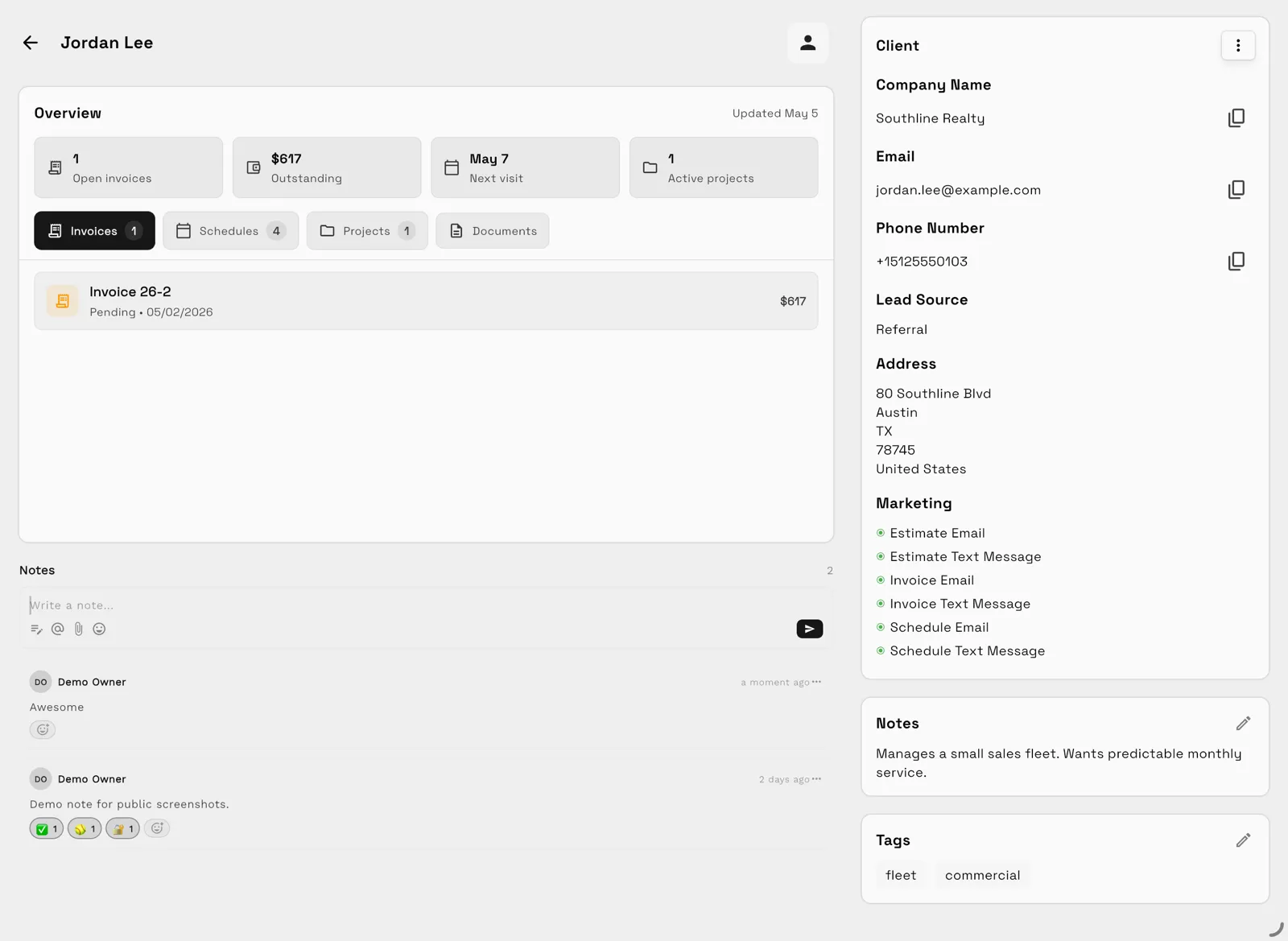
Clients watch progress, files, and invoices in a branded portal instead of asking your team for updates.

Workspace369 client record showing history, files, communication, and invoices in one profile
02

Every channel in one inbox

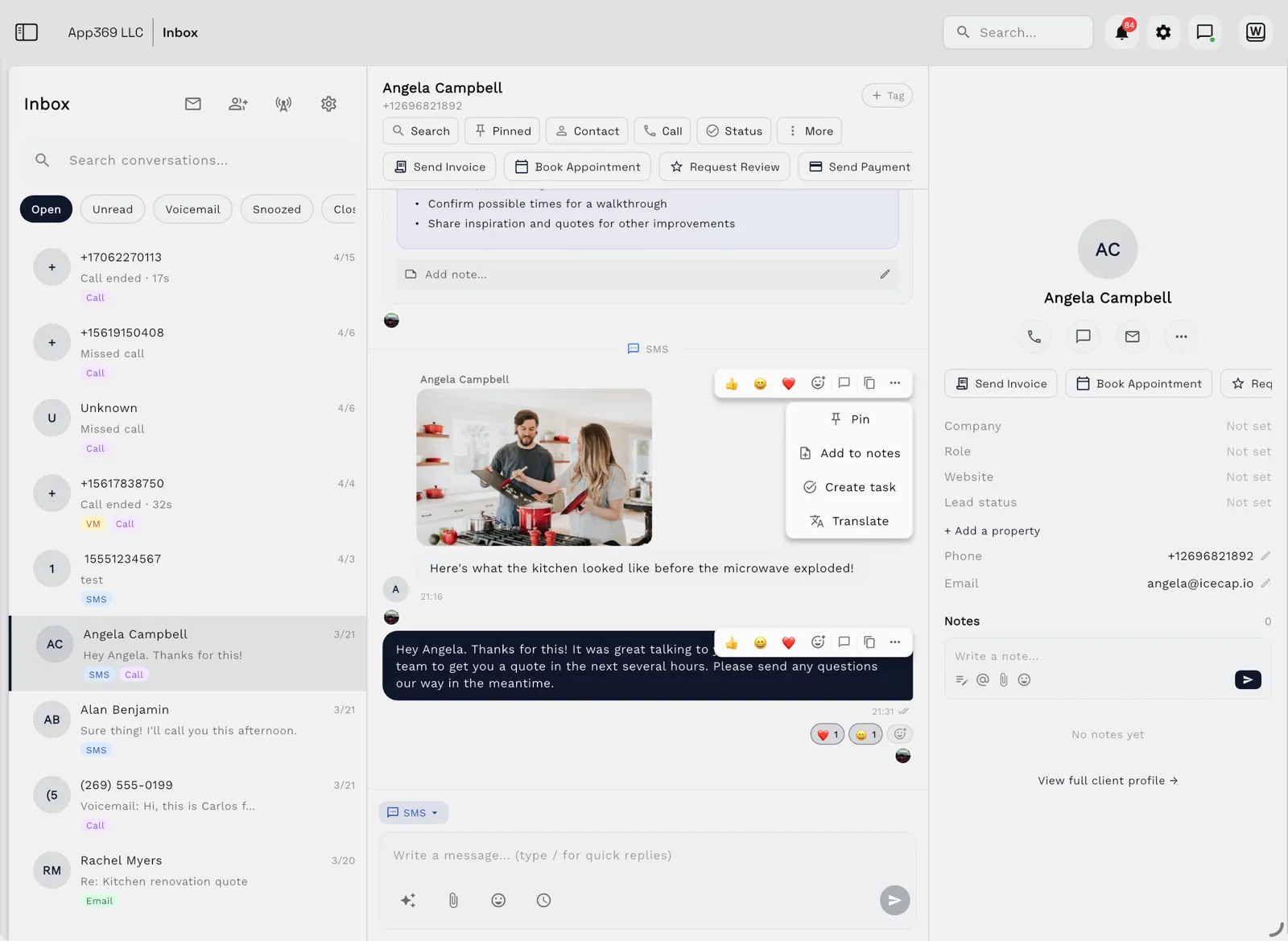
Email, SMS, calls, and voicemail land beside the client record — with AI summaries, so anyone on the team can reply with full context.

Workspace369 shared inbox showing email, SMS, and call history beside a client record
03

Client work, organized as projects

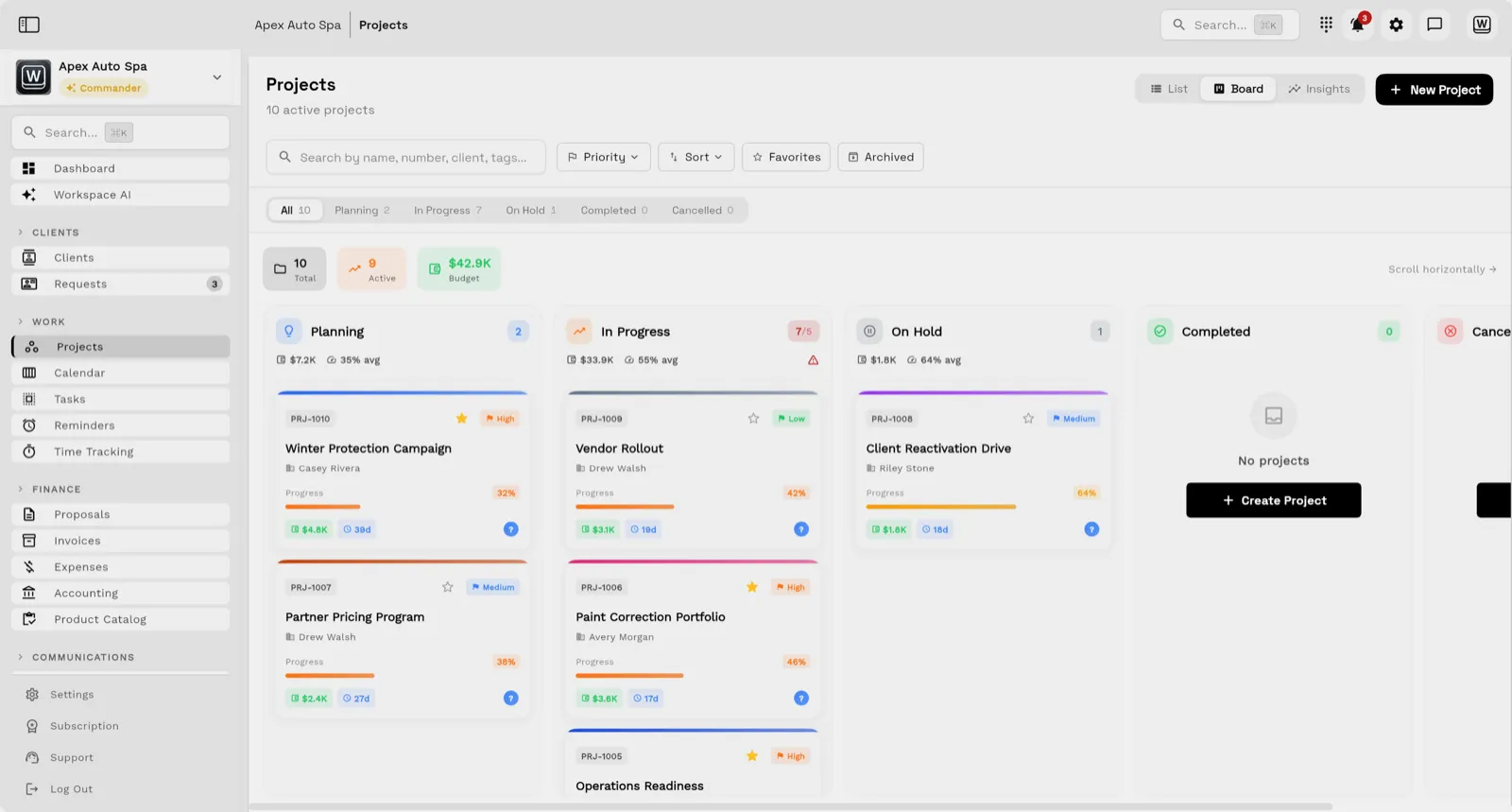
Tasks, files, and status for every engagement — visible to the team and, through the client portal, to the client.

Workspace369 project board showing client work organized into stages with owners and status
04

Proposals to paid invoices

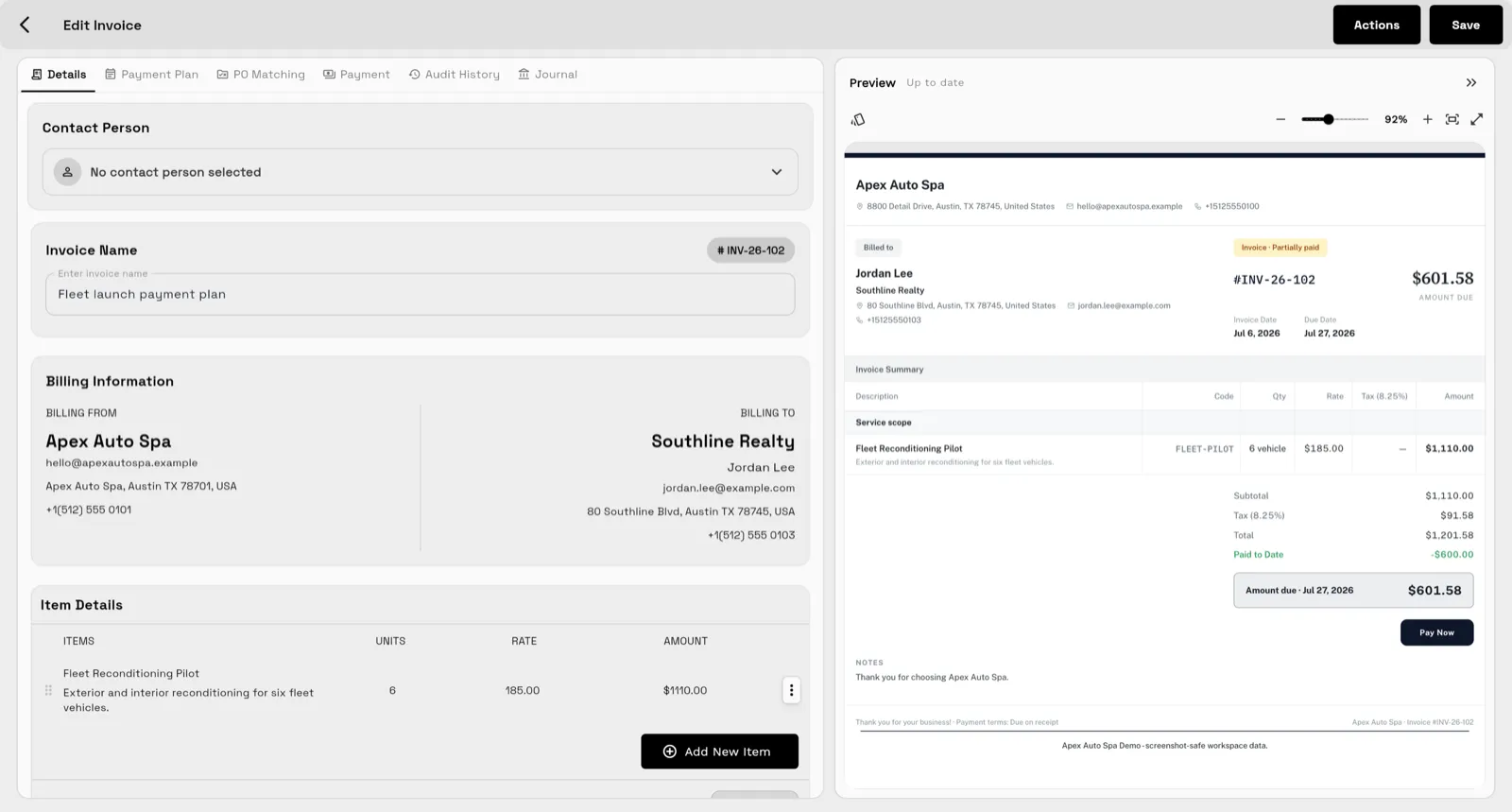
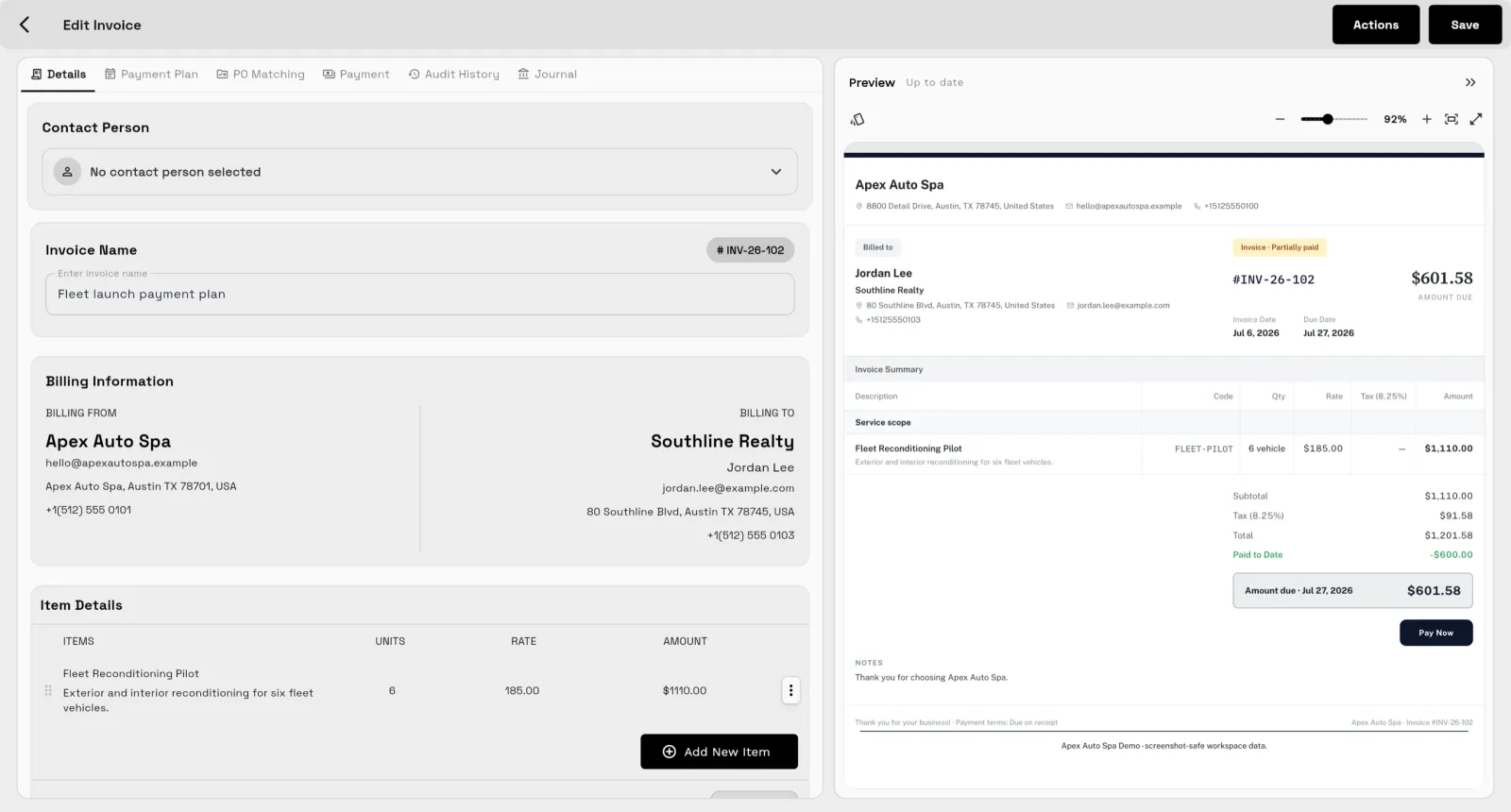
Send quotes, bill milestones or retainers, and let automated reminders chase anything outstanding.

Workspace369 invoice editor showing line items, payment terms, and client details

Workflow

Step-by-Step Booking Workflow

01

Initial Intake and Client Records Setup

The booking manager creates a new entry in client records as soon as an entertainment inquiry arrives. This record stores the initial event date, venue details, and client contact information. The manager attaches all initial inquiry files and starts a conversation thread to document specific performance constraints, ensuring all foundational data is accessible for the next step in the booking.

02

Generating and Reviewing the Proposal

The operator creates a detailed proposal outlining the performance duration, set numbers, and baseline fees. This proposal is sent to the client through the client portal for review. The manager tracks the proposal status, ensuring that any requested adjustments to the performance structure are recorded in the brief before moving to project creation.

03

Project Creation and Task Assignment

Once the proposal is accepted, the operator creates an active project for the booking. The team builds tasks for equipment checks, setlist confirmation, and venue coordination. All relevant technical files and stage plots are uploaded directly to the project, allowing the administrative staff to monitor task completion dates against the main scheduling calendar.

04

Managing Last-Minute Booking Exceptions

When a client adds another set and changes the venue contact shortly before the event, the operator can update the project tasks, scheduling calendar, and client records. The manager leaves a detailed note in the conversation log and updates the file repository with the new venue layout, ensuring the band reads the updated brief.

05

Final Scheduling and Invoice Issuance

The booking manager verifies all scheduling entries against the completed project tasks. After confirming the extra set details, the operator generates the final invoice reflecting the updated fees. The invoice is sent via the client portal, and the manager marks the project as completed once payment verification is recorded in the system.

Product coverage

Client operations for live bands & entertainers

  • The system must allow an operator to modify the venue contact in the client records and update the scheduling calendar within a single session.
  • The project workspace must support uploading updated stage layout files and adding an extra set task while the operator updates the pending invoice.
  • The client portal must allow the client to view the updated proposal and final invoice details after the adjustments are saved by the administrator.
Client records
Proposals
Projects and tasks
Files
Conversations
Scheduling
Invoices
Client portal
Workflow Automations

Loved on the App Store

Rated by the people running their client work on it.

★★★★★
Finally feels calm

Bounced between three or four all-in-one tools and always ended up in a mess of tabs. This is the first one that feels calm. Set up my client projects in ten minutes.

Justin R. · Solo founder · App Store review
★★★★★
Painless team rollout

Rolled it out to our eight-person team and adoption was painless — intuitive and polished. I'd love more integrations, but they keep shipping.

Samantha D. · Operations lead · App Store review
★★★★★
Hours back every week

Was juggling separate tools for notes, tasks, docs, and updates. Consolidating into one place has genuinely saved me hours each week. Support is responsive too.

Alicia N. · Agency founder · App Store review

Get started

See Workspace369 on your own client work.

Start a free trial or talk to sales — either way, you will see the whole loop: inbox, projects, portal, and billing.

FAQ

Verification Criteria for Entertainment Workflows

Can Workspace369 handle performance production or artist licensing?

Keep production, licensing and artist payment arrangements in the tools built for them. Workspace369 runs the booking business around them: client records, proposals, projects, tasks, files, conversations, scheduling, invoices with online payment, and the client portal.

How does the system handle a sudden change in the venue contact?

When a venue contact changes shortly before a performance, the booking manager can open the client records and update the contact field. The operator should then update the active conversation log and project tasks to ensure the administrative team sees the new contact details immediately.

Can we automate task assignments when a new set is added?

Workflow Automations can create tasks, send email or SMS, issue reminders and notify team members using supported triggers, conditions and timed waits. Email automations start at Cadet and SMS steps at Voyager; AI-drafted workflows start at Commander. Test the required event, owner and review step before enabling the workflow. Call triggers require a plan with voice. Simulated test runs and execution logs show exactly what the workflow will do with a sample booking.

How do clients view updated event proposals and invoices?

Clients can access their documents by logging into the client portal. When an administrator updates a proposal or invoice to reflect an extra set, the changes are visible within the portal. The operator can send the client a message pointing them to the updated documents.

Ready when you are

See where Workspace369 fits into your client-work flow.

Start with the modules you need today, then turn on AI, automations, accounting, inventory, requests, and reporting as the operation grows.