CRM for photo booth companies

CRM for Photo Booth Companies with a Specific Booking Workflow

Photo booth companies manage event logistics that frequently shift after a client confirms a date. When an event coordinator introduces a second activation period or requests specific branded outputs mid-project, standard administrative records can become disorganized. Workspace369 keeps every one of these changes on the booking itself. By managing client records, proposals, tasks, and invoices in one location, your team can document every operational modification without losing track of the original event parameters or pricing agreements.

Clientthe relationship and agreed brief
Worktasks with a responsible person
Billinginvoices and commercial context
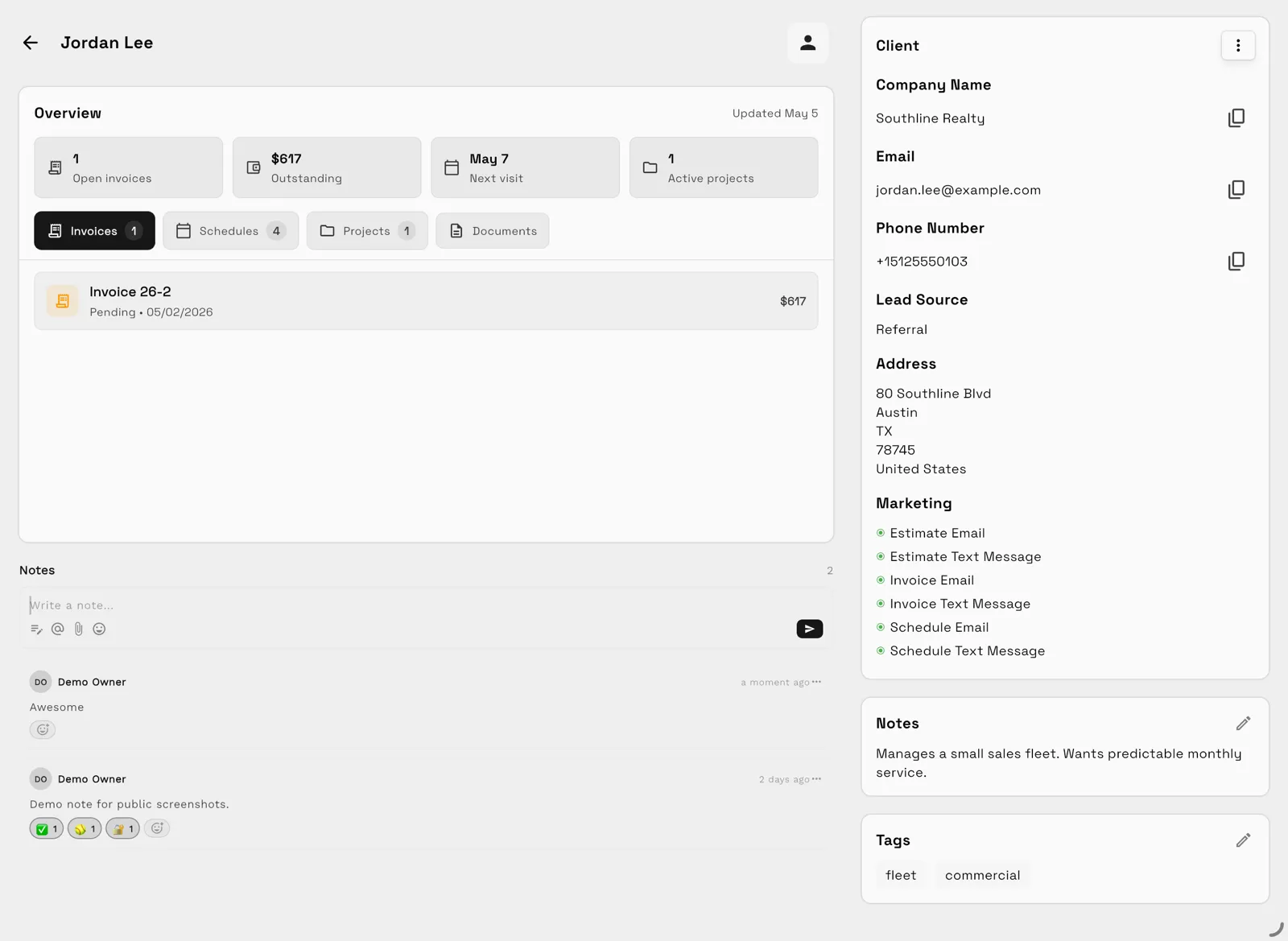
Workspace369 client record showing history, files, communication, and invoices in one profile

Key facts

CRM for photo booth companies at Workspace369 covers 9 areas, including client records, proposals, projects and tasks.

The workflow runs in 5 steps, from "building the initial event proposal" to "providing client portal access".

Workspace369 starts at $29/mo for 1 seat, and the Commander plan includes 20 seats, 500 GB of storage, and 120,000 AI tokens per month at $299/mo.

Additional seats cost $10 each and 100 GB of additional storage costs $15; full pricing is public on the Workspace369 pricing page.

The problem

Common Administrative Bottlenecks in Photo Booth Operations

Untracked Post-Confirmation Schedule Adjustments

When a corporate client adds a second activation period to an existing photo booth booking, operators often rely on scattered notes. This breakdown in client records leads to scheduling conflicts for physical booth hardware and staffing shortages on site. Without a deliberate method to document these extra hours within active projects, your team risks missing the additional operational window entirely during the event execution.
Misplaced Branded Output Specifications

Clients frequently send updated graphic assets and layout requirements weeks after approving the initial proposal. Storing print templates or digital overlay files across disconnected email threads causes production errors. If files and conversations are not bound directly to the client record, the on-site technician may deploy the wrong branded output configuration, resulting in incorrect prints and dissatisfied event hosts.

Invoicing Gaps for Extra Booth Hours

Adding an extra activation window requires an updated billing statement. When invoices are handled separately from project updates, the additional operational hours often go unbilled. Photo booth operators lose revenue because the administrative team lacks immediate visibility into the conversations where the client requested the extra time, causing delayed or completely omitted supplemental billing updates.

Fragmented Event Coordinator Communication

Managing multi-hour event timelines requires clear alignment between the venue coordinator and the booth operator. When scheduling adjustments and layout files are buried in personal text messages, critical operational details vanish. A lack of structured client portal access means coordinators cannot independently verify their booking parameters, leading to redundant phone calls and last-minute panic before the doors open.

The product

See the workspace your clients feel.

01

A portal clients actually check

Clients watch progress, files, and invoices in a branded portal instead of asking your team for updates.

Workspace369 client record showing history, files, communication, and invoices in one profile
02

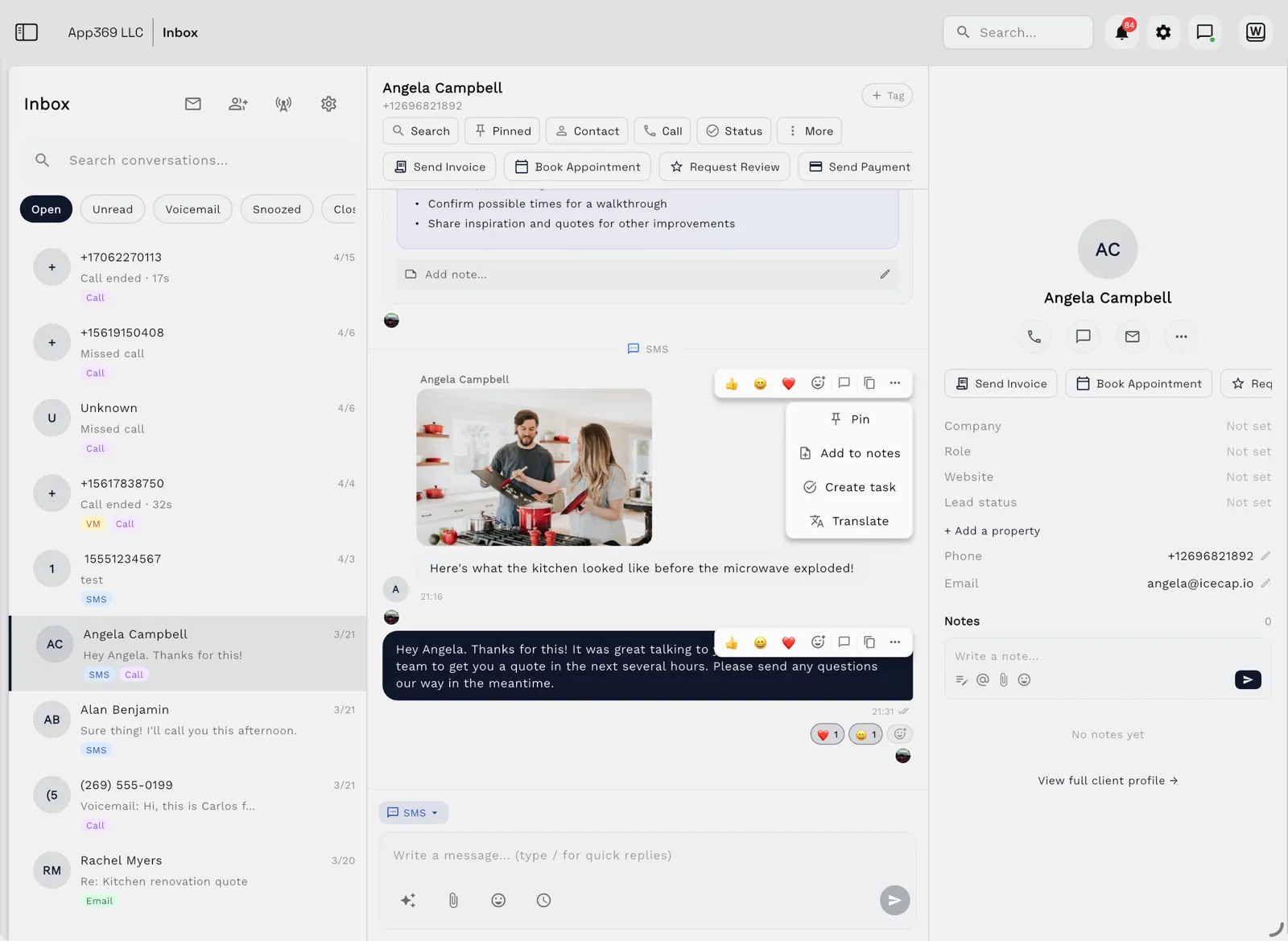
Every channel in one inbox

Email, SMS, calls, and voicemail land beside the client record — with AI summaries, so anyone on the team can reply with full context.

Workspace369 shared inbox showing email, SMS, and call history beside a client record
03

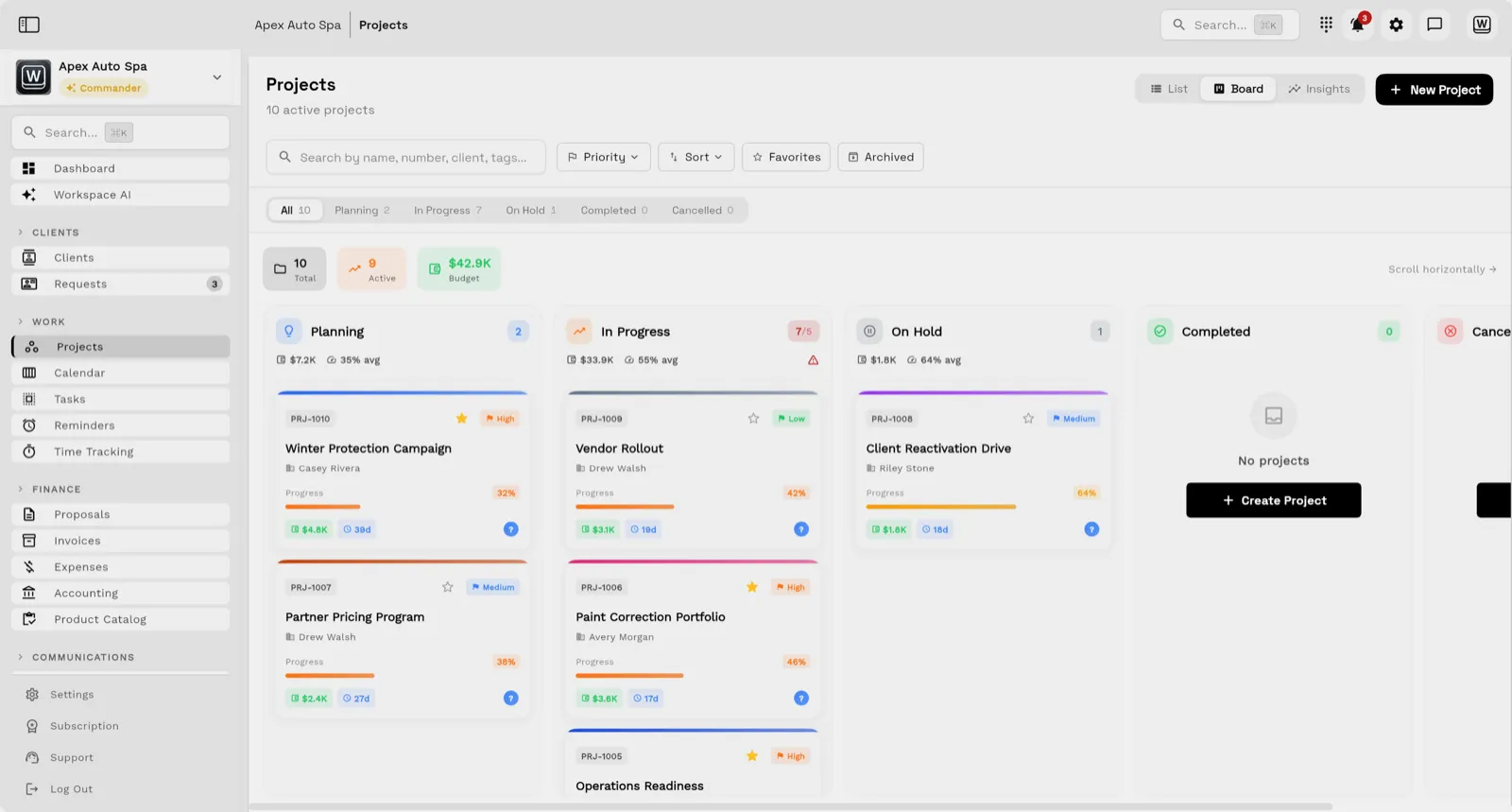
Client work, organized as projects

Tasks, files, and status for every engagement — visible to the team and, through the client portal, to the client.

Workspace369 project board showing client work organized into stages with owners and status
04

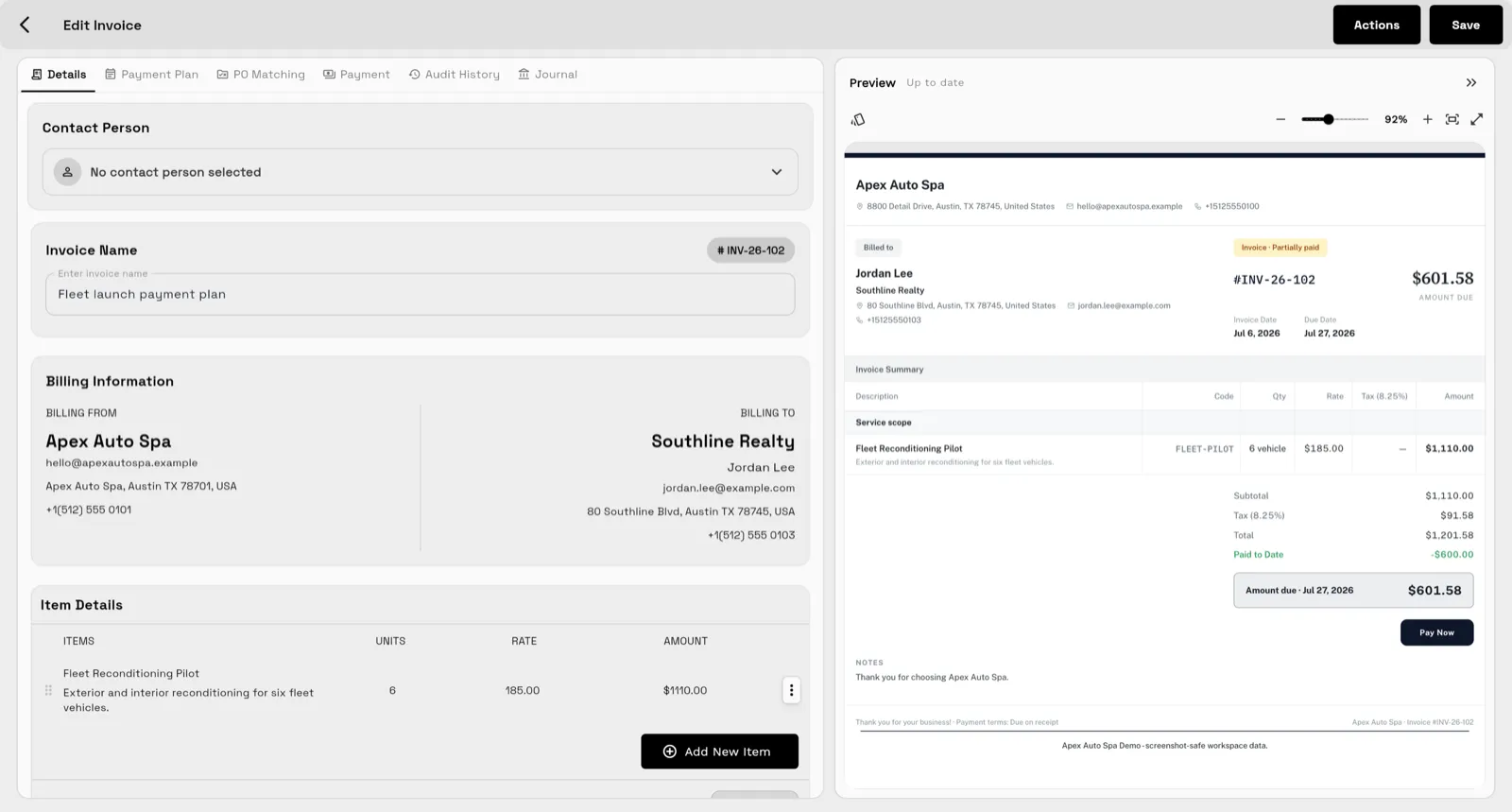
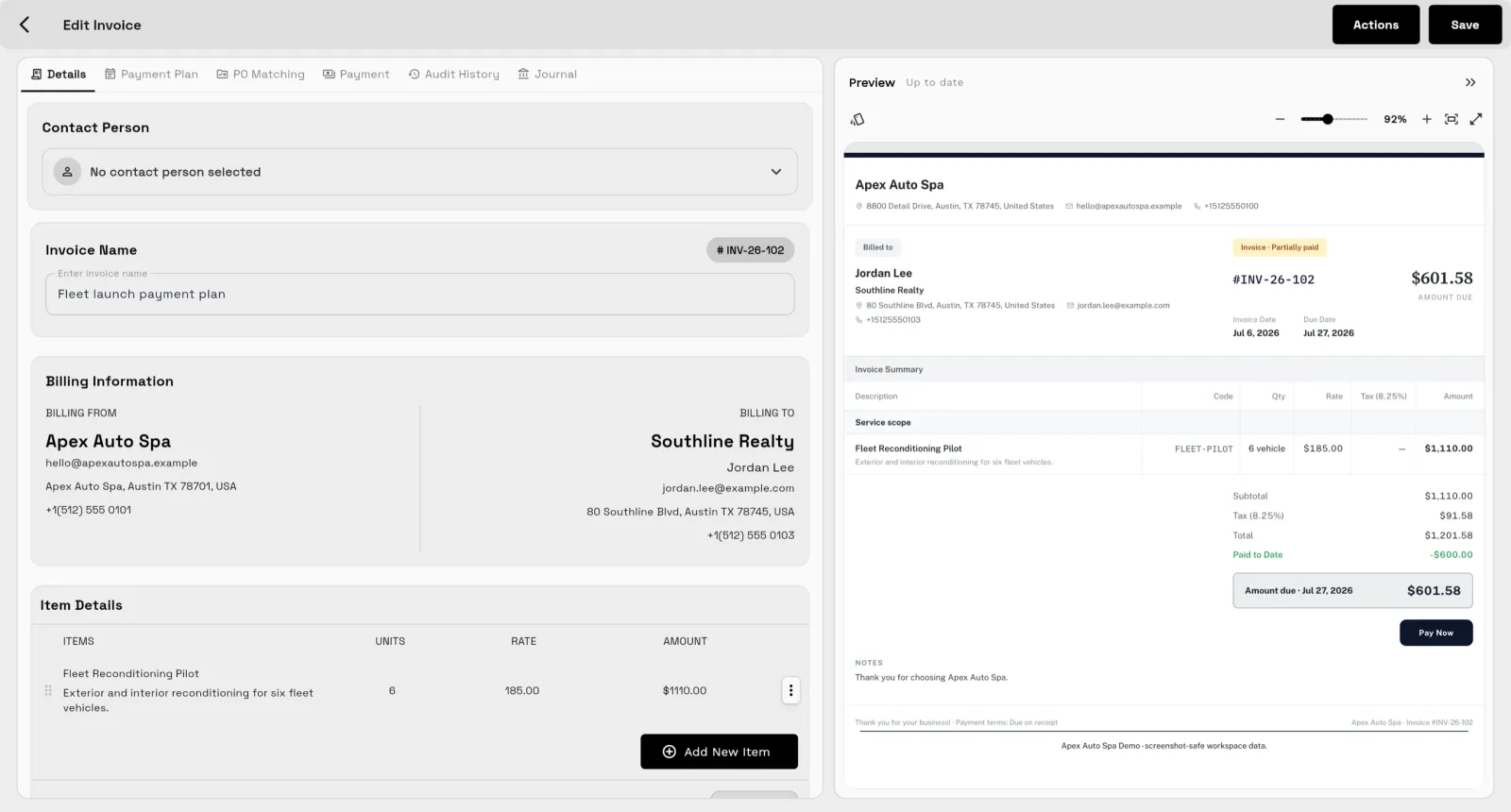
Proposals to paid invoices

Send quotes, bill milestones or retainers, and let automated reminders chase anything outstanding.

Workspace369 invoice editor showing line items, payment terms, and client details

Workflow

Step-by-Step Post-Confirmation Booking Workflow

01

Building the Initial Event Proposal

The process begins by assembling a formal proposal that outlines the primary activation hours, background choices, and standard print options. You input these details into the client records to establish a clear baseline. The client reviews the proposal and scheduling details. Once accepted, this document establishes the initial project scope, creating a foundation for any subsequent changes the client might introduce closer to the event date.

02

Documenting the Second Activation Period

When the client requests an additional operational window after confirmation, a team member logs this requirement directly in the project notes. You update the scheduling calendar to reflect the new time block, ensuring the physical booth asset is not double-booked. Recording this amendment inside the client records prevents scheduling overlaps and keeps the entire administrative team informed of the new operational timeline.

03

Attaching Branded Output Files

The client uploads their custom overlay graphics, logos, and print templates. You store these files directly within the project record alongside the relevant client conversations. A team member assigns specific tasks for file verification to ensure the dimensions match the booth software requirements. Keeping assets linked to the project prevents mix-ups and ensures the technician accesses the correct graphics.

04

Issuing Supplemental Invoices

After documenting the additional activation period, you generate an updated invoice reflecting the additional hours and custom branding fees. This invoice is tied directly to the project, allowing the client to view their updated balance. Tracking payments within the same system ensures that all extra operational costs are covered before the team packs the equipment for transport to the venue.

05

Providing Client Portal Access

You grant the event coordinator access to the client portal, where they can view the confirmed scheduling blocks, finalized proposals, and open invoices. The coordinator uses this portal to verify that the second activation period has been accurately recorded. This self-service visibility reduces administrative messaging and ensures both parties are completely aligned before the physical setup begins at the venue.

Product coverage

Client operations for photo booth companies

  • The client portal shows both the original and the newly added activation periods accurately before the event date arrives.
  • The supplemental invoice carries the correct line items for the second activation window and any custom branding fees.
  • Project tasks show that the technical team has downloaded the correct branded output files from the project files.
Client records
Proposals
Projects and tasks
Files
Conversations
Scheduling
Invoices
Client portal
Workflow Automations

Loved on the App Store

Rated by the people running their client work on it.

★★★★★
Finally feels calm

Bounced between three or four all-in-one tools and always ended up in a mess of tabs. This is the first one that feels calm. Set up my client projects in ten minutes.

Justin R. · Solo founder · App Store review
★★★★★
Painless team rollout

Rolled it out to our eight-person team and adoption was painless — intuitive and polished. I'd love more integrations, but they keep shipping.

Samantha D. · Operations lead · App Store review
★★★★★
Hours back every week

Was juggling separate tools for notes, tasks, docs, and updates. Consolidating into one place has genuinely saved me hours each week. Support is responsive too.

Alicia N. · Agency founder · App Store review

Get started

See Workspace369 on your own client work.

Start a free trial or talk to sales — either way, you will see the whole loop: inbox, projects, portal, and billing.

FAQ

Evaluation and Verification Protocols

Can Workspace369 operate the physical photo booth or trigger the cameras?

Keep booth operation, camera triggering and media delivery in your photo booth software. Workspace369 runs the business around the booth: client records, proposals, scheduling, conversations, the client portal and invoices.

How does the system handle a change in event timing after confirmation?

When an event coordinator changes the schedule, the team updates the calendar event and project notes in one place. You can then adjust the client records and issue an updated invoice or proposal to reflect the new activation hours, ensuring every booking detail stays aligned.

Where do we store the custom overlay templates for an event?

From Specialist, you can attach custom overlay graphics, logos, and print layout templates directly to the specific project. This keeps the design assets linked to client records, conversations, and tasks, ensuring the office team and on-site technicians can locate them easily during event preparation.

Can clients see their updated event schedule independently?

Yes. By providing the event coordinator or client with access to the client portal, they can log in independently to view their confirmed scheduling details, active proposals, and invoices. This allows them to verify that the second activation period has been documented correctly without needing to call your office.

Ready when you are

See where Workspace369 fits into your client-work flow.

Start with the modules you need today, then turn on AI, automations, accounting, inventory, requests, and reporting as the operation grows.