CRM for shopify store owners

CRM for Shopify Store Owners Managing Custom Wholesale Inquiries

Shopify store owners often encounter operational friction when a high-volume B2B buyer requests custom production runs or modified bulk terms. Standard checkout flows do not handle negotiated pricing or multi-stage project tracking for bespoke manufacturing. Workspace369 runs these accounts end to end: client records, custom Proposals with e-signing, production projects and tasks, and invoices with deposits and online card payments. It works alongside your core store, keeping custom commercial accounts apart from standard consumer retail transactions. By establishing a clear separation between retail orders and custom commercial accounts, business owners can maintain detailed records for specialized client requests. This guide shows how to manage these custom workflows, with every proposal, project task, and client conversation tracked systematically on one record.

Clientthe relationship and agreed brief
Worktasks with a responsible person
Billinginvoices and commercial context
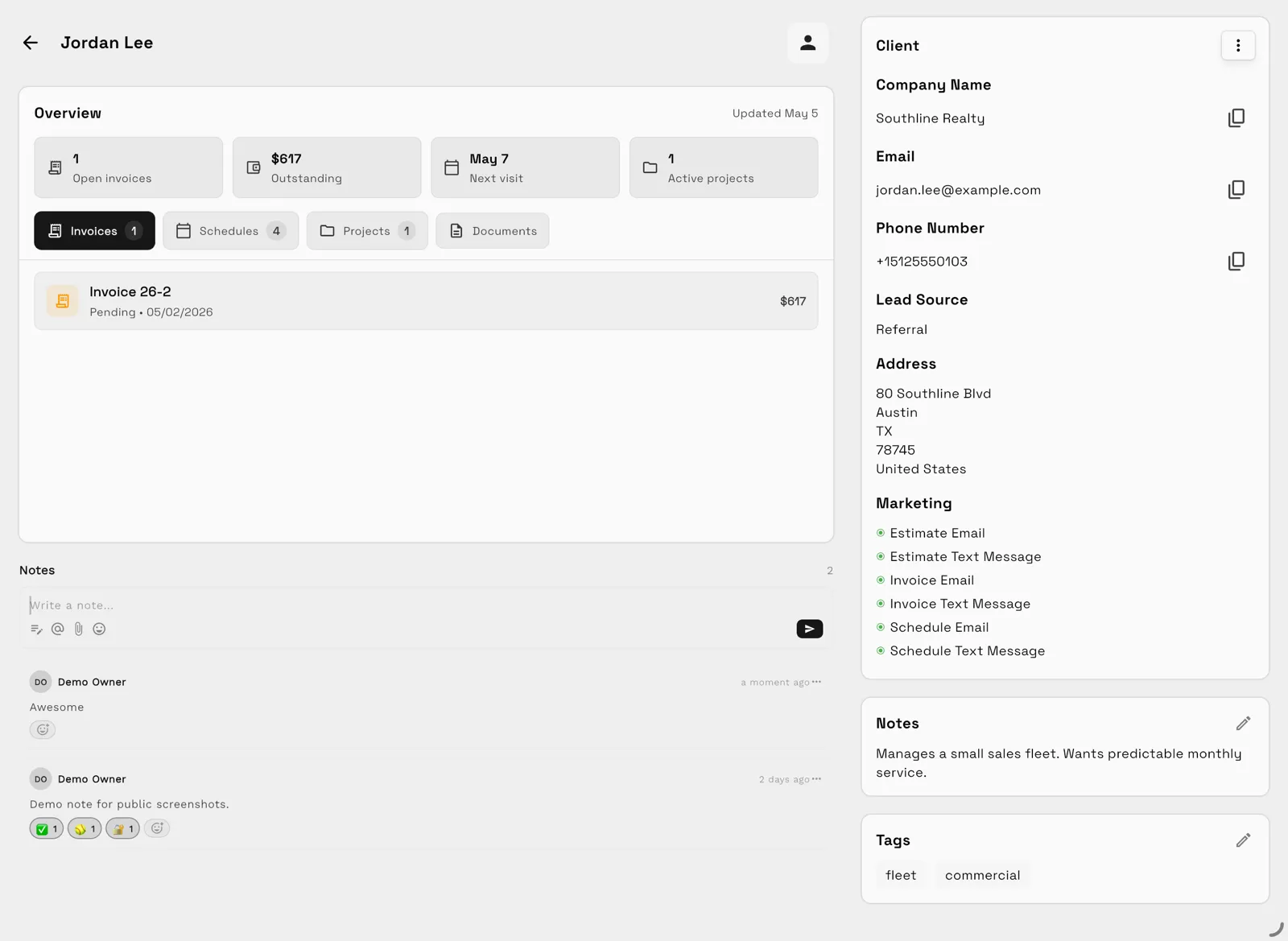
Workspace369 client record showing history, files, communication, and invoices in one profile

Key facts

CRM for shopify store owners at Workspace369 covers 9 areas, including client records, proposals, projects and tasks.

The workflow runs in 5 steps, from "capture client records and inquiry details" to "generate and track wholesale invoices".

Workspace369 starts at $29/mo for 1 seat, and the Commander plan includes 20 seats, 500 GB of storage, and 120,000 AI tokens per month at $299/mo.

Additional seats cost $10 each and 100 GB of additional storage costs $15; full pricing is public on the Workspace369 pricing page.

The problem

Operational Bottlenecks in Wholesale E-commerce

Fragmented Bulk Order Communication

Wholesale buyers require extensive negotiation regarding custom quantities and bulk pricing models. When these discussions happen across disparate channels, staff members lose track of specific client commitments. Without a dedicated space for conversations and files, store operators misplace design specifications or custom packaging requests. This disconnect leads to manufacturing errors and delayed production schedules for major business accounts. Maintaining a structured record of every interaction helps teams verify client requirements before production begins, reducing administrative confusion and ensuring that custom specifications are preserved accurately over long negotiation cycles.
Inflexible Standard Checkout Flows

A commercial buyer may need a negotiated Proposal, deposit and payment terms beyond the store’s usual checkout flow. Check what the commerce platform already supports before adding another system. Where a separate B2B workflow is useful, keep the buyer’s request, agreed pricing and responsible person together. Workspace369 Proposals document the commercial scope, and its invoices handle deposits, split payments and payment links for the agreed terms. Test the handoff with a sample order so the storefront record and the negotiated agreement do not conflict.

Disorganized Custom Production Tasks

Fulfilling a custom wholesale inquiry involves multiple operational steps, from sourcing materials to final quality checks. Managing these steps on loose paper or generic spreadsheets causes missed deadlines. Operators need to assign clear tasks and track projects to ensure production matches the negotiated agreement. A lack of structured task tracking results in unfulfilled wholesale obligations and operational delays. By organizing production into defined projects with specific tasks, stages, and subtasks, teams can monitor manufacturing progress in real time, ensuring that every custom detail is executed according to the client's approved specifications.

Isolated Manual Invoicing Systems

When bulk orders are processed outside the standard online storefront, invoicing often becomes detached from client records. Store operators generate documents without a clear history of prior conversations or file attachments. This isolation makes it difficult to track outstanding balances or verify payment terms. Staff must cross-reference bank deposits against outstanding invoices, increasing administrative overhead. Linking invoices directly to client records and proposals helps track outstanding balances, deposits, and split payments, ensuring that financial records remain organized alongside the corresponding project details and communication history.

The product

See the workspace your clients feel.

01

A portal clients actually check

Clients watch progress, files, and invoices in a branded portal instead of asking your team for updates.

Workspace369 client record showing history, files, communication, and invoices in one profile
02

Every channel in one inbox

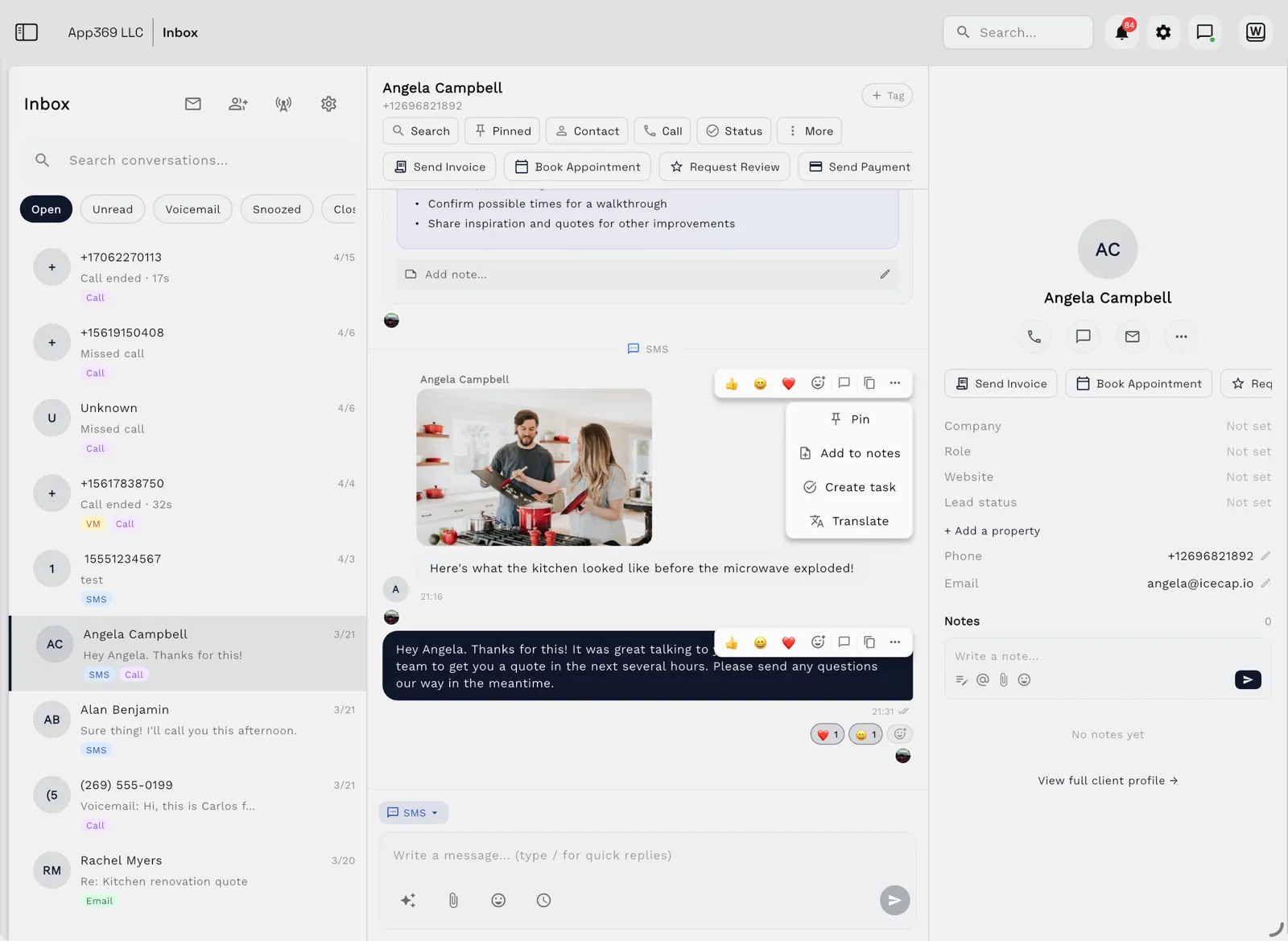
Email, SMS, calls, and voicemail land beside the client record — with AI summaries, so anyone on the team can reply with full context.

Workspace369 shared inbox showing email, SMS, and call history beside a client record
03

Client work, organized as projects

Tasks, files, and status for every engagement — visible to the team and, through the client portal, to the client.

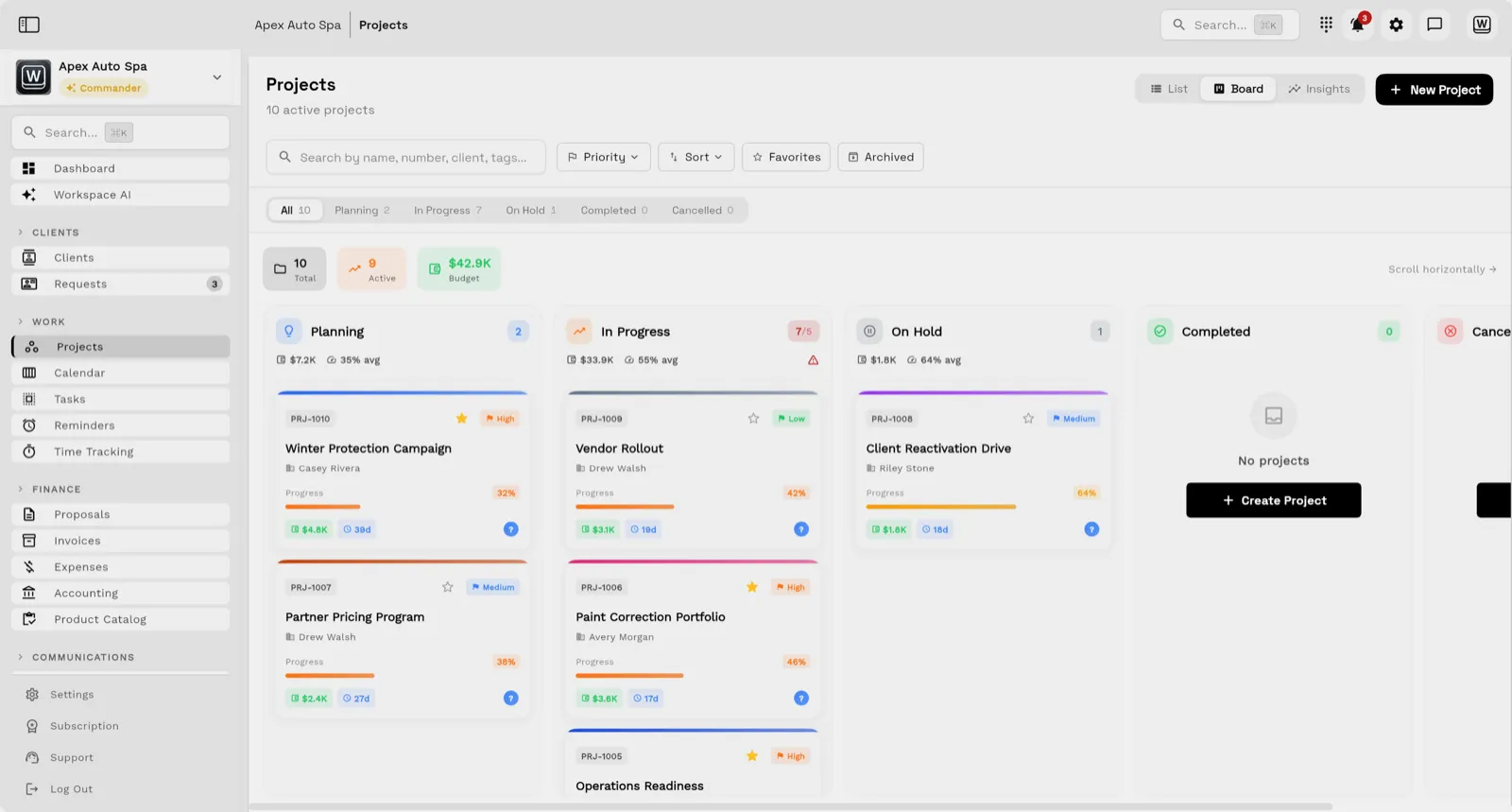
Workspace369 project board showing client work organized into stages with owners and status
04

Proposals to paid invoices

Send quotes, bill milestones or retainers, and let automated reminders chase anything outstanding.

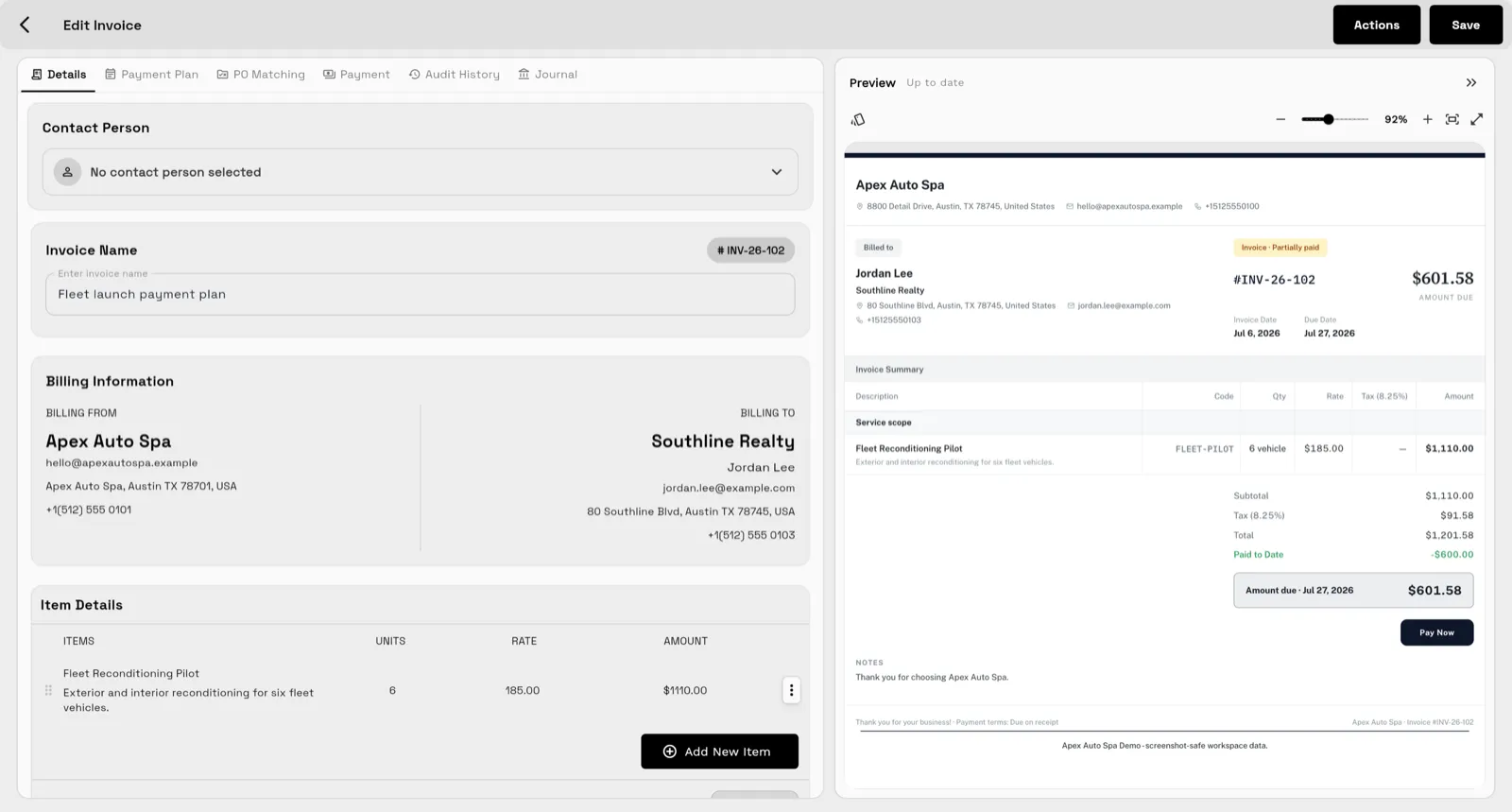
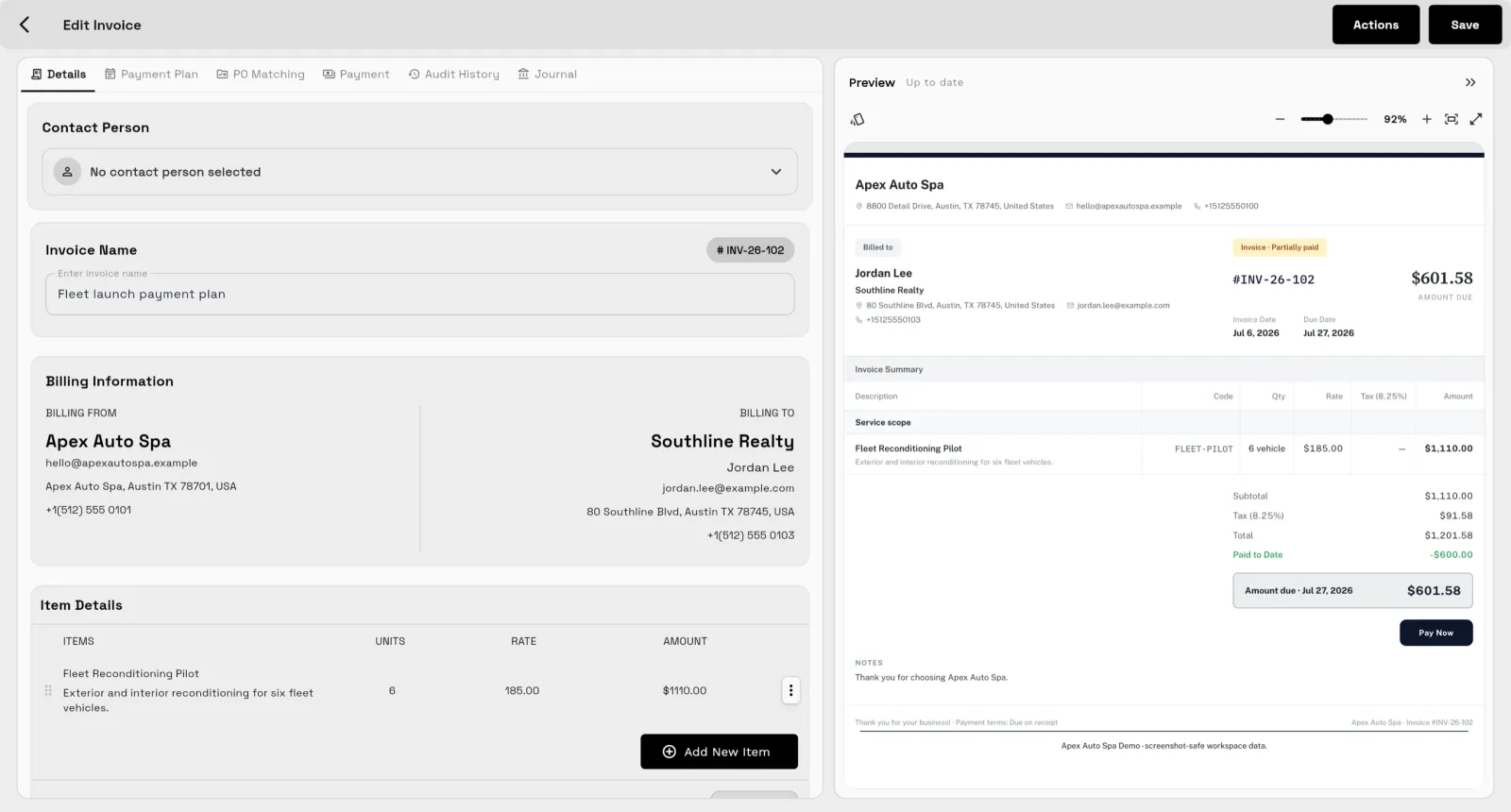
Workspace369 invoice editor showing line items, payment terms, and client details

Workflow

Step-by-Step Wholesale Inquiry Management Workflow

01

Capture Client Records and Inquiry Details

A store operator receives a custom wholesale inquiry via email or phone. The operator creates a new profile within client records to store the business name, custom fields, and contact details. All initial requirements and specific bulk requests are written directly into the client record, allowing staff members to reference the primary parameters of the custom request. This ensures that all foundational information is captured immediately, providing a clear starting point for the B2B relationship before any formal proposals or projects are initiated.

02

Develop and Issue Formal Proposals

The operator reviews the custom manufacturing requirements and calculates the bulk pricing structure. Using the system, the operator drafts formal Proposals detailing unit costs, minimum order quantities, and estimated production timelines. The operator uploads technical drawings to files and attaches them to the proposal. The document is then sent to the prospective wholesale client for review, public approval, and signing, allowing the client to review terms and confirm their agreement before any manufacturing resources are committed.

03

Establish Production Projects and Tasks

Once the client accepts the proposal, the operator creates a dedicated entry within projects to govern the manufacturing run. The operator breaks down the bulk order into discrete operational steps by generating detailed tasks, stages, and subtasks for material sourcing, initial assembly, packaging, and final quality assurance. This structured list helps production staff follow the specifications outlined during the initial negotiation phase, keeping the entire team aligned on project milestones and delivery timelines.

04

Coordinate Client Conversations and Portal Access

The operator configures the client portal to give the wholesale buyer visibility into the project status. The operator uses conversations to provide updates and request clarifications regarding shipping logistics. The buyer logs into their client portal to view the active project timeline, download shared files, and review shared invoices and communication without needing to call the store directly. This transparency improves client trust and reduces repetitive administrative check-ins, as the buyer can access their records independently at any time.

05

Generate and Track Wholesale Invoices

Upon completing the production tasks, the operator generates invoices reflecting the finalized bulk pricing and agreed payment terms. The invoice is linked directly to the client records and made available inside the client portal. The operator schedules a follow-up date using scheduling to check for payment receipt, updating the invoice status once the payment is verified. This ensures that the financial cycle is completed systematically, with all payment schedules, invoices, and client records properly cross-referenced within Workspace369.

Product coverage

Client operations for shopify store owners

  • The operator can create a new profile in client records and successfully input detailed custom wholesale requirements into custom fields without encountering software errors.
  • The wholesale client can log into the client portal, view the assigned project tasks, download attached files, and read active conversations without experiencing access errors.
  • The operator can generate an invoice linked directly to the client records and verify that the payment status can be updated upon payment confirmation.
Client records
Proposals
Projects and tasks
Files
Conversations
Scheduling
Invoices
Client portal
Workflow Automations

Loved on the App Store

Rated by the people running their client work on it.

★★★★★
Finally feels calm

Bounced between three or four all-in-one tools and always ended up in a mess of tabs. This is the first one that feels calm. Set up my client projects in ten minutes.

Justin R. · Solo founder · App Store review
★★★★★
Painless team rollout

Rolled it out to our eight-person team and adoption was painless — intuitive and polished. I'd love more integrations, but they keep shipping.

Samantha D. · Operations lead · App Store review
★★★★★
Hours back every week

Was juggling separate tools for notes, tasks, docs, and updates. Consolidating into one place has genuinely saved me hours each week. Support is responsive too.

Alicia N. · Agency founder · App Store review

Get started

See Workspace369 on your own client work.

Start a free trial or talk to sales — either way, you will see the whole loop: inbox, projects, portal, and billing.

FAQ

Wholesale Workflow Verification Criteria

Does this system automatically sync with my Shopify inventory?

Workspace369 connects to other systems through webhooks and its API from Specialist. Map the events and fields you need, set permissions and test failure handling with sample records before you rely on the sync.

Can I use this CRM to run automated email marketing campaigns for my store?

Workspace369 includes funnels with lead capture on every plan, email automations from Cadet, SMS workflow steps from Voyager, marketing tools and campaigns from Specialist and AI-drafted workflows from Commander. Check your audience, campaign format and consent requirements before the first send.

How do we handle custom manufacturing drawings for a bulk client?

You can upload technical drawings, specification sheets, and custom packaging designs directly into files associated with specific client records or projects. These files can then be attached to formal Proposals or shared directly with the bulk buyer through the client portal for review and sign-off before production begins.

Can clients schedule consultation calls through the platform?

Yes. From Specialist, buyers book calls through online booking pages with automatic reminders, and store operators can also schedule consultation calls or virtual meetings directly. This ensures that all discussions regarding custom specifications, bulk pricing adjustments, or shipping logistics are organized alongside the active client records, projects, and task lists.

Ready when you are

See where Workspace369 fits into your client-work flow.

Start with the modules you need today, then turn on AI, automations, accounting, inventory, requests, and reporting as the operation grows.