Best CRM for Custom Manufacturers in 2026
Best CRM for custom manufacturers: six tools compared on price, RFQ-to-Proposal flow, deposits, job tracking and invoicing. Odoo and MRPeasy lead production.
We make Workspace369, which is on this list. Weigh our ranking with that in mind.

By Simon Dziak, Founder, Workspace369 · LinkedIn
The best CRM for custom manufacturers keeps the RFQ, the Proposal, the deposit, the agreement and the final invoice on one customer record, and leaves bills of materials and machine scheduling to production software. For a shop that wants stock and production orders in the same product as the sales paper trail, Odoo leads and MRPeasy follows. Workspace369 is third and fits shops that already run production elsewhere and need the RFQ, Proposal, deposit, agreement and invoice on one record; its plans are on the pricing page. Solo makers who sell services too may prefer the best CRM for freelancers. If a buyer already wants a spec change, put a price on it first with the free scope-change request builder.
Disclosure and method: we sell Workspace369 and it appears below as option three, so weigh our ranking with that in mind. Every figure comes from a vendor's own pricing page, reviewed on October 22, 2026 in a browser with each billing switch flipped, except Pipedrive, whose page could not be read on October 22, 2026 and keeps its October 19, 2026 figures. Nothing here was tried hands-on; confirm plans with the vendor before you commit.
Key takeaways
- A small custom shop needs two systems of record: one for the RFQ, Proposal, deposit, agreement and invoice, and one for bills of materials, stock and the production schedule. Few tools do both well.
- Workspace369 Cadet is $29 a month ($23.25 billed yearly) for one user. It lists Proposals with optional add-on lines, deposit on acceptance, contracts, file versioning and Proposal-to-invoice conversion on every plan. Inventory tracking, change orders, expenses and the API start at Specialist ($149 a month).
- Odoo Standard ($31.10 a month billed yearly, $38.90 monthly) bundles CRM, Sales, Sign, Inventory, Project and Accounting in one per-user price, and its app list includes Manufacturing. MRPeasy ($49 a month monthly, $44.92 billed yearly) puts production planning and bills of materials on its entry plan.
- Zoho CRM Professional ($23 a month billed yearly, $35 monthly) lists Configure, Price, Quote and order and invoice records; Pipedrive Premium ($59 billed yearly, $79 monthly) lists contracts with e-signatures. Neither lists production scheduling.
- Katana runs a free plan capped at 30 SKUs; its paid tier, Advantage, has no public price. Odoo, MRPeasy and Katana beat Workspace369 on stock and production. Workspace369 is the only one of the six whose pricing page names a deposit step; Odoo documents down payments in its help docs.
What's inside?
What a CRM for custom manufacturers is (and what it is not)How we compared these toolsThe best CRM for custom manufacturers in 2026Side-by-side comparisonWhich tool fits your shop?Run an RFQ-to-invoice test during the trialWhen to keep it simple
What a CRM for custom manufacturers is (and what it is not)
For a made-to-order shop, the customer side of the job is a chain: an RFQ arrives with drawings, you price it, the buyer accepts, a deposit clears, an agreement is signed, the job runs, and the balance is invoiced. A CRM holds that chain and the people attached to it. It is not an MRP system, a CAM package or a quality system, and it does not plan which machine runs which operation. Larger job-shop systems such as ProShop publish no price on their pricing page, which points to a pricing proposal form, so they sit outside this price-based shortlist. The tools below split into three groups: a client-work platform (Workspace369), all-in-one business suites with production modules (Odoo, MRPeasy), and tools that cover only one side (Zoho CRM, Pipedrive, Katana).
How we compared these tools
We read each vendor's own pricing page and scored it on five jobs a small custom shop has to cover, counting a job only when the page names it:
- A priced offer: a Proposal or a configure-price-quote step that starts from the RFQ.
- A signed agreement: a contract or signing step on the plan.
- A deposit: payment collected before work starts.
- Job tracking to invoice: projects or orders that end in an invoice.
- Stock or production: inventory, bills of materials or production orders.
Alongside the five jobs we logged each entry price for one user in both billing views, any seat minimum and the trial terms. Speed, support quality, uptime and mobile apps were out of scope, and no review-site ratings were used.
Odoo is first because one per-user price covers all five jobs: Sales, Sign, Project and Invoicing, Inventory and Manufacturing, and its help docs describe down payments. MRPeasy is second: its Starter plan lists bills of materials, routing-style production planning and rescheduling plus quoting, invoicing and order tracking, but names no signing or deposit step. Workspace369 is third, above Zoho CRM, because its matrix names the sales-to-cash rows on Cadet: Proposals from a product catalog, deposit on acceptance, contracts with e-signature, retainers, Proposal-to-invoice conversion and projects; inventory tracking starts at Specialist and it has no production tools. Zoho CRM needs Professional for configure-price-quote and order records and names no signing, deposit or project tools, though it reaches order and invoice records for less ($35 a month monthly, against Specialist's $149). Pipedrive is fifth: its quotes and contracts need Premium and it lists no stock. Katana is last because it is an MRP tool, not a CRM, and names no Proposal or signing step; for pure inventory and production it is a strong free starting point.
The best CRM for custom manufacturers in 2026
1. Odoo, best for one suite that also holds stock and production
Odoo's One App plan is free for a single app. Standard lists all apps, including Sales, CRM, Sign, Inventory, Project and Accounting, at $31.10 per user a month billed yearly or $38.90 billed monthly. The page shows a lower first-year figure ($24.90 yearly, $31.10 monthly) with a footnote that the discount lasts 12 months, so the list prices are the ones to budget. The app selector on the trial page also lists Manufacturing, Purchase and Quality. Custom is $61.00 yearly ($76.20 monthly) and adds Odoo Studio and the external API. Support and hosting are included.
Limitations: the pricing page itself names no deposit step (the help docs describe down payments), and implementation services are sold separately, so a small team should budget setup time. Light users are listed at $8.90 a month but are licensed through a meeting with an Odoo advisor. The trial page offers a 15-day free trial with no card.
Best for: shops that want RFQ, signing, stock, production orders and accounting in one product and can invest in setup.
2. MRPeasy, best for production planning with a CRM built in
MRPeasy is made for manufacturers. Starter is $49 per user a month billed monthly or $44.92 billed annually, and lists production planning, bill of materials management, drag-and-drop rescheduling, lot traceability, warehouse management, a CRM, standard accounting, quoting, invoicing and order tracking from quotation to delivery. Professional ($69 monthly, $63.25 annually) adds a B2B customer portal, a product configurator, custom fields, quality control and subcontracting; Enterprise ($99, $90.75) adds approvals, version control and a master production schedule. Unlimited is $149 monthly ($136.58 annually) with a two-user minimum. The trial is 15 plus 15 days, with no card required.
Support is a ticket system for paid accounts, with paid training hours and advanced support priced separately. From the 11th user the price drops to $79 per 10 users on every plan, which helps once the office and floor staff all need seats.
Limitations: no agreement signing or deposit step is named, and the sales tools are lighter than a dedicated CRM. Pricing is per user from the first seat, so a one-person shop pays the full rate for a suite it may only partly use.
Best for: small manufacturers whose hardest problem is materials, routing and the production schedule.
3. Workspace369, best for the RFQ-to-invoice paper trail
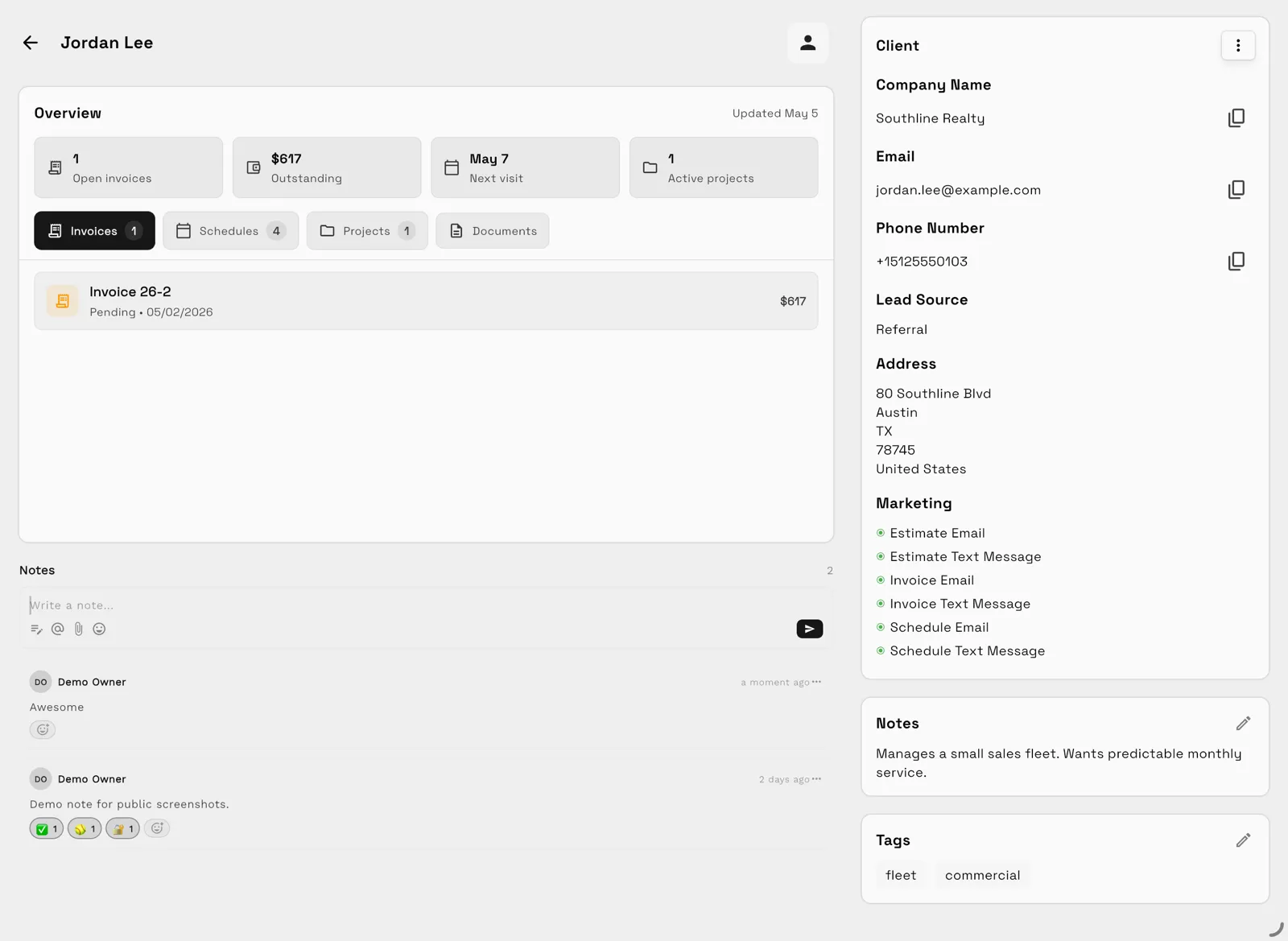
Workspace369 lists Proposals built from a product catalog, with optional add-on lines the buyer can tick, deposit on acceptance, contracts the buyer signs online, retainers and payment schedules, and Proposal-to-invoice conversion on every plan. The entry plan, Cadet, costs $29 a month for one user ($23.25 a month billed yearly) and allows 5 active projects. Voyager ($74 a month, $59.25 billed yearly, 2 seats) removes the project cap and adds a timeline view, task dependencies and a project financials dashboard that shows budget, billed amount and costs. Specialist ($149 a month, $119.25 billed yearly, 10 seats) adds inventory tracking, change orders, Proposal revisions, expense tracking, payment plans and webhooks and the API. The screenshot is a demo record, not a customer result.
Limitations: the matrix names no bills of materials, routings, lot traceability or machine scheduling, and inventory tracking only starts at Specialist, so a Cadet or Voyager shop tracks stock elsewhere. Odoo and MRPeasy cost more per user but include production tools. The 14-day trial needs a card.
Best for: custom and made-to-order shops that already have a production method and want the buyer-facing paper trail, from RFQ to invoice, in one place.
4. Zoho CRM, best for a configurable price list on a real CRM
Zoho CRM has a free plan for three users. Standard is $14 per user a month billed annually ($20 monthly); Professional is $23 annually ($35 monthly) and lists Configure, Price, Quote, an inventory management module covering sales and purchase orders, invoices, products and vendors (order and invoice records, not manufacturing stock), process management and customer portals. Enterprise is $40 annually ($50 monthly). The page offers a 15-day free trial with no credit card.
Standard still lists multiple sales pipelines, data capture through forms, sales forecasting and custom modules, so a shop can start there and move up when the price list grows. Enterprise adds an approval process and a developer sandbox.
Limitations: CPQ and the order records both need Professional, no signing step or deposit is named on the plan lists, and the page names no production or bill-of-materials tools. Per-user pricing also means every estimator and salesperson needs a seat.
Best for: shops with a large option catalog and several people selling who want a full CRM and will keep production elsewhere.
5. Pipedrive, best for a clean sales pipeline
Pipedrive's plans are Lite at $14 per seat a month billed annually ($24 monthly), Growth at $39 ($49), Premium at $59 ($79) and Ultimate at $79 ($99). Premium is the plan that lists quotes, proposals and contracts with built-in e-signatures. Growth lists subscriptions and installment tracking. The trial is 14 days with no credit card (per the page as read October 19, 2026; the page could not be read on October 22, 2026). Growth adds email sync with tracking, automations and a meeting scheduler, which suits a team chasing many open RFQs. A Projects add-on, from $16.66, is sold separately for post-sale delivery, so job tracking is an extra cost rather than a core feature.
Limitations: the pricing page names no inventory or production tools, and the signing step needs Premium, the third of four tiers. There is no deposit step on the plan lists, and prices are per seat.
Best for: sales-led shops that mostly need to track RFQs through stages and follow up on time.
6. Katana, best for inventory and production on a free plan
Per the pricing page FAQ, Katana's Free plan costs $0, needs no card and includes every feature up to 30 SKUs, with API access and users without a cap; the first 15 days allow unlimited SKUs. The paid tier, Advantage, is a custom annual contract with a named customer success manager and implementation help, and no public price. The page lists sales and purchase orders, price lists, traceability, barcode scanning and manufacturing management, plus real-time inventory planning and forecasting. Free users get an AI assistant and a knowledge base for support, while Advantage adds round-the-clock live support.
Limitations: it is an inventory and production tool, not a CRM, and its pricing page lists no Proposal, agreement or deposit step. Only Shopify is named as an e-commerce integration on Free, and the 30-SKU cap rules out a shop with a wide parts catalog.
Best for: small product makers with a modest catalog who need stock and production control before they need a CRM.
Side-by-side comparison
| Tool | Entry price (monthly) | Billed yearly | Sales-to-cash jobs named | Stock or production | Main limit | Trial |
|---|---|---|---|---|---|---|
| Odoo | $38.90 (Standard, per user) | $31.10 a month | Sales, Sign, Invoicing | Inventory, Manufacturing | Setup time; down payments documented in help docs | 15 days, no card |
| MRPeasy | $49 (Starter, per user) | $44.92 a month | Quoting, invoicing | Production, BOM, lots | No signing or deposit named | 15 + 15 days, no card |
| Workspace369 | $29 (Cadet, one user) | $23.25 a month | Proposal, contract, deposit, invoice | Inventory from Specialist ($149 monthly) | 5 active projects, 1 seat; no BOM or scheduling | 14 days, card required |
| Zoho CRM | $20 (Standard, per user) | $14 a month | Quote (CPQ) on Professional ($35 monthly) | Order and invoice records on Professional | No production tools named | 15 days, no card |
| Pipedrive | $24 (Lite, per seat) | $14 a month | Contracts and e-signatures on Premium ($79 monthly) | None named | No inventory or production | 14 days, no card |
| Katana | $0 (Free, 30 SKUs) | Advantage: No public price | Sales and purchase orders | Core strength | Not a CRM; no Proposal flow | Free plan, no card |
Which tool fits your shop?
| If you mostly need | Start with | Why |
|---|---|---|
| One suite for sales, stock and production orders | Odoo | One per-user price across CRM, Sales, Inventory and Manufacturing |
| Production planning and BOMs first, light CRM second | MRPeasy | Production tools and a CRM on the entry plan |
| RFQ, Proposal, deposit, agreement and invoice on one record | Workspace369 | Deposit, contracts and optional lines on every plan |
| A configurable price list inside a full CRM | Zoho CRM | CPQ and order and invoice records on Professional |
| A simple RFQ pipeline with follow-ups | Pipedrive | Public prices and contracts on Premium |
| Stock and production for a small catalog at no cost | Katana | Free plan up to 30 SKUs |
Run an RFQ-to-invoice test during the trial
Take one fictional order through the sequence below in each tool you shortlist. It is an exercise, not a customer result.
- Log an RFQ with a drawing attached and price it with an optional add-on, such as a finish upgrade the buyer can choose.
- Collect the deposit when the buyer accepts, and send the agreement with the lead time.
- Create the job, attach the drawings, and log the hours and materials against it.
- After approval, the buyer asks for a thicker gauge. Record the change, adjust the price and lead time, and send it for approval.
- Invoice the balance and check that the Proposal, agreement, drawings, change and both invoices sit on the same customer record.
The best tool for you is the one where you find the original terms in seconds. Size the deposit with the deposit calculator, and draft the change with the scope-change request builder.

When to keep it simple
A shop shipping a few orders a month can run on a Proposal template, a signed-agreement template and a billing app. The signal to upgrade is overlap: two buyers changing specs at once, or a repeat customer whose last agreed terms nobody can find. Workspace369's custom manufacturers page walks through Proposals, shared communications and invoices; current plans are on the pricing page. From Specialist, change orders record a revised scope against the signed original. Leave the shop-floor schedule in production software and link the two through webhooks and the API.
Use sample data for the first full job, and confirm you can export every record before real customers go in.
Sources reviewed for this guide
- Workspace369 pricingPlan matrix reviewed October 22, 2026.
- Odoo pricingOfficial pricing page reviewed October 22, 2026 in the yearly and monthly views, with the first-year discount footnote read; trial wording from odoo.com/trial.
- Odoo down payment documentationOdoo help documentation read October 20, 2026 for down payments on sales orders.
- MRPeasy pricingOfficial pricing page reviewed October 22, 2026 with the billing switch set to monthly and to annual; plan features and trial terms read from the full page.
- Zoho CRM pricingOfficial pricing page reviewed October 22, 2026 in the monthly and annual views; plan feature lists and the 15-day trial wording.
- Pipedrive pricingOfficial pricing page last read October 19, 2026 in the monthly and annual views; the page could not be read on October 22, 2026.
- Katana pricingOfficial pricing page reviewed October 22, 2026, including its FAQ; Free plan limits and Advantage custom pricing.
Workspace369 publishes this documentation-based comparison and is one of the options. It is not an independent ranking or a hands-on benchmark.
Run client follow-up in one workspace.
CRM, inbox, voice, invoicing, payments, projects, files, AI, and workflow automations — connected instead of exported.
14-day free trial. Card required. After the trial: from $29/month. Renews automatically every month until you cancel. Cancel anytime in Settings → Billing.