Best CRM for Etsy & Handmade Sellers in 2026
Best CRM for Etsy and handmade sellers: five options compared on fees, price, store tools, email and custom-order handling, plus a commission test.
We make Workspace369, which is on this list. Weigh our ranking with that in mind.

By Simon Dziak, Founder, Workspace369 · LinkedIn
The best CRM for Etsy and handmade sellers is usually not a CRM at all: catalog orders belong in Etsy or a store of your own, and your buyers belong on an email list. Workspace369 (see its Etsy and handmade sellers page and the pricing page) ranks fifth of five here, because it fits only the custom jobs that need a written Proposal and a deposit, written up as a Proposal. If you sell through your own site, read the best CRM for Shopify store owners next, and work out a commission deposit with our free deposit calculator.
Disclosure and method: Workspace369 wrote this page and sits in the list, at the bottom for this reader. Vendor pages were reviewed on October 22, 2026 (Etsy's help pages could not be read that day, so its figures are from October 19, 2026), and nothing below comes from a hands-on trial. Fees move often, so confirm them with the vendor before you commit.
Key takeaways
- Most Etsy and handmade sellers move catalog orders through a marketplace or a store, so the tools that fit best are the marketplace itself, a store platform and an email list, not a client-work CRM.
- Etsy lists $0.20 per listing; it also has a $0.20 custom listing for a private sale to one buyer.
- Shopify Basic is $39 a month ($29 billed yearly) and syncs 50 marketplace orders a month free; the promo of $1 a month for 3 months is not the price.
- Workspace369 Cadet is $29 a month ($23.25 billed yearly) for one user with 5 active projects. It fits only custom and commission work sold by Proposal with a deposit, names no store or marketplace connector, and ranks last of five here.
- Test each tool with one fictional commission: a Proposal with an add-on, a deposit, reference photos, a revised size and a final balance should live on one record.
What's inside?
What a CRM for Etsy and handmade sellers is (and is not)How we compared these toolsThe best CRM for Etsy and handmade sellers in 2026Side-by-side comparisonMatch the tool to your handmade businessRun a commission test during the trialKeep catalog orders where they already liveWhen to keep it simple
What a CRM for Etsy and handmade sellers is (and is not)
A maker's customer records are scattered by design. A marketplace sale lives in the marketplace, a website sale lives in the store, a newsletter sign-up lives in an email tool, and a custom job lives in a message thread. A CRM in this trade is whatever stops those four places from becoming one tangle: who bought, who asked for a custom piece, who still owes a balance and who should hear about the next drop. For catalog goods, the platform that took the order already answers most of that. A separate client record starts to earn its cost when a buyer wants something made to order and the price, the size and the schedule are all negotiated.
How we compared these tools
Each option was read on the same five points, from the vendor's own pages as of October 22, 2026 (Etsy: October 19, 2026, because its pages could not be read on October 22):
- Cost model: listing and sale fees, or a monthly plan, and what is gated behind a higher tier.
- Catalog selling: whether the tool takes standard orders and handles stock.
- Customer contact: an email list, order messages or a client record.
- Custom and commission work: a private sale, a written scope, a deposit or an add-on line.
- Limits and trial terms: seat counts, caps and whether a card is needed.
Shipping labels, tax handling, support quality and mobile apps were outside the review, and no third-party ratings were used. The order reflects documented fit for someone who sells mostly finished goods and occasionally builds to order. Where a monthly figure is not stated, the table says "See site" or "Not shown" rather than a guess.
The best CRM for Etsy and handmade sellers in 2026
1. Etsy, best for marketplace orders and one-off private sales
Etsy's help center lists a $0.20 listing fee per item. A custom listing, which Etsy describes as a private sale of a particular product to a particular buyer, carries the same $0.20 listing fee. Offsite Ads are charged at 15% of an attributed sale for shops that have always made less than $10,000 USD in any 365-day period (they can opt out) and at 12% for shops that have made $10,000 USD or more (participation required); the fee is capped at $100 per order. Opening a shop has a one-time set-up fee that varies by location, which we label "See site".
Limitations: the fee pages describe charges, not CRM features, so we cannot say how Etsy handles scope, deposits or revisions beyond the custom listing. Etsy Plus pricing is not stated on the pages we read, and there is no monthly plan to compare. The etsy.com/legal/fees page returned nothing in headless Chromium, so figures come from help-center articles.
Best for: sellers whose orders mostly arrive through the marketplace and who want one place for listings, sales and buyer messages.
2. Shopify, best for selling from your own site with email built in
Shopify's pricing page lists Basic at $39 a month, or $29 a month on the Pay yearly view, and Grow at $105 a month or $89 yearly. Every plan lists unlimited products, a custom domain, abandoned-checkout recovery and the ability to create email campaigns and customer segments. Grow lists up to 5 staff accounts. Under Marketplaces, the page lists 50 synced marketplace orders a month free, then 1% up to $99 a month. The trial is 3 days, with no card required.
The page also advertises a $1 a month offer for the first 3 months; that is a promotion, not the price, so it is left out of the table.
Limitations: the pricing page does not name a Proposal, deposit or written-scope feature for custom orders, so we cannot confirm how it handles a commission. It also does not say which marketplaces the sync covers. You pay card rates on top of the plan.
Best for: sellers who want their own storefront next to, or instead of, a marketplace, with stock and email in the same account.
3. Mailchimp, best for keeping your buyers on a list you control
Mailchimp's Free plan includes 1 seat, 1 audience with up to 250 contacts and 500 sends a month. Essentials starts at $13 a month and Standard at $20 a month at 500 contacts, with the price rising by audience size. Essentials lists 3 seats and automation flows capped at 4 steps; Standard lists 5 seats and up to 200 flows. The 14-day trial covers Standard and Essentials only, and the terms require valid payment information at enrollment. Premium lists $350 a month at 10,000 contacts; its $297.50 offer for 12 months is a promotion.
Limitations: it is an email and marketing tool, not an order or client record, so no catalog, Proposal or deposit feature appears on the page. We did not find a yearly figure for the monthly plans; annual plans are offered through sales for larger lists.
Best for: sellers who want a newsletter, a launch announcement or a restock alert without relying on a marketplace to reach buyers.
4. HoneyBook, best for makers who sell services and commissions together
On HoneyBook's yearly view the three tiers are Starter $29, Essentials $49 and Premium $109 a month; flip to monthly billing and they read $36, $59 and $129. The entry tier includes unlimited clients and projects, proposals, contracts, invoicing, payments, a client portal and up to 2 live lead forms. Scheduling begins on Essentials. A free 30-day trial is offered without a card.
Limitations: it has no store, stock or marketplace features on the pages we read, so it covers only the commission side. Unlike Workspace369's Cadet, it lists unlimited projects at the entry price, but it costs more per month than Cadet if you pay monthly.
Best for: makers who also teach, design or take bespoke work and would rather run all of it in one general-purpose app.
5. Workspace369, best only for custom and commission work sold by Proposal with a deposit
Workspace369 ties a buyer's record to a Proposal, a deposit taken on acceptance, optional add-on line items, a client portal and invoices. On Cadet, one user pays $29 a month, or $23.25 a month when billed yearly, and gets contracts with e-signature, project and client attachments, public intake forms and time tracking. The image below is demo data rather than a customer outcome.
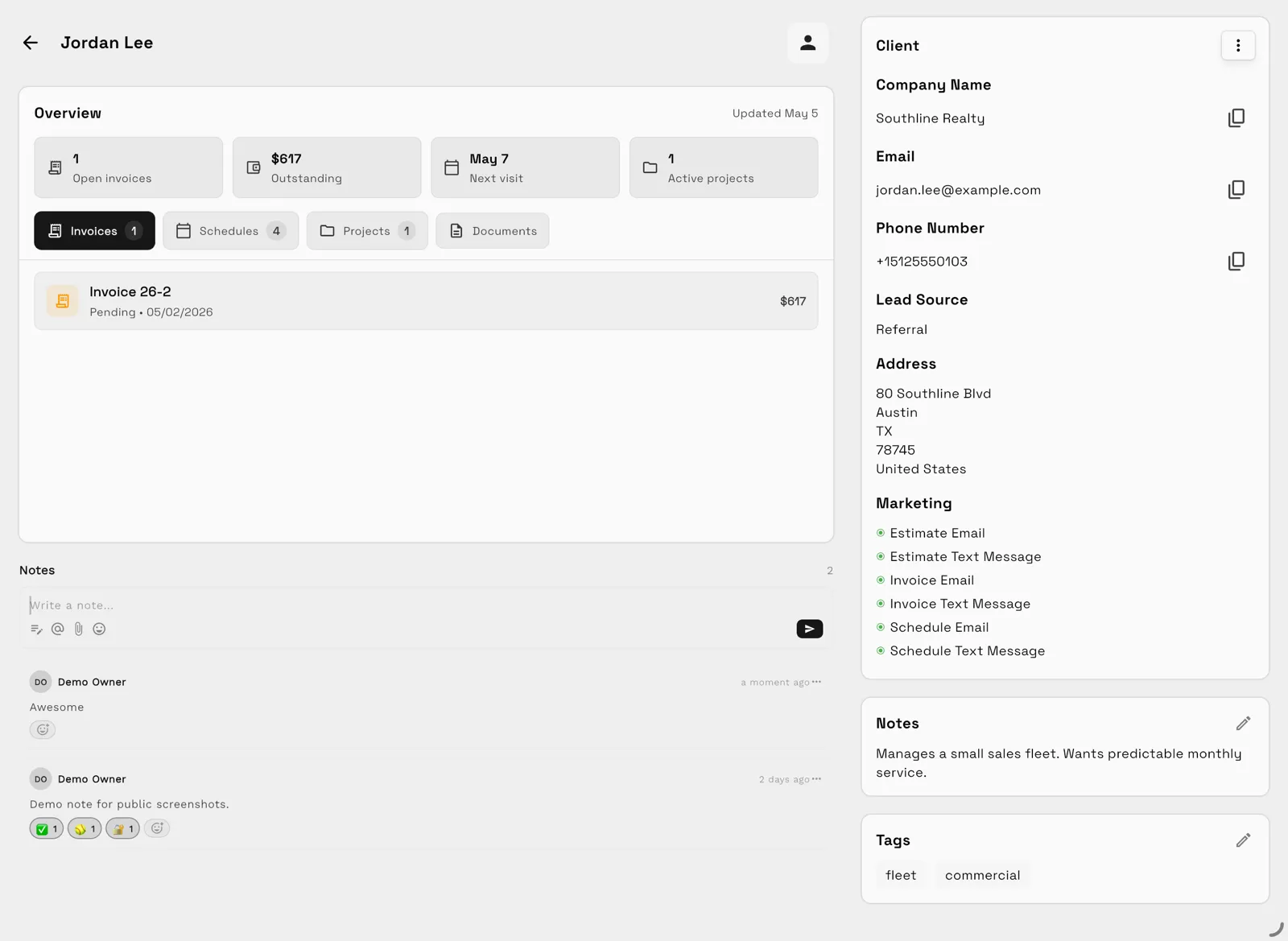
Limitations: the plan matrix names no store or marketplace connector, so Etsy and Shopify orders have to stay where they are. Webhooks and the API, the route a developer would use to link a store, begin on Specialist at $149 a month ($119.25 yearly) with 10 seats. Cadet caps you at a single user and five projects open at once, and its product catalog tops out at 20 items. Voyager ($74 a month, $59.25 billed yearly) adds a second seat and unlimited projects. Inventory tracking, low-stock alerts and Proposal revisions also start at Specialist. The 14-day trial needs a card. Etsy has no monthly plan, Shopify Basic costs more than Cadet but is built for catalog selling, and HoneyBook lists unlimited projects for commission work.
Best for: makers who sell finished goods elsewhere and handle two or three commissions at a time, with a written Proposal and a deposit.
Side-by-side comparison
| Tool | Plan priced | Monthly | Billed yearly | Catalog and custom-order features at that plan | Caps and fees | Trial |
|---|---|---|---|---|---|---|
| Etsy | Seller fees | $0.20 per listing | Not applicable | Marketplace listings; custom listing for a private sale | Set-up fee: See site | No trial stated |
| Shopify | Basic | $39 | $29 a month | Online store, unlimited products, email campaigns; no Proposal or deposit named | Marketplace sync: 50 orders free, then 1% up to $99 | 3 days, no card |
| Mailchimp | Essentials (500 contacts) | From $13 | Not shown | Email campaigns and flows up to 4 steps; no orders or Proposals | 3 seats; Free: 250 contacts | 14 days, payment info required |
| HoneyBook | Starter | $36 | $29 a month | Proposals, contracts, invoices, portal; no store | Up to 2 live lead forms | 30 days, no card |
| Workspace369 | Cadet | $29 | $23.25 a month | Proposals, deposit on acceptance, add-on lines; no store connector named | One user, five active projects | 14 days, card required |
Match the tool to your handmade business
| Your main need | First pick | Reason |
|---|---|---|
| Marketplace sales and private one-buyer listings | Etsy | Listing and transaction fees are published; custom listing is $0.20 |
| A store of your own with stock and email | Shopify | Basic is $29 a month yearly; marketplace sync is 50 orders free |
| A list that outlives any marketplace | Mailchimp | Free up to 250 contacts; Essentials from $13 |
| Services and commissions alongside other work | HoneyBook | Starter lists proposals, contracts, invoices and unlimited projects |
| A few custom jobs with a deposit and a written Proposal | Workspace369 | Cadet lists Proposals, deposits, add-on lines and a client portal |
Run a commission test during the trial
Take one fictional buyer through a custom order in each tool you shortlist:
- Record the inquiry and what the buyer wants, such as a hand-knit blanket in three named colors.
- Send a Proposal with the base price and an optional rush or monogram add-on.
- Collect a deposit when the buyer accepts.
- Attach reference photos and a size note to the job.
- Change the dimensions mid-way and see how the new price and the balance are recorded.
- Send the final invoice and check that the deposit and the add-on appear on it.
The right tool keeps the agreement, the deposit and the balance on one record without retyping. A tool that forces you to rebuild the price in a message thread has already failed the test.

Keep catalog orders where they already live
Standard orders do not need a second system. Leave them in Etsy or your store, and use a client-work tool only for the pieces that need negotiation. In Workspace369, CSV import is on every plan, file management covers attachments and versioning, and inventory tracking begins at Specialist if you do want stock counts beside the commission work. Building an automatic link to a store needs webhooks and the API, which also start at Specialist.
When to keep it simple
If custom jobs are a few a year, a saved message template, a payment link and a spreadsheet can carry them. Move to a Proposal tool when a commission goes wrong twice in the same way: the price is argued after the work starts, the deposit is chased, or nobody can find the reference photos. The Etsy and handmade sellers product page shows how Workspace369 handles contracts, payments and Workflow Automations for reminders, and the pricing page lists the current plans.
Before you move real customers, run one full commission on demo data and confirm you can export your records.
Sources reviewed for this guide
- Workspace369 pricingPlan matrix reviewed October 22, 2026 for seats, active projects, Proposals, deposits, add-on line items, webhooks and the trial.
- Etsy fee basicsEtsy help-center page reviewed October 19, 2026 (the page could not be read on October 22, 2026: Cloudflare security check) for listing, custom listing and transaction fees. etsy.com/legal/fees returned no content in headless Chromium.
- Etsy fees and taxes for sellingReviewed October 19, 2026 (the page could not be read on October 22, 2026: Cloudflare security check) for the set-up fee note, Offsite Ads and Etsy Plus references.
- Etsy payment processing feesReviewed October 19, 2026 (the page could not be read on October 22, 2026: Cloudflare security check) for how payment processing depends on bank-account location.
- Etsy Offsite AdsReviewed October 19, 2026 (the page could not be read on October 22, 2026: Cloudflare security check) for the 15% and 12% fee rates, the opt-out rule and the $100 cap per order.
- Shopify pricingOfficial pricing page reviewed October 22, 2026 in headless Chromium, with the Pay yearly switch on and off, for plan prices, marketplace order sync and the trial.
- Mailchimp pricingOfficial pricing page reviewed October 22, 2026 for the Free plan limits, Essentials and Standard starting prices and the trial terms.
- HoneyBook pricingOfficial pricing page reviewed October 22, 2026 on the yearly and monthly views for Starter prices, included features and the trial.
Workspace369 publishes this documentation-based comparison and is one of the options. It is not an independent ranking or a hands-on benchmark.
Run client follow-up in one workspace.
CRM, inbox, voice, invoicing, payments, projects, files, AI, and workflow automations — connected instead of exported.
14-day free trial. Card required. After the trial: from $29/month. Renews automatically every month until you cancel. Cancel anytime in Settings → Billing.