CRM for solo & small law firms

CRM for Solo and Small Law Firms with a Specific Workflow

A law-firm inquiry needs screening before it can become an accepted engagement. This page shows how solo and small law firms run intake in Workspace369, from the first inquiry to the signed engagement. With client records, conversations, and scheduling, an operator can review incoming requests before committing to a project, and public intake forms (Requests, from Voyager) capture new inquiries that convert into client records. Proposals with e-signing, projects, files, and invoices carry each engagement from there.

Clientthe relationship and agreed brief
Worktasks with a responsible person
Billinginvoices and commercial context
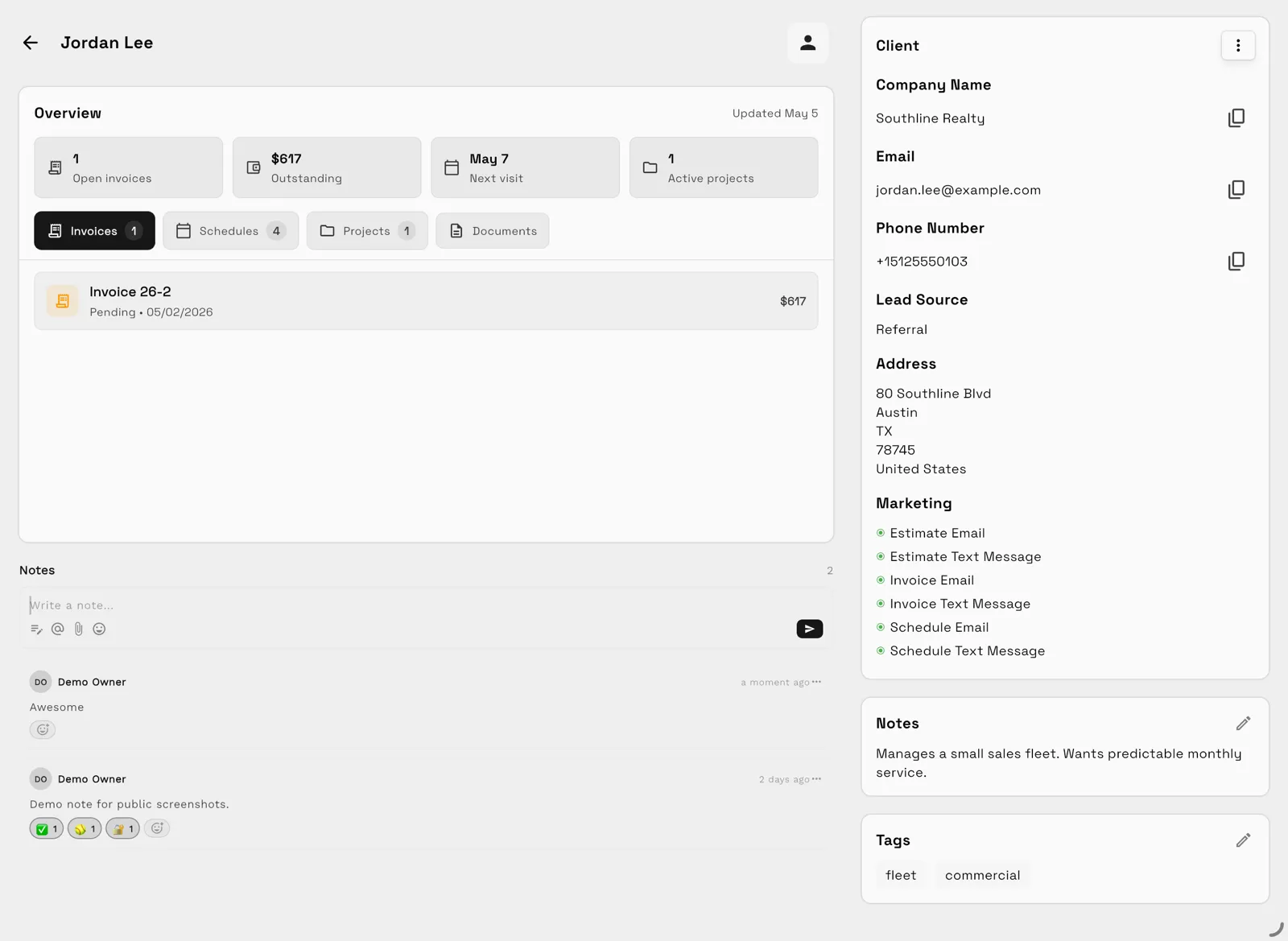
Workspace369 client record showing history, files, communication, and invoices in one profile

Key facts

CRM for solo & small law firms at Workspace369 covers 9 areas, including client records, proposals, projects and tasks.

The workflow runs in 5 steps, from "logging the initial inquiry" to "invoicing and payment tracking".

Workspace369 starts at $29/mo for 1 seat, and the Commander plan includes 20 seats, 500 GB of storage, and 120,000 AI tokens per month at $299/mo.

Additional seats cost $10 each and 100 GB of additional storage costs $15; full pricing is public on the Workspace369 pricing page.

The problem

Operational Bottlenecks in Small Law Firm Intake

Unscreened Client Inquiries

Initial inquiries often arrive without pre-screening, filling the intake queue with mismatched cases. Without a clear method to log conversations and review client records, staff spend hours manually parsing details. This administrative overhead delays responses to viable prospects. Operators need a structured way to document initial outreach and schedule preliminary evaluations before creating a formal project or sending proposals.
Scattered Intake Communication

When prospective client messages are spread across separate accounts, tracking the early history of an inquiry becomes difficult. Conversations, initial files, and scheduling notes remain unlinked to the primary client record. A person must manually verify whether an inquiry was screened or if a proposal was sent. This lack of administrative organization leads to repeated questions and slow response times during intake.

Disconnected Project Tracking

Moving from an accepted inquiry to project execution often creates operational friction. Tasks, related files, and client records are frequently stored in separate locations. A team member must manually recreate tasks in yet another tool. Without linking projects directly to the original client record, tracking progress and coordinating internal tasks requires excessive manual cross-checking.

Isolated Billing Administration

Billing for initial consultations or engagement milestones is inefficient when handled outside the main client system. Creating invoices requires manual data entry from separate scheduling logs and client records. When invoices are disconnected from client conversations and project files, tracking outstanding balances becomes a manual chore, forcing small law firms to spend extra time verifying payment statuses.

The product

See the workspace your clients feel.

01

A portal clients actually check

Clients watch progress, files, and invoices in a branded portal instead of asking your team for updates.

Workspace369 client record showing history, files, communication, and invoices in one profile
02

Every channel in one inbox

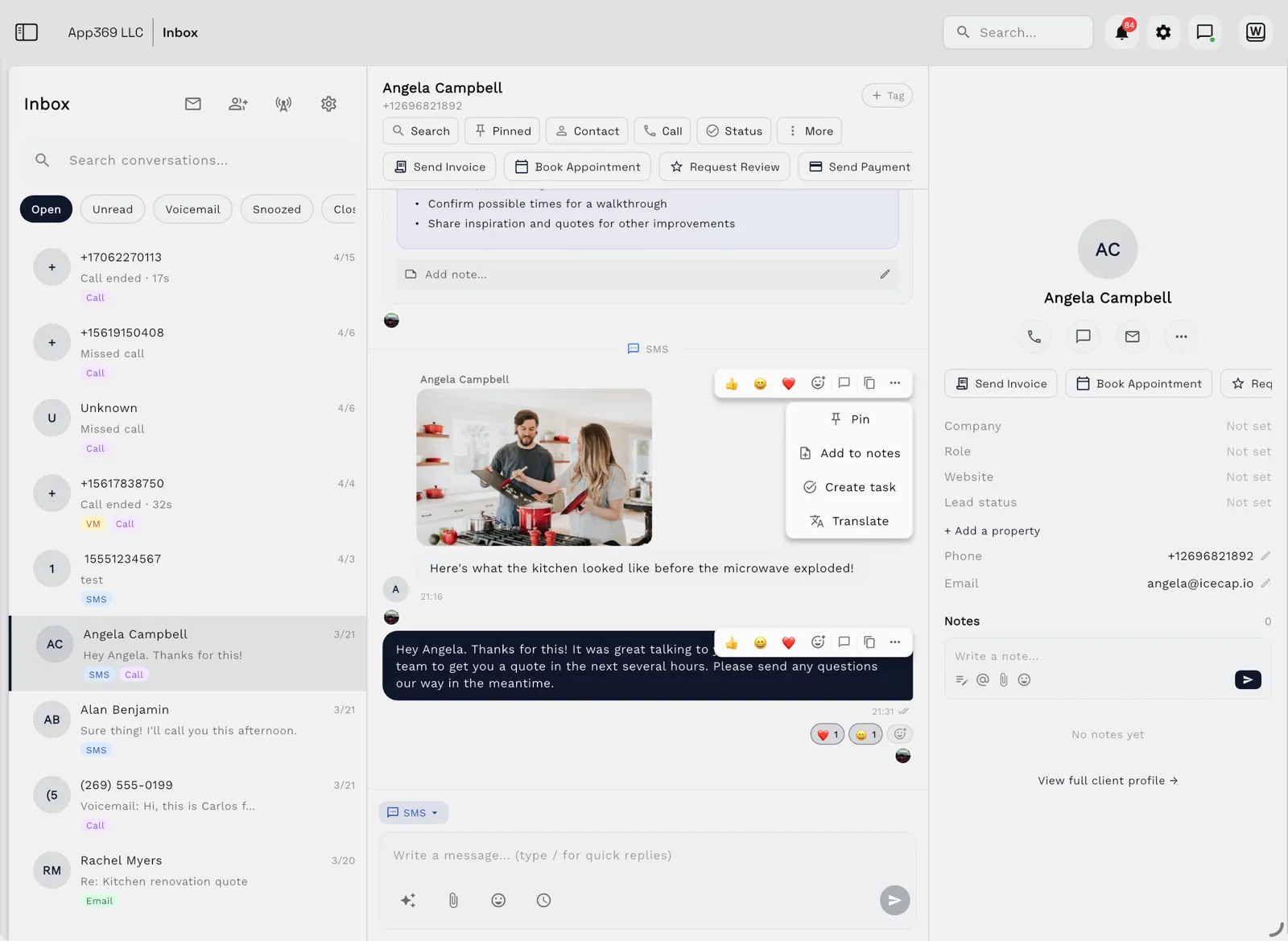
Email, SMS, calls, and voicemail land beside the client record — with AI summaries, so anyone on the team can reply with full context.

Workspace369 shared inbox showing email, SMS, and call history beside a client record
03

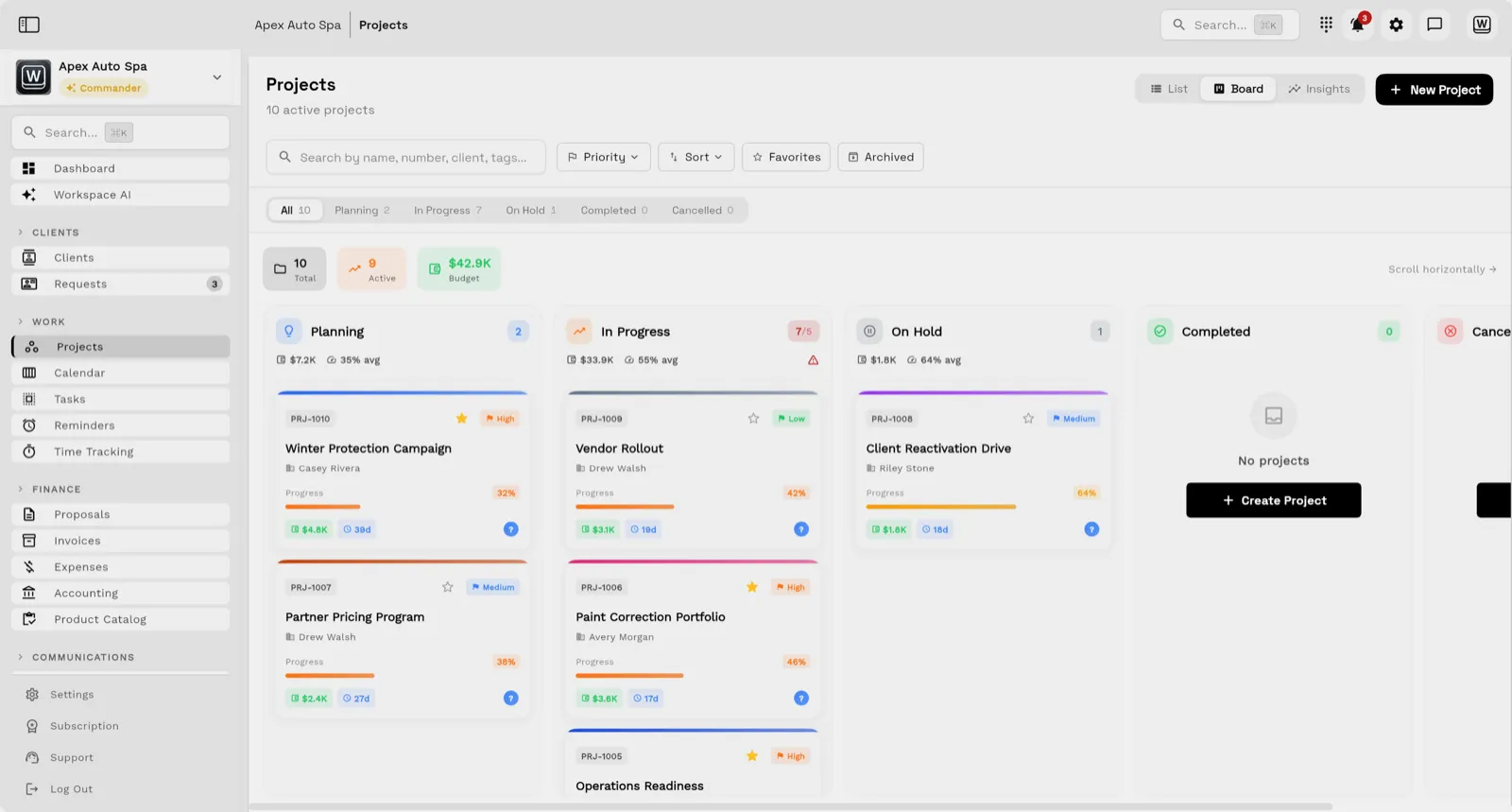
Client work, organized as projects

Tasks, files, and status for every engagement — visible to the team and, through the client portal, to the client.

Workspace369 project board showing client work organized into stages with owners and status
04

Proposals to paid invoices

Send quotes, bill milestones or retainers, and let automated reminders chase anything outstanding.

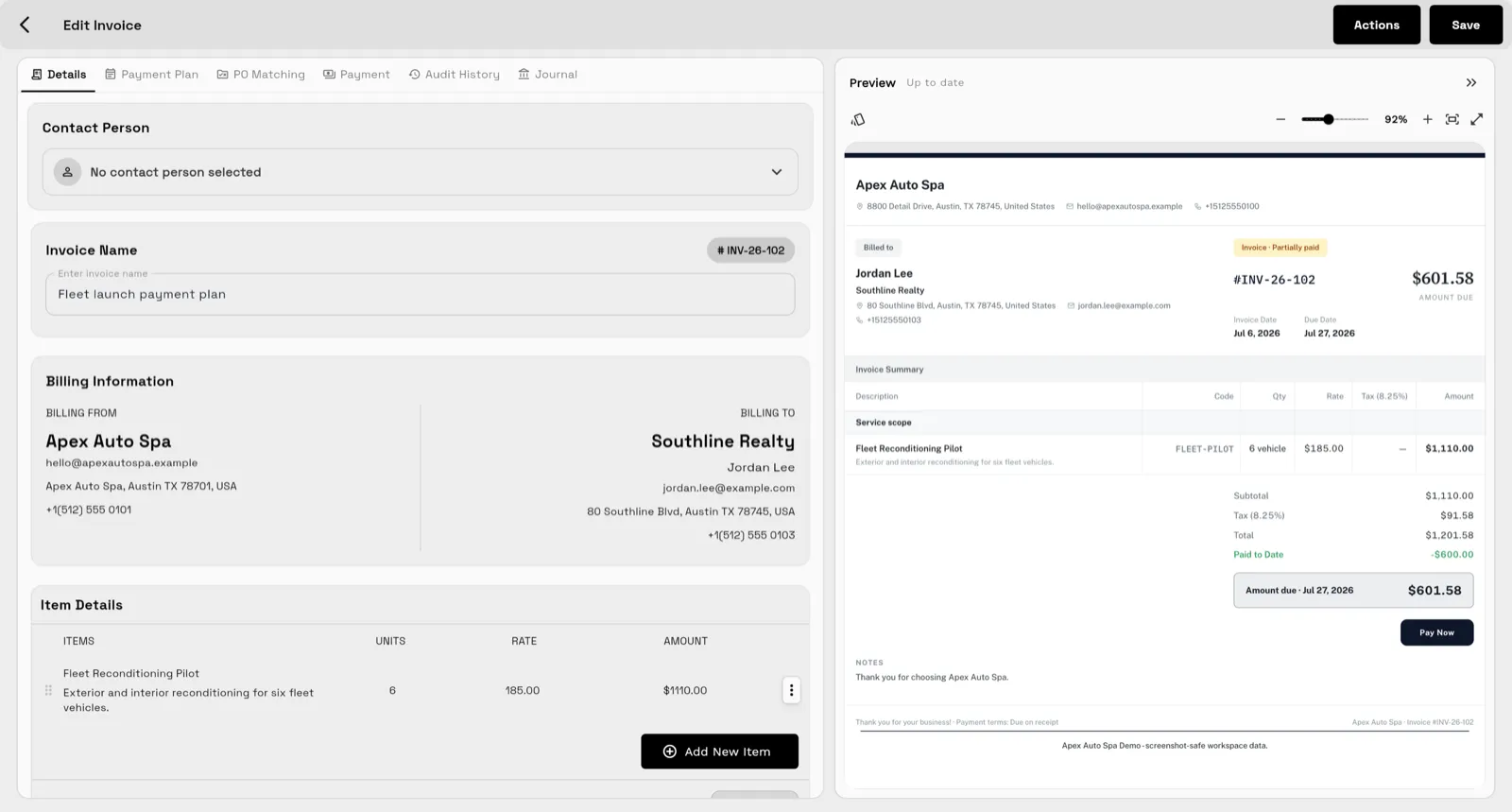
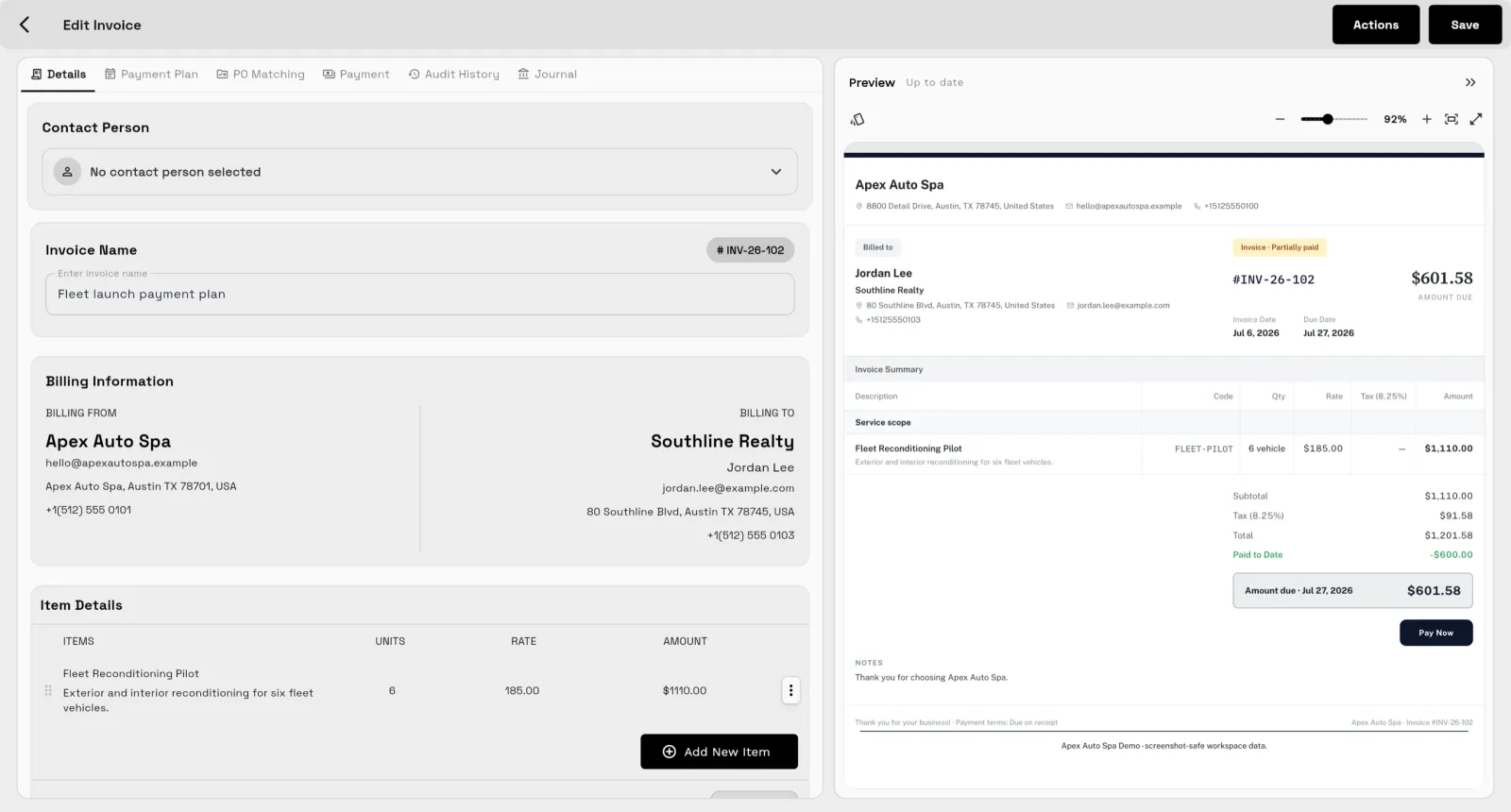
Workspace369 invoice editor showing line items, payment terms, and client details

Workflow

The Intake and Screening Workflow

01

Logging the Initial Inquiry

A person receives an incoming inquiry and enters the details into the client records, or converts a submitted intake request into a client record. The operator notes the prospect's contact information and records the core request as a record in the brief. This step starts tracking before any screening occurs. The team uses this record to store subsequent conversations and files, keeping early touchpoints linked to one specific prospect entry.

02

Screening and Preliminary Scheduling

The operator reviews the client records to determine if the inquiry meets the firm's intake criteria. A person then uses the scheduling tool to set up an intake call. During this call, the administrator documents the conversation details directly within the inquiry file. This screening step allows the firm to evaluate the scope of the request before moving forward with a formal engagement or project.

03

Issuing the Engagement Proposal

Once the screening is complete, a team member generates a proposal outlining the engagement scope, estimated timelines, and fee terms. The operator uploads relevant files to the proposal record and sends it to the prospect. The prospect reviews, approves, and e-signs the proposal through its public link. This step keeps fees clear before project activation.

04

Activating the Engagement Project

After the prospect accepts the proposal, the operator creates a project to manage the engagement tasks. The team outlines specific tasks, assigns operational deadlines, and schedules follow-up actions. All conversations and files related to the onboarding process are stored within this project. This structure lets the firm track milestones and progress for every engagement in one place.

05

Invoicing and Payment Tracking

Upon reaching agreed milestones, the operator converts the accepted proposal into invoices on the agreed terms. The operator links these invoices to the client records and project files. The administrator tracks the payment status and coordinates any necessary follow-up through the client portal or direct conversations. This completes the cycle, keeping billing records organized alongside the full project history.

Product coverage

Client operations for solo & small law firms

  • The operator must successfully log a test inquiry in the client records, add a screening note as a record in the brief, and verify the note saves correctly.
  • A team member must schedule an intake event, link it to the client record, and confirm the conversation log displays the scheduled time accurately.
  • The administrator must generate a test invoice from the project view, send it to the client portal, and verify the client can access the file.
Client records
Proposals
Projects and tasks
Files
Conversations
Scheduling
Invoices
Client portal
Workflow Automations

Loved on the App Store

Rated by the people running their client work on it.

★★★★★
Finally feels calm

Bounced between three or four all-in-one tools and always ended up in a mess of tabs. This is the first one that feels calm. Set up my client projects in ten minutes.

Justin R. · Solo founder · App Store review
★★★★★
Painless team rollout

Rolled it out to our eight-person team and adoption was painless — intuitive and polished. I'd love more integrations, but they keep shipping.

Samantha D. · Operations lead · App Store review
★★★★★
Hours back every week

Was juggling separate tools for notes, tasks, docs, and updates. Consolidating into one place has genuinely saved me hours each week. Support is responsive too.

Alicia N. · Agency founder · App Store review

Get started

See Workspace369 on your own client work.

Start a free trial or talk to sales — either way, you will see the whole loop: inbox, projects, portal, and billing.

FAQ

Evaluation and Acceptance Criteria

Where do conflicts checks and trust accounting fit?

Keep trust accounting and conflicts checks in your legal practice-management software, set up for your bar's rules. Workspace369 runs intake, client records, proposals, scheduling, client messages, and invoices, with basic accounting from Specialist.

How does the client portal function during the screening process?

The client portal allows prospective clients to access shared files and view proposals sent by the firm. A person can log in to verify that the required access is functioning correctly. The portal is where prospects message the firm and view documents, separate from internal task management.

Can we manage sales pipelines similarly to traditional CRM platforms?

Yes. Track inquiries in client records with lead sources, and run accepted engagements as projects with stages and Kanban boards. If your firm wants a sales-only pipeline tool, Pipedrive focuses specifically on sales opportunity pipeline management. Workspace369 runs the whole client lifecycle, from intake to proposals, scheduling, tasks, and invoicing.

How are files and conversations organized for a new inquiry?

Conversations and uploaded files can be linked directly to the corresponding client records or project entries by the operator. When a person receives new information, they record it in the brief to maintain an organized history. This allows anyone reviewing the inquiry to see the recorded timeline, from the initial screening call to final invoicing.

Ready when you are

See where Workspace369 fits into your client-work flow.

Start with the modules you need today, then turn on AI, automations, accounting, inventory, requests, and reporting as the operation grows.