The free calculator
- An hourly and day rate calculated once, from your inputs
- You re-check the math manually as costs change
- Nothing connects the rate to an actual quote
Work out the hourly and day rate you actually need — from your income goal, billable hours, expenses, and margin. Free, instant, no signup.
Your numbers
The filled values are editable examples, not typical freelancer averages. Enter an income goal, more than zero and at most 168 billable hours per week, and more than zero and at most 52 working weeks per year. Blank optional expenses and buffer count as zero; the buffer must be between 0% and 99.99%.
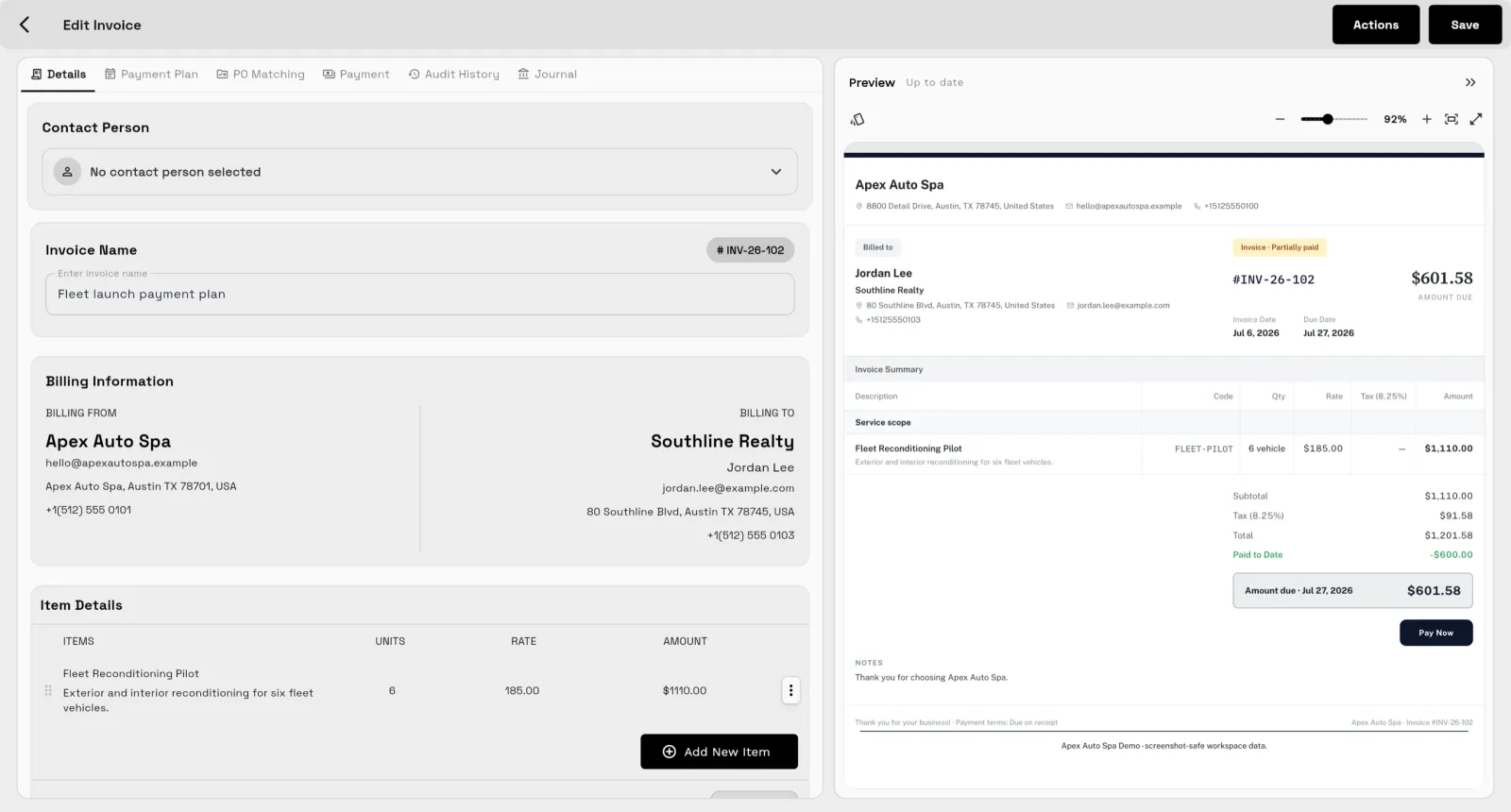
The connected version
| Your inputs | Value |
|---|---|
| Target annual income | $120,000.00 |
| Annual business expenses | $9,600.00 |
| Revenue buffer | 20% |
Annual billable hours = billable hours per week × working weeks. The day rate assumes eight billable hours. This is a cost-based planning estimate, not a market rate or a personal tax calculation.
Your annual income goal before personal taxes, separate from business expenses.
Use your own billable hours, working weeks and costs; the buffer is a share of modeled revenue.
Both rates update live, with the revenue and cost breakdown behind them.
The upgrade path
The free calculator
Workspace369 — the connected version
Software for freelance businessesWorkspace369 plans and pricing
Add your annual income goal and annual business expenses, then divide by one minus your revenue buffer as a decimal. Divide that required revenue by your expected annual billable hours. The buffer is not a personal tax rate or a markup on costs.
Use your own expected billable hours and working weeks. Exclude sales, administration, leave and unbilled gaps. The filled values are examples, not measured averages for freelancers.
This calculator multiplies the hourly estimate by eight billable hours. If the client agrees to a different day length or deliverable scope, adjust the quote accordingly; the displayed day rate does not establish a market price.
Annual revenue needed = (annual income goal + monthly business expenses × 12) ÷ (1 − revenue buffer ÷ 100). Divide that revenue by annual billable hours for the hourly rate. The buffer is a share of final modeled revenue, not a markup added to costs.
For example, a $120,000 income goal plus $800 monthly expenses gives a $129,600 annual cost base. With a 20% revenue buffer and 25 billable hours for 46 weeks, revenue needed is $162,000 and the hourly rate is about $140.87. These inputs are illustrative assumptions, not observed averages.
Keep sales, administration, leave and other non-billable time out of your billable-hours estimate. Avoid counting expenses twice. A quoted eight-hour day differs from a day with fewer billable hours; agree the included hours and scope with the client.
For external context, compare published freelancer rates by market and unit. UK day rates and US hourly rates are different populations and units, not interchangeable prices. For billing-model choices, read fixed-fee, hourly and retainer billing.
Ready when you are
Start with the modules you need today, then turn on AI, automations, accounting, inventory, requests, and reporting as the operation grows.