CRM for influencer marketing agencies

CRM for Influencer Marketing Agencies with a specific workflow

Influencer marketing agencies manage complex campaigns where creative briefs, brand requirements, and creator deliverables must align. Workspace369 runs client records, proposals, project tasks and invoices for the agency, alongside any creator marketplace you use. It allows teams to coordinate scheduling and invoicing while maintaining clear communication through a client portal, ensuring that brand approvals and creator payments are tracked systematically throughout the campaign lifecycle.

Clientthe relationship and agreed brief
Worktasks with a responsible person
Billinginvoices and commercial context
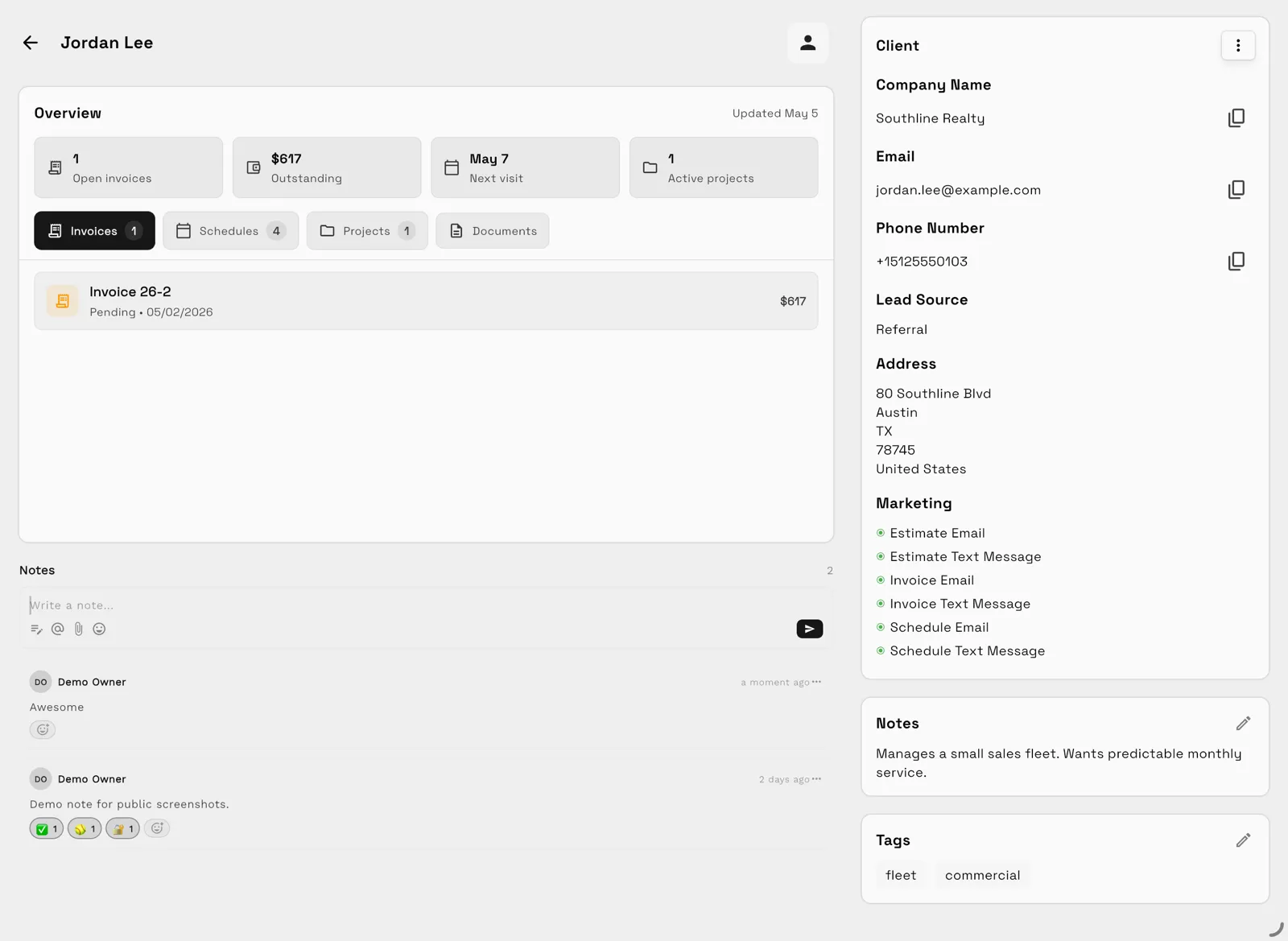
Workspace369 client record showing history, files, communication, and invoices in one profile

Key facts

CRM for influencer marketing agencies at Workspace369 covers 9 areas, including client records, proposals, projects and tasks.

The workflow runs in 5 steps, from "client intake" to "invoice processing".

Workspace369 starts at $29/mo for 1 seat, and the Commander plan includes 20 seats, 500 GB of storage, and 120,000 AI tokens per month at $299/mo.

Additional seats cost $10 each and 100 GB of additional storage costs $15; full pricing is public on the Workspace369 pricing page.

The problem

Operational friction in influencer campaigns

Brief Discrepancies

When a brand client modifies their creative requirements after a creator has already started production, the agency often fails to update the documentation. This results in influencers delivering content based on outdated instructions. Without a primary project file to record the new brief, the agency faces rejected deliverables and wasted budget, leading to friction with both the brand owner and the influencer talent.
Fragmented Communication

Brand managers and talent agents often use different threads, making it difficult to find the final agreed-upon deliverables or scheduling dates. When conversations are scattered across multiple platforms, critical details about creator requirements are lost. This lack of a unified record in the conversation history leads to confusion during the final approval stage, causing delays in campaign launches and increasing administrative overhead.

Payment Delays

Without a unified record of completed tasks and approved invoices, creators wait weeks for payment while the agency waits for client funds. The gap between brand approval and creator payment often lacks clear ownership, leading to missed deadlines. When the person approving the content is different from the person processing the payment, the lack of a shared task record causes significant internal friction.

Proposal Mismatch

Initial brand proposals often differ from the actual project tasks, causing scope creep that erodes the agency's profit margins on influencer deals. If the agency cannot link the original proposal to the final project deliverables, they struggle to justify additional costs to the brand. Recording these changes in the project brief is essential to maintain financial clarity and ensure the agency is paid for all work.

The product

See the workspace your clients feel.

01

A portal clients actually check

Clients watch progress, files, and invoices in a branded portal instead of asking your team for updates.

Workspace369 client record showing history, files, communication, and invoices in one profile
02

Every channel in one inbox

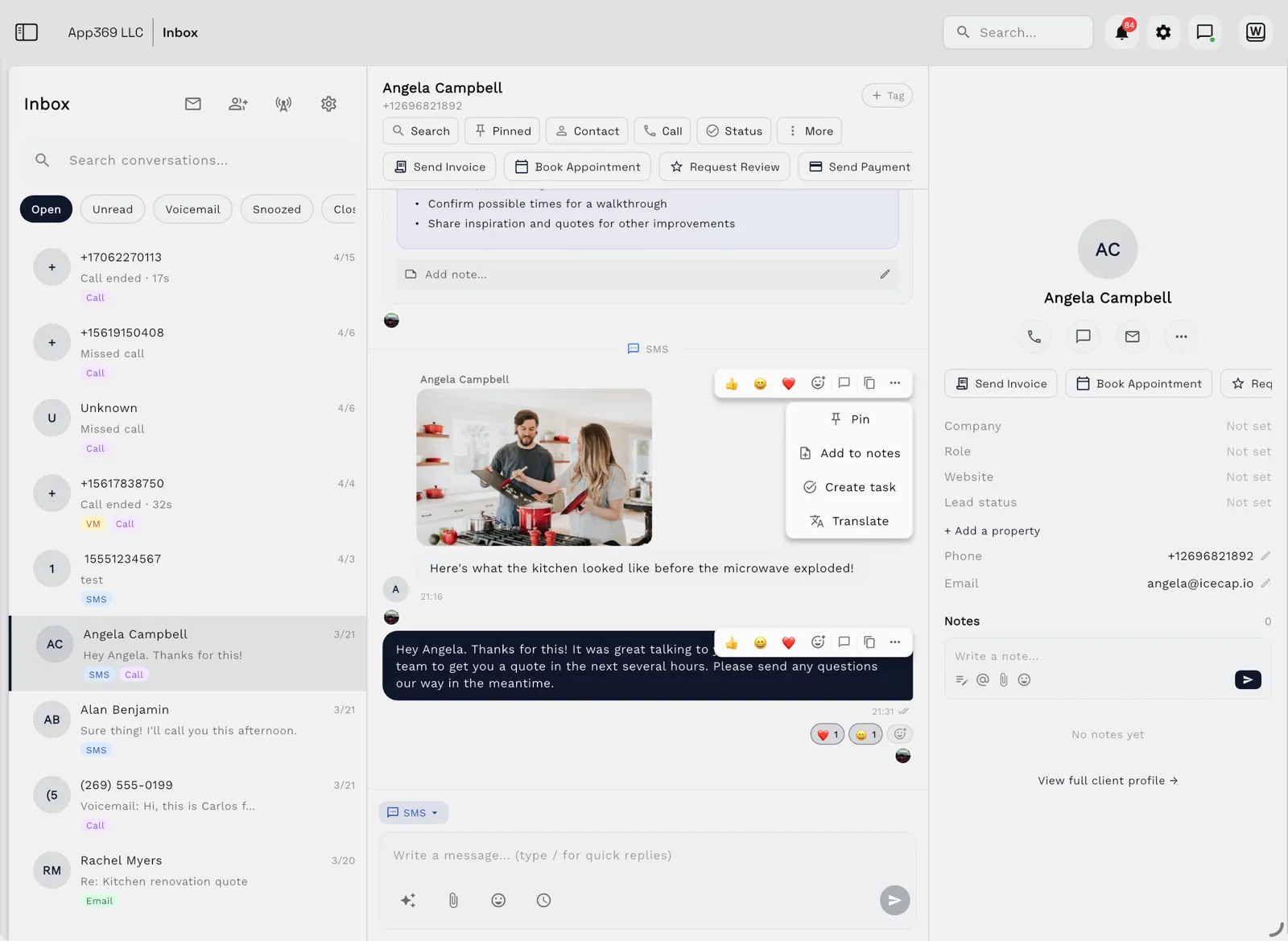
Email, SMS, calls, and voicemail land beside the client record — with AI summaries, so anyone on the team can reply with full context.

Workspace369 shared inbox showing email, SMS, and call history beside a client record
03

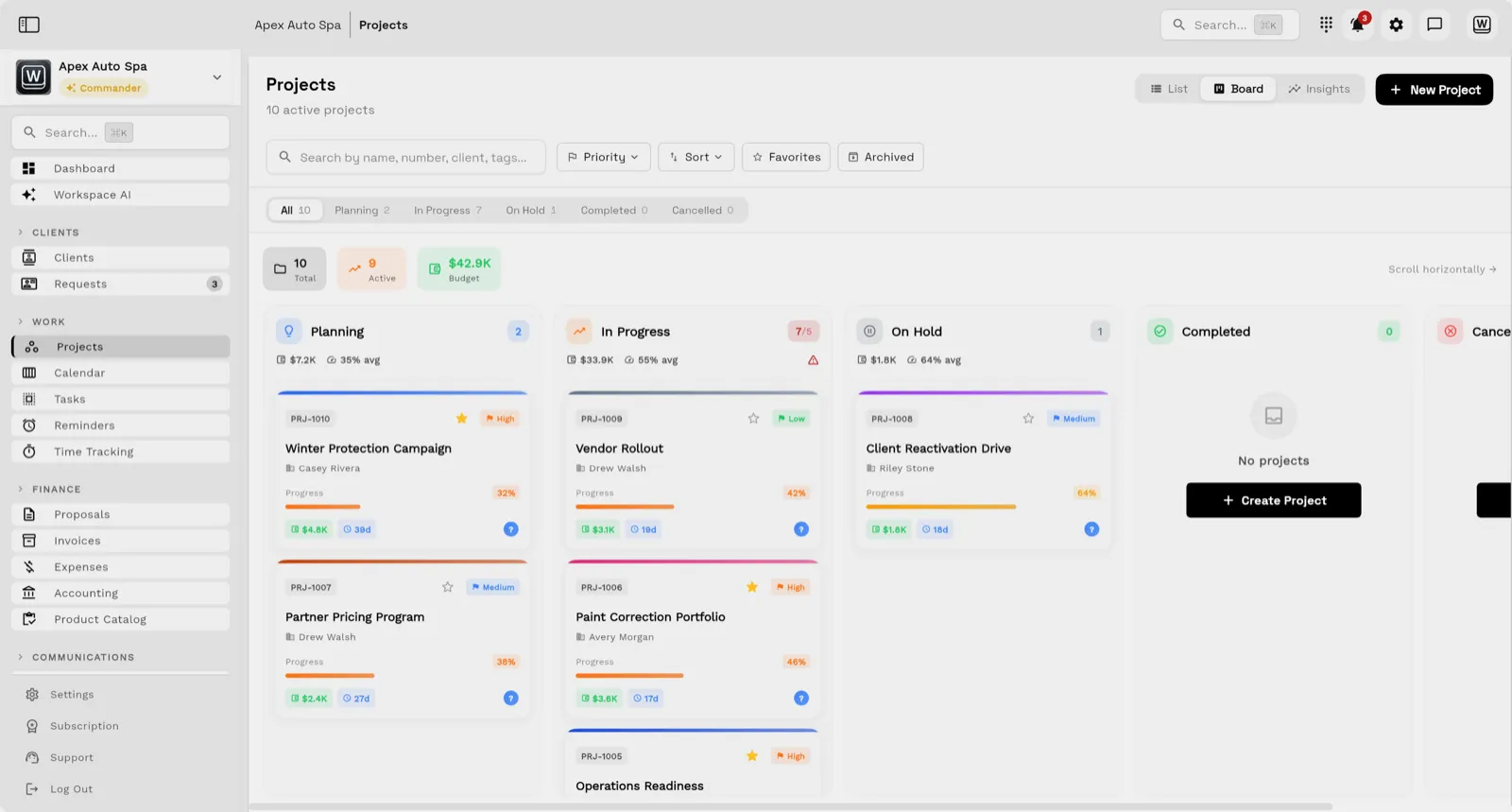
Client work, organized as projects

Tasks, files, and status for every engagement — visible to the team and, through the client portal, to the client.

Workspace369 project board showing client work organized into stages with owners and status
04

Proposals to paid invoices

Send quotes, bill milestones or retainers, and let automated reminders chase anything outstanding.

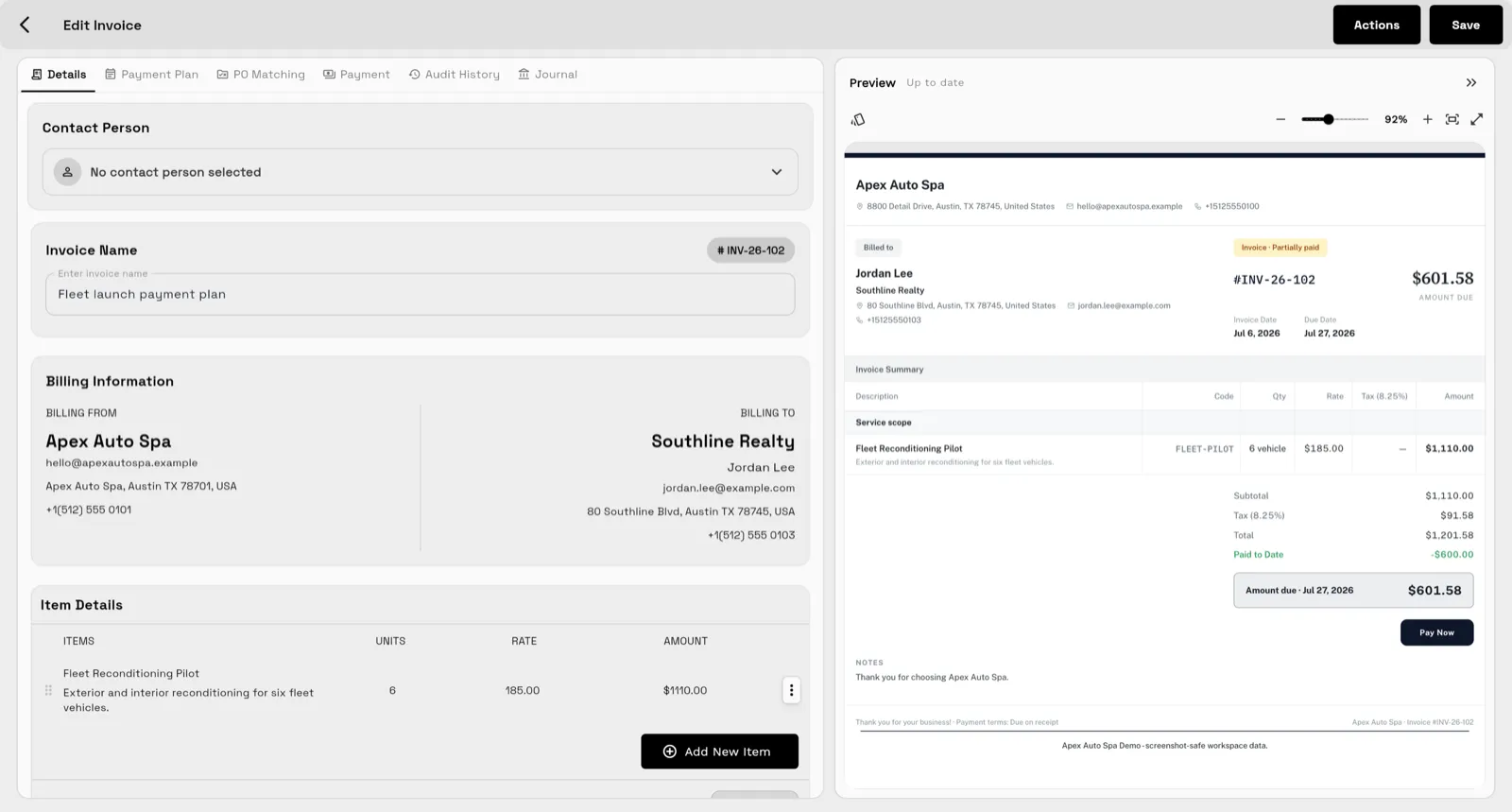
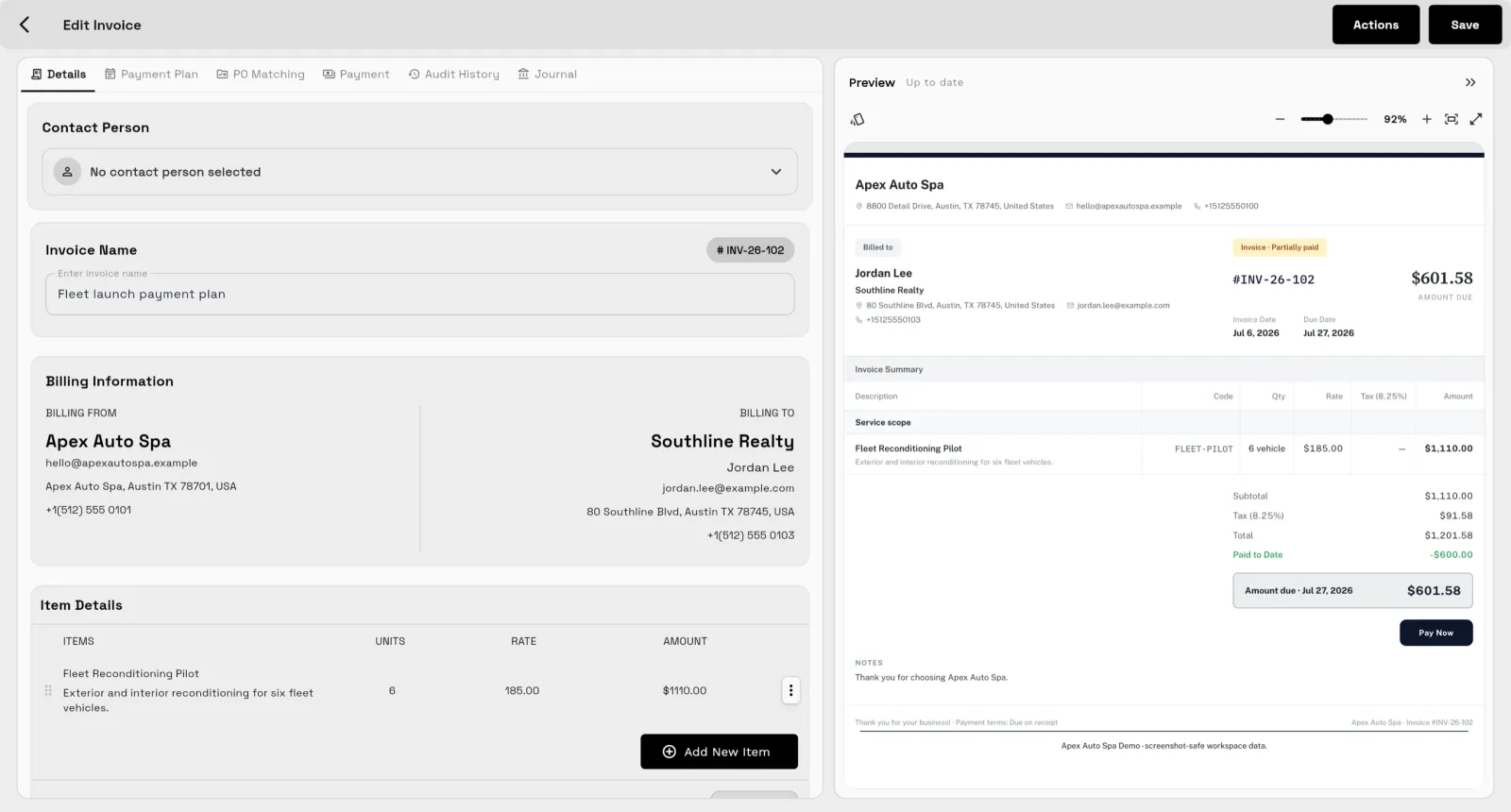
Workspace369 invoice editor showing line items, payment terms, and client details

Workflow

Campaign operations from proposal to payment

01

Client Intake

Create a client record for the brand and record the campaign objectives in a new project file. This ensures that all subsequent proposals and tasks are linked to the correct brand entity. By establishing this foundation, the agency can track multiple campaigns for the same brand while keeping the records for each project separate and organized for future reference.

02

Creator Proposals

Send detailed proposals to influencers, outlining specific deliverables, usage rights, and scheduling requirements for social posts. This step establishes the formal agreement before any creative work begins. By recording these terms in the proposal, the agency and the creator have a clear reference point, reducing the likelihood of disputes over the scope of work or the timing of the content deliverables.

03

Brief Management

Store the final creative brief in the project files and use tasks to track content creation, draft reviews, and final edits. If the brand changes the requirements, you must record in the brief the new specifications immediately. This ensures that the creator always has access to the most current instructions, preventing the production of content that does not meet the brand's updated expectations.

04

Brand Approval

Use the client portal to share drafts with the brand owner, recording their feedback and final sign-off within the conversation history. This creates a definitive record of approval that is separate from the internal agency tasks. By involving the brand owner directly in the portal, you ensure that they are accountable for the feedback they provide, which simplifies the final deliverable acceptance.

05

Invoice Processing

Generate invoices for the brand and record creator payment status against project tasks once deliverables are confirmed as complete. This ensures that the person responsible for payments has a clear trigger to release funds. By linking the invoice to the completed tasks in the project, the agency maintains a transparent financial trail that connects the brand's payment to the creator's compensation.

Product coverage

Client operations for influencer marketing agencies

  • Update the influencer brief file within the project and verify that the creator can access the new version through the client portal immediately to confirm the update is live.
  • Assign a task for brand approval to one team member and a separate task for payment processing to another, ensuring distinct ownership and no overlap in duties.
  • Record the creator's acceptance of the new deliverables in the conversation log and verify that the final invoice reflects the adjusted project scope and any associated cost changes.
Client records
Proposals
Projects and tasks
Files
Conversations
Scheduling
Invoices
Client portal
Workflow Automations

Loved on the App Store

Rated by the people running their client work on it.

★★★★★
Finally feels calm

Bounced between three or four all-in-one tools and always ended up in a mess of tabs. This is the first one that feels calm. Set up my client projects in ten minutes.

Justin R. · Solo founder · App Store review
★★★★★
Painless team rollout

Rolled it out to our eight-person team and adoption was painless — intuitive and polished. I'd love more integrations, but they keep shipping.

Samantha D. · Operations lead · App Store review
★★★★★
Hours back every week

Was juggling separate tools for notes, tasks, docs, and updates. Consolidating into one place has genuinely saved me hours each week. Support is responsive too.

Alicia N. · Agency founder · App Store review

Get started

See Workspace369 on your own client work.

Start a free trial or talk to sales — either way, you will see the whole loop: inbox, projects, portal, and billing.

FAQ

Fictional Evaluation Exercise: The Brief Change Test

Can we manage influencer contracts here?

Yes. Proposals carry deliverables and usage terms to e-signature, and signed contracts sit with the project. Legal templates and rights enforcement stay with your lawyer. You should use the project files to keep a record of the agreed-upon usage rights for each influencer, ensuring that the agency has a clear trail if a brand client asks for verification of the contract terms.

How do we handle brand feedback?

You can use the client portal to share files and maintain a conversation history. This ensures the brand owner sees the latest drafts and provides feedback in one place. By recording all brand comments within the project conversation, the agency avoids the confusion of tracking feedback across multiple email threads or messaging apps, keeping the approval process organized.

Does this integrate with TikTok or Instagram?

Workspace369 connects to other systems through webhooks and its API from Specialist. Map the events and fields you need, set permissions and test failure handling with sample records before you rely on the sync.

Can we pay influencers through the platform?

Workspace369 collects brand payments online through Stripe, with payment links, deposits and split payments, and records creator payment status against each task. Creator payouts go out through your bank or payout provider. The system acts as the record of completion, ensuring that the payment owner knows exactly when a creator has fulfilled their tasks and is eligible for the agreed-upon compensation for their content.

Ready when you are

See where Workspace369 fits into your client-work flow.

Start with the modules you need today, then turn on AI, automations, accounting, inventory, requests, and reporting as the operation grows.