Best CRM for Branding Agencies in 2026: phases, approvals, deposits
Best CRM for branding agencies: seven compared for teams of 2-10 on discovery, phases, approvals, deposits and seats. Prices checked October 22, 2026.
We make Workspace369 and list it first here. Weigh our ranking with that in mind, and if another tool fits you better, use it.

By Simon Dziak, Founder, Workspace369 · LinkedIn
The best CRM for branding agencies follows one client through discovery, a phased project, written approvals and deposits, and it still works when a rebrand grows from a logo to packaging. For small agencies of 2-10 people who want that on one record, our pick is Workspace369. HoneyBook and Dubsado suit booking-style creative workflows, and Productive suits budget and resource planning. Pricing the first phase? Try the free deposit calculator.
Disclosure and method: Workspace369 publishes this guide and is one of the options. It is a documentation-based shortlist, not a hands-on benchmark. Official vendor pages were re-read on October 22, 2026. Check current plans with each vendor before you buy.
Key takeaways
- A branding agency CRM should carry a client from discovery through phased deliverables, written approvals and deposits, and it should keep working when a rebrand grows from a logo to packaging.
- Workspace369 lists proposals approved by link, deposits, retainers, a client portal, time tracking and invoices on every plan from $29 a month; seats are 1 on Cadet, 2 on Voyager and 10 on Specialist, with extra seats at $10 a month on Voyager and above.
- HoneyBook and Dubsado are strong for booking-style creative workflows; HoneyBook includes up to 2 team members on Essentials and no team-member cap on Premium, while Dubsado lets three additional users in free.
- Bonsai and Moxie suit very small teams, and Productive suits agencies that want budgets and resource planning, but its pricing page no longer lists a CRM, deals, invoices, e-signature or a client portal.
- Run one fictional rebrand through discovery, three phases, an approval and a deposit in each trial, then price it at your real team size.
What's inside?
What a branding agency CRM is (and what it is not)How we compared these toolsThe best CRMs for branding agencies in 2026Side-by-side comparisonWhich tool fits your branding agency?Run a phased rebrand test during the trialWhen to keep it simple
What a branding agency CRM is (and what it is not)
A branding agency CRM is a client record that follows the commercial side of identity work: the discovery notes, the proposal and its phases, the approval, the deposit, the extra deliverables and the invoices. It is not a design tool, a proof-review platform or a digital asset library. Source files stay in your design software. If a tool stores contacts but leaves proposals, deposits and time to other apps, a phase that expands mid-project is billed from memory.
How we compared these tools
We compared each tool on the same five points, using only the vendor's own pricing and product pages:
- Entry price, monthly and billed yearly, as listed on October 22, 2026.
- Proposal, approval and deposit coverage on that plan.
- Client portal on the entry plan, where clients see status and files.
- Team seats and what a 2-10 person agency pays for them.
- Trial terms: length, and whether the vendor says a card is needed.
We did not test speed, support or reliability, and we did not use third-party ratings. Order reflects fit for a small agency running phased projects.
The best CRMs for branding agencies in 2026
1. Workspace369, best for small agencies that want proposals, deposits, portal and time on one record
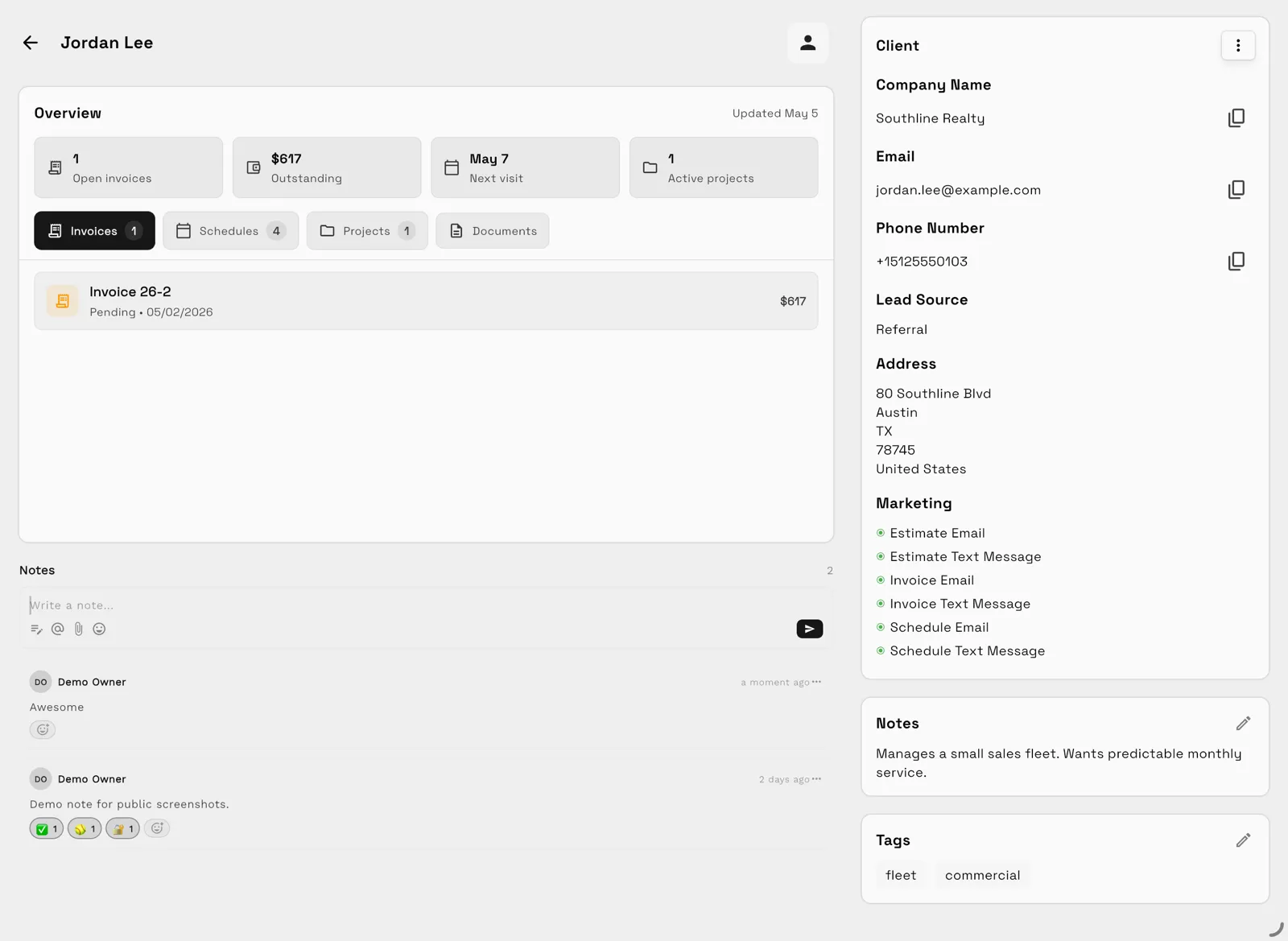
Workspace369 connects the client record to proposals that clients approve by public link, deposits collected on acceptance, retainers and payment schedules, projects with stages and task boards, a client portal, time tracking and invoices with Stripe card payments, all behind a client portal. All of that is on Cadet, $29 a month for one seat (see all plans). Voyager ($74) includes 2 seats and Specialist ($149) includes 10, with extra seats at $10 a month from Voyager up. Portal visitors do not take a seat. The screenshot is a demo record.
Limitations: Cadet allows up to 5 active projects; Voyager removes the cap. Payment plans, online booking and expense tracking start at Specialist. Proposal approval is by link, not design-proof review, and the 14-day trial needs a card.
Best for: branding agencies of 2-10 people who want discovery, phased scope, approvals, deposits and hours in one system.
2. HoneyBook, best for booking-style creative workflows
HoneyBook's pricing page lists proposals and contracts, invoices and payments, a client portal and up to 2 live lead forms on Starter, $29 a month billed yearly. Essentials is $49 a month billed yearly with up to 2 team members, unlimited Scheduler sessions (Starter allows 1) and automations; Premium is $109 a month billed yearly with no cap on team members. The trial is 30 days and the page says no card is needed. If you run the test, expect the inquiry, proposal and payment steps to fit its flow.
Limitations: Team members are not listed on Starter. Time tracking is not listed, so billing hours against a phase needs another tool, and project delivery is lighter than a task-board tool.
Best for: creative studios whose main job is turning inquiries into signed, paid bookings.
3. Dubsado, best for form-heavy onboarding and discovery
Dubsado lists Starter at $335 a year and Premier at $525 a year, with three additional users free and then $25 a month for 4-10 users. Premier includes unlimited lead forms, public proposals, automated workflows and scheduling, and comes with a 21-day trial that needs no card. If you run the test, trial Premier, because Starter has one active form and no public proposals. Its strength is questionnaires and discovery intake: both plans include a client portal, invoicing with payment plans and form and email templates, so a phased deposit schedule is available even on Starter.
Limitations: Starter lacks workflows, scheduling and public proposals. Time tracking is not listed, and extra brands cost $10 a month each.
Best for: agencies with a repeatable discovery questionnaire who will build forms and workflows once.
4. Moxie, best for a very small team on a low price
Moxie Starter is $10 a month billed annually ($12 monthly) and lists proposals, quotes and contracts, invoicing and time tracking. Pro ($20 billed yearly) adds a white-label client portal and automation. Teams is $32 a month billed yearly for up to five team members. The page mentions a 14-day trial; card terms are not stated. If you run the test, price Teams, not Starter, because the team plan is the one that covers a studio of several designers and strategists working in the same workspace.
Limitations: The portal starts at Pro, and the team plan caps at five members. Deposits are not listed by name.
Best for: studios of two to five people who want proposals, time and invoices at a low flat price.
5. Bonsai, best for a two-person studio paying per seat
Bonsai lists Essentials at $25 a month per user ($19 billed yearly), with proposals, contracts, invoices, scheduling and a client portal. Basic ($15, or $9 yearly) lacks them. Premium adds client messaging and a deals pipeline. The trial is 7 days. At five users on Essentials billed yearly, the listed rate comes to $95 a month; check it at your own headcount. Essentials is the first tier with proposals, contracts, invoices, scheduling, forms and a client portal, so it is the tier to trial for client-facing work.
Limitations: Per-user pricing grows with every designer, and integrations start at Premium.
Best for: small studios that want to add seats one at a time.
6. Productive, best for budgets and resource planning
Productive's pricing page lists budgeting, resource planning, project and task management, time tracking and expense management on Essential, with billable-time approvals, rate cards, recurring budgets and HRIS and invoicing integrations on Professional. It lists a 14-day trial with no card required, and every plan needs at least 3 seats. Essential is $10 per user a month billed yearly ($12 monthly) and Professional is $25 ($29) (checked October 22, 2026). If you run the test, expect it to shine at utilization and budget burn.
Limitations: The pricing page no longer lists a CRM, deals, invoices, e-signing or a branded client portal, so sales and billing live in other tools. It is built for resource planning rather than inquiry-to-invoice.
Best for: agencies that already sell work elsewhere and need budgets and capacity planning.
7. HubSpot free CRM, best for free deal tracking
HubSpot's free CRM allows up to 2 users and 1,000 contacts, with deal tracking and meeting scheduling, and no card is required. Paid tiers are priced per seat, so check HubSpot's page at your headcount. If you run the test, expect the lead-tracking step to fit; the free tier creates invoices but has only legacy quotes (the current quote tool needs Revenue Hub Professional), lists no time tracking, and its customer portal starts on Service Hub Professional.
Limitations: Delivery, proposals and billing live elsewhere, so a branding agency would pair it with a proposal and invoicing tool. A free tier of two users stops short of most agencies, and quotes are not listed on it.
Best for: agencies that only need to track new-business leads.
Side-by-side comparison
| Tool | Entry price (monthly) | Billed yearly | Team seats on that tier | Main entry-plan gate | Trial |
|---|---|---|---|---|---|
| Workspace369 | $29 (Cadet) | $23.25 a month | 1 (Voyager 2, Specialist 10) | 5 active projects on Cadet | 14 days, card required |
| HoneyBook | $36 (Starter) | $29 a month (Starter) | Not listed; Essentials 2 | 2 live lead forms | 30 days, no card |
| Dubsado | $35 (Starter) | $335 a year (Starter) | 3 extra users free | No public proposals on Starter | 21 days, no card |
| Moxie | $12 (Starter) | $10 a month | Teams up to 5 | No portal below Pro | 14 days, no card |
| Bonsai | $25 (Essentials) | $19 a month | Per user | Integrations from Premium | 7 days, card requested after |
| Productive | $12 per user (Essential) | $10 per user | 3-seat minimum | No CRM, invoices, e-signature or portal listed | 14 days, no card |
| HubSpot | Free | Free | 2 users | 1,000 contacts | Free plan, no card |
Which tool fits your branding agency?
| If you mostly need | Start with | Why |
|---|---|---|
| Proposals, deposits, portal and time for 2-10 people | Workspace369 | All on Cadet; seats from 1 to 10 across plans |
| Signed, paid bookings for a creative studio | HoneyBook | Proposals, contracts and payments on every plan |
| Detailed discovery forms | Dubsado | Unlimited forms on Premier |
| A flat price for up to five | Moxie | Teams plan covers five members |
| Budgets and capacity planning | Productive | Resource planning on every plan |
| Free lead tracking | HubSpot free CRM | Two users, 1,000 contacts |
Run a phased rebrand test during the trial
Take one fictional rebrand through each tool you shortlist:
- Log discovery notes on the client record.
- Send a three-phase proposal and approve it by link as the "client".
- Collect the deposit for phase one.
- Add packaging as a new priced item after the concept presentation.
- Log designer hours and invoice phase two.
- Count your seats and price the plan at your real team size.
If you run the test, expect the gaps to show at steps 3 and 4. The scope-change request builder can draft the wording for step 4.

When to keep it simple
If you take on a few identity projects a year and bill from a template, a proposal document and an invoicing app can be enough. Move to a CRM when phases overlap, approvals are chased by email and nobody can say what is still unbilled. Keep source files in your design software. The branding agencies page has Workspace369 plan details, and how to stop scope creep covers the change-request habit.
Before you move a real client over, run the phased rebrand on demo data and check that your records can be exported. Compare current plans on the pricing page.
Sources reviewed for this guide
- Workspace369 pricingPlan matrix reviewed October 22, 2026.
- HoneyBook pricingOfficial pricing page reviewed October 22, 2026 for plans, team members and trial terms.
- Dubsado pricingOfficial pricing page reviewed October 22, 2026 for yearly prices, plan differences and extra-user pricing.
- Moxie pricingOfficial pricing page reviewed October 22, 2026 for plan prices and team member limits.
- Bonsai pricingOfficial pricing page reviewed October 22, 2026 for per-user prices and plan features.
- Productive pricingOfficial pricing page reviewed October 22, 2026 for plan features, trial terms and the 3-seat minimum; per-seat prices are quoted from the yearly and monthly views.
- HubSpot CRMOfficial pricing page reviewed October 22, 2026 for free CRM limits (2 users).
- HubSpot pricingOfficial pricing page reviewed October 22, 2026 for the free tier and the per-seat paid tiers.
Workspace369 publishes this documentation-based comparison and is one of the options. It is not an independent ranking or a hands-on benchmark.
Run client follow-up in one workspace.
CRM, inbox, voice, invoicing, payments, projects, files, AI, and workflow automations — connected instead of exported.
14-day free trial. Card required. After the trial: from $29/month. Renews automatically every month until you cancel. Cancel anytime in Settings → Billing.