Best CRM for AI Automation Agencies 2026: Retainers
Six client-work tools for AI automation agencies compared on price, API and webhook gates, retainers, portals and invoicing, plus a failed-run test.
We make Workspace369, which is on this list. Weigh our ranking with that in mind.

By Simon Dziak, Founder, Workspace369 · LinkedIn
The best CRM for ai automation agencies keeps the scoped build, the monthly retainer, the logged time and the invoice on one client record, so a failed run or a new request becomes a priced change instead of free work. For a solo operator who wants the lowest checked price with webhooks and an API, we put Moxie first; for agencies that want the whole client lifecycle plus MCP on every plan, Workspace369 comes second, and its webhook gate is the cost (see the pricing matrix). To price a monthly retainer first, use the free retainer pricing calculator.
Disclosure and method: Workspace369 publishes this guide and is one of the options. It is a documentation-based shortlist, not a hands-on benchmark. Official vendor pages were reviewed on October 22, 2026. Check current plans with each vendor before you buy.
Key takeaways
- An AI automation agency CRM should hold the scoped build, the monthly retainer, the logged time and the invoice on one client record, so a failed run or a new request becomes a priced change.
- Moxie Pro ($25 a month, $20 billed yearly) lists Zapier, Make, webhooks and a public API, the cheapest checked route to API-connected delivery for a solo operator.
- Workspace369 includes MCP, with personal access tokens for Claude and ChatGPT, on every plan; webhooks and the API start at Specialist ($149 a month, 10 seats).
- HighLevel ($97 a month, 3 sub-accounts) suits agencies that deliver inside its own automation platform; Attio and HubSpot suit sales-side CRM; Productive suits agencies that need resource planning.
- Run one fictional client through a build, a failed run and a retainer invoice in each trial, and check that the task, the time and the invoice agree.
What's inside?
What a CRM for AI automation agencies is (and what it is not)How we compared these toolsThe best CRM for AI automation agencies in 2026Side-by-side comparisonWhich tool fits your agency?Test any CRM with a failed-run scenarioPlan and setup costsSources and review scope
What a CRM for AI automation agencies is (and what it is not)
An AI automation agency sells builds (a scoped workflow or agent), audits and monthly retainers for monitoring and fixes. The CRM is the business side of that work: who the client is, what was scoped and approved, which fixes and change requests are open, what time you logged and what is unpaid. It is not the place the automations run. Your n8n, Make, Zapier or code stays in your own environment and talks to the CRM through webhooks, an API or MCP. It is also not a secrets store: keep client credentials in a password manager. If a tool holds contacts but leaves scope, time and billing to other apps, the retainer terms live in an email thread and every failed run turns into unpaid work.
How we compared these tools
We compared each tool on the same five points, using only the vendor's own pricing and product pages:
- Entry price, monthly and billed yearly, as listed on October 22, 2026.
- Retainer and billing coverage on the plan that carries the features you need: time, recurring invoices or retainers, and invoicing.
- Automation connection: the plan where webhooks, an API or MCP are listed.
- Client-facing pieces: portal, proposals or contracts, projects and tasks.
- Hard limits and trial terms: seats, sub-accounts, minimums, trial length and card terms where stated.
We did not test speed, support, reliability or mobile apps, and did not use third-party ratings. Order reflects fit for a small agency that sells builds and retainers: Moxie is first on price and webhook access, and Workspace369 is ahead on retainers and MCP; sales-side CRMs and a resource-planning tool sit lower because they cover only part of that job. Pipedrive is not included because its pricing page could not be checked.
The best CRM for AI automation agencies in 2026
1. Moxie, best for a solo operator who wants API access cheaply
Moxie's Starter plan is $12 a month, or $10 a month billed yearly, and lists client and project management, invoicing and payments, proposals, quotes and contracts, time tracking, a sales pipeline and a form builder. Pro is $25 a month ($20 billed yearly) and adds a white-labeled client portal, a custom domain, support ticketing and client request management, workflow automations and "API Integrations (Zapier, Make, Webhooks, Public API)". Teams is $40 a month ($32 billed yearly) for up to five team members. The page title mentions a 14-day free trial; card terms are not stated. Starter also lists a meeting scheduler and a universal calendar and inbox, which matters when audits and kickoff calls start as discovery calls.
Limitations: webhooks and the public API need Pro. The page does not name MCP, recurring invoices or retainers, so confirm retainer billing in the trial. Teams stops at five members.
Best for: solo agency owners and teams of up to five who want proposals, time, invoices and Zapier, Make or webhook connections at the lowest checked price.
2. Workspace369, best for agencies that sell builds and run retainers
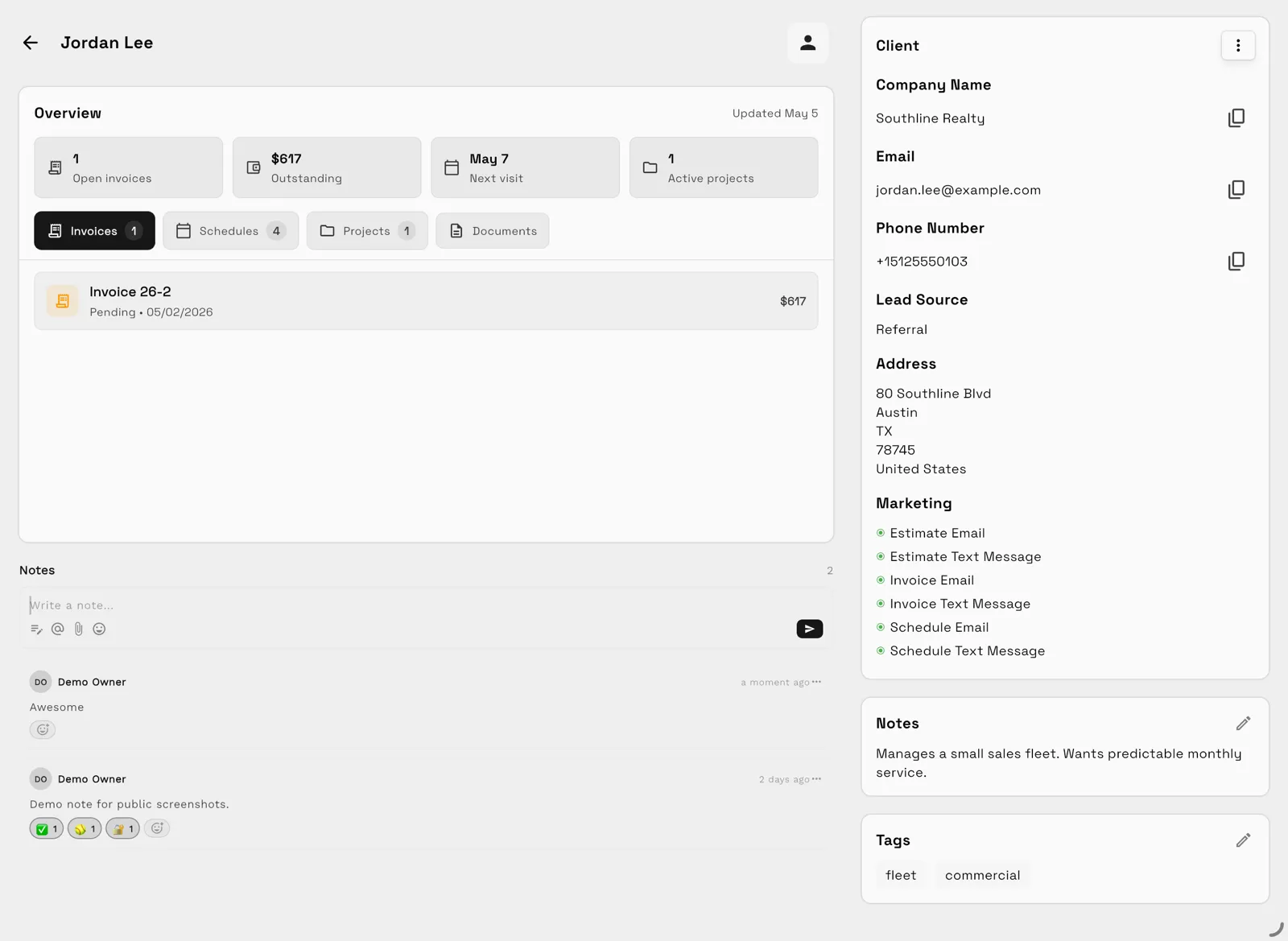
Workspace369 puts the client record, a proposal the client approves online, projects and tasks, time tracking, a private client portal and invoices in one place. Retainers and recurring invoices and time-to-invoice are listed on every plan. Cadet is $29 a month for one seat ($23.25 billed yearly). MCP, including personal access tokens for Claude and ChatGPT, works on every plan (see MCP), so an AI client can read and update client records. Workflow Automations are on every plan; Cadet allows email automations with up to 3 active workflows. The screenshot is a demo record, not a customer result.
Limitations: webhooks and API integrations start at Specialist ($149 a month, 10 seats), a big step above Moxie Pro for an agency whose delivery depends on them. The setup guides show how to connect Workspace369 to Zapier, connect Workspace369 to Make and use the Workspace369 n8n integration. Cadet is capped at 5 active projects and one seat; Voyager ($74 a month, 2 seats) removes the project cap and adds SMS steps. The 14-day trial needs a card.
Best for: small agencies that want scope, retainer, time, portal and invoices on one record and plan to connect AI clients over MCP; add Specialist when your own stack must push events in.
3. HighLevel, best for agencies that deliver inside one automation platform
HighLevel lists a 14-day free trial on any plan and says billing begins automatically at the end of the trial unless canceled. Starter is $97 a month ($970 billed yearly) with 3 sub-accounts, unlimited contacts, no per-user charge, 24/7 support and all core features. Unlimited is $297 a month ($2,970 billed yearly) with unlimited sub-accounts and basic API access; Agency Pro is $497 a month ($4,970 billed yearly) with SaaS Mode and advanced API access.
Limitations: it is a marketing and automation platform built around a sub-account per client, not a retainer and project ledger, and the pricing page does not list proposals, time tracking or project invoicing, so those would need other tools. API access starts at the $297 plan, so the entry tier cannot connect to your own stack through the API. The page also notes that usage-based fees for telecommunications or third-party services may apply during the trial, so check them before you load client data.
Best for: agencies that build and host client automations inside HighLevel itself and want white-label sub-accounts.
4. Attio, best for a flexible sales-side CRM
Attio's pricing page lists Free ($0, up to 3 seats), Plus ($44 per user a month, $35 billed annually, up to 10 seats) and Pro ($99 per user a month, $79 billed annually). Its comparison table has rows for API and webhook access, an MCP server and Workflows, but the visible text does not show which plans include each, so check the gates on the page. It says to start with no credit card required. The page also lists seat credits and workspace credits shared across its AI and workflow features, with paid credit top-ups, so heavy automation use has a usage cost on top of seats.
Limitations: per-user pricing climbs fast, and the page does not list proposals, project delivery, time tracking or invoicing; billing and delivery would need other tools. Attio also issues invoices for its own Pro and Enterprise plans only, which is about paying Attio, not billing your clients.
Best for: agencies whose main challenge is tracking leads, audits and deals in a flexible data model.
5. Productive, best for agencies that plan resources and project margin
Productive is built for agency operations. Essential lists budgeting, resource planning, project and task management, time tracking, expense management and API access; Essential is $10 a seat a month billed yearly ($12 monthly) and Professional is $25 yearly ($29 monthly), checked October 22, 2026. Webhooks are listed under Ultimate, which is priced by quote. All plans require at least 3 seats, and the page offers a free 14-day trial with no card required. Freelancers and contractors you invite are charged the same price as employees, so a subcontractor bench raises the bill.
Limitations: the three-seat minimum makes it the wrong size for a solo operator, webhooks are on the highest tier, and Essential does not list invoicing, which appears as an integration from Professional alongside recurring budgets.
Best for: agencies of three or more people that need capacity planning and project budgets.
6. HubSpot CRM, best as a free contact list
HubSpot's pricing page says the free CRM is "Free for up to 2 users. No credit card required", and HubSpot's FAQ puts the free CRM at 1,000 contacts. Starter is $20 per seat a month at list price, with limited-time offers for new customers. Sales Hub Starter lists up to 50 workflows with restricted triggers and actions, and up to 15 pipelines per account across object types, which is plenty for tracking audits and builds as deals. The pricing page also lists separate Marketing, Sales, Service, Content and Data hubs, so the monthly cost depends on how many hubs you add. Treat HubSpot as the front of the funnel and confirm in a trial what it covers for proposals and billing.
Limitations: the free plan is a contact and pipeline tool; retainers, time, project work and invoices need other tools.
Best for: an agency that only needs a free contact list while it validates its offer, and plans to add billing and delivery tools later.
Side-by-side comparison
| Tool | Entry price (monthly) | Billed yearly | API / webhooks / MCP | Main entry-plan limit | Trial |
|---|---|---|---|---|---|
| Moxie | $12 (Starter) | $10 a month | Webhooks and public API on Pro ($25, $20 yearly); MCP server on Pro and Teams | No portal or automations on Starter | 14 days, no card |
| Workspace369 | $29 (Cadet) | $23.25 a month | MCP on every plan; webhooks and API from Specialist ($149) | 5 active projects, 1 seat | 14 days, card required |
| HighLevel | $97 (Starter) | $970 a year | Basic API on Unlimited ($297); advanced API on Agency Pro ($497) | 3 sub-accounts | 14 days, billing starts automatically after |
| Attio | $44 per user (Plus) | $35 per user a month | Rows listed; plan gates not visible in text | Free: 3 seats; Plus: 10 seats | Free plan, no card |
| Productive | $12 per seat (Essential) | $10 per seat | API on Essential; webhooks on Ultimate | 3-seat minimum | 14 days, no card |
| HubSpot CRM | $0 (Free) | Starter: See site | Not stated | 2 users, 1,000 contacts | Free plan, no card |
Which tool fits your agency?
| If you mostly need | Start with | Why |
|---|---|---|
| The lowest checked price with webhooks and a public API | Moxie | Pro lists Zapier, Make, webhooks and a public API |
| Retainers, time, portal and invoices plus MCP on every plan | Workspace369 | Retainers and time-to-invoice from Cadet, MCP on every plan |
| Webhooks from your own stack into client records | Workspace369 Specialist or Moxie Pro | Specialist at $149 for 10 seats, Moxie Pro at $25 |
| Client automations hosted in one platform | HighLevel | Sub-accounts per client, white-label |
| A flexible sales-side CRM | Attio | Free for up to 3 seats, data model for leads and deals |
| Capacity planning for 3+ people | Productive | Resource planning and budgets |
| Only a free contact list | HubSpot CRM | Free for up to 2 users |
Test any CRM with a failed-run scenario
Create a fictional client and take it through four steps in each trial: a proposal for a fixed-scope build, a project with a "failed run" fix task, a logged hour against that task, and a monthly retainer invoice. The acceptance condition is that the proposal, the fix task, the time and the invoice all sit on the same client record. If a client then asks for a new automation outside the retainer, draft the written change with the free scope-change request builder before any more time is logged. Use the AI automation agencies product overview to check where the client record, tasks and invoices sit in Workspace369.

Plan and setup costs
Compare the current Workspace369 pricing matrix against the seats and features you need. Cadet is $29 a month ($23.25 billed yearly) for one seat; Voyager is $74 (2 seats, calls and texts start here); Specialist is $149 (10 seats) and adds webhooks and API integrations. Cadet through Commander start with a 14-day free trial that requires a card.
Sources and review scope
- Workspace369 pricing
- Moxie pricing
- HighLevel pricing
- Attio pricing
- Productive pricing
- HubSpot CRM pricing
Official pricing pages reviewed October 22, 2026. Recommendations depend on the workflow described, and prices change, so confirm current plans with each vendor.
Sources reviewed for this guide
- Workspace369 pricingPlan matrix reviewed October 22, 2026.
- Moxie pricingOfficial pricing page reviewed October 22, 2026 for prices, features and the integrations listed on Pro.
- HighLevel pricingOfficial pricing page reviewed October 22, 2026 for plan prices, sub-account limits, API access and trial terms.
- Attio pricingOfficial pricing page reviewed October 22, 2026 for per-user prices, seat limits and the listed API, webhook and MCP rows.
- Productive pricingOfficial pricing page reviewed October 22, 2026 for prices, the three-seat minimum, API and webhook gates and trial terms.
- HubSpot CRM pricingOfficial pricing page reviewed October 22, 2026 for the free CRM user limit and Starter workflow limits.
Workspace369 publishes this documentation-based comparison and is one of the options. It is not an independent ranking or a hands-on benchmark.
Run client follow-up in one workspace.
CRM, inbox, voice, invoicing, payments, projects, files, AI, and workflow automations — connected instead of exported.
14-day free trial. Card required. After the trial: from $29/month. Renews automatically every month until you cancel. Cancel anytime in Settings → Billing.