Discovery does not reach delivery
A founder sells the engagement, then a developer starts from a brief that omits the conversation behind it. Keep the client objective, agreed scope and supporting files accessible to the people planning the work.
CRM for app development agencies
Keep the business side of an app engagement connected. Workspace369 brings the client relationship, proposal, project work, conversations and invoices into one workspace, so your team can find what was agreed when a new request arrives.
14-day free trial. Card required. After the trial: from $29/month. Renews automatically every month until you cancel. Cancel anytime in Settings → Billing.
Key facts
CRM for app development agencies at Workspace369 covers 8 areas, including client records, proposals, projects and tasks.
The workflow runs in 5 steps, from "capture the discovery context" to "prepare billing from the agreement".
Workspace369 starts at $29/mo for 1 seat, and the Commander plan includes 20 seats, and 120,000 AI tokens per month at $299/mo.
Additional seats cost $10 each; full pricing is public on the Workspace369 pricing page.
Compared
Workspace369 fits app agencies of about 2 to 10 people that want the proposal, change request, logged time, client portal and invoice on one record, from $29 a month on Cadet (1 seat, 5 active projects), with no capacity planning or Jira connector. Productive and Teamwork go further on budgets and resourcing, Bonsai covers proposals and invoices from $19 per user billed yearly, and Accelo is quote-only.
| Tool | Entry price | Proposals and change requests | Retainers and time | Main limit | Trial |
|---|---|---|---|---|---|
| Workspace369 | $29 (Cadet), $23.25 billed yearly | Proposals on every plan | Retainers, time-to-invoice on every plan | No capacity planning; 5 active projects on Cadet | 14 days, card required |
| Productive | $10-$12 per user (toggle labels conflict) | Deals and proposal PDF export | Retainers, time tracking, budgets | 3-seat minimum | 14 days, no card |
| Teamwork | $9.99 per user, billed yearly | Quotes in Optimize (quote-only) | Retainers from Accelerate | 3 to 5 user minimums | 14 days, no card |
| Bonsai | $25 per user ($19 yearly), Essentials | Proposals from Essentials | Time tracking from Basic; retainer invoices listed | Pipeline starts at Premium | 7 days, card to continue |
| Accelo | See site (custom quote) | See site | Retainers and fixed-fee projects | No public price | Not stated |
| HubSpot CRM | $0 (free CRM) | Not listed | Not listed | 2 users, 1,000 contacts | Free CRM, no card |
Prices and limits from each vendor's official pricing page, checked October 17, 2026, in USD. Prices change, so confirm before you buy. Read the full buyer's guide.
The problem
A founder sells the engagement, then a developer starts from a brief that omits the conversation behind it. Keep the client objective, agreed scope and supporting files accessible to the people planning the work.
A seemingly small feature can alter the agreed deliverable. Capture the client request and make the commercial decision visible before assigning additional work. The team should know who approved the change and what happens next.
Delivery and finance may be looking at different records. Keep invoices connected to the client and review them against the agreed terms, so somebody can explain the bill without reconstructing several conversations.
When only one person knows the history, every handoff interrupts them. A useful shared record lets a colleague find the current agreement, responsible person and next client action without relying on memory.
The product
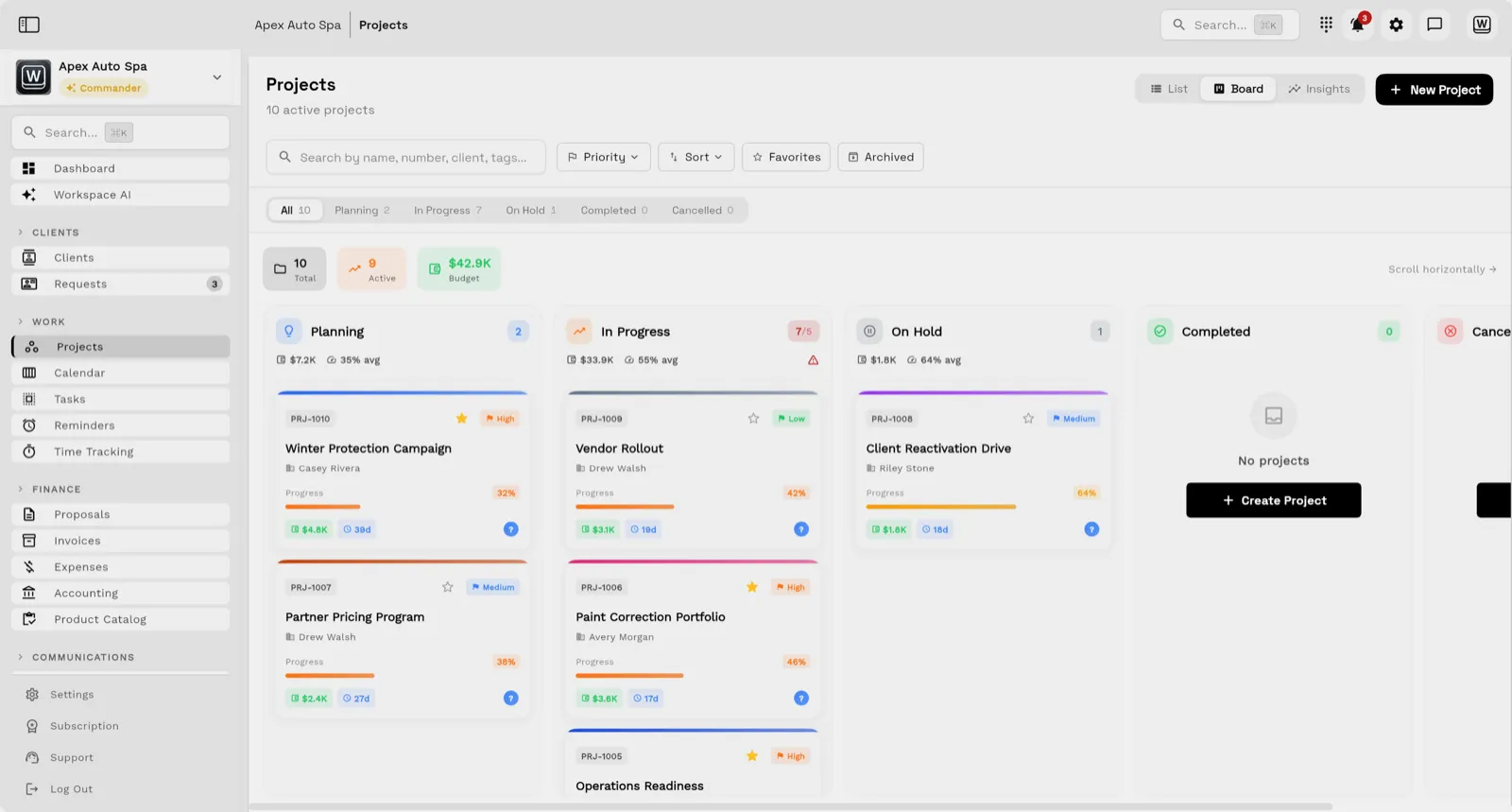
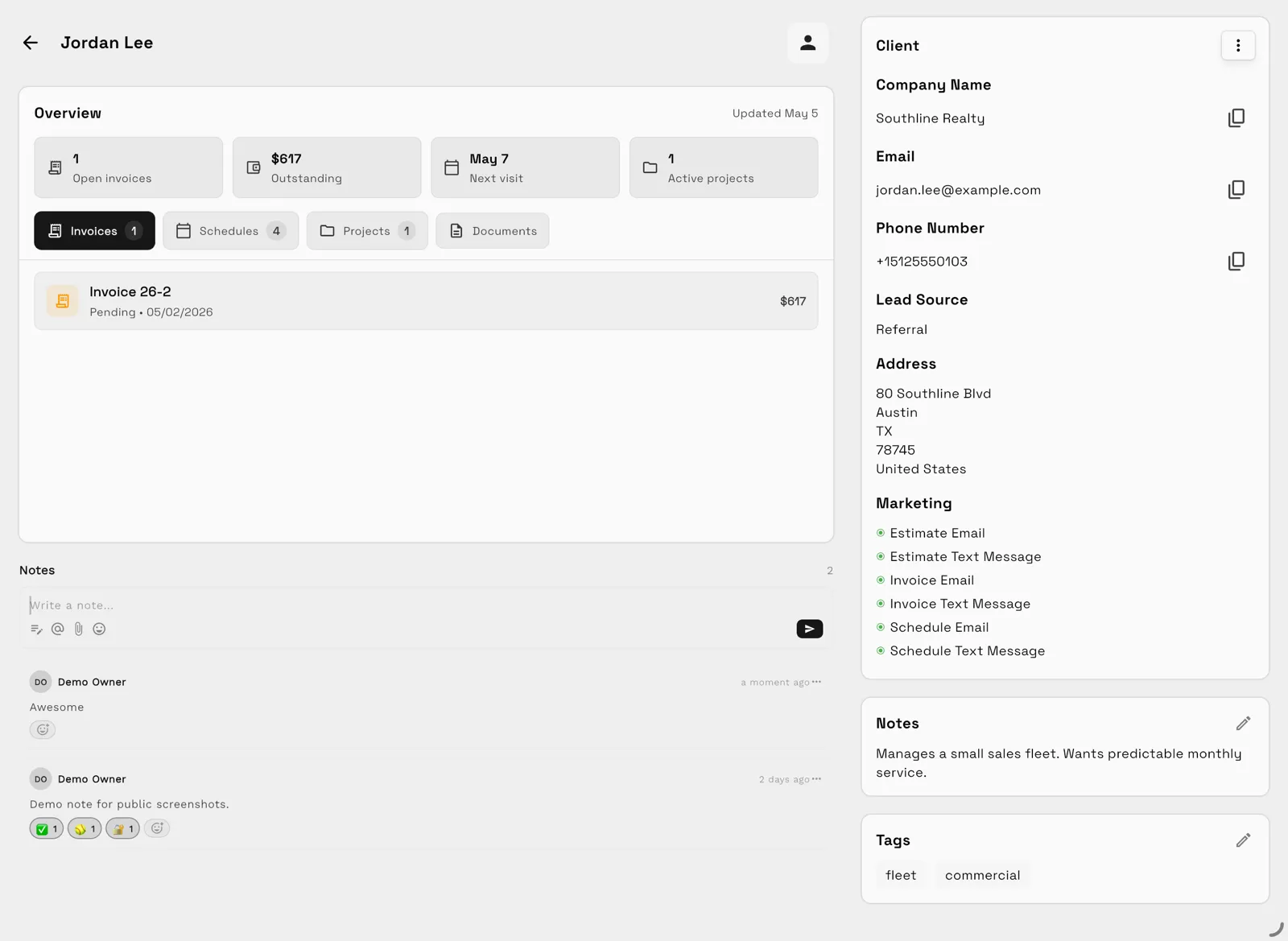
Tasks, files, and status for every engagement — visible to the team and, through the client portal, to the client.
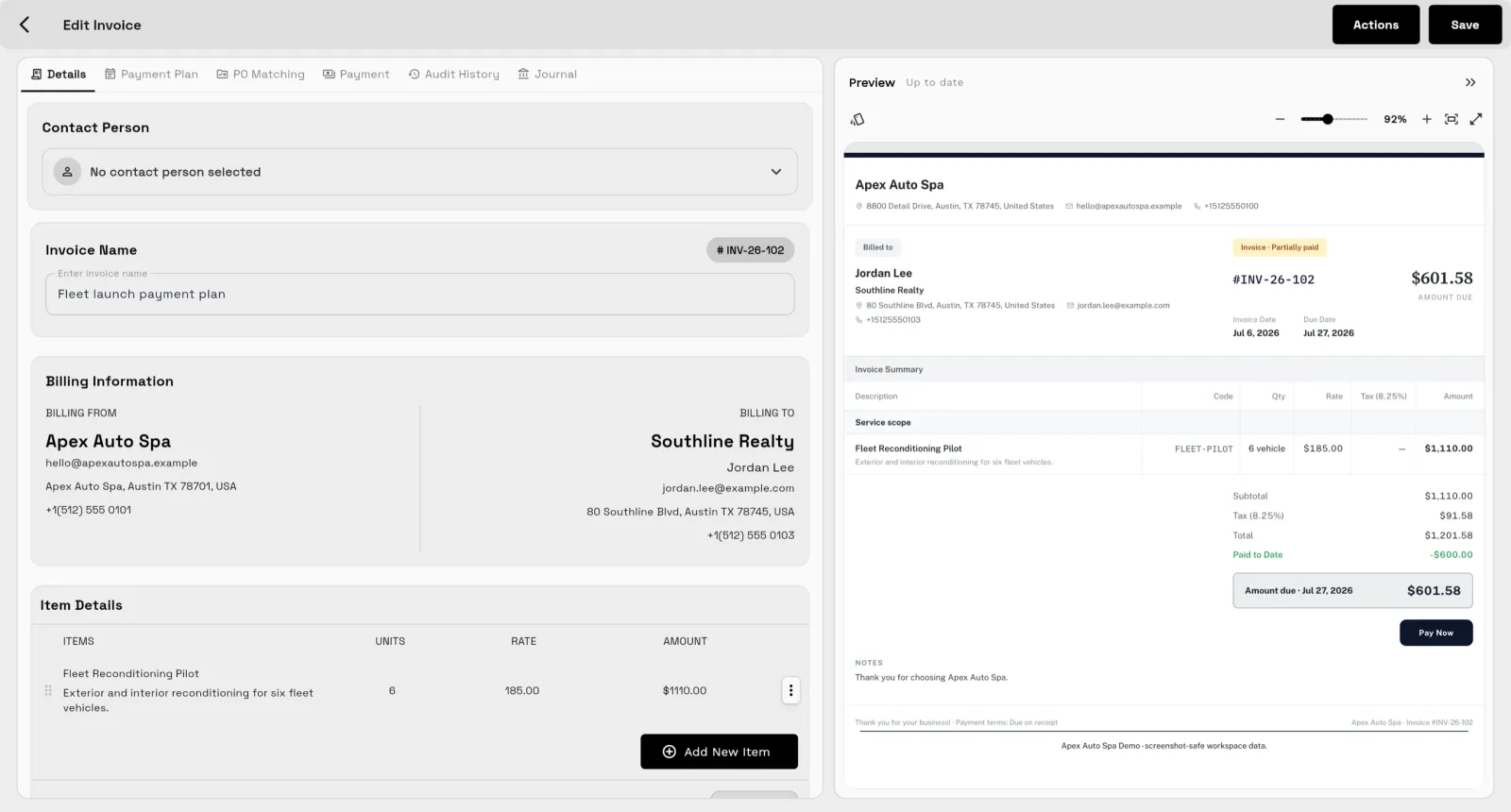
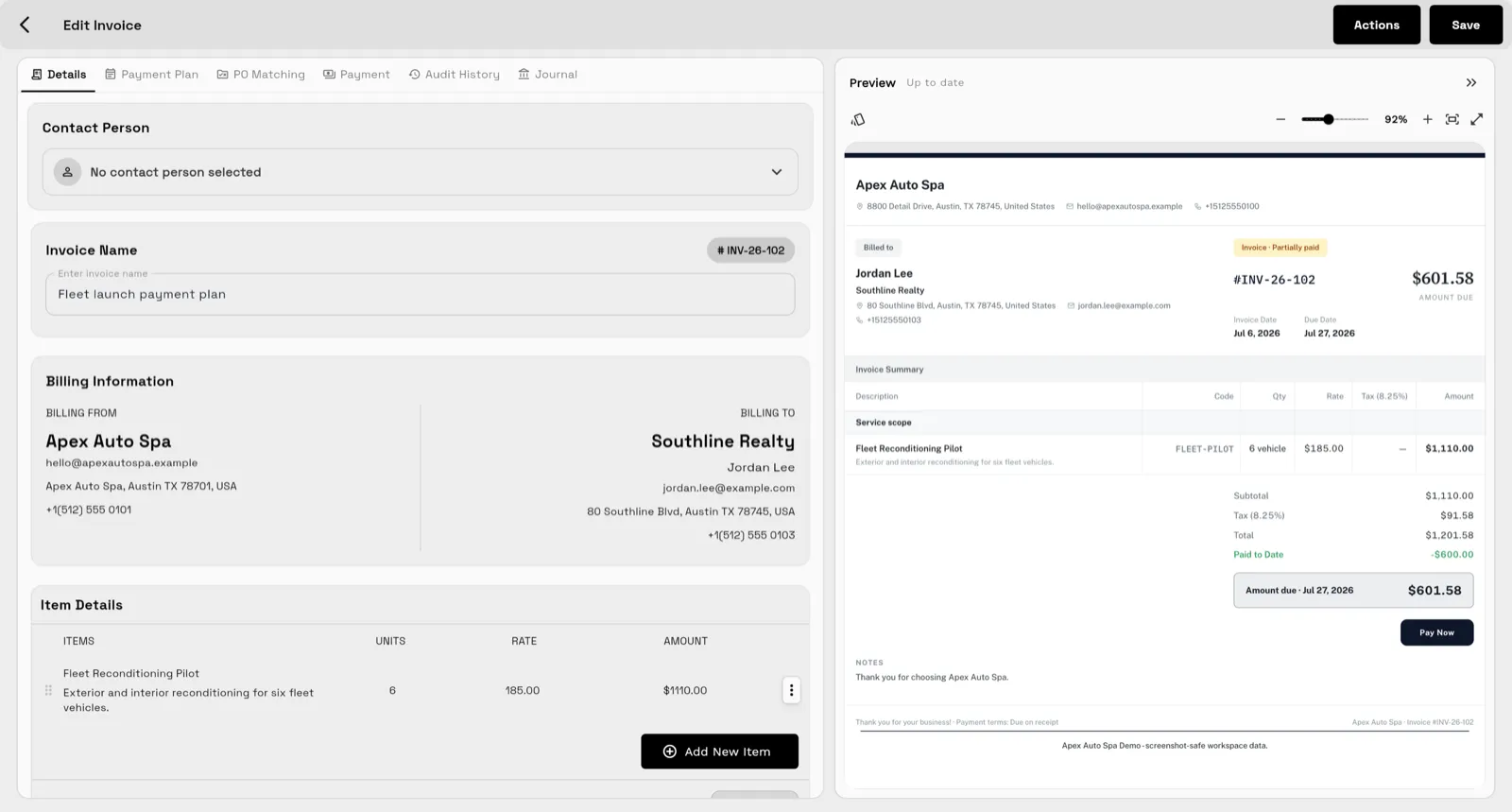
Send quotes, bill milestones or retainers, and let automated reminders chase anything outstanding.
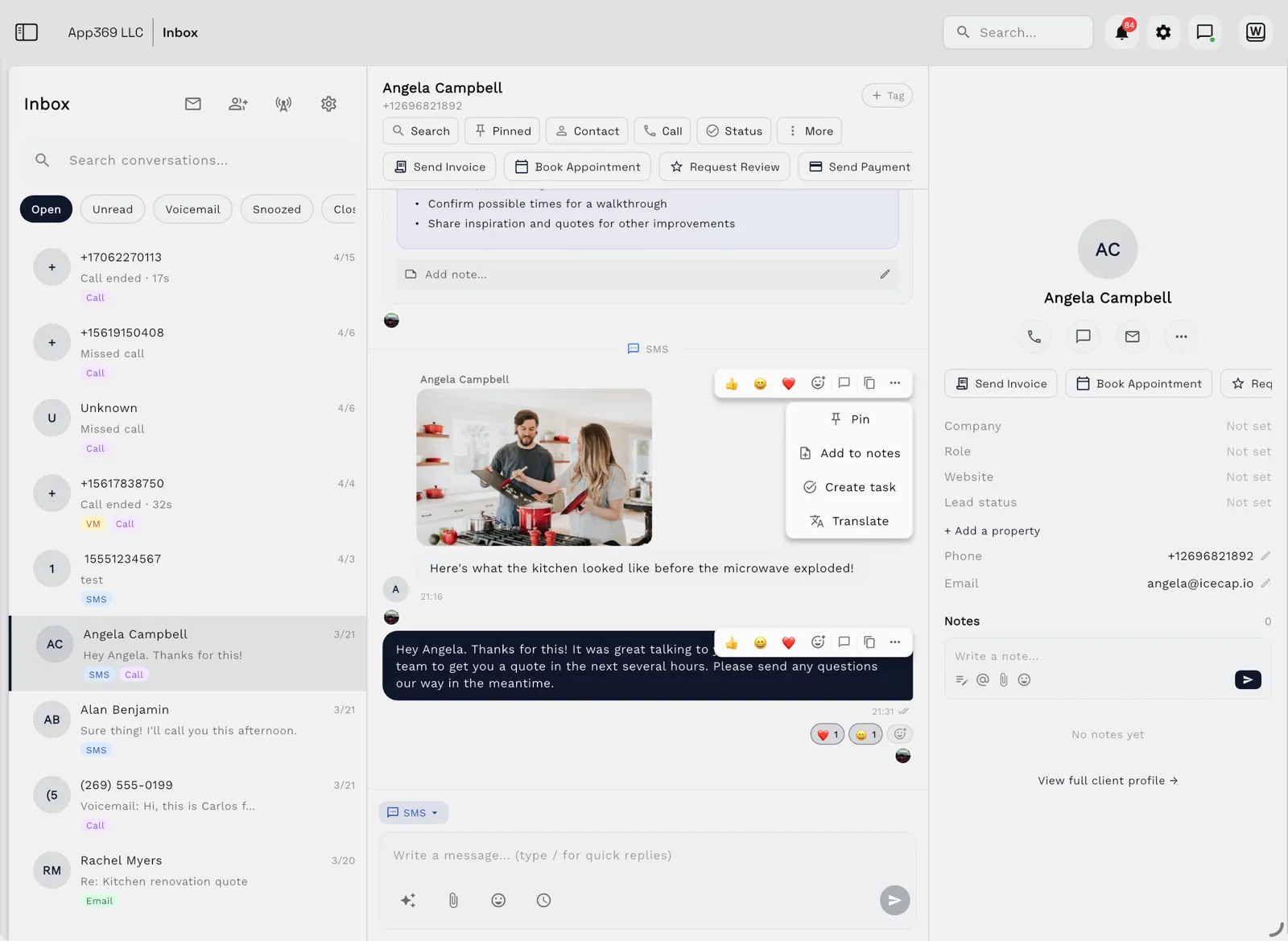
Email, SMS, calls, and voicemail land beside the client record — with AI summaries, so anyone on the team can reply with full context.
Clients watch progress, files, and invoices in a branded portal instead of asking your team for updates.
Workflow
Create the client record and keep the objective, decision-maker, relevant files and conversations together. Record constraints such as the target platform and client dependencies as part of your brief. Assign the person responsible for the next discussion.
Use Proposals to describe deliverables, exclusions and payment terms. Decide who can approve scope changes and how acceptance will be recorded. A CRM supports that process; it does not make the commercial judgment for the team.
Organize the engagement using Projects and Tasks, with owners and dates. Keep engineering implementation in the tools suited to it. Reference the necessary technical context without copying every commit or internal issue into a client conversation.
Bring a new client request back to the agreed scope. Record whether it is included, deferred or separately proposed. Update the work and commercial documents deliberately after the decision, so the team and client have a clear next step.
Review the invoice against the accepted terms and keep its status on the client record. Check the selected plan if the engagement needs payment plans or communication features. Reconcile financial records through the process your finance owner has approved.
Product coverage
Selected App Store reviews
SMB ModernizationGreat tool for modernizing small businesses. Ability to leverage AI without technical background.
True all-in-one systemIt beautifully combined my CRM, team calendar, and billing tools so I could finally stop paying for a bunch of separate software subscriptions
Best app for my construction businessGreat app. This app solved all my needs! Not only did it help, but it is cheaper than other apps. I highly recommend this app if you want to start organizing and automating your business on another level. Also love the design
Quoted exactly as written, in the reviewer’s own language. This is a selection of reviews, not all of them. Reviews from our own team are left out of the selection, but the overall rating includes their ratings.
Get started
14-day free trial. Card required. After the trial: from $29/month. Renews automatically every month until you cancel. Cancel anytime in Settings → Billing.
FAQ
It organizes the commercial relationship around a software engagement: the prospect, agreed scope, client communication, delivery context and billing. Workspace369 connects these business records so the team can keep the relationship understandable as work moves from discovery into delivery.
Keep source control, code review and release engineering in dedicated tools. This page describes the client-business workflow. Link repositories and issue trackers through webhooks and the API from Specialist, and test the sync with a sample project.
Use client records, conversations, Proposals, Projects and Tasks to organize the request and resulting work. Your team still decides whether it is included, separately quoted or deferred, and records that decision before proceeding.
Compare your seat count and required features on the pricing page. Monthly USD plans start at $29 for one seat. SMS and calls start at Voyager, while IVR, call queues and payment plans start at Specialist. Review allowances and processing charges as part of the decision.
Use a fictional client and one representative engagement before moving live records. Test discovery, scope acceptance, a teammate handoff, an extra request and an invoice. Record which actions require configuration or another system.
Ready when you are
Start with the modules you need today, then turn on AI, automations, accounting, inventory, requests, and reporting as the operation grows.
14-day free trial. Card required. After the trial: from $29/month. Renews automatically every month until you cancel. Cancel anytime in Settings → Billing.