CRM for lead generation agencies

CRM for Lead Generation Agencies with a Specific Workflow

Lead generation agencies require clear documentation to manage client definitions and delivery parameters. Workspace369 runs client records, proposals, projects, file deliveries and invoices in one place. Its signed proposals, conversations and structured delivery records help resolve client disputes regarding lead acceptance criteria.

Clientthe relationship and agreed brief
Worktasks with a responsible person
Billinginvoices and commercial context
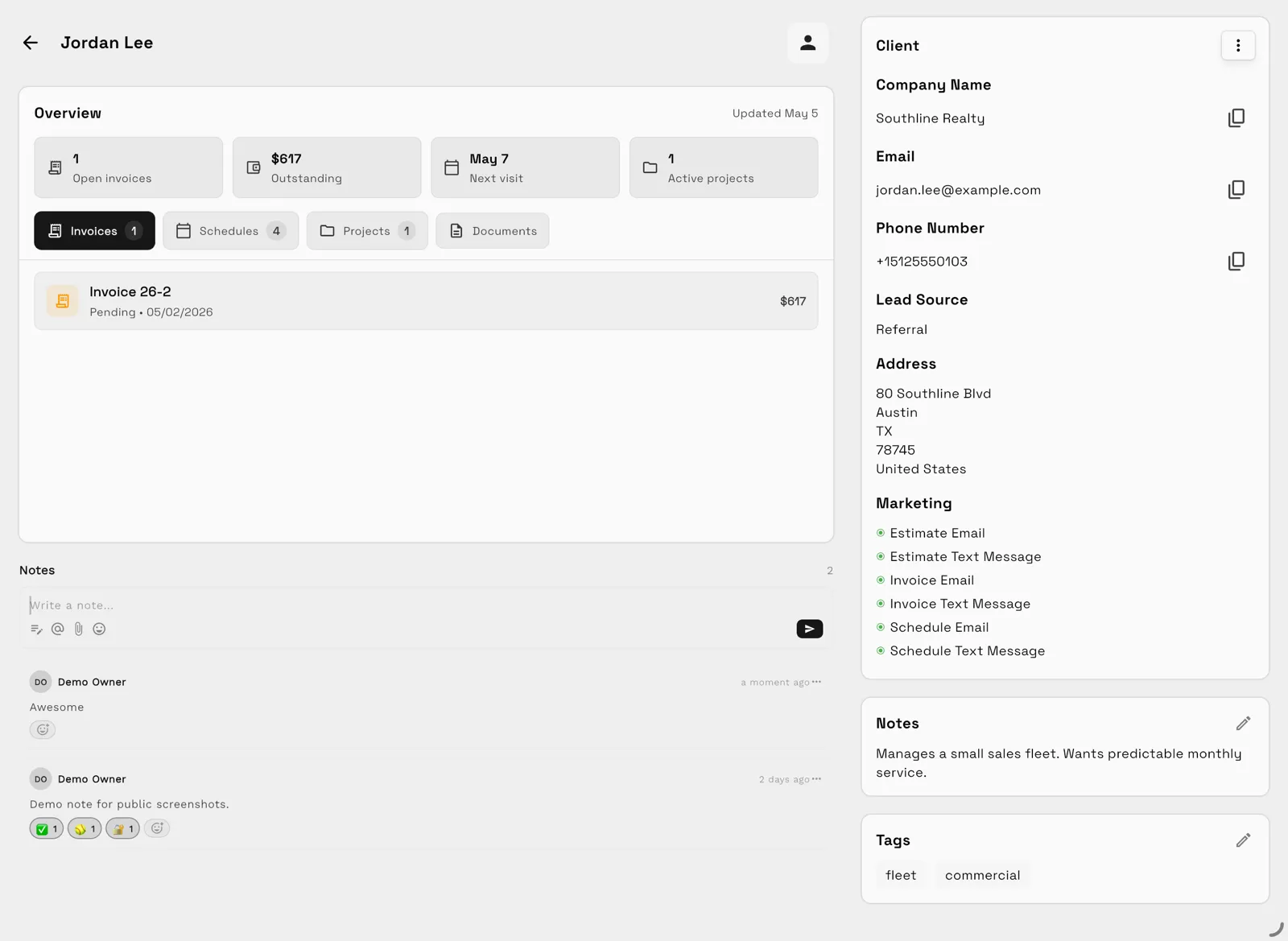
Workspace369 client record showing history, files, communication, and invoices in one profile

Key facts

CRM for lead generation agencies at Workspace369 covers 9 areas, including client records, proposals, projects and tasks.

The workflow runs in 5 steps, from "establishing the client record and proposal" to "reconciling deliveries and issuing invoices".

Workspace369 starts at $29/mo for 1 seat, and the Commander plan includes 20 seats, 500 GB of storage, and 120,000 AI tokens per month at $299/mo.

Additional seats cost $10 each and 100 GB of additional storage costs $15; full pricing is public on the Workspace369 pricing page.

The problem

Operational Friction in Lead Delivery Management

Disputed Lead Acceptance Criteria

When a client disputes whether a delivered lead meets the agreed definition, agencies without clear records face revenue loss. Misunderstandings occur when the original lead criteria are buried in scattered emails. Without a structured client record and a clear proposal framework, verifying the exact parameters agreed upon during onboarding requires manual searching through unorganized files, slowing down dispute resolution and harming client trust.
Scattered Communication History

Client conversations regarding target adjustments often happen across multiple unlinked channels. When a client requests a change in their ideal prospect profile, tracking that specific instruction becomes difficult without unified conversations. If the team updates campaign tasks without documenting the client request in a central client record, the agency risks delivering leads that the client rejects based on outdated criteria definitions.

Disconnected Delivery Tracking

Managing delivery schedules and campaign milestones across separate tools creates operational gaps. When project tasks are decoupled from client records and proposals, tracking whether the agency met its weekly delivery volume becomes difficult. This disconnect leads to missed scheduling deadlines, delayed client updates, and a lack of visibility into which campaign files were actually delivered to the client portal.

Invoicing Disputes and Delays

Billing clients for lead packages requires precise alignment between delivered volumes and invoice terms. When invoices are generated without direct reference to the original proposal or project milestones, clients frequently delay payments to verify the numbers. Resolving these billing discrepancies requires manual reconciliation of delivery files and conversation logs, which extends the payment cycle and creates administrative overhead.

The product

See the workspace your clients feel.

01

A portal clients actually check

Clients watch progress, files, and invoices in a branded portal instead of asking your team for updates.

Workspace369 client record showing history, files, communication, and invoices in one profile
02

Every channel in one inbox

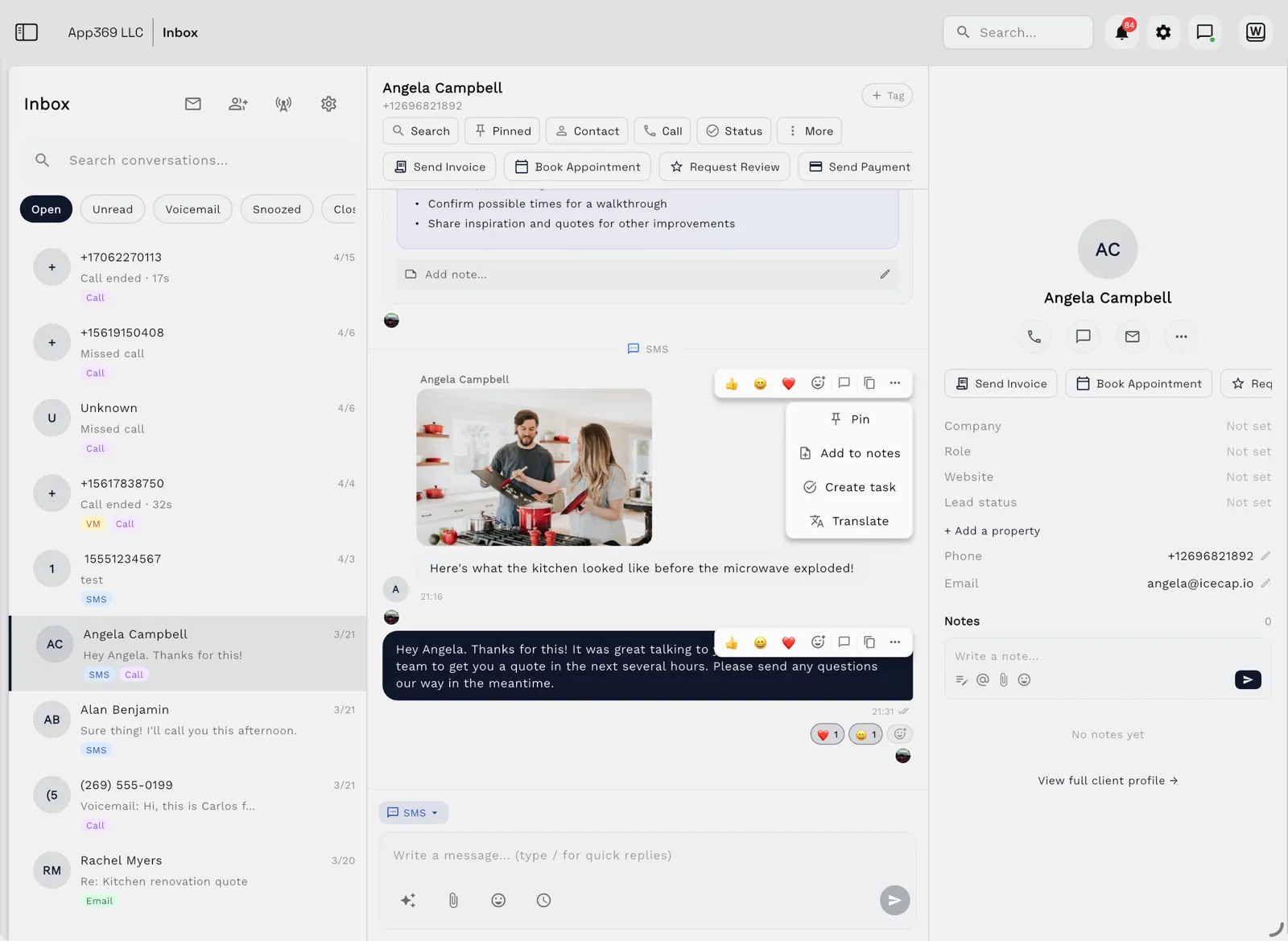
Email, SMS, calls, and voicemail land beside the client record — with AI summaries, so anyone on the team can reply with full context.

Workspace369 shared inbox showing email, SMS, and call history beside a client record
03

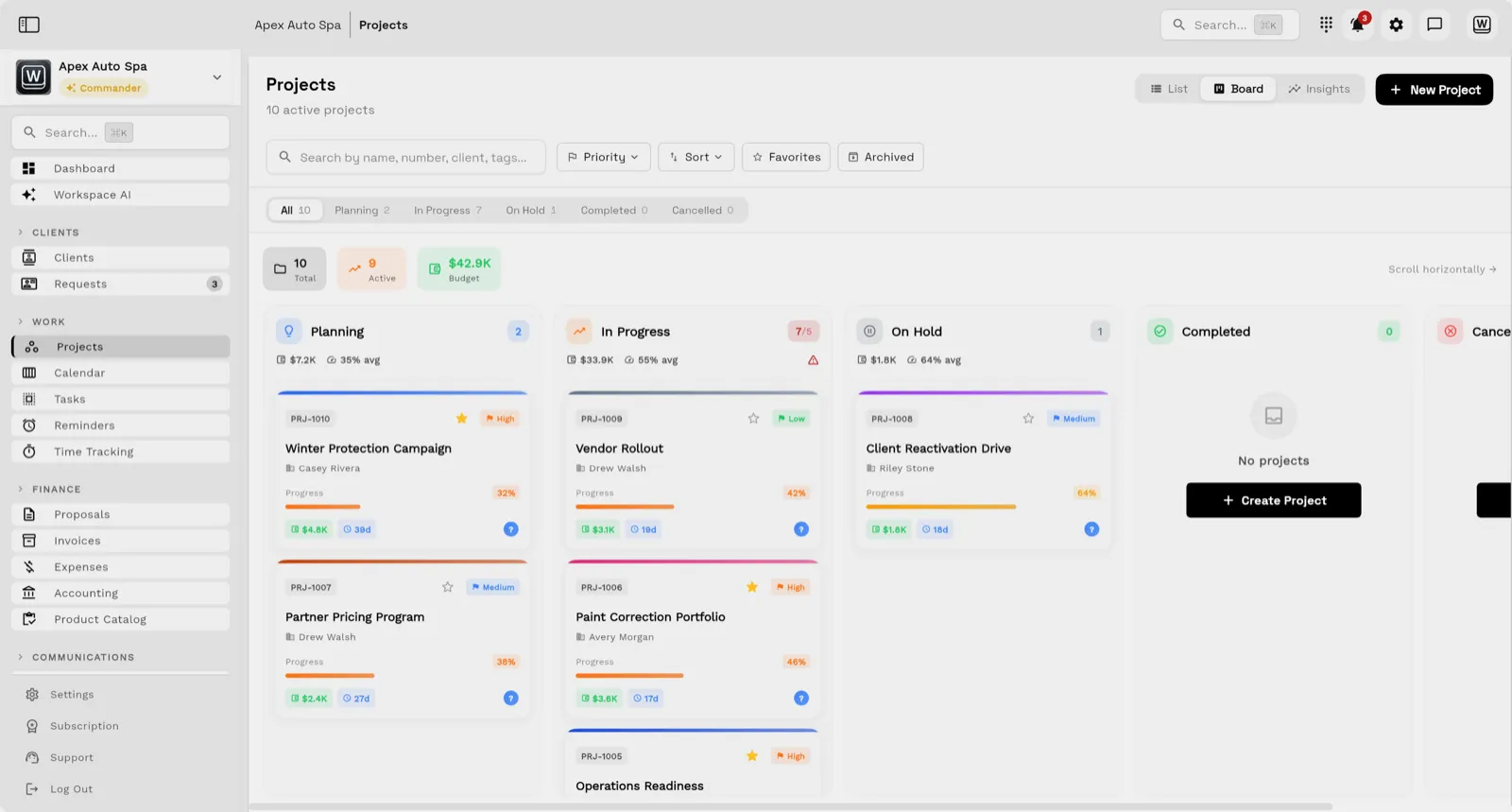
Client work, organized as projects

Tasks, files, and status for every engagement — visible to the team and, through the client portal, to the client.

Workspace369 project board showing client work organized into stages with owners and status
04

Proposals to paid invoices

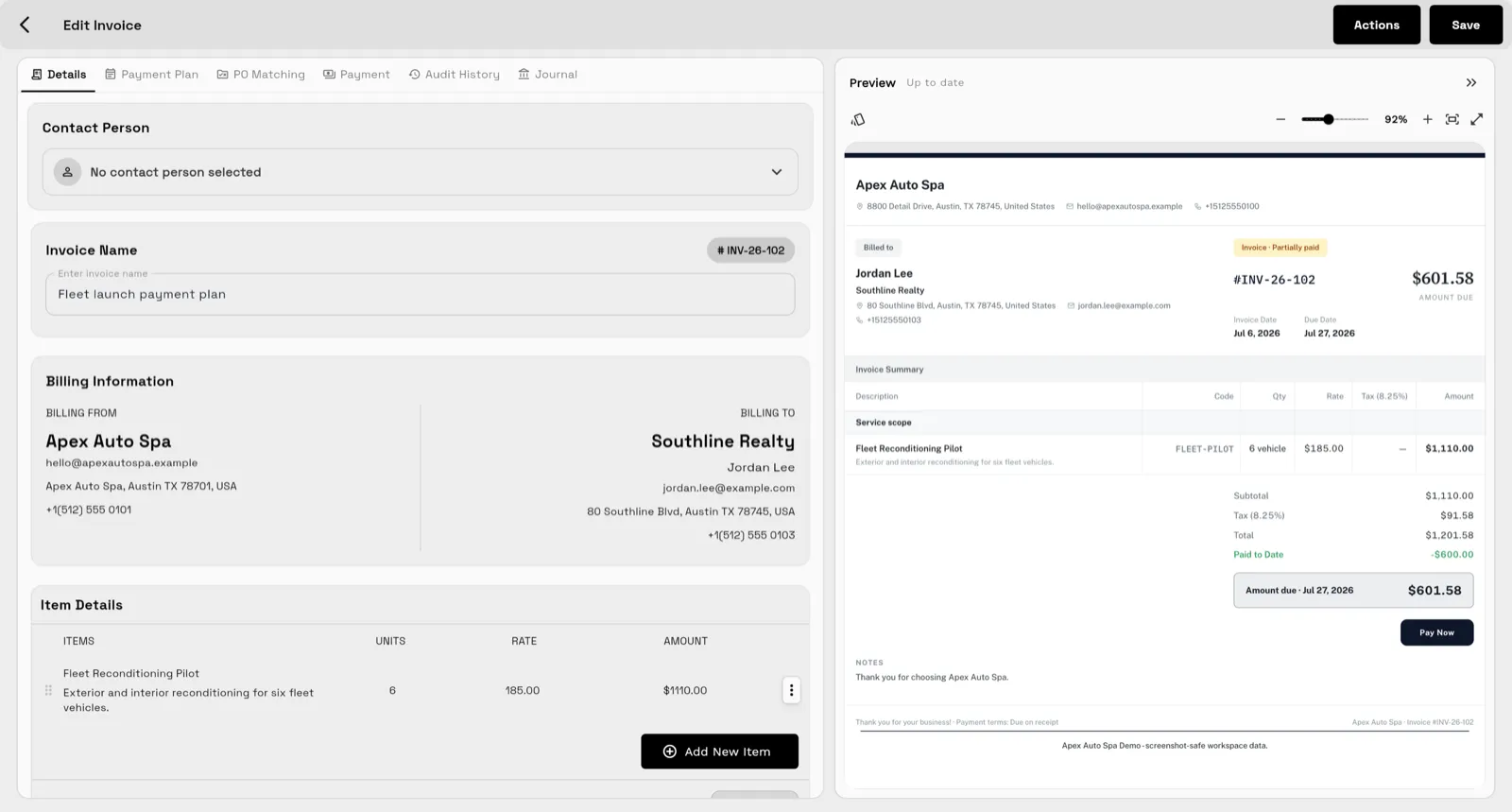
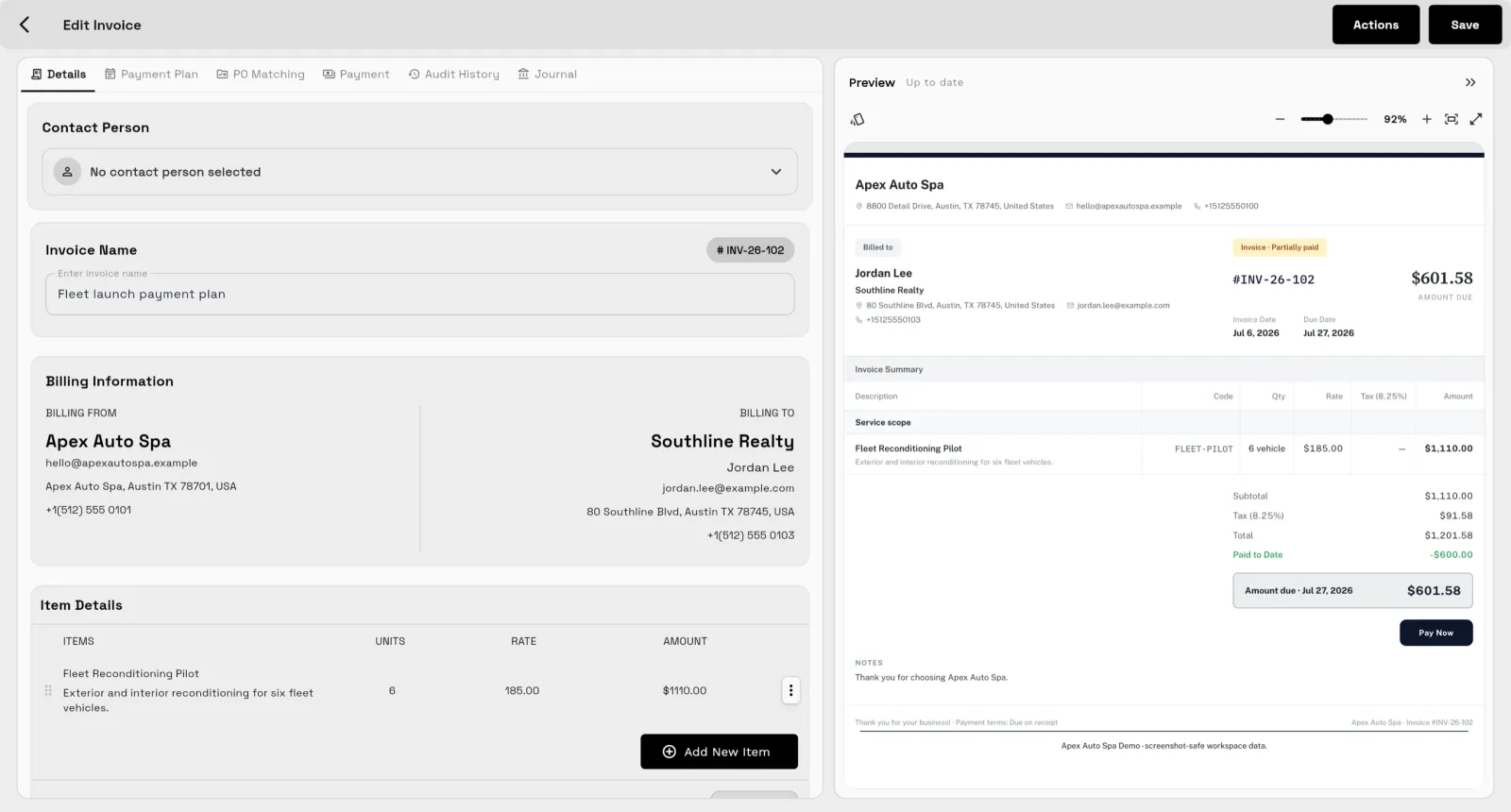
Send quotes, bill milestones or retainers, and let automated reminders chase anything outstanding.

Workspace369 invoice editor showing line items, payment terms, and client details

Workflow

Structured Operations for Lead Delivery

01

Establishing the Client Record and Proposal

The workflow begins by creating a comprehensive client record that holds contacts, terms and history. You draft a detailed proposal outlining the exact lead acceptance definitions, volume commitments, and pricing tiers. A human operator records the specific lead criteria definitions directly in the brief text within the proposal file, ensuring both parties can refer to the recorded decision in the agreed brief before any campaign execution begins.

02

Mapping Projects and Operational Tasks

Once the proposal is finalized, you set up a dedicated project for the lead generation campaign. Within this project, you create specific tasks for list building, campaign launching, and quality checks. Operators use these tasks to track daily progress and ensure that the team performs manual verification steps against the lead acceptance criteria recorded in the client brief before any file delivery occurs.

03

Managing Conversations and Scheduling Reviews

All client communications are maintained within the system conversations area to track feedback on lead quality. You use the scheduling feature to set up regular performance reviews with the client. Any adjustments to the target profile discussed during these meetings are manually recorded in the client record, ensuring the operational team updates their task checklists accordingly.

04

Delivering Files via the Client Portal

Delivered lead lists are uploaded as files directly into the secure client portal (client file attachments start on Specialist). This provides the client with immediate access to the deliverables while keeping a record of exactly what was sent and when. A human operator instructs the client to review the files within the portal to confirm that the delivery matches the active project parameters.

05

Reconciling Deliveries and Issuing Invoices

At the end of the billing cycle, you generate invoices based on the terms established in the initial proposal. The operator reviews the completed tasks and delivered files within the project to verify the exact lead count. The final invoice is sent to the client, backed by the complete history of conversations and file deliveries accessible in the portal.

Product coverage

Client operations for lead generation agencies

  • A human operator can locate the original lead acceptance criteria in the proposal text within three clicks from the main client record during a dispute simulation.
  • A human operator can verify the uploaded lead delivery files inside the client portal, checking the recorded files against the project requirements for verification.
  • All client feedback conversations and scheduled campaign review notes are linked directly to the specific project, allowing immediate cross-referencing against issued invoices.
Client records
Proposals
Projects and tasks
Files
Conversations
Scheduling
Invoices
Client portal
Workflow Automations

Loved on the App Store

Rated by the people running their client work on it.

★★★★★
Finally feels calm

Bounced between three or four all-in-one tools and always ended up in a mess of tabs. This is the first one that feels calm. Set up my client projects in ten minutes.

Justin R. · Solo founder · App Store review
★★★★★
Painless team rollout

Rolled it out to our eight-person team and adoption was painless — intuitive and polished. I'd love more integrations, but they keep shipping.

Samantha D. · Operations lead · App Store review
★★★★★
Hours back every week

Was juggling separate tools for notes, tasks, docs, and updates. Consolidating into one place has genuinely saved me hours each week. Support is responsive too.

Alicia N. · Agency founder · App Store review

Get started

See Workspace369 on your own client work.

Start a free trial or talk to sales — either way, you will see the whole loop: inbox, projects, portal, and billing.

FAQ

Evaluation and Acceptance Criteria

How does the system help resolve a lead quality dispute?

When a client disputes a lead, a human operator checks the original proposal text within the client record to verify the agreed criteria. They then cross-reference the delivered files in the client portal and review the conversation history to determine if any profile adjustments were recorded in the brief during scheduled meetings, providing the recorded information to help resolve the issue.

Can we automate lead qualification or data enrichment here?

Lead triggers and conditions in workflow automations run a configured qualification workflow, and funnels capture leads into the CRM. Pair a prospect database or enrichment service for list data, test the actual acceptance criteria and keep a responsible reviewer for exceptions.

How do we track changes to a client target profile?

Any changes to a client's target profile must be manually recorded in the brief text within the client record or project files. When a change is discussed during a scheduled meeting or via conversations, an operator updates the relevant tasks and files to ensure the delivery team executes campaigns against the revised criteria.

Is there an automated approval workflow for delivered files?

Workflow Automations supports task creation and team notifications with configured triggers and conditions. Test the required owner assignment and review steps before enabling it. A team member uploads the lead delivery files to the client portal and asks the client to check and record their feedback regarding the delivered leads directly within the conversation history.

Ready when you are

See where Workspace369 fits into your client-work flow.

Start with the modules you need today, then turn on AI, automations, accounting, inventory, requests, and reporting as the operation grows.