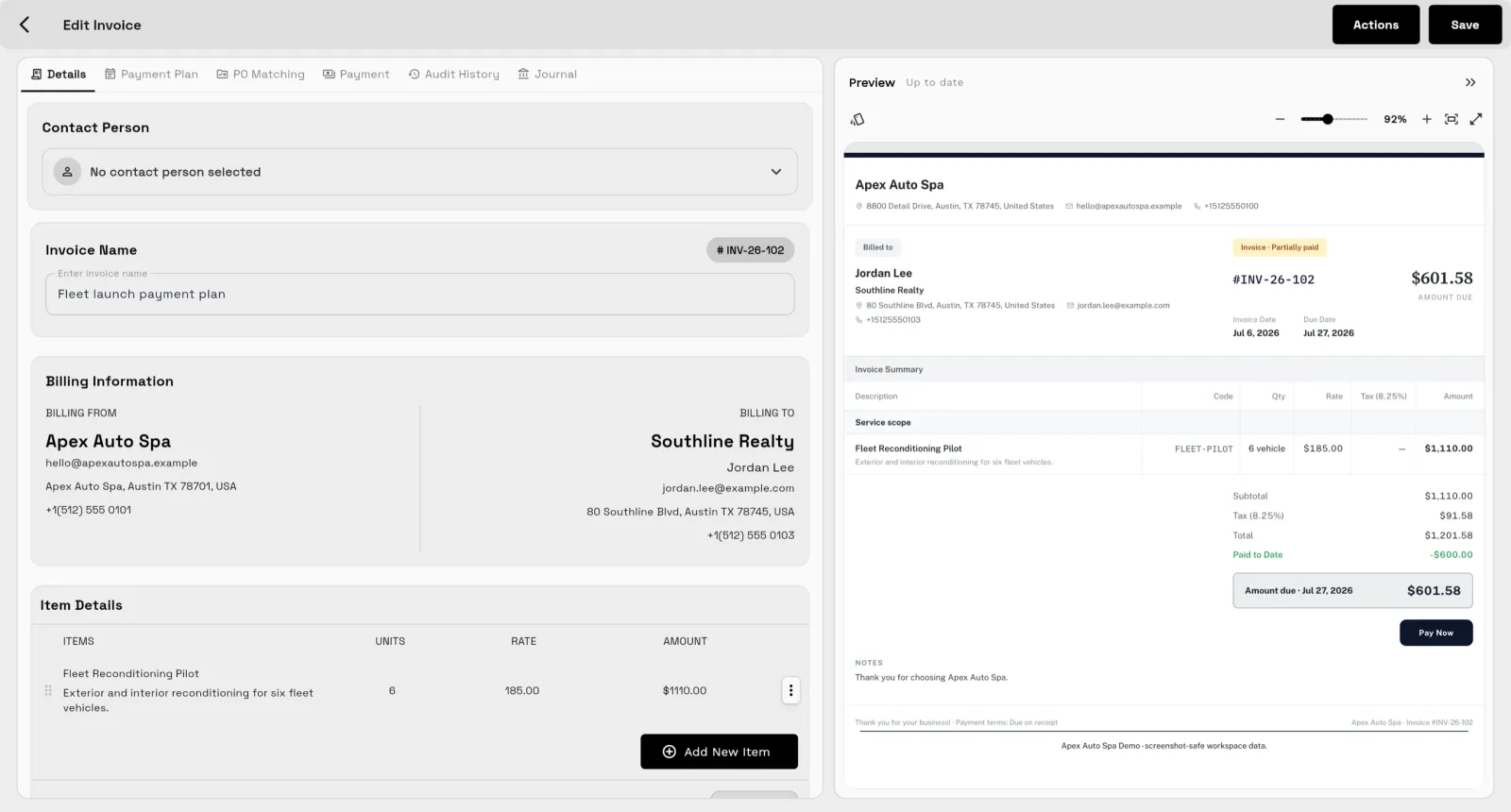
Time entries lack context
A duration alone does not explain the client, task, scope change, or deliverable that made it billable.
Track time where the client work happens, preserve the project and task context, and move from approved effort to invoice and payment without rebuilding a timesheet by hand.
14-day free trial. Card required. After the trial: from $29/month. Renews automatically every month until you cancel. Cancel anytime in Settings → Billing.
2 minutes: email, mobile number (code for US/Canada only), card. $0 for 14 days.
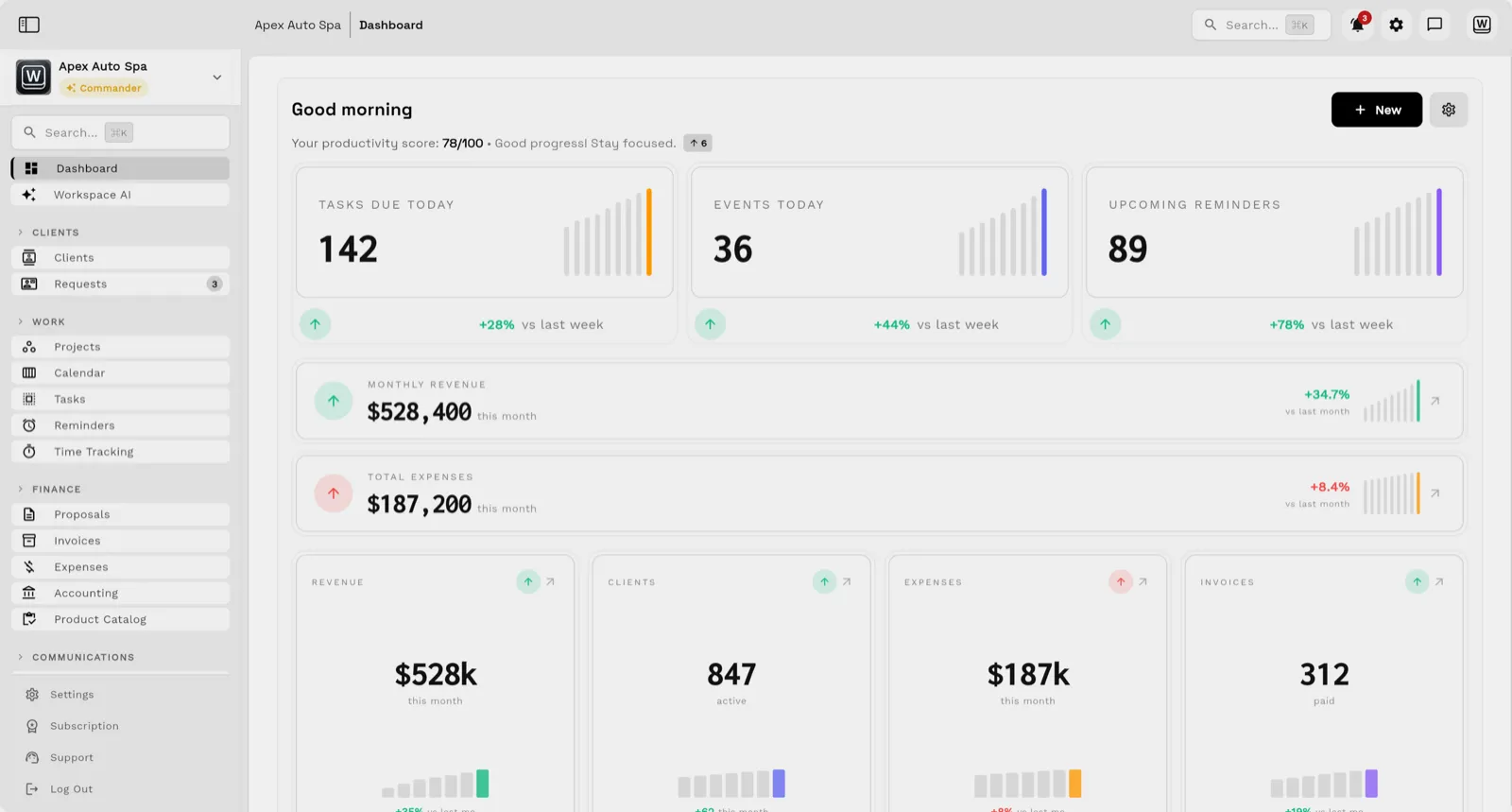
Key facts
Time tracking and invoicing at Workspace369 covers 10 areas, including timers, timesheets, projects.
The workflow runs in 6 steps, from "track in the work" to "measure the outcome".
Workspace369 starts at $29/mo for 1 seat, and the Commander plan includes 20 seats and 12× Cadet usage at $299/mo.
Additional seats cost $10 each; full pricing is public on the Workspace369 pricing page.
For the lowest cost, Harvest has a free plan with invoicing for 1 seat and 2 projects, and Clockify lists invoicing from Standard ($5.49 per seat billed yearly). FreshBooks is invoicing-first with time tracking on every plan ($23 Lite, 5 billable clients), and Toggl Track doesn't list invoicing on any plan. Workspace369 ($29 a month, Cadet) includes timers, timesheets, time-to-invoice, recurring invoices, payment reminders and a client portal on every plan, with 1 seat and 5 active projects on Cadet.
| Tool | Entry price with tracking and invoicing | Billed yearly | Main entry-plan limit | Trial |
|---|---|---|---|---|
| Workspace369 | $29 (Cadet) | $23.25 a month | 1 seat, 5 active projects | 14 days, card required |
| Harvest | Free, or $11 per seat (Teams) | $9 per seat | Free: 1 seat, 2 projects | 30 days, no card |
| FreshBooks | $23 list (Lite); an 80% off offer for the first 4 months was showing on October 24, 2026 | Not listed | 5 billable clients | 30 days, no card |
| Clockify | $6.99 per seat (Standard) | $5.49 per seat | Invoicing not on Free or Basic | 7 days (Pro), no card |
| Bonsai | $25 per user (Essentials) | $19 per user | Basic has no invoicing | 7 days, card to continue |
| Toggl Track | Invoicing not listed in any plan | Starter $9 per user | No invoicing on pricing page | 30 days, card not stated |
| Hubstaff | $7 per seat (Starter, with Clients & Invoices) | $4.99 per seat | 2-seat minimum | 14 days, no card |
Prices and limits from each vendor's official pricing page, checked October 24, 2026, in USD. Prices change, so confirm before you buy. Read the full time tracking and invoicing comparison.
A duration alone does not explain the client, task, scope change, or deliverable that made it billable.
Teams export hours, reconcile spreadsheets, and rewrite descriptions before they can bill.
Tracked hours look productive while project costs, write-offs, delays, and payment status remain elsewhere.
Work logged in a separate tracker, or never logged at all, quietly drops off the invoice when the billing period closes.
Without per-role rates and a stated rounding policy on the invoice, clients question totals that should have been self-explanatory.
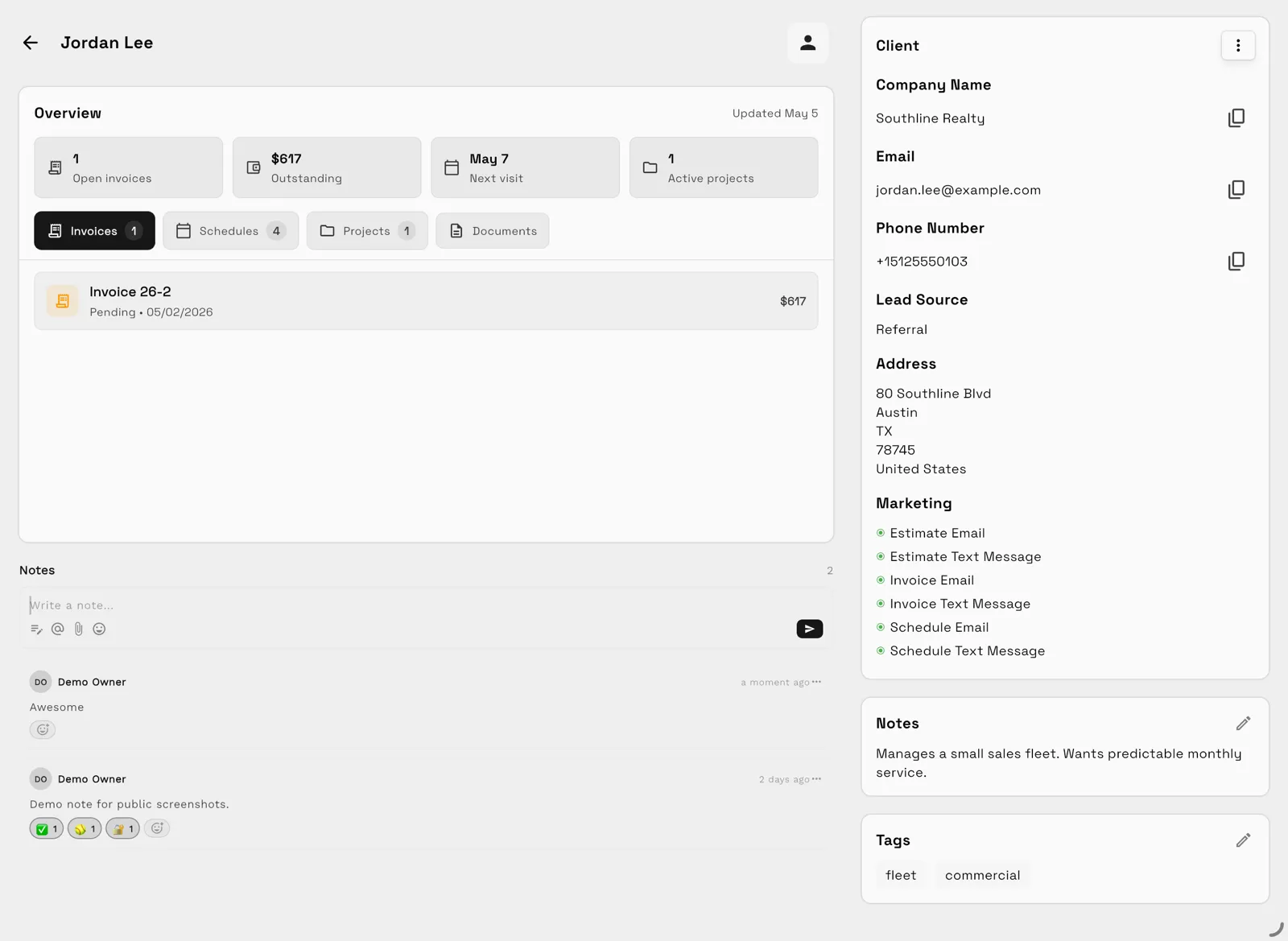
Email lands beside the client record on every plan; texts, calls and voicemail join it from Voyager, with AI call summaries from Specialist.
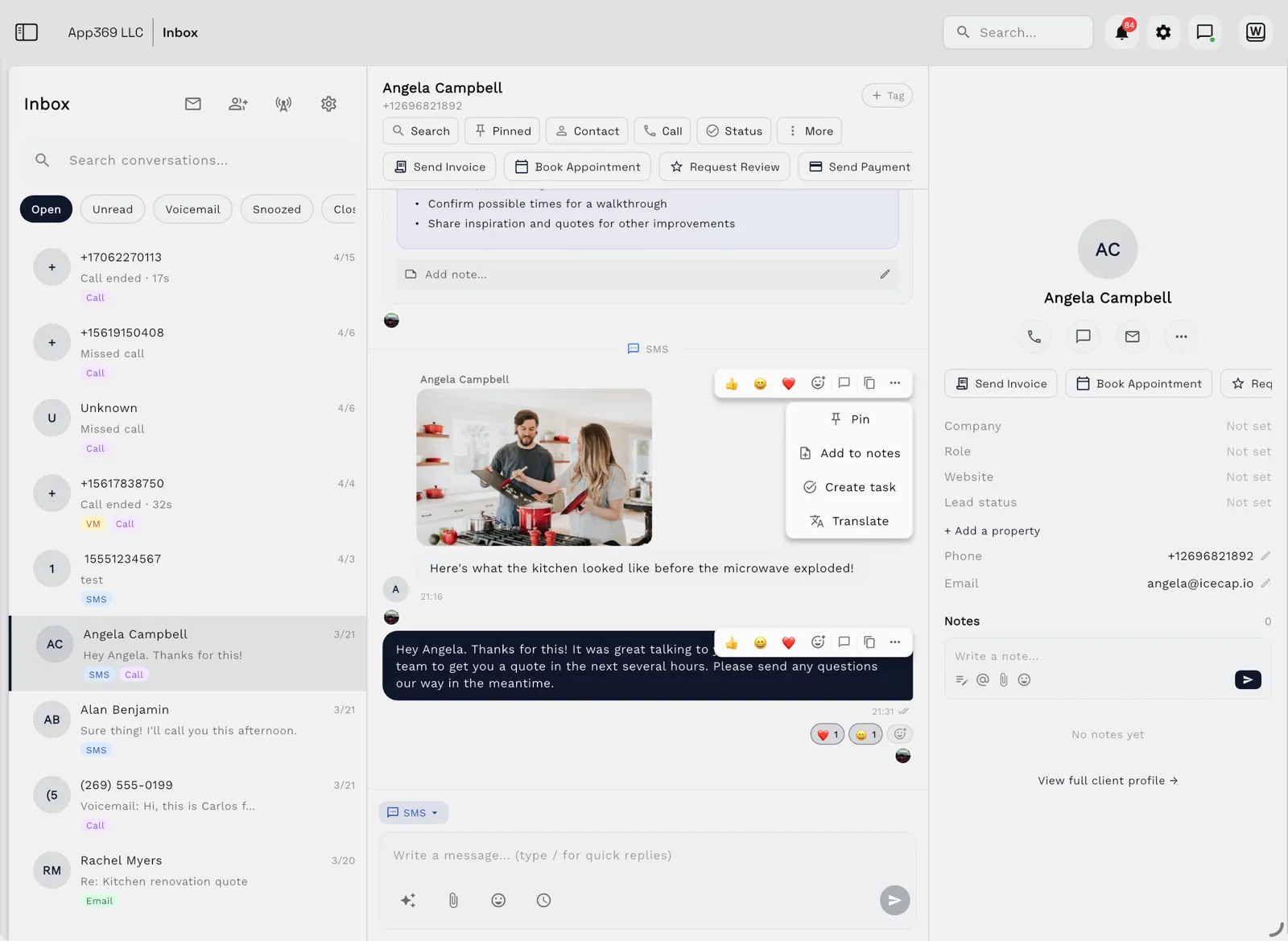
Tasks, files, and status for every engagement — visible to the team and, through the client portal, to the client.
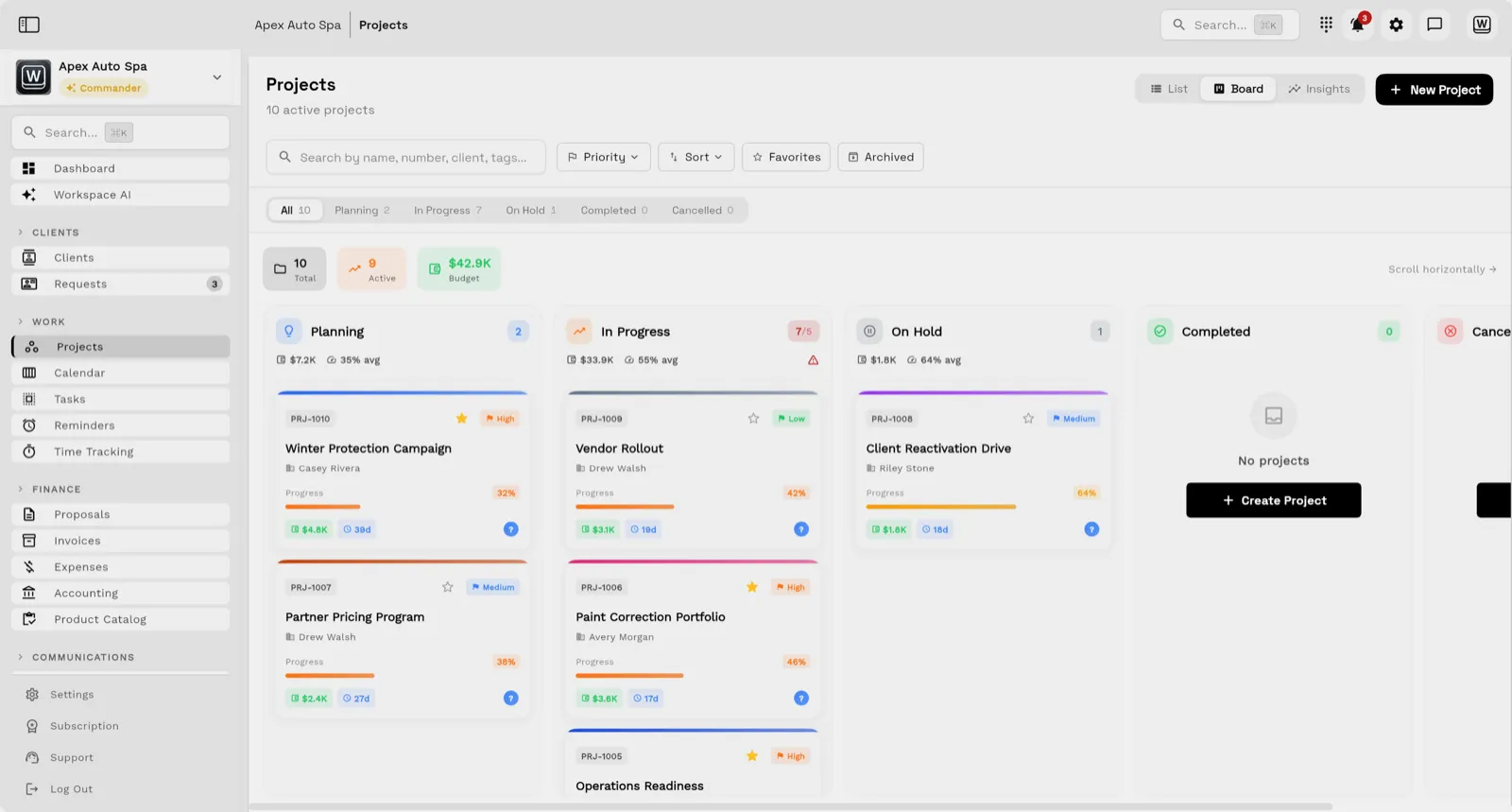
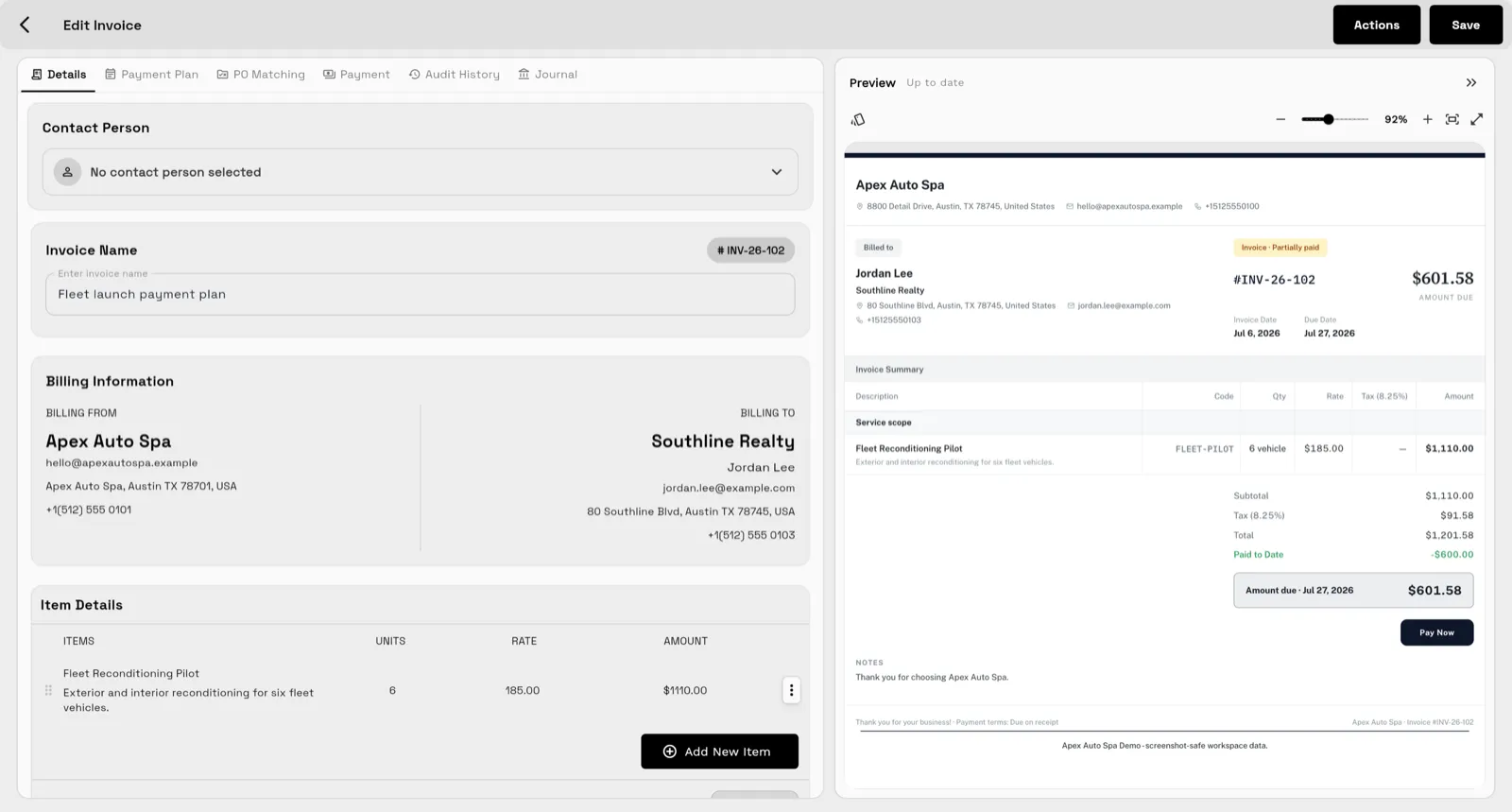
Send quotes, bill milestones or retainers, and let automated reminders chase anything outstanding.
Clients watch progress, files, and invoices in a branded portal instead of asking your team for updates.
Record time against the client, project, task, or delivery context instead of an isolated timer list.
Compare time, expenses, scope, progress, and notes before billing or changing the plan.
Bill hours at the rate for the role or person who did the work, with a stated rounding policy the client has already accepted.
Create clear proposals and invoices informed by the actual work, then collect and track payment.
Watch payment status, send reminders, and keep the follow-up conversation attached to the same client record.
Review revenue, costs, receivables, project health, and profitability in the same operating view.
SMB ModernizationGreat tool for modernizing small businesses. Ability to leverage AI without technical background.
True all-in-one systemIt beautifully combined my CRM, team calendar, and billing tools so I could finally stop paying for a bunch of separate software subscriptions
Best app for my construction businessGreat app. This app solved all my needs! Not only did it help, but it is cheaper than other apps. I highly recommend this app if you want to start organizing and automating your business on another level. Also love the design
Quoted exactly as written, in the reviewer’s own language. This is a selection of reviews, not all of them. Reviews from our own team are left out of the selection, but the overall rating includes their ratings.
14-day free trial. Card required. After the trial: from $29/month. Renews automatically every month until you cancel. Cancel anytime in Settings → Billing.
It depends on what follows the invoice. Workspace369 fits when you also want reminders, recurring billing, proposals and a client portal on the entry plan ($29 a month, Cadet). For the lowest cost to track and bill, compare Harvest's free plan (1 seat, 2 projects) and Clockify, which lists invoicing from Standard. FreshBooks suits invoicing-first billing priced by client count.
Yes. Workspace369 connects time tracking with clients, projects, tasks, expenses, proposals, invoices, payments, and profitability reporting.
Consultants, agencies, freelancers, and service teams benefit when billable effort needs to become a clear invoice and a measurable project result.
In Workspace369, timers, timesheets, billable time tracking and time-to-invoice are available on every plan, starting with Cadet at $29/month. Voyager at $74/month adds 2 seats, the shared inbox, and SMS for small teams.
Yes. Time-to-invoice converts reviewed, billable time entries into invoice line items with the project context attached, so the hours do not need to be retyped into a separate billing document.
A clear time-based invoice shows the billing period, a summary of the activities performed, the hours and rate for each role or person, any expenses, the payment terms, and the rounding policy applied to the totals.
A timer captures work as it happens. A timesheet is the reviewed record of that work over a period, where entries can be edited, completed, and marked billable before they are invoiced. Workspace369 supports both.
Usually yes when the freelancer bills by the hour, because the gap between tracked effort and the invoice is where revenue leaks. A solo operator can start on a one-seat plan and keep the same workflow as the client list grows.
No. Profitability also depends on rates, costs, scope, write-offs, utilization, and payment. Workspace369 keeps those operational signals closer together.
Start with the modules you need today, then turn on AI, automations, accounting, inventory, requests, and reporting as the operation grows.
14-day free trial. Card required. After the trial: from $29/month. Renews automatically every month until you cancel. Cancel anytime in Settings → Billing.