Best CRM for Barbershops in 2026: Chairs, Rent and Events
Six barbershop software options compared on price for a 4-chair shop, walk-in and booth-rent tools, and how to sell off-site corporate events.
We make Workspace369, which is on this list. Weigh our ranking with that in mind.

By Simon Dziak, Founder, Workspace369 · LinkedIn
The best CRM for barbershops is usually a booking tool built around chairs, not a general CRM. Squire and theCut list walk-in and booth-rent tools, and Booksy, Square and Fresha cover online booking; Workspace369 only fits when you also sell corporate or wedding grooming days by proposal. Need to invoice a deposit for an event? Try the free invoice generator.
Disclosure and method: Workspace369 publishes this guide and is one of the options, ranked last here for chair booking. It is a documentation-based shortlist, not a hands-on benchmark. Official vendor pages were reviewed on October 21, 2026 (Square Appointments showed no prices, so see site), so check current plans before you buy.
Key takeaways
- For a shop with 2-8 chairs, start with a barbershop-first booking tool: Squire lists commission and rent collection from $150 a month, and theCut lists booth rent tracking on a $0 Shop plan.
- For a 4-barber team, the listed subscriptions come to about $59.80 a month on Fresha and $89.99 on Booksy, before payment processing fees and any marketplace commission.
- Workspace369 does not do barber payouts, commission tracking or a POS register, and online booking starts on Specialist at $149 a month, so it is not a chair-booking tool.
- Workspace369 fits the side business: corporate grooming days and wedding parties sold by proposal, with a deposit invoice and a client portal on every plan.
- Run one real week of walk-ins and one fake corporate event through each trial before you move your client list.
What's inside?
What barbershop CRM software is (and what it is not)How we compared these toolsThe best CRM and software for barbershops in 2026Side-by-side comparisonWhich barbershop software fits your shop?Run a week-in-the-shop test during the trialHow to decide
What barbershop CRM software is (and what it is not)
Barbershop software covers the front desk: a calendar per barber, online booking, a walk-in list, reminders so regulars come back, and in many shops payouts for commission or booth-rent barbers. A CRM, in the narrower sense, keeps client records, conversations and deals in one place. The two overlap on client history, but they solve different problems. A booking app answers "who is in my chair at 3 pm", while a client-work CRM answers "what did we quote the bank for its team day, and has the deposit landed".
This guide is for an owner with two to eight chairs, either owner-operator or a booth-rent and commission mix. Hair-focused shops with colour and retail may prefer our hair salon CRM guide or the broader salon software shortlist. Here we focus on what is specific to barbershops: walk-ins, per-barber money, repeat-cut reminders and the occasional off-site booking.
How we compared these tools
We compared each option on the same five points, using only the vendor's own pricing and product pages:
- Monthly price for a 4-barber shop, as listed on October 21, 2026, with processing fees kept separate.
- Barber money tools: whether the page lists commission, booth rent or payouts, and on which plan.
- Walk-ins and booking: online booking, waitlist or walk-in handling, and reminders.
- Extra fees: marketplace commissions, per-barber charges and add-ons.
- Trial terms: length, and whether the vendor says a card is needed.
We did not test speed, support, security, payout accuracy or reliability, and we did not use third-party ratings or reviews. Order reflects documented fit for a 2-8 chair shop. Workspace369 is one of the options and is placed last for chair booking. Prices are US dollars as listed that day.
The best CRM and software for barbershops in 2026
1. Squire, best for shops that collect commission and rent
Squire is built for barbershops. Its pricing page lists Pro at $50 a month for single-location shops, with multiple barber accounts, Google and Instagram booking, shop management and waitlist, client transfer and promo codes. Executive is $150 a month per shop and adds email and SMS marketing, a Google reviews booster and commission and rent collection. Titan is $250 a month per shop with multi-location support, a branded app, a rewards program, gift cards and inventory. A solo Independent plan is $30 a month, and the page lists a 14-day free trial.
Limitations: commission and rent collection sit on the $150 Executive tier, so the barber-money tools triple the entry price. The page we fetched did not show whether each added barber costs extra, and it does not describe event or corporate sales. It also says nothing about payment processing fees, so ask for those.
Best for: a 3-8 chair shop with a commission or booth-rent mix that wants walk-in waitlist and payouts in one barber-specific tool.
2. theCut, best for a free shop plan with booth rent tracking
theCut splits pricing by role. The Free barber plan is $0 with a booking link, no-show protection and mobile payments, and Pro is $25 a month with client blasts and automation. The Shop plan for owners is listed at $0 a month and includes staff management, multiple locations and booth rent tracking and reminders. New clients found through its discovery feature cost $10 per client on the Free plan. The page offers a 30-day Pro trial and says no credit card is required.
Limitations: the owner plan is free, but each barber still picks Free or Pro, so the real bill depends on who upgrades. The $10 discovery fee is a real cost, and the page does not describe walk-in queue handling or event sales.
Best for: a booth-rent shop where each barber runs their own book and the owner mainly wants visibility, rent tracking and low fixed costs.
3. Booksy, best for a flat price with all features included
Booksy lists $29.99 a month plus $20 a month for each additional team member, with every feature in that one subscription. A 4-barber shop would pay about $89.99 a month plus tax. The page says appointment confirmations and reminders are always free, plans include 2,000 free SMS marketing messages, and there is no commission unless you switch on Boost, which charges a one-time 30% of a new client's first visit, capped at $100.
Limitations: the per-member charge makes it the dearest of the per-barber subscriptions listed at four or more chairs. The pages we read do not mention booth rent or commission payouts for barbers, and it lists a 14-day trial with no credit card needed to sign up.
Best for: a shop that wants one predictable subscription and a large consumer marketplace, and keeps barber payouts in a spreadsheet or payroll tool.
4. Square Appointments, best if you already take payments on Square
Square Appointments has Free, Plus and Premium tiers, but its page showed no prices or trial length when we opened it on October 21, 2026, so see the site for current costs. Free lists unlimited staff calendars and appointment reminders; Plus adds a cancellation policy with no-show fees, multi-staff booking and a waitlist. Premium adds a future bookings report, service cost tracking and resource management. See how it stacks up against Workspace369 on the Square Appointments comparison.
Limitations: payments run through Square, so processing fees apply and moving away later is harder. Square's plan table lists many retail and food-service features, so check which of them your barbers will actually use. The page we read does not mention commission tracking or tip pooling, so ask Square about barber payouts.
Best for: shops already on Square hardware that want booking, a waitlist and card payments under one login.
5. Fresha, best for low per-barber subscription cost
Fresha lists Independent at $19.95 a month for one calendar column and Team at $14.95 a month per bookable team member, with a 7-day trial. Four bookable barbers come to about $59.80 a month. Messages are bundled: 100 free messages and 50 free marketing emails per team member. Bookings from your own link, Facebook and Instagram are free.
Limitations: new clients found through the Fresha marketplace carry a 20% one-time commission with a $6 minimum, which can erase the subscription saving. The pages we read do not describe booth rent or commission payouts, so check payroll separately.
Best for: a shop that wants the lowest per-barber fee and will mostly rely on its own link and regulars rather than the marketplace.
6. Workspace369, best only for corporate and wedding grooming sold by proposal
Workspace369 is not a chair-booking tool, and we rank it last for that reason. Its plan matrix lists online booking from Specialist at $149 a month with 10 seats, while Cadet is $29 a month ($23.25 billed yearly) for one seat with up to 5 active projects and Voyager is $74 for two seats with calls and texts. It does not include a POS register, barber payouts or commission tracking. What it adds is the event side: Proposals with a deposit, invoices, intake forms, email appointment reminders and a client portal on every plan, so a bank's team day can be quoted, approved and billed in one record.
Limitations: the 14-day trial needs a card, extra seats cost $10 a month from Voyager, and daily walk-in handling stays in your booking tool. Use it beside one of the tools above, not instead of them.
Best for: shops that sell off-site corporate days or wedding parties and want a proposal, deposit and invoice trail. See the CRM for barbershops page.
Side-by-side comparison
| Tool | Listed price | Barber money tools | Standout | Main limitation |
|---|---|---|---|---|
| Squire | $50 Pro; $150 Executive per shop | Commission and rent on Executive | Barbershop-first, waitlist | Barber money tools on the $150 tier |
| theCut | Shop $0; barbers Free or $25 Pro | Booth rent tracking on Shop | Free owner plan | $10 per discovered client |
| Booksy | $29.99 + $20 per extra member | Not listed | Everything in one price | About $89.99 for 4 barbers |
| Square Appointments | See site (Free, Plus, Premium tiers) | Not listed | Free calendars; waitlist on Plus | Tied to Square payments |
| Fresha | $19.95 solo; $14.95 per member | Not listed | Low per-barber fee ($14.95) | 20% new-client marketplace fee |
| Workspace369 | Cadet $29; Voyager $74; Specialist $149 | None | Proposals, deposits, portal | Booking from $149; trial needs a card |
Which barbershop software fits your shop?
| If you mostly need | Start with | Why |
|---|---|---|
| Commission and rent collection with a waitlist | Squire | Listed on Executive at $150 |
| A free owner plan for booth renters | theCut | Shop plan at $0 with rent tracking |
| One flat price with everything included | Booksy | All features in the subscription |
| Booking plus card payments on Square | Square Appointments | Free plan, waitlist on Plus |
| The lowest per-barber fee | Fresha | $14.95 per bookable member, about $59.80 for four |
| Corporate or wedding grooming sold by proposal | Workspace369 | Proposal, deposit and portal on every plan |
Run a week-in-the-shop test during the trial
Demos look the same until a Saturday. Test the tool with real shop situations:
- Add every barber with their own hours, services and prices.
- Book three online appointments and add two walk-ins from the phone.
- Move one barber's afternoon and see who is notified.
- Set up a repeat-cut reminder and send it to your own phone.
- Record a week of payments and check commission or booth rent against your own sums.
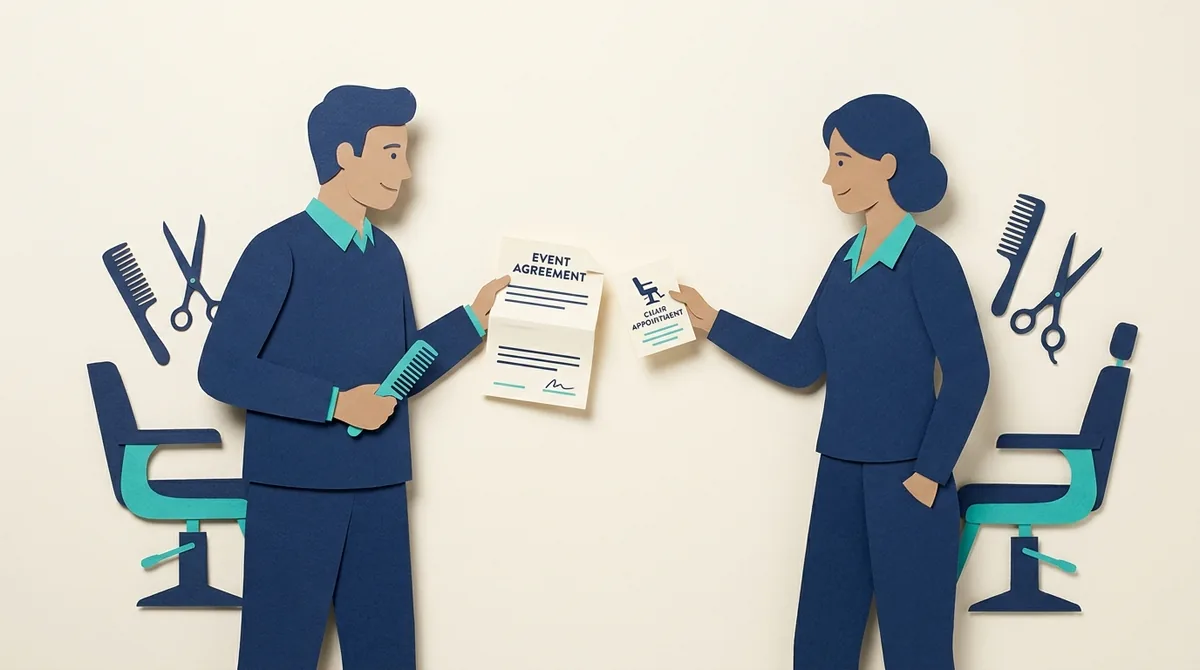
- Create a fake corporate event for eight people: quote it, take a deposit and issue a final invoice.
If a step needs a workaround, plan for that workaround every week. Also ask each vendor three questions: what you pay per added barber, which fees apply to new clients, and how you export your client list if you leave.
How to decide
Count how much of your revenue comes from chairs and how much from events. If it is nearly all chairs, pick a barbershop-first tool from the top of the list and ignore the rest. If a corporate day or wedding party is worth several haircuts, keep that tool and add a place to quote and invoice it. You can look at the Workspace369 client record using this demo view, then compare plans on the pricing page.
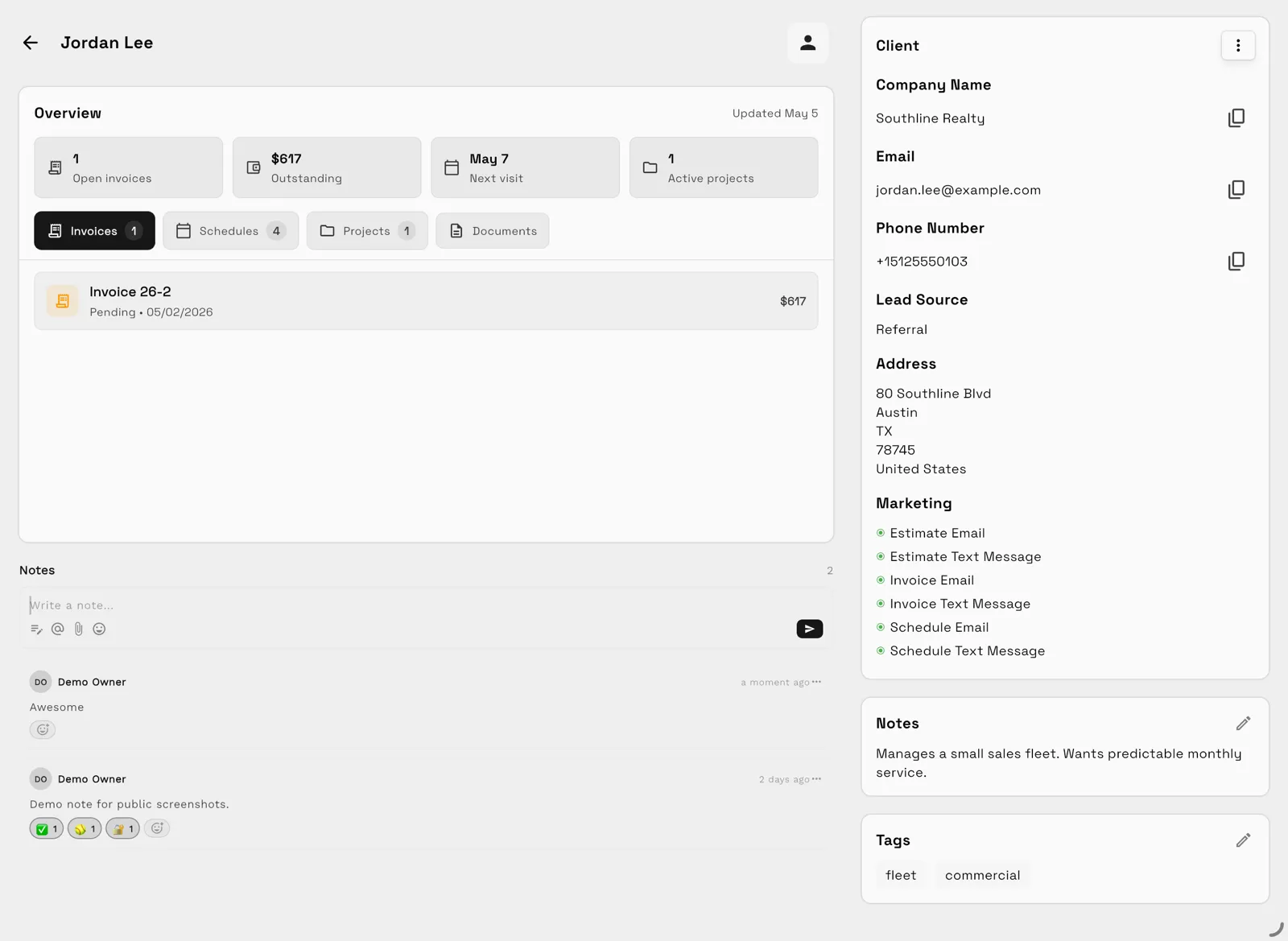
Demo data, not a customer outcome.
Workflow Automations can create tasks, send email or SMS and issue reminders for an event, with a simulated test run before you switch them on. Review Workflow Automations.
Sources reviewed for this guide
- Workspace369 pricingPlan matrix reviewed October 21, 2026.
- Squire pricingOfficial pricing page reviewed October 21, 2026 for plan prices, commission and rent collection, waitlist and trial.
- theCut pricingOfficial pricing page reviewed October 21, 2026 for Free, Pro and Shop plans, booth rent tracking and processing fee.
- Booksy pricingOfficial pricing page reviewed October 21, 2026 for subscription price, per-member fee, trial and Boost commission.
- Square Appointments pricingOfficial pricing page opened October 21, 2026; it showed no prices or trial length, so the guide says see site.
- Fresha pricingOfficial pricing page reviewed October 21, 2026 for Independent and Team prices and new-client commission.
Workspace369 publishes this documentation-based comparison and is one of the options. It is not an independent ranking or a hands-on benchmark.
Run client follow-up in one workspace.
CRM, inbox, voice, invoicing, payments, projects, files, AI, and workflow automations — connected instead of exported.
14-day free trial. Card required. After the trial: from $29/month. Renews automatically every month until you cancel. Cancel anytime in Settings → Billing.