Best CRM for Estheticians in 2026: Booking, Forms, Price
Best CRM for estheticians: six tools for solo estheticians and small skin studios compared on price, online booking, reminders, forms and trial terms.
We make Workspace369, which is on this list. Weigh our ranking with that in mind.

By Simon Dziak, Founder, Workspace369 · LinkedIn
The best CRM for estheticians depends on whether clients book single treatments or you sell packages and events. For a solo esthetician who takes appointments, our pick is Vagaro, with GlossGenius, Square Appointments and Fresha close behind. Workspace369 is ranked last here because its online booking starts at Specialist. It suits the proposal, deposit and invoice side of bridal and corporate work; see the CRM for estheticians page. For the broader salon and spa view, see our best salon software guide. To size a booking deposit first, use the free deposit calculator.
Disclosure and method: Workspace369 publishes this guide and is one of the options. It is a documentation-based shortlist, not a hands-on benchmark. Official vendor pages were reviewed on October 21, 2026. Check current plans with each vendor before you buy.
Key takeaways
- A solo esthetician who books appointments is usually better served by a booking tool first: Vagaro, GlossGenius, Square Appointments, Fresha and Boulevard all list online booking on their entry plans.
- Workspace369 Cadet is $29 a month ($23.25 billed yearly) for one seat, but online booking starts at Specialist ($149 a month) and SMS reminders at Voyager ($74 a month), so we rank it last for this reader.
- Square Free has no monthly subscription; Fresha Independent is $19.95 a month; GlossGenius Standard is $28 a month ($24 billed annually); Vagaro lists $30 a month.
- Intake forms and waivers sit higher up on some plans: GlossGenius lists Forms and Waivers from Gold, and Boulevard sells Forms and charts separately on Essentials.
- Keep treatment notes, patch tests and health history in your booking tool; Workspace369 makes no HIPAA claim and fits the proposal, deposit and invoice side of event and package work.
What's inside?
What a CRM for estheticians is (and what it is not)How we compared these toolsThe best CRM for estheticians in 2026Side-by-side comparisonWhich tool fits your esthetics business?Run a first-facial test during the trialWhen Workspace369 fits an esthetics business
What a CRM for estheticians is (and what it is not)
A CRM for estheticians is the client side of a skin studio: who the client is, what they booked, what they paid up front, what you said to them and what they owe. For most solo estheticians that job is handled by booking software, because the calendar, reminders, card-on-file and rebooking are the daily work. A general client-work CRM adds proposals, contracts, invoices and a portal for bigger jobs such as a bridal party or a corporate event day. Neither one is a clinical chart. Keep health history, patch-test results and treatment notes in a tool built for them, and do not store anything in a general CRM that you would not want to lose or share.
How we compared these tools
We compared each tool on the same five points, using only the vendor's own pricing and product pages:
- Entry price for one provider, monthly and billed yearly where the page shows both, as listed on October 21, 2026.
- Online booking and reminders on that entry plan.
- Forms and client notes: what the page lists, and on which plan.
- Hard limits on the entry plan: provider caps, marketplace fees, add-ons.
- Trial terms: length, and whether the vendor says a card is needed.
We did not test speed, support, reliability, payment processing or mobile apps, and did not use third-party ratings. Order reflects documented fit for a solo esthetician or small studio that books appointments. Workspace369 is placed where those facts put it.
The best CRM for estheticians in 2026
1. Vagaro, best for an all-in-one solo plan
Vagaro lists $30 a month for one location, with an exclusive rate of $23.99 a month for the first 6 months. Each bookable calendar license is $10, up to seven; the page does not show how that combines with the base price, so confirm your total. The page lists, as included with every plan, online booking on Vagaro, Instagram, Facebook and Apple Maps, unlimited notifications and appointment reminders, client tracking, SOAP notes and forms, memberships, packages and gift certificates, inventory tracking, invoices and 1,000 free emails a month. That is a long list of salon basics on an entry plan, which is why it leads for a booking esthetician.
Limitations: the price rises with each bookable calendar license, and the pricing page does not show a separate yearly rate. Its SOAP notes and forms are Vagaro's own; confirm in the trial that they cover the records you keep. The page's FAQ names a 30-day free trial; card terms are not stated.
Best for: solo estheticians and small skin studios who want booking, reminders, packages and notes in one tool.
2. GlossGenius, best for a polished booking site and payments
GlossGenius Standard is $28 a month, or $24 a month billed annually. It lists a booking website, client notifications, email and text marketing, inventory, packages and memberships; deposits appear in the plan comparison, so confirm which tiers include them. Forms and waivers, an automated waitlist and Google booking start at Gold ($56 a month, $48 billed annually, for up to 9 staff). The FAQ describes HIPAA compliance as a free add-on rather than part of a tier, a vendor claim to confirm directly. The trial is 14 days and the page says no credit card is required.
Limitations: forms and waivers are not on Standard, so a solo esthetician who wants an intake form needs Gold, double the Standard price. A Medspa and Aesthetics tab has separate, higher-priced plans for clinical practices.
Best for: solo estheticians who want a booking website and client notifications without building a site separately.
3. Square Appointments, best for a $0 start
Square Free lists an online booking site, appointment reminders and unlimited staff calendars; the page showed no monthly price when we fetched it, so check the price on Square's site. Plus adds cancellation policy and no-show fees, multi-staff appointment booking and a waitlist. Premium adds a future bookings report, service cost tracking and resource management. Plus and Premium each offer a free trial; the trial length and card terms did not display (see site).
Limitations: the cancellation policy and no-show fees that matter most for appointments need Plus. The pricing page lists automatic contracts sent when clients book, which can work as a waiver; it lists no treatment notes or health forms, so check both in the trial.
Best for: a new solo esthetician who wants to start booking with no monthly subscription.
4. Fresha, best for a low per-provider price
Fresha Independent is $19.95 a month for one bookable team member, with a 7-day trial. The FAQ says there is no credit card needed for the trial. Team is $14.95 per team member a month. The plan comparison lists calendar, client management, consultation forms, patch tests, quotes and invoices, memberships, packages, gift cards and upfront payments. Direct booking links, Instagram and Facebook bookings are free. Texts beyond 100 free a month cost $0.02 each.
Limitations: Fresha charges a one-time commission of 20% on new clients who find you through its marketplace, with a minimum fee of $6 per client. Returning clients carry no fee. The Independent plan has a single calendar column, so adding a second provider means moving to Team.
Best for: solo estheticians who want a low per-provider subscription and are comfortable with the marketplace commission or leaving the marketplace off.
5. Boulevard, best for a bigger studio with memberships
Boulevard Essentials is $143 a month for one location and up to 5 providers; a monthly/annual toggle shows a 10% saving but the annual prices did not display. The plan comparison lists online booking, email and text reminders, booking deposits, memberships and autopay, and series and packages. Forms are sold separately from $65 a month per location on Essentials and Premier, and a Forms add-on is included in Prestige. The page shows a demo button and does not state a trial.
Limitations: the entry price is far above the other four for a solo esthetician, and forms cost extra. The pricing page frames it for small teams with simple operations, so a one-chair studio is paying for room it may not use. Premier lists at $293 and Prestige at $410 a month per location; on October 23, 2026 a limited-time fall offer for new customers showed them lower.
Best for: a growing skin studio with several providers that wants memberships, series and packages in the booking tool.
6. Workspace369, best for events, packages and proposals
Workspace369 is a client-work system rather than a booking tool. Cadet is $29 a month for one seat ($23.25 billed yearly) and lists a client portal, public intake forms, Proposals with deposit on acceptance, invoices, retainers and recurring invoices, a product and service catalog of up to 20 items, email appointment reminders and two-way Google Calendar sync. Voyager ($74 a month, two seats) adds SMS and texts; online booking, payment plans and inventory tracking start at Specialist ($149 a month, 10 seats). The screenshot further down is a demo record, not a customer result.
Limitations: this is why it ranks last here. Cadet has no online booking, so a client cannot pick a treatment slot. Cadet is capped at 5 active projects and one seat. Workspace369 makes no HIPAA or health-record claim, and Vagaro, GlossGenius and Fresha all list notes or forms that Workspace369 does not match. Per-visit package credits are not listed in the plan matrix. The 14-day trial requires a card.
Best for: estheticians who sell bridal-party or corporate event proposals, deposits and packages by invoice, and already book single treatments elsewhere.
Side-by-side comparison
| Tool | Entry price (monthly) | Billed yearly | Online booking on entry plan | Forms and notes | Main limit | Trial |
|---|---|---|---|---|---|---|
| Vagaro | $30 (one location) | Not stated | Yes | SOAP notes and forms included | Price rises per bookable calendar license | 30-day free trial (FAQ), card not stated |
| GlossGenius | $28 (Standard) | $24 a month | Yes | Forms and waivers from Gold ($56) | Forms not on Standard | 14 days, no card |
| Square Appointments | $0 (Free) | Not applicable | Yes | Automatic contracts at booking (can serve as a waiver); no health notes listed | No-show fees need Plus (See site) | Trial on Plus and Premium (See site) |
| Fresha | $19.95 (Independent) | Not stated | Yes | Consultation forms, patch tests listed | 20% new-client marketplace commission | 7 days, no card |
| Boulevard | $143 (Essentials) | See site | Yes | Forms sold separately from $65 | Up to 5 providers, high entry price | Demo only |
| Workspace369 | $29 (Cadet) | $23.25 a month | No, starts at Specialist ($149) | Intake forms; no health-record claim | 5 active projects, 1 seat | 14 days, card required |
Which tool fits your esthetics business?
| If you mostly need | Start with | Why |
|---|---|---|
| Booking, reminders and packages for one provider | Vagaro | Listed on every plan at $30 for one location |
| A polished booking site | GlossGenius | Booking website and notifications on Standard |
| To start with no monthly subscription | Square Appointments | Free plan with online booking and reminders |
| A low per-provider price and consultation forms | Fresha | $19.95 for one provider, forms listed |
| Memberships and series for several providers | Boulevard | Memberships, series and packages on Essentials |
| Bridal and corporate proposals with deposits | Workspace369 | Proposals, deposits and invoices on every plan |
| Health history and patch tests | A booking tool built for them | Workspace369 makes no HIPAA claim |
Run a first-facial test during the trial
Take one fictional client through the tool you shortlist:
- Create a new client and a facial booking with a deposit.
- Send the reminder and check the message the client sees.
- Record a short treatment note and see where it is stored.
- Cancel late and see whether the no-show rule applies.
- Rebook and sell a three-visit package, then check the invoice.
- Export the client's records and check what comes out.
If you run the test, the best tool keeps the booking, deposit, reminder, note and invoice on one client record. Use fictional data only, and keep any real health information out of tools that do not claim to handle it.

When Workspace369 fits an esthetics business
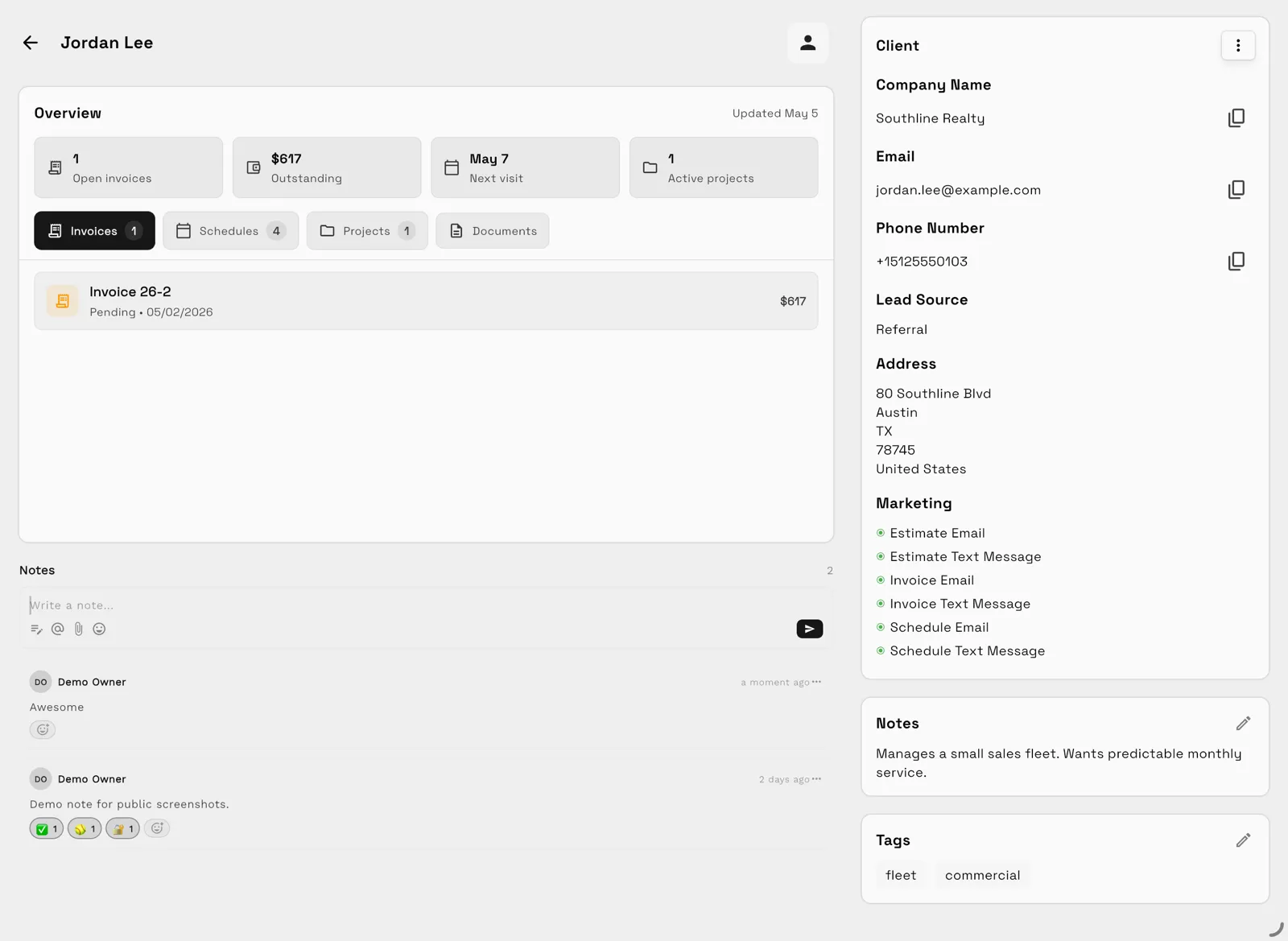
Demo data, not a customer outcome.
Use the estheticians product overview to see how a bridal-party proposal, deposit and invoice sit on one client record. Proposals hold the scope and price, communications keep follow-up in one inbox and invoices track what is paid. Workflow Automations can create tasks and send reminder emails, with email automations on every plan.
If you do not take event work, a booking tool from the list above is the simpler choice. Check the pricing page for current plans.
Before importing real clients, run one full test on demo data and check that your records can be exported.
Sources reviewed for this guide
- Workspace369 pricingPlan matrix reviewed October 21, 2026.
- Vagaro pricingOfficial pricing page reviewed October 21, 2026 for the price, the first-6-months rate, staff licenses, included features and trial terms.
- GlossGenius pricingOfficial pricing page reviewed October 21, 2026 for monthly and annual prices, per-plan features and trial terms.
- Square Appointments pricingOfficial pricing page reviewed October 21, 2026 for listed features; plan prices and trial length did not display, so those say See site.
- Fresha pricingOfficial pricing page reviewed October 21, 2026 for subscription prices, marketplace commission, messaging and trial terms.
- Boulevard pricingOfficial pricing page reviewed October 21, 2026 for monthly prices, provider limits and listed features; annual prices did not display.
Workspace369 publishes this documentation-based comparison and is one of the options. It is not an independent ranking or a hands-on benchmark.
Run client follow-up in one workspace.
CRM, inbox, voice, invoicing, payments, projects, files, AI, and workflow automations — connected instead of exported.
14-day free trial. Card required. After the trial: from $29/month. Renews automatically every month until you cancel. Cancel anytime in Settings → Billing.