Best CRM for Real Estate Education in 2026
Best CRM for real estate investing education: six tools compared on price, agreements, payment schedules, booking and course delivery. Workspace369 is second.
We make Workspace369, which is on this list. Weigh our ranking with that in mind.

By Simon Dziak, Founder, Workspace369 · LinkedIn
The best CRM for real estate investing education programs follows an applicant from form to booked call to signed enrollment agreement to first payment, and keeps every message and file on that one record. HighLevel is our pick when you also want course hosting in the same tool, and Workspace369 ranks second for the agreement and payment paperwork. Solo operators who sell other services can start from the best CRM for freelancers. After a call goes quiet, the free proposal follow-up generator drafts the nudge.
Disclosure and method: Workspace369 publishes this guide and is one of the options. It is a documentation-based shortlist, not a hands-on benchmark. Official vendor pages were reviewed on October 19, 2026. Check current plans with each vendor before you buy.
Key takeaways
- A CRM for a real estate investing course or mentorship should follow one applicant from form to call to signed enrollment agreement to first payment, with every message and file on the same record. Lesson hosting is a separate job.
- HighLevel Starter is $97 a month ($970 a year) and its pricing page names forms, booking calendars, funnels, payments and invoicing, courses and communities. Calling, email, SMS and AI carry usage-based charges, and no contract or e-signature row is shown.
- Workspace369 Cadet is $29 a month ($23.25 billed yearly) for one user and lists Proposals, contracts with e-signature, deposits, payment schedules, intake forms and a client portal. It hosts no lessons, and its payment plans row and online booking start at Specialist ($149 a month).
- Pipedrive lists contracts and e-signatures only from Premium ($79 per seat monthly, $59 billed yearly) and installment tracking from Growth. Close ($49 per user monthly on Essentials, $35 billed yearly) names no contracts, invoices or payments on its page.
- Kajabi ($179 a month, $143 billed yearly) and Dubsado ($35 a month, $335 a year) each cover one half of the job: lesson delivery for Kajabi, agreements and client forms for Dubsado. Run one fictional applicant through every trial before choosing.
What's inside?
What a CRM for an investing education program is (and what it is not)How we compared these toolsThe best CRM for real estate investing education programs in 2026Side-by-side comparisonWhich tool fits your program?Run an applicant test during the trialWhen a spreadsheet and e-signature app are enough
What a CRM for an investing education program is (and what it is not)
If you run a course, coaching group or mentorship about buying and managing property, your sales process is usually an application, a short call and an agreement. A CRM is the system of record for that chain: who applied, what they were told on the call, which version of the agreement they signed, what they have paid and what is still due. It is not a lesson player, a community, a deal-analysis tool or a source of advice about property. Those stay in your course platform and your own materials.
The useful job is narrower: a record that shows exactly what the program offered and what the student accepted.
How we compared these tools
Each tool was read from its own pricing page, in a rendered browser, with every billing switch clicked and the full page text checked. Six questions decided the order:
- Application and call: does the page name forms, a pipeline, booking or calling?
- Agreement: is a contract, proposal or e-signature named, and on which plan?
- Payments: are deposits, invoices, payment plans or installments named?
- Lesson delivery: does the plan host courses or a community?
- Entry price and limits: monthly and yearly figures, seats, and any cap on the lowest plan.
- Trial terms: length, and whether a card is required.
Speed, support quality and mobile apps were outside the review, and no third-party ratings fed the order. The ranking reflects documented fit for a program that sells by application and call. HighLevel is first because its page lists forms, booking calendars, funnels, payments and invoicing, courses and communities in one plan. Workspace369 is second because its matrix names contracts with e-signature, Proposals, deposits, payment schedules, a client portal and file management on Cadet. Dubsado is third because its Starter plan names invoicing, payment plans, client portals and forms at $35 flat, ahead of Pipedrive, whose page names e-signatures only on Premium ($79 per seat monthly) and names no invoicing or portal. Kajabi is last as a CRM because its page names no pipeline, booking or agreement rows, although it is the strongest here on lesson delivery.
The best CRM for real estate investing education programs in 2026
1. HighLevel, best for forms, calendars, payments and courses in one tool
HighLevel Starter is $97 a month, or $970 a year, and the page shows contacts and users without a cap. Its feature list names CRM and pipelines, forms, surveys and quizzes, booking calendars, a funnel and website builder, workflow automation, payments and invoicing, courses, communities, email and SMS marketing, and inbound and outbound calling. Calling, email, SMS and the AI features carry usage-based charges that the page marks with an asterisk. The trial is 14 days; billing begins automatically at the end of the trial unless canceled.
Limitations: Starter includes 3 sub-accounts, a structure built around agencies, so a single program uses one of them. The pricing page names no e-signature, agreement or payment plan row, so confirm how you would collect a signed enrollment agreement. Optional add-ons such as the branded client portal app ($49 a month per sub-account) and premium support ($500 a month) cost extra.
Best for: programs that want the application form, the booked call, the payment and the lessons in a single tool, and have someone who will configure it.
2. Workspace369, best for the enrollment agreement and payment schedule on one record
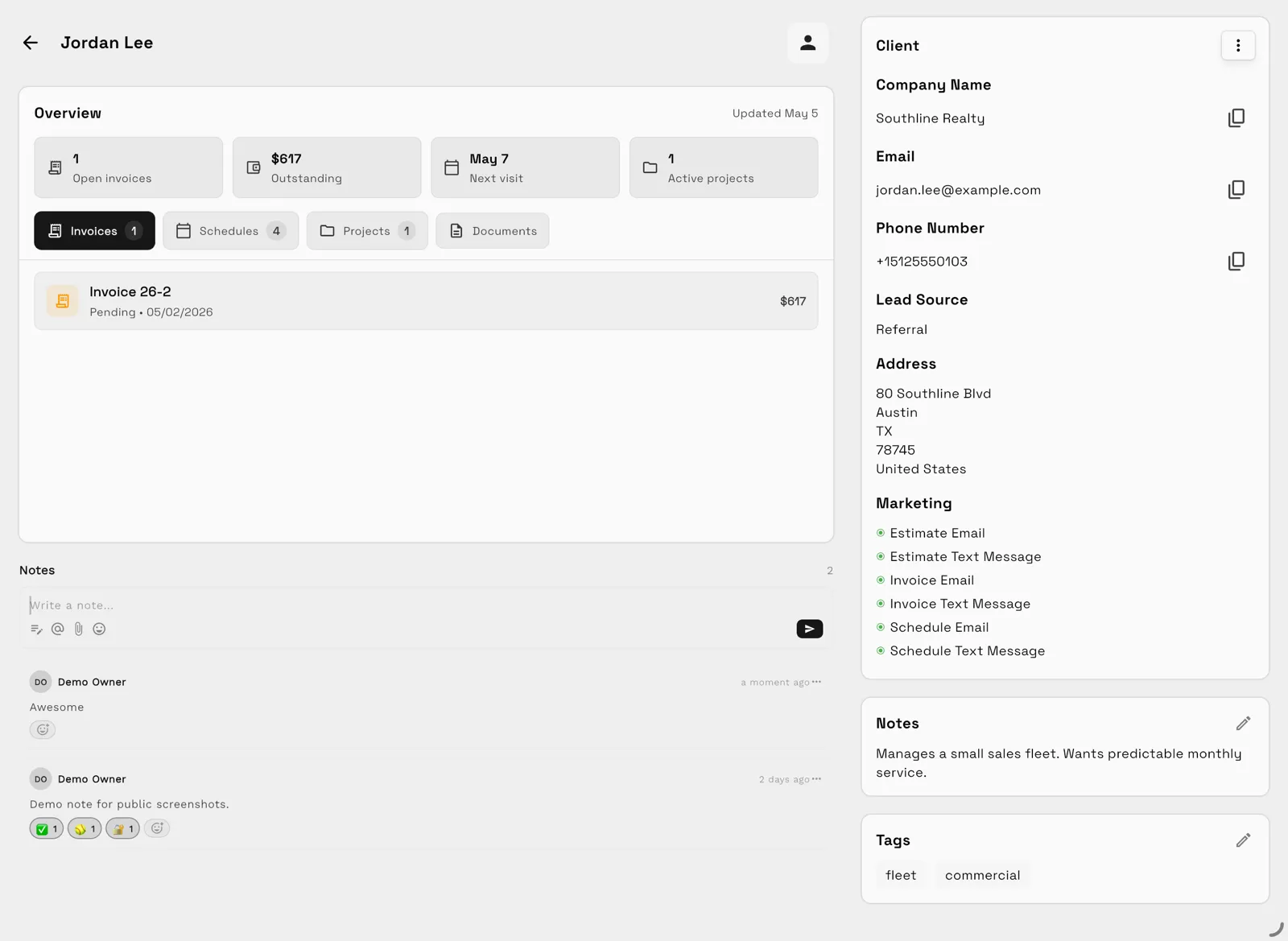
Workspace369 lists public intake forms, request tracking and request-to-client conversion on every plan, so an application can become a client record. Proposals carry optional and add-on lines, and contracts with e-signature, deposit on acceptance, retainers and payment schedules sit on Cadet, priced at $29 a month for one user ($23.25 on yearly billing). Every plan also lists the client portal, file management, file versioning and invoices. The screenshot shows demo data only.
Limitations: it hosts no lessons, videos or community. Cadet allows 5 active projects and one seat. The separate payment plans row, online booking, expense tracking and webhooks start at Specialist ($149 a month, $119.25 billed yearly). Calling, SMS and shared inbox start at Voyager ($74 a month). The 14-day trial needs a card. It has no pipeline for high-volume cold outreach comparable to Close.
Best for: one-person or small programs that sell on a call, need a signed agreement and a payment schedule on the same record, and keep lessons on a separate platform.
3. Dubsado, best for client forms and agreements with a flat price
Dubsado Starter is $35 a month, or $335 billed yearly. The feature table lists unlimited projects and clients, invoicing and payment plans, form and email templates, client portals, calendar connection and one active lead capture form. Premier is $55 a month or $525 billed yearly and adds scheduling, automated workflows, public proposals, unlimited lead capture forms and a Zapier integration. The page says the sales flow includes sending and executing contracts, but its plan table has no contracts row. Three additional users are free, and the trial is 21 days with no card.
Limitations: scheduling, workflows and public proposals start at Premier. Starter has one active lead form, which limits several programs or cohorts on separate applications. It hosts no lessons and lists no sales pipeline or dialer.
Best for: a solo operator who wants forms, agreements, invoices and payment plans at a flat price and will book calls through a separate calendar on Starter.
4. Pipedrive, best for a sales pipeline with e-signatures at Premium
Pipedrive Lite is $24 per seat monthly or $14 billed yearly ($168 a year) and lists lead, calendar and pipeline management plus meeting intelligence. Growth is $49 monthly or $39 billed yearly and adds email sync, automations, a meeting scheduler and tracking of products billed as subscriptions or installments. Premium is $79 monthly or $59 billed yearly and adds quotes, proposals and contracts with built-in e-signatures. The trial is 14 days with no card.
Limitations: prices are per seat, so a setter and a closer double the bill. Contracts and e-signatures need Premium, the third plan. The page names no invoicing, client portal or course hosting.
Best for: programs where one or two people run the application pipeline and want deal stages and a booking link, with the agreement signed inside the same system from Premium.
5. Close, best for a call-and-text sales team
Close charges per user. Solo is $19 monthly or $9 billed annually, limited to 1 user and 10,000 leads without workflows. Essentials is $49 monthly or $35 billed annually, with unlimited leads, built-in forms, email, calling and SMS. Growth is $109 monthly or $99 billed annually and adds automated workflows and a power dialer; Scale is $149 monthly or $139 billed annually. Calling and SMS are passed through at cost, with most outbound calls around $0.02 a minute. The trial is 14 days with no card and includes $5 of calling and enrichment credits.
Limitations: the pricing page names no contracts, invoices, payments or client portal, so the agreement and the money live in other tools. Workflows start at Growth. It hosts no lessons.
Best for: programs with callers who work a long list of applicants by phone and text, and who sign and bill elsewhere.
6. Kajabi, best for lessons, community and checkout rather than the sales process
Kajabi Basic is $179 a month, or $143 a month billed annually ($1,716 a year). It lists courses, coaching and memberships, a website, a private community, landing pages and funnels, and checkout with payments built in. Growth is $249 monthly or $199 billed annually and adds live cohort courses; Pro is $499 monthly or $399 billed annually. Products you can sell are capped at 5 on Basic and 50 on Growth, and contacts at 2,500, 25,000 and 100,000. Kajabi takes no revenue share, though Kajabi Payments carries card processing fees. The trial is 14 days; card terms are not stated.
Limitations: the page names no sales pipeline, booking calendar, contract or invoice, so applications and agreements need another tool. Its entry plan is the highest-priced one in this guide.
Best for: programs whose main need is a branded home for lessons, a cohort community and checkout, paired with a lighter system for applicants and agreements.
Side-by-side comparison
| Tool | Entry price (monthly) | Billed yearly | Agreement and payment features named | Booking and calls | Main entry-plan limit | Trial |
|---|---|---|---|---|---|---|
| HighLevel | $97 (Starter) | $970 a year | Payments and invoicing; no e-signature or agreement row | Booking calendars; calling with usage charges | 3 sub-accounts | 14 days; billing starts automatically unless canceled |
| Workspace369 | $29 (Cadet, one user) | $23.25 a month | Proposals, contracts, deposits, payment schedules, invoices | Online booking from Specialist ($149); calling from Voyager ($74) | 5 active projects, 1 seat | 14 days, card required |
| Dubsado | $35 (Starter) | $335 a year | Invoices and payment plans; public proposals on Premier ($55) | Scheduling on Premier | 1 active lead form | 21 days, no card |
| Pipedrive | $24 per seat (Lite) | $14 per seat a month | Installment tracking from Growth; contracts and e-signatures from Premium ($79) | Scheduler from Growth ($49) | Per seat | 14 days, no card |
| Close | $19 per user (Solo; Essentials $49) | $9 per user a month (Essentials $35) | None named | Calling and SMS on Essentials | Solo: 1 user, 10,000 leads | 14 days, no card |
| Kajabi | $179 (Basic) | $143 a month | Checkout and payments built in | None named | 5 products, 2,500 contacts | 14 days, card not stated |
Which tool fits your program?
| If you mostly need | Start with | Why |
|---|---|---|
| Forms, calendar, payments and lessons in one tool | HighLevel | One plan lists all of them, with usage charges for messaging |
| A signed enrollment agreement and payment schedule on the student record | Workspace369 | Contracts, deposits and schedules are listed on Cadet |
| Forms and payment plans at a flat price | Dubsado | Starter lists invoicing, payment plans and client portals; one lead form |
| Deal stages for a small sales team | Pipedrive | Pipeline on Lite, scheduler on Growth, e-signatures on Premium |
| Phone-first follow-up of many applicants | Close | Calling, SMS and forms on Essentials |
| A home for lessons and a cohort community | Kajabi | Courses, community and checkout on Basic |
Run an applicant test during the trial
Use one fictional applicant in each tool you shortlist. The scenario is a practice run, not a customer result.
- Publish an application form and submit it as the applicant.
- Book a call from the form or from a link in your reply, and log notes after it.
- Prepare the enrollment agreement, which states what the program includes and excludes, and have the applicant sign it.
- Collect the first payment and set a date for the second.
- Open the record and check that the form answers, call notes, signed agreement and both payments are linked.
The best tool lets you answer a question about what a student agreed to in under a minute, without searching three inboxes.

When a spreadsheet and e-signature app are enough
With a few students per cohort, an application form, a calendar link and an e-signature app can do the job. A client system pays off when applicants start to overlap, when you cannot find who signed which version of your terms, or when payment follow-up takes a weekly hour. The real estate investing education product page shows how Workspace369 pairs Proposals, communications and invoices on one student record, and the pricing page lists current plans. Lessons stay in your course platform; the client portal and file sharing handle the paperwork side.
Before moving real students over, run a demo applicant start to finish and check that your records can be exported.
Sources reviewed for this guide
- Workspace369 pricingPlan matrix reviewed October 19, 2026.
- HighLevel pricingOfficial pricing page reviewed October 19, 2026 in a rendered browser, with the monthly and yearly views, the feature list, add-ons and the trial text.
- Pipedrive pricingOfficial pricing page reviewed October 19, 2026 with both the billed-monthly and billed-annually views, per-seat prices and plan features.
- Close pricingOfficial pricing page reviewed October 19, 2026 with the Monthly and Annually views, per-user prices, plan limits and the trial FAQ.
- Dubsado pricingOfficial pricing page reviewed October 19, 2026 with the Monthly Plan and Annual Plan views, the feature table, user pricing and trial FAQ.
- Kajabi pricingOfficial pricing page reviewed October 19, 2026 with the Monthly and Annual views, the plan comparison and the FAQ.
Workspace369 publishes this documentation-based comparison and is one of the options. It is not an independent ranking or a hands-on benchmark.
Run client follow-up in one workspace.
CRM, inbox, voice, invoicing, payments, projects, files, AI, and workflow automations — connected instead of exported.
14-day free trial. Card required. After the trial: from $29/month. Renews automatically every month until you cancel. Cancel anytime in Settings → Billing.