Best CRM for freelancers in 2026: from inquiry to paid invoice
Seven CRMs for freelancers compared on price, plan limits and the inquiry-to-invoice workflow, with a use-case table and a one-client test you can run in a trial.

By Simon Dziak, Founder, Workspace369 · LinkedIn
The best CRM for freelancers keeps one client's whole story on one record: the inquiry, the proposal they accepted, the work in progress and the invoice they still owe. For most freelancers who want that in one place, our pick is Workspace369. HoneyBook and Dubsado are strong for proposal and contract workflows, Plutio for an everything-included solo plan, and HubSpot's free CRM for contact tracking alone. Need a contract before you choose? Start with the free freelance contract template.
Disclosure and method: Workspace369 publishes this guide and is one of the options. It is a documentation-based shortlist, not a hands-on benchmark. Official vendor pages were reviewed on October 14, 2026. Check current plans with each vendor before you buy.
Key takeaways
- A freelancer CRM should carry each client from inquiry to proposal, project and paid invoice, not just store contacts.
- Workspace369 fits freelancers who want CRM, proposals, projects, a client portal, time tracking and invoicing on one record from $29 a month; Cadet is capped at 5 active projects.
- HoneyBook and Dubsado are strong client-admin tools for proposals, contracts and forms; Plutio puts every feature on every plan but caps its Core plan at 9 active clients.
- Moxie has the lowest checked price for a plan with invoicing, but leaves the client portal to Pro; HubSpot's free CRM leaves billing and the portal to other tools.
- Run one fictional client from inquiry to paid invoice in each trial and count how often you retype a detail.
What's inside?
What a freelancer CRM is (and what it is not)How we compared these CRMsThe best CRMs for freelancers in 2026Side-by-side comparisonWhich CRM fits your freelance business?Run a one-client test during the trialWhen to keep it simple
What a freelancer CRM is (and what it is not)
A freelancer CRM is a client record that follows the work. It holds where each client came from, what you proposed and what they accepted, what is in progress, what was said and what they owe. It is not a sales-team pipeline built for forecasting quotas, and it is not just an address book. If a tool stores contacts but leaves proposals, projects and invoices to three other apps, you will still rebuild the picture by hand every Monday.
How we compared these CRMs
We compared each tool on the same five points, using only the vendor's own pricing and product pages:
- Entry price for one person, monthly and billed yearly, as listed on October 14, 2026.
- Inquiry-to-invoice coverage on that plan: proposals, contracts or signing, projects, invoicing and online payment.
- Client portal on the entry plan, because clients checking status themselves saves the most email.
- Hard limits on the entry plan: clients, projects, seats or lead forms.
- Trial terms: length, and whether the vendor says a card is needed.
We did not test speed, support or reliability, and we did not use third-party ratings. Order reflects fit for a freelancer who wants the whole client cycle in one tool.
The best CRMs for freelancers in 2026
1. Workspace369, best for freelancers who want CRM, projects, portal and invoicing in one place
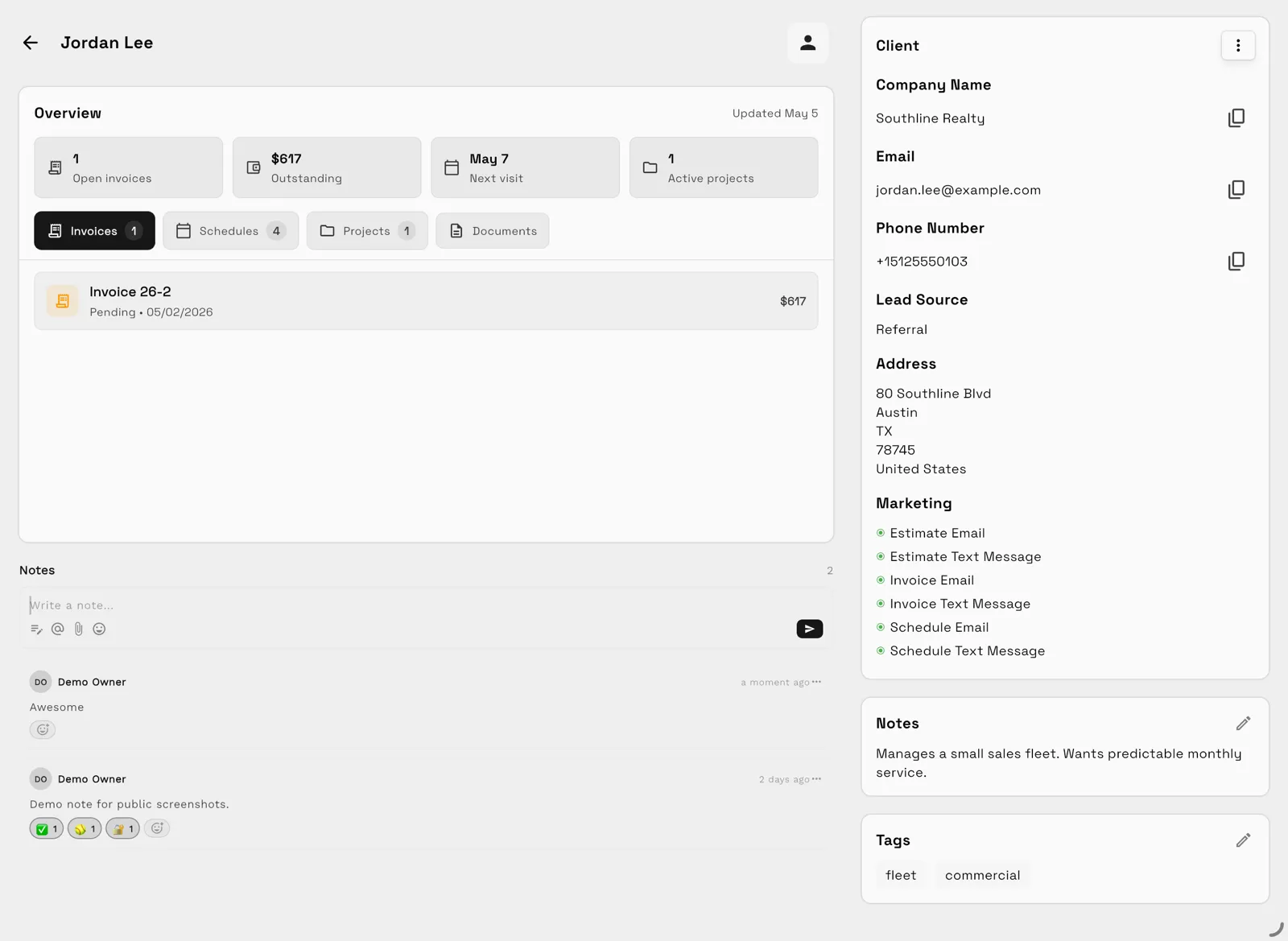
Workspace369 connects the client record to proposals that clients accept and sign by link, projects with task boards, a private client portal, time tracking, invoices and online card payments through Stripe. All of that is on Cadet, $29 a month for one person ($23.25 a month billed yearly), along with public intake forms, recurring invoices and deposits collected when a proposal is accepted. The screenshot above is a demo record, not a customer result.
Limitations: Cadet runs up to 5 active projects and one seat; Voyager ($74 a month for two seats) removes the project cap and adds the shared inbox, SMS and calls. Online booking and payment plans start at Specialist ($149 a month). The 14-day trial needs a card.
Best for: freelancers and solo studios whose week is spent copying details between a CRM, a project app and an invoicing tool.
2. HoneyBook, best for proposal, contract and payment workflows
HoneyBook's pricing page lists proposals, contracts with e-signatures, invoicing and a client portal on every plan, with Starter at $29 a month billed yearly. It offers a 30-day trial and says no card is needed. It is built around the booking flow of a creative or service business: inquiry, proposal, contract, payment. If you run the one-client test, expect the inquiry, proposal and invoice steps to sit naturally in HoneyBook's flow; check how far the project step goes before you rely on it for delivery.
Limitations: Starter has no scheduler or automations and allows two live lead forms; adding team members starts at Essentials. Time tracking is not listed, and project delivery is lighter than a task-board tool.
Best for: photographers, planners and designers whose main job is turning inquiries into signed, paid bookings.
3. Dubsado, best for form-heavy onboarding on a yearly budget
Dubsado prices yearly: Starter is $335 a year and Premier $525 a year, with a 21-day trial of Premier access and no card required, per its pricing page. Both plans include invoicing and a client portal, and up to three extra users are free. If you run the one-client test, Starter covers the invoice and portal steps on paper, but a proposal the client accepts by link needs Premier, so trial Premier and price Premier. Its strength is depth of forms: questionnaires, lead capture and onboarding.
Limitations: Starter has one lead form and no public proposals, workflows or advanced scheduling; those need Premier. Time tracking is not listed.
Best for: freelancers with a repeatable onboarding process who are happy to build forms and workflows once and pay yearly.
4. Plutio, best for an everything-included solo plan with few clients
Plutio's pricing page lists proposals, contracts with e-signature, invoicing, projects, a client portal, scheduling and time tracking on every plan. Core is $19 a month (about $15 billed yearly), with a 7-day trial and no card required. If you run the one-client test, every step is listed on Core. The question is the cap: count your active clients over the past year before you commit, because a tenth active client means moving up a plan.
Limitations: Core is solo only, with no contributors, and is limited to 9 active clients. After the trial you can view data but cannot create projects or send invoices without a plan.
Best for: a solo freelancer with a small, steady client list who wants every module from day one.
5. Moxie, best for the lowest price with invoicing included
Moxie Starter is $12 a month, or $10 billed yearly, and its pricing page lists proposals, invoicing, projects, scheduling and time tracking from Starter. Its pricing page mentions a 14-day trial; card terms are not stated. If you run the one-client test, the inquiry-to-invoice steps are listed from Starter, but clients have no portal to check progress, so status updates stay in email until you move to Pro. Check the Pro price before you plan to grow into it.
Limitations: the client portal, custom domain and workflow automations start at Pro, so the cheapest plan leaves clients emailing you for status.
Best for: new freelancers who want proposals, projects and invoices at the lowest monthly cost and do not need a portal yet.
6. Bonsai, best for contract-led freelancers who want per-user pricing
Bonsai prices per user: Basic is $15 a month ($9 billed yearly), and Essentials, where proposals, contracts, invoicing, scheduling and the client portal start, is $25 a month ($19 billed yearly). The trial is 7 days, so set up your test client before you start it. If you run the one-client test, trial Essentials rather than Basic, because Basic cannot send the proposal or the invoice. Price it per person: each teammate you add is another seat at the same per-user rate.
Limitations: Basic covers projects and time tracking but not invoicing or proposals, so most freelancers need Essentials. Integrations and branding removal need Premium.
Best for: freelancers who lead with contracts and want to add teammates one seat at a time.
7. HubSpot free CRM, best for free contact and deal tracking
HubSpot's free CRM has no expiry and no card requirement, with up to 2 users and 1,000 contacts, plus sales quotes, tasks, meeting scheduling and payment links, according to its product page. Starter is listed at $15 per seat a month. If you run the one-client test, capturing the lead, logging the email and sending a quote should fit the free CRM; the project, the invoice and the partial payment need other tools. That makes it a good free start for lead tracking and a weak fit for running delivery and billing.
Limitations: the product page does not list invoicing, contracts with e-signature or a client portal on the free tier, so delivery and billing live in other tools.
Best for: freelancers who mainly need to remember leads and follow up, and already have invoicing sorted.
Side-by-side comparison
| CRM | Entry price (monthly) | Billed yearly | Client portal on entry plan | Main entry-plan limit | Trial |
|---|---|---|---|---|---|
| Workspace369 | $29 (Cadet) | $23.25 a month | Yes | 5 active projects, 1 seat | 14 days, card required |
| HoneyBook | Not stated | $29 a month (Starter) | Yes | 2 live lead forms, no team members | 30 days, no card |
| Dubsado | Not stated | $335 a year (Starter) | Yes | 1 lead form, no public proposals | 21 days, no card |
| Plutio | $19 (Core) | About $15 a month | Yes | 9 active clients, solo | 7 days, no card |
| Moxie | $12 (Starter) | $10 a month | No (Pro and up) | No portal or automations | 14 days, card not stated |
| Bonsai | $25 (Essentials; Basic has no invoicing or portal) | $19 a month | Yes | Integrations need Premium | 7 days, card not stated |
| HubSpot | Free | Free | No | 2 users, 1,000 contacts | Free plan, no card |
Which CRM fits your freelance business?
| If you mostly need | Start with | Why |
|---|---|---|
| Inquiry to paid invoice in one tool, with a client portal | Workspace369 | Proposals, projects, portal, time tracking and invoices share one record from Cadet |
| Signed, paid bookings for a creative business | HoneyBook | Proposals, e-signed contracts and payments on every plan |
| Detailed onboarding forms and workflows | Dubsado | Forms and workflows on Premier, priced yearly |
| Every module for a handful of clients | Plutio | All features on Core, capped at 9 active clients |
| The cheapest plan with invoicing | Moxie | $10 a month billed yearly, portal later |
| Free lead and follow-up tracking | HubSpot free CRM | Free with 2 users and 1,000 contacts |
Run a one-client test during the trial
Feature lists look alike. Take one fictional inquiry all the way to a paid invoice in each tool you shortlist:
- Capture the inquiry and record the lead source.
- Send a proposal with two line items and accept it by link as the "client".
- Turn the accepted proposal into a project with three tasks.
- Log one email from the client against the record.
- Send the first invoice and record a partial payment.
- A day later, find everything by searching the client's name.
Count how many times you switched tabs or retyped a detail. That count is a better buying signal than any table, including the ones above.

When to keep it simple
If you have a handful of steady clients and invoicing already works, a spreadsheet plus a calendar can carry you a long way. Move to a CRM when inquiries start slipping, when you cannot say who owes you money without checking two apps, or when a client asks about something you agreed three months ago and you have to dig for it. If you work alone across several kinds of business, the best CRM for solo entrepreneurs guide covers that case, and the CRM for freelancers page has Workspace369's plan details.
Whichever tool you trial, finish one full client cycle with demo data before you import real clients, and confirm you can export your records if you ever leave. Compare current plans on the pricing page.
Research record
Sources reviewed for this guide
- Workspace369 pricingPlan matrix reviewed October 14, 2026.
- HoneyBook pricingOfficial pricing page reviewed October 14, 2026 for plans, team members and trial terms.
- Dubsado pricingOfficial pricing page reviewed October 14, 2026 for yearly prices, plan limits and trial terms.
- Plutio pricingOfficial pricing page reviewed October 14, 2026 for plan limits on clients and contributors.
- Moxie pricingOfficial pricing page reviewed October 14, 2026 for Starter and Pro features.
- Bonsai pricingOfficial pricing page reviewed October 14, 2026 for Basic and Essentials features.
- HubSpot CRMOfficial product page reviewed October 14, 2026 for free CRM limits and Starter pricing.
Workspace369 publishes this documentation-based comparison and is one of the options. It is not an independent ranking or a hands-on benchmark.
Put it into practice
Run client follow-up in one workspace.
CRM, inbox, voice, invoicing, payments, projects, files, AI, and workflow automations — connected instead of exported.