Best CRM for Real Estate Photographers in 2026
Six tools for real estate photographers compared on price, order forms, scheduling, media delivery and agent billing, plus an add-on-and-reshoot test.
We make Workspace369, which is on this list. Weigh our ranking with that in mind.

By Simon Dziak, Founder, Workspace369 · LinkedIn
The best CRM for real estate photographers takes the agent's order, schedules the shoot, delivers the media and bills the brokerage, because the same packages repeat across hundreds of listings. For most readers that means a property-media tool such as Spiro, Aryeo or HDPhotoHub; Workspace369 (see its real estate photographers page) comes last of six here because it has no media delivery or property websites. For the wider decision, start with the best CRM for photography studios guide, or the best CRM for freelance photographers if you work alone. To size a booking fee first, use the free deposit calculator.
Disclosure and method: Workspace369 publishes this guide and is one of the options; we rank it last of six for this reader. It is a documentation-based shortlist, not a hands-on benchmark. Official vendor pages were reviewed on October 19, 2026. Check current plans with each vendor before you buy.
Key takeaways
- Real estate photographers sell the same packages to many agents, so order forms, scheduling and fast media delivery usually matter more than a general client-work CRM.
- Spiro lists $5 per listing with a CRM, ordering and booking, property websites and delivery included, and no subscription; HDPhotoHub lists $5 or $10 per delivery in USD, deducted when your client pays.
- Aryeo has a free Lite plan for media delivery; its Pro tiers are listed at $49, $99 and $179 a month for 100, 250 and 500 annual listings.
- Workspace369 Cadet is $29 a month ($23.25 billed yearly) for one user with proposals, contracts, deposits, a portal and invoices, but it has no media delivery or property websites, and online booking starts at Specialist ($149 a month). We rank it last of six for this reader.
- Test each tool by adding a twilight shoot and a floor plan to an agent's booked listing: the order, the schedule, the invoice and the delivery should update without retyping.
What's inside?
What a CRM for real estate photographers is (and what it is not)How we compared these toolsThe best CRM for real estate photographers in 2026Side-by-side comparisonWhich tool fits your real estate photography business?Run an add-on-and-reshoot test during the trialKeep media delivery in a delivery toolWhen to keep it simple
What a CRM for real estate photographers is (and what it is not)
A CRM for a real estate photographer is the business side of the shoot: which agent or brokerage ordered, which package and add-ons they picked, when the shoot is booked, what is owed and whether the media has been delivered. It is not an editing tool. Property-media platforms bundle order forms, scheduling and delivery pages; general client-work tools usually do not. If the order, the schedule and the delivery live in three apps, an added twilight shoot means retyping everything.
How we compared these tools
We compared each tool on the same five points, using only the vendor's own pricing pages as read on October 19, 2026:
- Price model, per listing, per delivery or per month, and the plan that unlocks each feature.
- Ordering and scheduling: order forms or booking tools, and whether they sit on the entry plan.
- Media delivery: delivery pages, property websites or galleries in the same account.
- Billing: invoicing, brokerage billing or payments on the entry plan.
- Limits and trial terms: listing caps, team members and whether a card is needed.
We did not test speed, support, reliability or mobile apps, did not test MLS or Zillow integrations, and did not use third-party ratings. Order reflects documented fit for a photographer selling packages and add-ons to agents.
The best CRM for real estate photographers in 2026
1. Spiro, best for per-listing pricing with ordering and delivery included
Spiro's site lists $5 per listing with no subscription and no hidden fees, and says the price includes client management and CRM, property websites, marketing kits, ordering and booking, custom order pages, automated workflows and task management, delivery tools, flexible invoicing options, a photographer portal and agent referral programs. The page also mentions brokerage billing and Pay at Close. Signup is described as free.
Limitations: the /pricing path returned a 404, so we read the price from the home page, which does not state a trial. We did not check what Pay at Close costs. A per-listing price grows with volume, so compare it with a flat plan at your monthly listings.
Best for: solo and small-team photographers who want ordering, delivery and billing in one account and prefer to pay per listing.
2. Aryeo, best for a free media-delivery start with a tiered upgrade
Aryeo's pricing page lists Aryeo Lite as free forever, covering media delivery, a content management dashboard, branded delivery pages, an agent login portal and Zillow integrations. Pro is shown as starting at $49 a month, adding advanced scheduling, payroll and invoicing, a reporting dashboard, a marketing center, the Aryeo Go mobile app and virtual staging. The Pro tiers are $49 a month (100 annual listings, 1 team member), $99 (250, 3) and $179 (500, 5); Enterprise is custom. SMS notifications are an extra $19 a month.
Limitations: the listing caps are annual, so a busy photographer can outgrow Tier 1 quickly. The page lists a Branded Mobile App at an extra $179 a month, and we did not check which order-form features sit on which plan. Pro is by demo booking.
Best for: photographers who want free branded delivery now and scheduling and invoicing later as volume grows.
3. HDPhotoHub, best for pay-as-you-grow delivery with unlimited team members
HDPhotoHub's pricing page, on its USD tab, lists Basic Delivery at $5 and Full Delivery at $10 per delivery; Full adds a marketing kit with property sites, teaser videos, flyers and social graphics. The fee is deducted from your transaction when your client pays, or invoiced monthly if you do not bill through the platform. The page says there are no monthly subscriptions, unlimited team members, no storage limits and no download limits, and that scheduling and business tools are included.
Limitations: the page does not show a plan table, so we could not verify a CRM or order-form feature list. CAD, AUD and NZD tabs show different prices, so check the currency. Enterprise pricing is by contact.
Best for: teams with several shooters who want delivery and scheduling without a monthly subscription.
4. Pixieset, best for gallery delivery and print or download sales
Pixieset sells Client Gallery, Studio Manager and Store as separate products. On the Client Gallery tab, Free is $0 with 3 GB of storage and a 15% Store commission, Basic is $8 a month billed annually ($10 monthly) with 10 GB and commission-free sales, and Plus is $16 ($20) with 100 GB. On the Studio Manager tab, Free is $0, Plus is $12 billed annually ($15 monthly) and Pro is $18 ($24). Retainers during booking start at Pro. The free account needs no card.
Limitations: it is a general photography platform, so there are no listing-based order forms, property websites or brokerage billing on the pages we read. The total depends on which products you combine.
Best for: photographers who also sell downloads or prints and want a simple client gallery with studio tools.
5. HoneyBook, best for studios that also sell non-photo services
HoneyBook lists Starter at $29 a month billed yearly ($36 monthly), Essentials at $49 ($59) and Premium at $109 ($129). Starter includes proposals, contracts, invoices and payments, a client portal and unlimited clients and projects. The Scheduler allows 1 session on Starter and unlimited sessions from Essentials. The page gives a 30-day trial with no credit card required.
Limitations: it is a general creative-business tool with no media delivery or property websites, and no listing-based order form for agents; the page lists services and pricing guides that clients select from.
Best for: photographers who also sell video, branding or other services and want proposals, contracts and payments in one general tool.
6. Workspace369, best for a general client-work record when delivery lives elsewhere
Workspace369 keeps the agent record, a proposal, contracts with e-signature, deposits, a client portal and invoices together. Cadet is $29 a month for one user ($23.25 billed yearly) and lists public intake forms, a client portal, deposits and online payments, optional add-on line items and time tracking on the plan, plus email appointment reminders. The screenshot is a demo record, not a customer result.
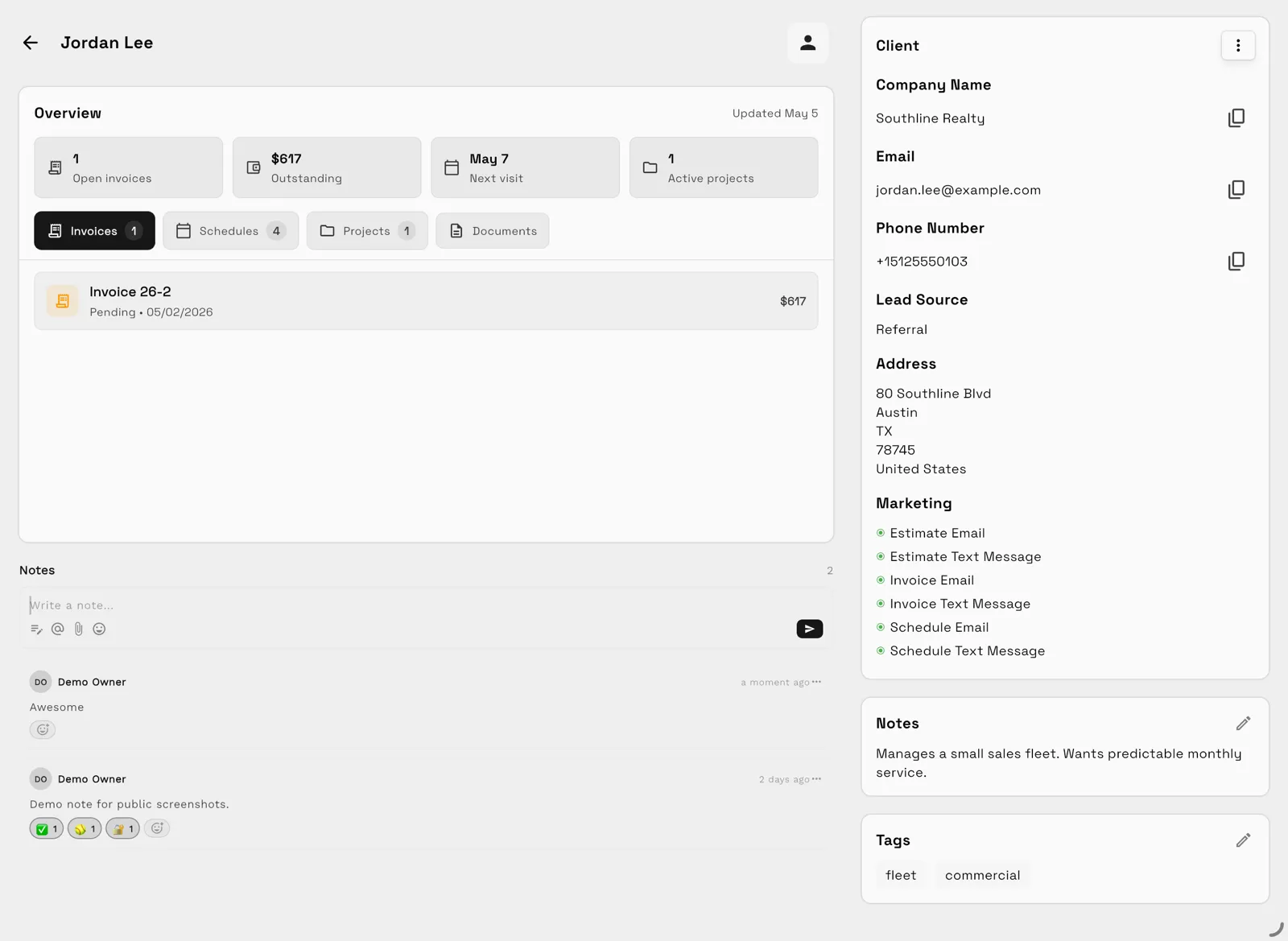
Limitations: it has no media delivery pages, property websites or pay-to-download, so photos, video and floor plans go through another tool. Online booking and round-robin team scheduling start at Specialist ($149 a month, $119.25 billed yearly, 10 seats), so an agent-facing booking page is not on Cadet or Voyager. Cadet has one user and 5 active projects; Voyager ($74 a month, $59.25 billed yearly) gives two seats. The 14-day trial needs a card. Spiro at $5 per listing and Aryeo's free Lite plan cost less to start and are built for this work.
Best for: photographers who deliver media elsewhere, take orders by email or an intake form and want proposals, contracts, deposits and invoices on one agent record.
Side-by-side comparison
| Tool | Plan priced | Monthly | Billed yearly | Ordering, scheduling and delivery at that plan | Limits | Trial |
|---|---|---|---|---|---|---|
| Spiro | Per listing | $5 per listing | Not shown | Ordering and booking, delivery tools, property websites | No subscription | Free signup |
| Aryeo | Pro Tier 1 | $49 | Not shown | Advanced scheduling and invoicing; Lite delivery is free | 100 annual listings, 1 team member | Free Lite; Pro by demo |
| HDPhotoHub | Basic Delivery | $5 per delivery | Not shown | Delivery page; scheduling tools included | Per-delivery fee | See site |
| Pixieset | Studio Manager Plus | $15 | $12 a month | 3 session types; galleries and Store sold separately | Pro for retainer at booking | Free plan, no card |
| HoneyBook | Starter | $36 | $29 a month | Scheduler allows 1 session; no delivery | 2 live lead forms | 30 days, no card |
| Workspace369 | Cadet | $29 | $23.25 a month | No online booking (Specialist, $149); no delivery | 1 user, 5 active projects | 14 days, card required |
Which tool fits your real estate photography business?
| If you mostly need | Start with | Why |
|---|---|---|
| Ordering, delivery and billing at a per-listing price | Spiro | $5 per listing with ordering, delivery and invoicing listed |
| Free branded delivery with a path to scheduling | Aryeo | Lite is free; Pro adds scheduling and invoicing |
| Delivery for a multi-shooter team with no subscription | HDPhotoHub | Per-delivery fee, unlimited team members |
| Galleries and download or print sales | Pixieset | Client Gallery with a Store; no commission on paid plans |
| Property shoots plus other creative services | HoneyBook | Proposals, contracts and payments for general work |
| Contracts, deposits and invoices with delivery elsewhere | Workspace369 | Proposals, deposits, portal and invoices on Cadet |
Run an add-on-and-reshoot test during the trial
Take one fictional agent through an order in each tool you shortlist:
- Create the agent and brokerage, and place an order with a photo package.
- Schedule the shoot and assign it to a photographer.
- Add a drone package and a floor plan to the same order.
- Move the date as if the listing was delayed, and see what the agent receives.
- Send the invoice and check the added items and any deposit are on it.
- Log in as the agent and check they see only their own listings.
The best tool keeps the order, the schedule, the invoice and the delivery on one record, without retyping. If an add-on means a second invoice and a manual email, that is the leak this test is built to find.

Keep media delivery in a delivery tool
Final photos, video and floor plans belong in a delivery or gallery product. If you pick a tool without delivery, such as HoneyBook or Workspace369, pair it with a media tool and keep the proposal, deposit and invoice in the client record. In Workspace369, file versioning is on every plan, and webhooks and the API start at Specialist if you want to connect a delivery system.
When to keep it simple
If you shoot a handful of listings a month for a few agents, an order form, a contract template and an invoice template can carry you a long way. Move to a dedicated tool when a second shooter takes bookings, when an added service means manual emails, or when you cannot say which agents have paid. The real estate photographers product page shows how Workspace369 handles communications, contracts and payments, and the pricing page has current plans. Workflow Automations can send reminders and follow-ups, with email automations on every plan.
Before importing real clients, run one full order on demo data and check that your records can be exported.
Sources reviewed for this guide
- Workspace369 pricingPlan matrix reviewed October 19, 2026 for seats, active projects, contracts, deposits, online booking and trial terms.
- Spiro pricingOfficial site reviewed October 19, 2026 for the $5 per listing price and the included features. The /pricing path returned a 404.
- Aryeo pricingOfficial pricing page reviewed October 19, 2026 for the Lite plan, the Pro tier prices and listing and team-member limits.
- HDPhotoHub pricingOfficial pricing page reviewed October 19, 2026 for per-delivery prices on the USD tab and the billing model.
- Pixieset pricingOfficial pricing page reviewed October 19, 2026 for Client Gallery and Studio Manager prices billed annually or monthly, and the Store commission on free accounts.
- HoneyBook pricingOfficial pricing page reviewed October 19, 2026 for Starter, Essentials and Premium prices on the yearly and monthly views and the Scheduler limits.
Workspace369 publishes this documentation-based comparison and is one of the options. It is not an independent ranking or a hands-on benchmark.
Run client follow-up in one workspace.
CRM, inbox, voice, invoicing, payments, projects, files, AI, and workflow automations — connected instead of exported.
14-day free trial. Card required. After the trial: from $29/month. Renews automatically every month until you cancel. Cancel anytime in Settings → Billing.