Best CRM for Dietitians in 2026
Best CRM for nutritionists and dietitians: five practice tools and Workspace369 compared on price, charting, scheduling and client health data claims.
We make Workspace369, which is on this list. Weigh our ranking with that in mind.

By Simon Dziak, Founder, Workspace369 · LinkedIn
The best CRM for nutritionists and dietitians books the first visit, keeps client charts and messages together and takes payment in one place. For most readers that means a nutrition or healthcare practice platform such as Healthie, Nutrium or Practice Better; Workspace369 (see its nutritionists and dietitians page) comes last of six here because its matrix lists no HIPAA statement or BAA, clinical charting or insurance billing. For a related niche, see the best CRM for health and nutrition coaches. To price a program first, use the free deposit calculator.
Disclosure and method: Workspace369 publishes this guide and is one of the options; we rank it last of six for this reader. It is a documentation-based shortlist, not a hands-on benchmark. Official vendor pages were reviewed on October 19, 2026. We make no medical, legal or insurance-billing claims of our own and quote a vendor's HIPAA wording only where its own page says it. Check current plans with each vendor before you buy.
Key takeaways
- A dietitian in private practice usually needs scheduling, charting, client messaging and payments in one system, so nutrition and healthcare practice tools lead this list and a general client-work tool comes last.
- Healthie lists Core at $19.99 a month ($18 billed yearly) for 10 active clients, with charting, scheduling and payment processing; its page says "Healthie is HIPAA and SOC 2 compliant".
- Nutrium lists $79 a month or $599 a year with unlimited clients and a 14-day trial; Practice Better lists Starter at $35 a month ($25 billed yearly) for 10 clients.
- Workspace369's plan matrix lists no HIPAA statement or BAA, no clinical charting and no insurance billing, so it should not hold client health information; Cadet is $29 a month ($23.25 billed yearly) for one user, and online booking starts at Specialist ($149 a month).
- Test each tool by taking one fictional client from inquiry to first paid visit, and ask every vendor in writing what it states about health data.
What's inside?
What a CRM for a dietitian is (and what it is not)How we compared these toolsThe best CRM for nutritionists and dietitians in 2026Side-by-side comparisonWhich tool fits your practice?Run an inquiry-to-first-visit test during the trialKeep client health information out of the wrong toolWhen to keep it simple
What a CRM for a dietitian is (and what it is not)
A CRM for a dietitian is the practice side of the work: who inquired, which visit they booked, which forms they completed, which program they bought, what they owe and when they are due back. Practice platforms for nutrition and healthcare bundle scheduling, charting and messaging with payments; general client-work tools do not. A CRM is also not a legal or compliance review. Ask every vendor in writing what it states about client health information, and keep anything clinical out of a tool that does not state it.
How we compared these tools
We compared each tool on the same five points, using only the vendor's own pricing pages as read on October 19, 2026:
- Price at a stated size: monthly and yearly prices, with every billing toggle on the page selected, and any client or seat limit.
- Scheduling and reminders: booking, reminders and the plan they sit on.
- Charting and forms: charting, intake forms or note templates named on the page.
- Health-data wording: any HIPAA statement, quoted only as the vendor wrote it, or "not named on its pricing page".
- Fees and trial terms: add-ons, per-claim or payment fees, and whether a trial exists.
We did not test speed, support, reliability or mobile apps, did not evaluate any vendor's security or compliance, and did not use third-party ratings. Healthie ranks first because its page ties charting, payment processing and a ClaimMD insurance integration to named plans and links a Business Associate Agreement; Nutrium ranks second for its nutrition-specific analysis and meal-planning tools, and it lists no insurance billing. Order reflects documented fit for a private practice, not the lowest price.
The best CRM for nutritionists and dietitians in 2026
1. Healthie, best for a dietitian who wants charting, payments and insurance tools together
Healthie lists four plans. On the monthly view, Core is $19.99, Essentials $49.99, Plus $129.99 and Group $149.99+; billed yearly they are $18, $45, $115 and $135+. Core lists 10 active clients, scheduling, payment processing, charting, telehealth, a client portal and a mobile app. Essentials raises the limit to 250 active clients and adds a ClaimMD integration, which the page lists separately at $25 to $30 a month with a $50 to $100 setup fee. Plus has unlimited clients, group telehealth and online programs. The page says "Healthie is HIPAA and SOC 2 compliant" and links a Business Associate Agreement in its footer; we did not check what either covers, so ask Healthie in writing.
Limitations: the 10-client Core limit suits only a very small practice, and the team features start on Group. A 14-day trial of Plus is offered with no card required.
Best for: a solo dietitian who wants charting, scheduling and payments in one system and may bill insurance later.
2. Nutrium, best for nutrition-specific analysis and meal planning
Nutrium is built for dietitians and lists $79 a month on its monthly plan or $599 a year on its yearly plan, both with unlimited clients. The page shows a lower introductory rate of $39 a month or $25 a month billed yearly and says those prices are "valid for the firsts annual subscription or up to 12 consecutive monthly subscriptions", so we use the regular prices. Its feature list names nutrient analysis, meal plans, a recipe library, a food diary, AI summaries of appointments, automated scheduling and reminders, direct client chat and a client app. It lists "Payments & invoicing" and describes client management as storing profiles with medical history and progress notes, "GDPR and HIPAA compliant". A 14-day free trial is offered.
Limitations: the pricing page does not name insurance billing or contracts, and it does not say whether the trial needs a card. We did not check the HIPAA wording; ask Nutrium in writing.
Best for: a dietitian whose core work is analysis, meal plans and food diaries, and who does not need insurance billing in the same tool.
3. Practice Better, best for programs, groups and a free student plan
Practice Better lists Starter at $35 a month ($25 billed annually) for 10 clients, Professional at $69 ($62) for 300 clients, Plus at $99 ($89) with unlimited clients, and Team at $155 for two practitioner licenses, with more at $50 each. Starter lists scheduling, telehealth, integrated billing and payments, secure messaging, a client portal and forms and note templates. Professional adds group scheduling, fixed-date programs, and account deposits and payment plans; Plus adds evergreen and self-paced programs and 750 SMS reminders a month. A free Sprout plan covers up to 3 clients for students and recent graduates. Trials are 14 days, or 30 days for Team.
Limitations: its feature comparison lists "HIPAA/PIPEDA/GDPR compliance" and a "HIPAA-compliant telehealth platform", which we did not verify, so ask the vendor what they cover. The client caps on Starter and Professional bite early, and AI charting, the Connector Hub ($49 a month) and ePrescribe are separate add-ons. The page does not say whether the trial needs a card.
Best for: a dietitian who sells group programs or packages and wants deposits and payment plans in the practice system.
4. Kalix, best for a flat price with insurance billing listed on the base plan
Kalix lists Standard at $27 a month ($270 a year) and Virtual Practice at $47 a month ($470 a year), with unlimited clients, admin staff and locations. Standard names invoicing, superbills and insurance billing, charting, online forms and agreements, secure client messaging and a Cronometer integration. Virtual Practice adds a client portal and app, branding, card storage and processing, memberships, an online scheduling widget and HIPAA-compliant telehealth. The page lists "HIPAA & PCI compliance" among its features.
Limitations: the clearinghouse is a $15 a month add-on, e-prescribing is $40 per subscriber, and Virtual Plus is listed as coming soon. The FAQ describes a free one-month trial with "no credit card required". We did not check the HIPAA wording; ask Kalix.
Best for: a solo practice that wants insurance billing, charting and forms on a low base price.
5. SimplePractice, best for a practice that bills insurance and wants a large, general platform
SimplePractice lists Starter at $49 a month, Essential at $79 and Plus at $99, with unlimited clients, telehealth, online payments, progress notes, paperless intake documents and a client portal on every plan. Plus adds group appointments and extra clinicians from $74 each. The page lists $0.39 per insurance claim and a $20 annual per-clinician fee for AMA CPT codes. Its FAQ answers "SimplePractice is HIPAA compliant and HITRUST certified." A 30-day trial is offered with no credit card required.
Limitations: the pricing page does not mention nutrition, and plans are monthly (we found no yearly price). A 50% first-three-months offer is shown, which we did not use. Reminders and calendar sync start at Essential.
Best for: a dietitian who bills insurance and values a large general practice platform over nutrition-specific tools.
6. Workspace369, best for the business side when health information lives elsewhere
Workspace369 keeps a client record, a proposal for a program, contracts with e-signature, deposits, a client portal and invoices together. Cadet is $29 a month for one user ($23.25 billed yearly) and lists public intake forms, a drag-and-drop form builder, the client portal, deposits, retainers and payment schedules, recurring invoices and email appointment reminders. The screenshot is a demo record, not a customer result.
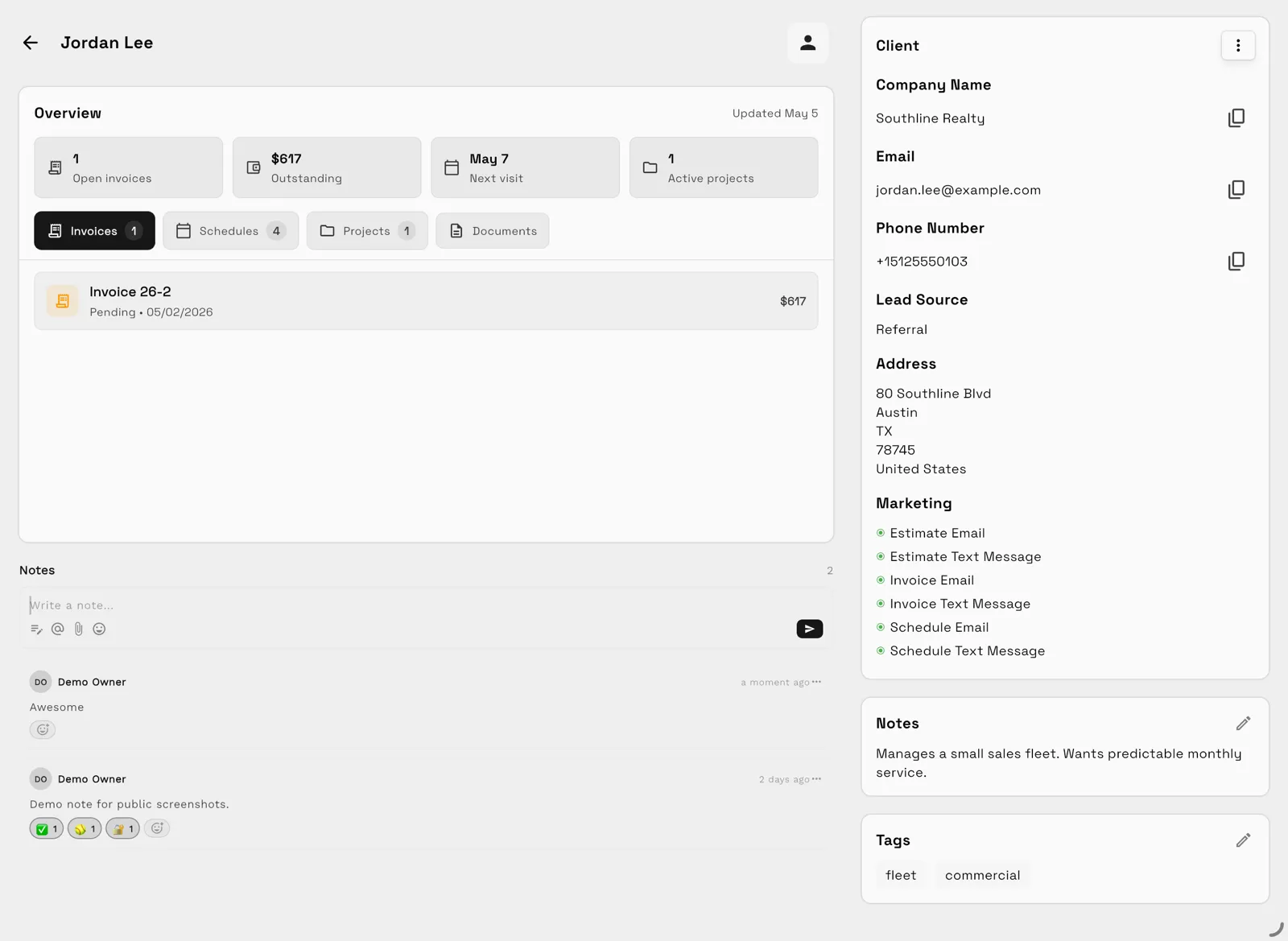
Limitations: the plan matrix lists no HIPAA statement or BAA, no clinical charting and no insurance billing, so Workspace369 should not hold client health information. Online booking starts at Specialist ($149 a month, $119.25 billed yearly, 10 seats), so a client-facing booking page is not on Cadet or Voyager. Cadet has one user and 5 active projects; Voyager ($74 a month, $59.25 billed yearly) gives two seats. The 14-day trial needs a card. Every tool above lists charting or health-data tooling that Workspace369 does not.
Best for: a nutrition coach who does not chart, or a dietitian who keeps clinical records elsewhere, and wants program proposals, contracts, deposits and invoices on a non-clinical client record.
Side-by-side comparison
| Tool | Plan priced | Monthly | Billed yearly | Charting, scheduling and payments at that plan | Limits | Trial |
|---|---|---|---|---|---|---|
| Healthie | Core | $19.99 | $18 a month | Charting, scheduling, payment processing; "HIPAA and SOC 2 compliant" on the page | 10 active clients; 250 on Essentials ($49.99) | 14 days, no card |
| Nutrium | Single plan | $79 | $599 a year | Nutrient analysis, meal plans, scheduling, payments and invoicing | Unlimited clients; no insurance billing named | 14 days; card not stated |
| Practice Better | Starter | $35 | $25 a month | Scheduling, billing and payments, forms and note templates | 10 clients; 300 on Professional ($69) | 14 days; card not stated |
| Kalix | Standard | $27 | $270 a year | Charting, forms, invoicing, superbills and insurance billing | Unlimited clients; portal on Virtual Practice ($47) | Free one-month trial, no card |
| SimplePractice | Starter | $49 | Not shown | Progress notes, online payments, insurance essentials | $0.39 per claim; $20 a year per clinician for CPT codes | 30 days, no card |
| Workspace369 | Cadet | $29 | $23.25 a month | Intake forms, portal, deposits; no online booking (Specialist, $149); no charting | 1 user, 5 active projects; no HIPAA statement or BAA listed | 14 days, card required |
Which tool fits your practice?
| If you mostly need | Start with | Why |
|---|---|---|
| Charting, payments and a ClaimMD insurance option | Healthie | Charting and payments on Core; ClaimMD from Essentials |
| Nutrient analysis and meal plans | Nutrium | Analysis, meal plans, food diary and invoicing listed, unlimited clients |
| Group programs and payment plans | Practice Better | Programs, deposits and payment plans from Professional |
| Insurance billing on a low base price | Kalix | Superbills and insurance billing on Standard at $27 |
| A large general practice platform | SimplePractice | Unlimited clients, telehealth and payments on every plan |
| Program proposals, contracts and invoices only | Workspace369 | Proposals, contracts, deposits and invoices; no health records |
Run an inquiry-to-first-visit test during the trial
Take one fictional client through each tool you shortlist, using made-up details only:
- Create the client from an inquiry and log what they asked about.
- Book a discovery call and send the intake form before it.
- Send a program proposal and see what the client receives.
- Take a deposit or first payment and confirm it shows on the client record.
- Move the appointment and check the reminder follows.
- Issue the final invoice and confirm the payment is on it.
The best tool keeps the inquiry, the booking, the form, the program and the payment on one record, without retyping. Also ask each vendor in writing what it states about client health information, because a trial cannot show you that.

Keep client health information out of the wrong tool
Food logs, health history and clinical notes belong in a system whose vendor states how it handles them. If you pick a tool without that statement, such as Workspace369, keep the proposal, contract and invoice in the client record and leave anything clinical out. In Workspace369, file versioning is on every plan, and webhooks and the API start at Specialist if you want to connect a booking or practice system.
When to keep it simple
If you see a handful of clients a week, an intake form, a proposal template and an invoice template can carry you a long way. Move to a dedicated practice tool when charting, insurance billing or a second practitioner enters the picture, or when you cannot say who has paid. The nutritionists and dietitians product page shows how Workspace369 handles communications, contracts and payments, and the pricing page has current plans. Workflow Automations can send reminders and follow-ups, with email automations on every plan.
Before importing real clients, run one full inquiry on demo data and check that your records can be exported.
Sources reviewed for this guide
- Workspace369 pricingPlan matrix reviewed October 19, 2026 for seats, online booking, reminders, deposits, contracts, portal and trial terms. The matrix lists no HIPAA statement or BAA, clinical charting or insurance billing.
- Healthie pricingOfficial pricing page reviewed October 19, 2026 with the Monthly and Yearly views each selected, for Core, Essentials, Plus and Group, the active-client limits, the ClaimMD add-on, the 14-day trial and the HIPAA wording.
- Nutrium pricingOfficial pricing page reviewed October 19, 2026 for the regular monthly and yearly prices, the first-period introductory rates, the 14-day trial, the feature list and the HIPAA and GDPR wording.
- Practice Better pricingOfficial pricing page reviewed October 19, 2026 with the Monthly and Annual views each selected, for Starter, Professional, Plus and Team, the client limits, the free Sprout plan, the trial lengths and the HIPAA wording in the feature comparison.
- Kalix pricingOfficial pricing page reviewed October 19, 2026 with the Monthly and Annually views each selected, for Standard and Virtual Practice, the included features and the HIPAA and PCI wording.
- SimplePractice pricingOfficial pricing page reviewed October 19, 2026 for Starter, Essential and Plus monthly prices, the per-claim fee, the 30-day trial and the HIPAA answer. The 50% first-three-months offer is not used.
Workspace369 publishes this documentation-based comparison and is one of the options. It is not an independent ranking or a hands-on benchmark.
Run client follow-up in one workspace.
CRM, inbox, voice, invoicing, payments, projects, files, AI, and workflow automations — connected instead of exported.
14-day free trial. Card required. After the trial: from $29/month. Renews automatically every month until you cancel. Cancel anytime in Settings → Billing.