Best CRM for Wedding Planners 2026: Vendors and Payments
Best CRM for wedding planners: six tools compared on vendor lists, timelines and budgets, and where Aisle Planner and Planning Pod are stronger.
We make Workspace369, which is on this list. Weigh our ranking with that in mind.

By Simon Dziak, Founder, Workspace369 · LinkedIn
The best CRM for wedding planners handles two jobs: the planning work (vendors, day-of timelines, budgets and checklists with the couple) and the business work (proposal, deposit, payment schedule and invoices). Aisle Planner is the strongest documented fit for both, Planning Pod suits planners who want detailed day-of itineraries, and Workspace369 suits planners who plan elsewhere and want the client side in one place. For the broader field, see the best event planning software guide. To set the balance dates for a planning package first, use the free invoice due date calculator.
Disclosure and method: Workspace369 publishes this guide and is one of the options. It is a documentation-based shortlist, not a hands-on benchmark. Official vendor pages were reviewed on October 18, 2026. Check current plans with each vendor before you buy. The wedding scenarios below are fictional evaluation exercises.
Key takeaways
- A wedding planner CRM has two jobs: the planning work (vendors, day-of timelines, budgets, checklists with the couple) and the business work (proposal, deposit, payment schedule, invoices).
- Aisle Planner and Planning Pod document vendor management, budgets, checklists and timelines on their own pages, so they rank above Workspace369 for planners who want those inside the CRM.
- Workspace369 Cadet is $29 a month ($23.25 billed yearly) with deposits on acceptance, retainers and payment schedules, a client portal, tasks and stage boards, but one seat and 5 active projects; the timeline view and task dependencies start at Voyager ($74).
- Aisle Planner lists checklists, timelines, budgets and vendor management only from its $69.99 plan for up to 15 projects; its $49.99 Sales Essentials plan covers proposals, invoices and payments.
- Test each tool with one fictional wedding: a vendor drops out, the ceremony moves an hour, and the deposit and balance schedule has to stay correct.
What's inside?
What a CRM for wedding planners is (and what it is not)How we compared these toolsThe best CRM for wedding planners in 2026Side-by-side comparisonWhich tool fits your planning business?Test a vendor change and a payment scheduleRecords for the couple, the payer and the vendorsPlan and setup costs in Workspace369
What a CRM for wedding planners is (and what it is not)
A CRM for wedding planners holds the couple and any separate payer, the planning package they bought, the deposit and balance schedule, the vendors you coordinate, the timeline and the checklist each side owes. It is not a photographer's gallery tool, a venue booking system or a guest-list site for couples. A tool that stores contacts but leaves vendors, timelines and payments in spreadsheets turns a late vendor change into a round of manual edits, and a tool that only plans the day leaves the deposit in a separate invoice app.
How we compared these tools
Best CRM for Event & Wedding Planners 2026: From Enquiry to Final Balance

We compared each tool on the same five points, using only the vendor's own pages:
- Vendor and budget tools: whether the page names vendor management or event budgets, and on which plan.
- Timelines and checklists: day-of or milestone timelines, and checklists you can assign to the couple or vendors.
- Payment schedules: deposits and instalments the vendor names, plus proposals and a client portal.
- Entry price and entry-plan limits, monthly and billed yearly where the page shows both.
- Trial terms, including whether a card is stated.
We did not test speed, support, reliability or migration effort, and we did not use third-party ratings. Order reflects documented fit for a wedding planner who sells full-service and partial planning packages. Where the planning tools are not on a vendor's page, the table says so.
The best CRM for wedding planners in 2026
1. Aisle Planner, best for planners who want planning and business tools in one system
Aisle Planner prices by project count. Sales Essentials is $49.99 a month and lists lead management, proposals and interactive quotes, contracts and e-signatures, invoicing and online payments, and internal task assignment and internal project management, but none of the client-facing project tools. The plan for up to 15 projects is $69.99 a month and adds the client portal, checklists, timelines, budgets, vendor and file management, guest management and layouts and seating. Higher tiers are $109.99 (16 to 25 projects), $164.99 (26 to 50) and $229.99 (51 to 100). Its payments page says clients can schedule payments such as deposits and balances, with automated reminders. The page offers a 30-day trial that needs a card.
Limitations: the planning tools are not on Sales Essentials, and cost rises with the number of events you run at once. The pricing page shows "Save 10% annually" without a yearly figure, so confirm it before you plan around it.
Best for: planners who want vendor lists, budgets, timelines and checklists in the same tool as the proposal and the payment schedule.
2. Planning Pod, best for day-of itineraries with vendor assignments
Planning Pod's wedding planning page lists budgets and payment tracking, timelines and itineraries, checklists and worksheets, vendor and venue management, contracts and e-signatures, invoicing and online payments, guest lists and seating charts. It says you can build day-of timelines with assignments and reminders, and its schedule page adds vendor assignments, a shareable private link and email and text reminders for assigned contacts. The wedding page also mentions payment schedules on invoices. This is the closest documented match to the planning side of a wedding.
Limitations: no price or trial length is stated on the site, and the main path is a demo request, with a trial link emailed afterwards. The platform is broad, covering venues and corporate events, so a solo planner should ask in the demo which tools to switch on.
Best for: planners who want detailed day-of itineraries, vendor assignments and budgets, and will accept a demo before seeing a price.
3. Workspace369, best for planners who plan elsewhere and want the client side in one place
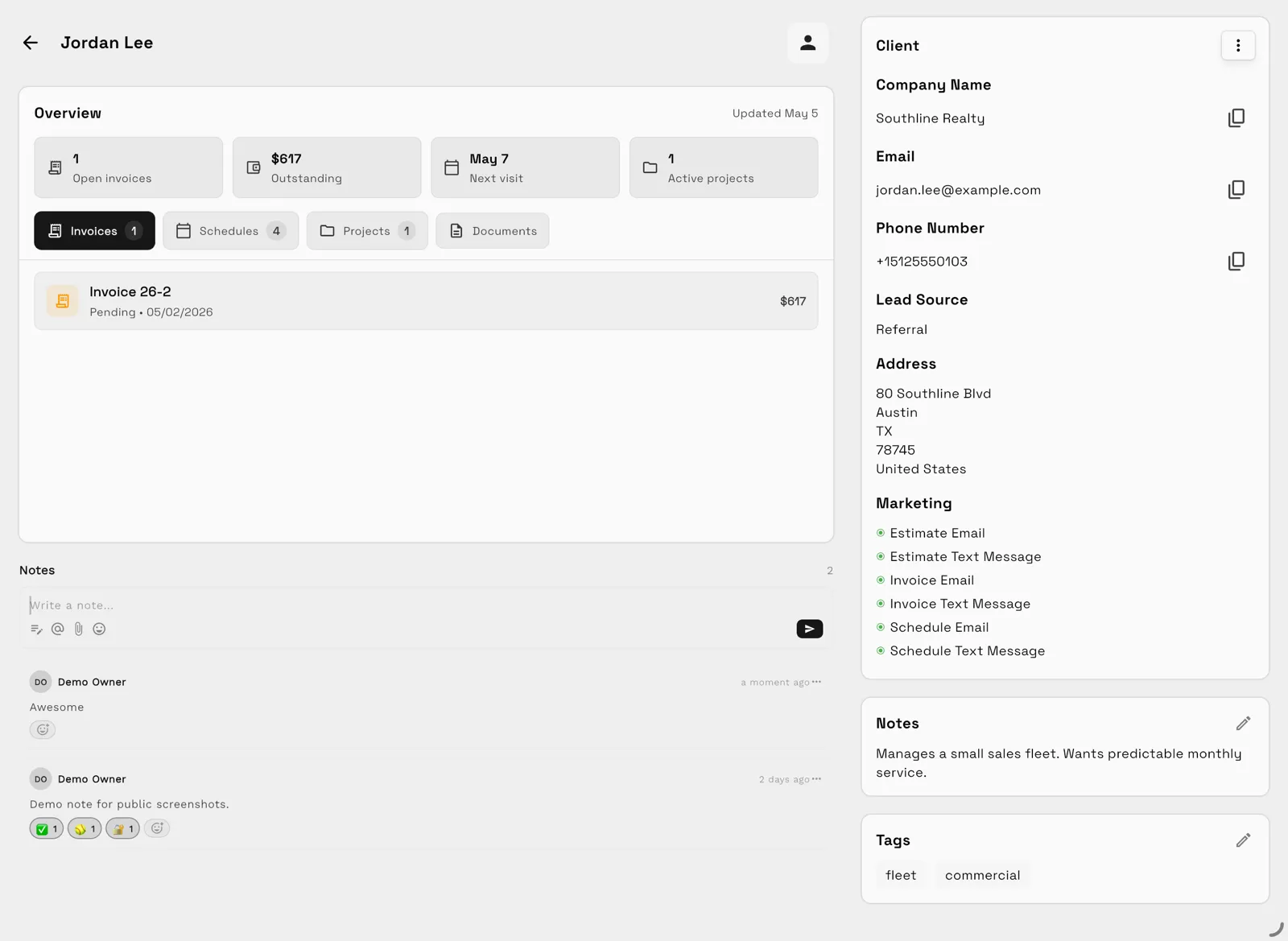
Workspace369 puts the client record, Proposals the couple approve by link with a deposit on acceptance, retainers and payment schedules, a private client portal, tasks with subtasks and stage boards, files and invoices in one place. Cadet is $29 a month for one seat ($23.25 billed yearly) and lists all of those, plus custom fields, intake forms and Google Calendar sync. The screenshot is a demo record, not a customer result. It ranks below the two planning tools because it has no vendor, budget or day-of itinerary tools.
Limitations: it does not list a vendor directory, event budgets, guest lists or seating charts, so those stay in a spreadsheet or planning tool. Cadet allows 5 active projects and one seat; the timeline view and task dependencies start at Voyager ($74 a month, 2 seats, $10 for each extra seat). Payment plans (instalments tracked on one invoice) and online booking start at Specialist ($149). The 14-day trial needs a card.
Best for: solo planners with up to five weddings open, or two-person studios on Voyager, who already keep vendor lists elsewhere.
4. HoneyBook, best for a polished inquiry-to-payment flow
HoneyBook Starter is $29 a month billed yearly ($36 billed monthly). Its comparison table lists proposals, contracts, invoices, a client portal, payment plans, task management and unlimited clients and projects on Starter. Essentials ($49 yearly, $59 monthly) adds assigning tasks to team members or clients, automations, unlimited Scheduler sessions (Starter allows 1) and a Prismm integration for 3D and 2D event floor plans. Premium is $109 yearly ($129 monthly). The FAQ gives a 30-day trial with no credit card required.
Limitations: the page lists no vendor management, budgets or timeline builder. Starter has up to 2 live lead forms, and assigning tasks to clients starts at Essentials, which also caps team members at 2.
Best for: planners who care most about the booking flow and a branded client experience, and track vendors elsewhere.
5. 17hats, best for one flat plan with payment schedules and to-do workflows
17hats shows one all-inclusive plan on its pricing page: $60 a month, $600 a year or $800 for two years, with a 7-day free trial. Its features page lists quotes, contracts with e-signatures, invoices, payment schedules, recurring billing, a client portal, pipelines, to-do workflows that automate recurring to-dos for every client, and advanced workflows. That suits a repeatable planning package whose checklist is the same for each couple.
Limitations: it names no vendor management, budgets or timeline builder, and the pricing page does not state card terms or what extra users cost, so ask before you add an associate.
Best for: planners with a repeatable package who want payment schedules and recurring to-dos on one plan.
6. Dubsado, best for form-heavy onboarding and custom workflows
Dubsado lists Starter at $35 a month ($335 billed yearly) and Premier at $55 a month ($525 billed yearly). Both list unlimited projects and clients, invoicing and payment plans, client portals and form and email templates. Its invoice page describes installment payment plans with autopay and reminders. Premier adds scheduling, automated workflows, public proposals and Zapier. The trial is 21 days with Premier access and no card required. Three additional users are free, and users 4 to 10 are listed at $25 a month.
Limitations: Starter has one active lead form and no public proposals or workflows. The pages reviewed name no vendor, budget or timeline tools, and we could not confirm a task list on the pricing or invoice pages.
Best for: planners who build long onboarding questionnaires and automated email sequences themselves.
Side-by-side comparison
| Tool | Entry price (monthly) | Billed yearly | Planning tools on the entry plan | Main entry-plan limit | Trial |
|---|---|---|---|---|---|
| Aisle Planner | $49.99 (Sales Essentials) | "Save 10% annually", no figure | None on Sales Essentials; checklists, timelines, budgets and vendors from the $69.99 plan | Priced by project count; planning tools need the 15-project plan | 30 days, card required |
| Planning Pod | See site | See site | Budgets, checklists, itineraries and vendors named | No published price | Demo, then a trial link; length not stated |
| Workspace369 | $29 (Cadet) | $23.25 a month | Tasks, subtasks, stage boards and files; timeline view from Voyager | 1 seat, 5 active projects | 14 days, card required |
| HoneyBook | $36 (Starter) | $29 a month | Task management; no vendor or budget tools listed | 2 live lead forms | 30 days, no card |
| 17hats | $60 (single plan) | $600 a year | To-do workflows and payment schedules; no vendor tools listed | One plan; extra-user cost not shown | 7 days, card not stated |
| Dubsado | $35 (Starter) | $335 a year | Payment plans and portal; workflows on Premier | 1 lead form on Starter | 21 days, no card |
Which tool fits your planning business?
| If you mostly need | Start with | Why |
|---|---|---|
| Vendors, budgets, checklists and timelines beside payments | Aisle Planner | Project plan lists them; Sales Essentials does not |
| Day-of itineraries with vendor assignments | Planning Pod | Itineraries with reminders named; price on request |
| Proposals, deposits, payment schedules and a portal at $29 | Workspace369 | On Cadet; vendors and budgets stay elsewhere |
| A polished booking flow and floor plans through Prismm | HoneyBook | Essentials adds Prismm; no vendor tools listed |
| Recurring to-dos and payment schedules on one plan | 17hats | To-do workflows and payment schedules listed |
| Long onboarding forms and automated sequences | Dubsado | Workflows and public proposals on Premier |
Test a vendor change and a payment schedule
Run one fictional wedding through every tool you shortlist:
- Capture the inquiry and send a planning-package proposal with a deposit.
- Add a payment schedule for the balance, and note who receives each invoice.
- List the vendors with a contact and a due date for each contract.
- Build the day-of timeline, then move the ceremony forward by one hour after a caterer drops out.
- Share the revised timeline with the couple and check what the payer sees.
- Count how many times you retype a date, a name or an amount.
The best tool changes the timeline once and keeps the payment schedule intact. Set the balance due dates before you build the schedule, so the test starts from real dates.

Records for the couple, the payer and the vendors
In many weddings the person paying is not the person choosing the details. A suggested setup is to keep the couple and the payer as separate records, so you can address the invoice to the payer while the schedule and checklist stay with the couple. In Workspace369 that could mean two client or contact records and a project for the wedding; this is a way to organise the records, not a documented feature for routing an invoice to a separate payer record, so check the flow in the trial; the wedding planners product page shows the layout. Keep seating charts and vendor sourcing in your planning tools, and use the CRM for the agreement, the money and the follow-up with communications and the client portal.
Plan and setup costs in Workspace369
Compare the current Workspace369 pricing matrix against the seats and features you need. Calls and texts start at Voyager; online booking, expense tracking and payment plans start at Specialist. Email automations start at Cadet, with up to 3 active workflows, and Workflow Automations can create tasks and send reminders for the couple and your team. Plans run from one seat on Cadet to 50 on Enterprise, and Cadet through Commander start with a 14-day free trial that requires a card.
Before importing real couples, run one fictional wedding on demo data and check that your records can be exported.
Sources reviewed for this guide
- Workspace369 pricingPlan matrix reviewed October 18, 2026.
- Aisle Planner pricingOfficial pricing page reviewed October 18, 2026 for plan prices, project limits, included tools and trial terms.
- Aisle Planner paymentsOfficial page reviewed October 18, 2026 for scheduled payments and reminders.
- Aisle Planner project managementOfficial page reviewed October 18, 2026 for checklists, timelines, budgets and vendor management.
- Planning Pod wedding planning firmsOfficial page reviewed October 18, 2026 for vendor management, budgets, day-of timelines, checklists and payment schedules.
- Planning Pod schedules and itinerariesOfficial page reviewed October 18, 2026 for vendor assignments and reminders on timelines.
- Planning Pod demo and trialOfficial page reviewed October 18, 2026; no price was found on the site and trial length was not stated.
- HoneyBook pricingOfficial pricing page reviewed October 18, 2026 for yearly and monthly prices, plan features and trial terms.
- Dubsado pricingOfficial pricing page reviewed October 18, 2026 for monthly and yearly prices, plan limits and trial terms.
- Dubsado invoices and payment plansOfficial page reviewed October 18, 2026 for installment payment plans and autopay.
- 17hats pricingOfficial pricing page reviewed October 18, 2026 for the single plan price and trial length.
- 17hats featuresOfficial features page reviewed October 18, 2026 for payment schedules, to-do workflows and the client portal.
Workspace369 publishes this documentation-based comparison and is one of the options. It is not an independent ranking or a hands-on benchmark.
Run client follow-up in one workspace.
CRM, inbox, voice, invoicing, payments, projects, files, AI, and workflow automations — connected instead of exported.
14-day free trial. Card required. After the trial: from $29/month. Renews automatically every month until you cancel. Cancel anytime in Settings → Billing.