Best CRM for Sales Training Programs in 2026
Best CRM for sales training programs: five tools compared on price, deal pipeline, proposals, contracts, scheduling and invoices, with a cohort add-on test.
We make Workspace369 and list it first here. Weigh our ranking with that in mind, and if another tool fits you better, use it.

By Simon Dziak, Founder, Workspace369 · LinkedIn
The best CRM for sales training programs holds the buyer company, the agreed scope, the signed contract, the cohort schedule and the invoice on one record, so an added cohort or a follow-on coaching retainer is billed as new work. For trainers who sell workshops and cohorts to a handful of companies, our pick is Workspace369. Pipedrive is the better tool for a large deal pipeline, and Kajabi is the one to compare if you host self-paced lessons. If you work alone across several kinds of client, the best CRM for freelancers is the wider read. When a buyer asks for one more cohort, the free scope-change request builder drafts the priced request.
Disclosure and method: Workspace369 publishes this guide and is one of the options. It is a documentation-based shortlist, not a hands-on benchmark. Each vendor's own pricing page was reviewed on October 19, 2026, so confirm today's plans before purchase.
Key takeaways
- A sales-training CRM should carry a company buyer from first call to signed scope, deposit, cohort schedule and invoice on one record, so an extra cohort or a coaching retainer is billed as new work and not absorbed as a freebie.
- Workspace369 Cadet is $29 a month ($23.25 billed yearly) for one user. It lists Companies, Proposals, contracts with e-signature, deposits, retainers, recurring invoices and purchase order matching on every plan; change orders and online booking start at Specialist ($149 a month), and Cadet allows 5 active projects.
- Pipedrive is the stronger pipeline: Lite is $14 per seat a month billed yearly ($24 monthly), and contracts with e-signature start at Premium ($59 yearly, $79 monthly). Its pricing page names no invoices, and projects are a paid add-on.
- Zoho CRM Professional ($23 per user a month billed yearly, $35 monthly) lists Configure, Price, Quote, custom portals and inventory management that covers invoices; HubSpot Sales Hub adds forecasting and sequences but lists no quotes, proposals, contracts or invoices as features on its plan table.
- Kajabi Basic ($143 a month billed yearly, $179 monthly) hosts courses and a community for self-paced content (live cohort courses start at Growth, $199 yearly or $249 monthly) but lists no proposals, contracts or invoices. Test each tool by adding a second cohort to one fictional company deal.
What's inside?
What a CRM for sales training programs is (and what it is not)How we compared these toolsThe best CRM for sales training programs in 2026Side-by-side comparisonWhich tool fits your training business?Run a cohort add-on test during the trialWhen a spreadsheet is enough
What a CRM for sales training programs is (and what it is not)
The reader here is a trainer or a small training firm that sells programs to companies: a two-day workshop for a sales team, a multi-week cohort, a quarterly coaching retainer. The CRM is the commercial record behind that work. It answers who the buyer is, which participants and sessions were agreed, what was signed, what was paid up front and what is still owed. It is not a learning management system, an exam builder, a call-recording coach or a sales dialer. Lessons and learner progress live in your training platform. When a buyer adds a cohort after signing, the CRM is where the original terms sit, so the new fee is a line in a document instead of a conversation you have to reconstruct.
How we compared these tools
We used only each vendor's own pricing page and judged every tool on the same five points:
- Entry price for one person, on monthly and yearly billing, as the page listed it on October 19, 2026. Per-seat tools are quoted per seat.
- Sales side: deal pipeline, forecasting and scheduling, named on the plan.
- Paperwork side: proposals or quotes, contracts with e-signature, and invoices, named on the plan.
- Delivery side: whether the tool lists projects, a client portal or course hosting.
- Hard limits and trial terms: projects, contacts, seats, onboarding fees, trial length and whether a card is needed.
Speed, support, reliability and mobile apps were not tested, and no third-party ratings were used. None of these is built for delivering corporate training. Order reflects documented fit for a trainer who closes a handful of company deals a quarter and then delivers them. Workspace369 is first because its matrix names Companies, Proposals, contracts with e-signature, deposits, retainers, recurring invoices, a client portal and projects on one entry plan, which none of the other four pages names together. Pipedrive and HubSpot are stronger at pipeline management, forecasting and outreach, and Kajabi is stronger at course hosting. Workspace369 is weaker for a team that runs hundreds of open deals, and Cadet is capped at 5 active projects.
The best CRM for sales training programs in 2026
1. Workspace369, best for company deals from signed scope to final invoice
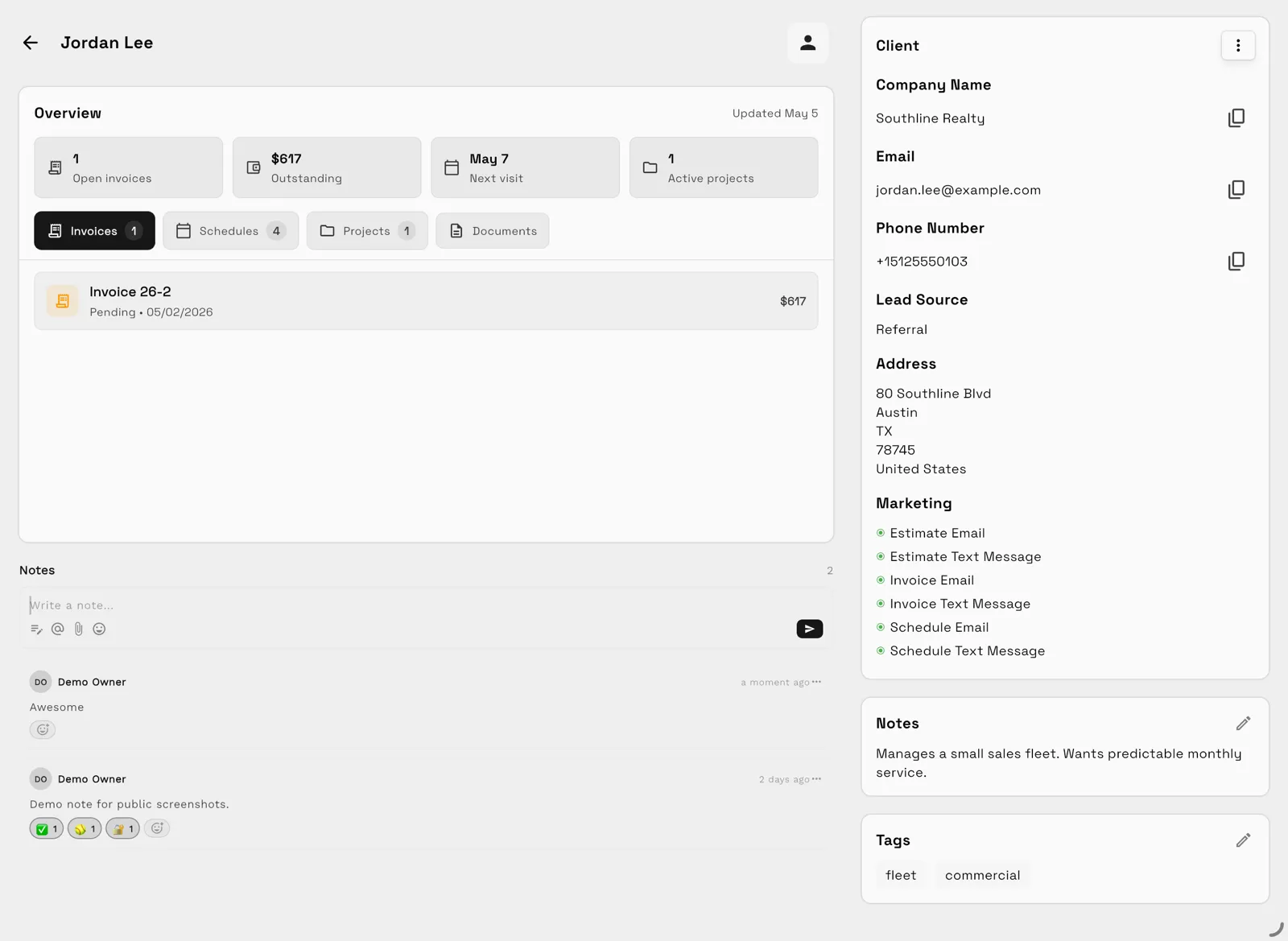
Workspace369 lists Companies and client records, Proposals with optional and add-on lines, contracts with e-signature, deposit on acceptance, retainers and payment schedules, and recurring invoices on every plan. Each cohort can be a project with tasks, and the buyer gets a client portal. Cadet is $29 a month for one user ($23.25 billed yearly). The image above is a demo record, not a customer outcome.
Limitations: Cadet holds 5 active projects and one seat, so five live cohorts use it up. Change orders, proposal revision history, online booking and payment plans start at Specialist ($149 a month, $119.25 billed yearly). The timeline view and project financials dashboard start at Voyager ($74 a month, $59.25 billed yearly). It has no lessons, tests, attendance or learner tracking, and its matrix names no sales forecasting or deal scoring. The 14-day trial needs a card.
Best for: solo trainers and small firms that sell workshops, cohorts and coaching retainers to companies and want the agreement, schedule and invoice in one place.
2. Pipedrive, best for a busier deal pipeline
Pipedrive prices per seat. Lite is $14 a month billed yearly ($24 billed monthly) with lead, calendar and pipeline management. Growth, at $39 yearly ($49 monthly), adds full email sync, automations and sequences, subscriptions and installment tracking with forecast reports, and a meeting scheduler. Premium, at $59 yearly ($79 monthly), lists quotes, proposals and contracts with built-in e-signatures. The trial is 14 days and the page says no credit card is required.
Limitations: invoices are not named on the page, so billing lives in another tool. Projects are a paid add-on, and the Smart Docs add-on, which the page describes as carrying e-signatures, is another. Contracts with e-signature need Premium, which costs more than Workspace369 Cadet per seat.
Best for: trainers or small sales teams working many company leads at once who want a pipeline view first and will bill elsewhere.
3. Zoho CRM, best for a configurable quote-to-invoice path at a low per-user price
Zoho CRM has a forever-free plan for 3 users. Standard is $14 per user a month billed yearly ($20 monthly) and lists multiple pipelines, forms, calling and sales forecasting. Professional is $23 yearly ($35 monthly) and lists Configure, Price, Quote, custom portals, process management and inventory management that covers invoices and sales orders. The page gives a 15-day free trial with no credit card required.
Limitations: contracts with e-signature are not named on the plan list, and Zoho Sign is listed as a separate product. Quotes and portals sit on Professional. Projects and course hosting are not named on the page.
Best for: a small training firm with a few sales staff that wants a configurable pipeline, quotes and invoices and can invest setup time.
4. HubSpot, best for forecasting and outreach at scale
HubSpot's free tools cover up to 2 users with no card. Sales Hub Starter lists at $20 per seat a month; HubSpot was also showing a lower new-customer promotion, which is not used here. Professional is $90 per seat a month billed annually ($100 with monthly billing and an annual commitment) and adds sequences, forecasting, deal plans and conversation intelligence. The page says the cost excludes a required one-time $1,500 onboarding fee.
Limitations: the Sales Hub plan table lists no quotes, proposals, contracts or invoices as features (Enterprise mentions only quote-based workflows), so those need another tool. Starter allows 1 personal meetings link and up to 15 pipelines; the page states no trial length.
Best for: training companies with a sales team that needs forecasting, sequences and call coaching, and a budget for onboarding.
5. Kajabi, best for self-paced courses and a learner community
Kajabi Basic is $143 a month billed annually ($179 billed monthly) and caps you at 5 products, 2,500 contacts, one website, one community and two admin users. Growth is $199 yearly ($249 monthly) with 50 products and 25,000 contacts, and it is the first plan that lists Cohorts, so live cohort courses need Growth rather than Basic. The trial is 14 days and the page does not state whether a card is needed; every plan also carries a 30-day money-back guarantee. Its product menu lists courses, communities, coaching and newsletters.
Limitations: no proposals, contracts, invoices or deal pipeline appear anywhere on the page. The design target is selling content to individual learners, not scoping a corporate contract.
Best for: trainers who sell recorded programs or communities to individual buyers and pair it with a separate tool for company deals.
Side-by-side comparison
| Tool | Entry price (monthly) | Billed yearly | Proposals, contracts and invoices on the plan that lists them | Pipeline or scheduling | Main limit | Trial |
|---|---|---|---|---|---|---|
| Workspace369 | $29 (Cadet, one user) | $23.25 a month | Proposals, contracts with e-signature, invoices (all plans) | Booking at Specialist ($149 monthly) | 5 active projects, 1 seat | 14 days, card required |
| Pipedrive | $24 per seat (Lite) | $14 per seat a month | Contracts with e-signature at Premium; invoices not named | Pipeline on Lite, scheduler on Growth | Projects are an add-on | 14 days, no card |
| Zoho CRM | $20 per user (Standard) | $14 per user a month | Quotes and inventory management that covers invoices at Professional ($35 monthly) | Multiple pipelines on Standard | Quotes and portals need Professional | 15 days, no card |
| HubSpot | $20 per seat (Starter list) | Not shown | Not listed as features | Pipelines and meeting links on Starter | $1,500 onboarding on Professional | Not shown |
| Kajabi | $179 (Basic) | $143 a month | Not named | No deal pipeline named | 5 products, 2,500 contacts | 14 days, card not stated |
Which tool fits your training business?
| If you mostly need | Start with | Why |
|---|---|---|
| Company deal, signed scope, cohort project and invoice on one record | Workspace369 | Proposals, e-signed contracts and retainers on Cadet |
| A larger open-deal pipeline with e-signed contracts | Pipedrive | Pipeline from Lite, contracts at Premium |
| Configurable quotes and invoices at a low per-user price | Zoho CRM | Configure, Price, Quote and inventory management that covers invoices at Professional |
| Forecasting, sequences and call coaching for a sales team | HubSpot | Professional plan table lists forecasting, sequences and call coaching |
| Recorded programs and a community for individual learners | Kajabi | Courses, community and coaching on its plans |
Run a cohort add-on test during the trial
Run the steps below on a made-up company in each trial you open. The scenario is a drill, not a customer result.
- Log a discovery call, then build a proposal for two cohorts of twelve people, with a coaching retainer as an optional line.
- Send the contract for signature and collect the deposit when the buyer accepts.
- Create the delivery record for each cohort with its session dates and the trainer assigned.
- After the first session, the buyer asks for a third cohort. Send a priced request for the extra fees and bill them on their own invoice.
- Open the company record and check that the call notes, proposal, contract, schedule, both invoices and the retainer are linked together.
The winner is the tool where all five items open from the same company page, with the original terms a click away. For step 4, the free scope-change request builder writes the request, and the deposit calculator sizes the up-front payment.

When a spreadsheet is enough
With two or three company deals a year, a proposal template, a signature app and an invoicing tool will do. A client-work tool starts to pay off when cohorts overlap, when last quarter's agreement is hard to find, or when extra-cohort requests outrun your pricing. Open the sales training programs product page to see Workspace369's Proposals, communications and invoices, and the pricing page for current plans. From Specialist, change orders log a scope change against the signed agreement. Lessons and learner progress stay in your training platform.
Before importing real contacts, push one whole deal through on demo data and confirm you can export your records.
Sources reviewed for this guide
- Workspace369 pricingPlan matrix reviewed October 19, 2026.
- Pipedrive pricingOfficial pricing page reviewed October 19, 2026 in the monthly and annual views for per-seat prices, plan features, add-ons and trial terms.
- Zoho CRM pricingOfficial pricing page reviewed October 19, 2026 in the monthly and yearly views for per-user prices, plan features and trial terms.
- HubSpot Sales Hub pricingOfficial pricing page reviewed October 19, 2026 for list prices, onboarding fees and the plan feature table. Promotional new-customer prices were not used.
- Kajabi pricingOfficial pricing page reviewed October 19, 2026 in the annual and monthly views for prices, plan limits and the guarantee.
Workspace369 publishes this documentation-based comparison and is one of the options. It is not an independent ranking or a hands-on benchmark.
Run client follow-up in one workspace.
CRM, inbox, voice, invoicing, payments, projects, files, AI, and workflow automations — connected instead of exported.
14-day free trial. Card required. After the trial: from $29/month. Renews automatically every month until you cancel. Cancel anytime in Settings → Billing.