Best CRM for Social Media Agencies in 2026: Retainers
Six tools for social media agencies of 1-15 compared on price, seats, retainers, approvals, client portals and reporting, plus Planable and Sprout.
We make Workspace369 and list it first here. Weigh our ranking with that in mind, and if another tool fits you better, use it.

By Simon Dziak, Founder, Workspace369 · LinkedIn
The best CRM for social media marketing agencies keeps the monthly retainer, content tasks, client sign-offs, logged time and invoice on one record. For agencies of 1 to 15 people, our pick is Workspace369 for the client-work side, with a scheduler such as Planable for post approvals. HighLevel suits agencies that want social planning and messaging in one platform. For the wider view, read the best CRM for marketing agencies, and price a package with the free retainer pricing calculator.
Disclosure and method: Workspace369 publishes this guide and is one of the options. It is a documentation-based shortlist, not a hands-on benchmark. Official vendor pages were reviewed on October 17, 2026; Productive's page was re-read on October 19, 2026. Check current plans with each vendor before you buy.
Key takeaways
- A social media agency CRM should hold the retainer, the monthly deliverables, the client approvals, the logged time and the invoice on one client record. Publishing, scheduling and network analytics stay in a social tool.
- Workspace369 Cadet is $29 a month ($23.25 billed yearly) for one seat; a five-person team on Voyager plus three extra seats is $104 a month. Cadet allows 5 active projects, and there is no post scheduling, social analytics or image-markup proofing.
- HighLevel Starter is $97 a month with unlimited users and 3 sub-accounts, and its core feature list includes social media management; phone, SMS, email and AI carry usage-based charges.
- Planable lists approval workflows (2 types on Basic, 3 on Pro) and unlimited users from $33 per workspace a month. If clients sign off on every post, that tool, not a CRM, is where approvals live.
- Test one fictional client through a month: retainer, content calendar tasks, a late approval, logged time and the invoice. Check that all five sit on one record.
What's inside?
What a CRM for social media agencies is (and what it is not)How we compared these toolsThe best CRM for social media agencies in 2026Side-by-side comparisonWhich tool fits your social media agency?Run a month-end approval test during the trialSee the client record in actionBefore you choose
What a CRM for social media agencies is (and what it is not)
A CRM for a social media agency is the business side of retainer work: who the client is, what you promised each month (say 12 posts, 4 reels and community replies), who approved the plan, what time went in and what is unpaid. It is not a publishing scheduler, a comment inbox or a network analytics dashboard. Those jobs belong to tools such as Planable or Sprout Social. The leak this guide targets is the gap between them: a client asks for ten extra posts in a chat, nobody prices it and the retainer quietly loses margin.
How we compared these tools
We compared each tool on the same five points, using only the vendor's own pricing and product pages:
- Entry price and a five-person price, from the listed per-seat or per-plan figures on October 17, 2026.
- Retainer coverage on that plan: retainers or recurring billing, time tracking and invoices.
- Client-facing pieces: a client portal, proposals, tasks and approvals.
- Hard limits: active projects, seats, sub-accounts and usage-based charges.
- Trial terms: length, and whether the vendor states that a card is needed.
We did not test speed, support or reliability, and we did not use third-party ratings. Order reflects fit for an agency that sells monthly content retainers. None of the six tools below schedules your posts except HighLevel, which lists social media management as a core feature.
The best CRM for social media agencies in 2026
1. Workspace369, best for retainer-based client work
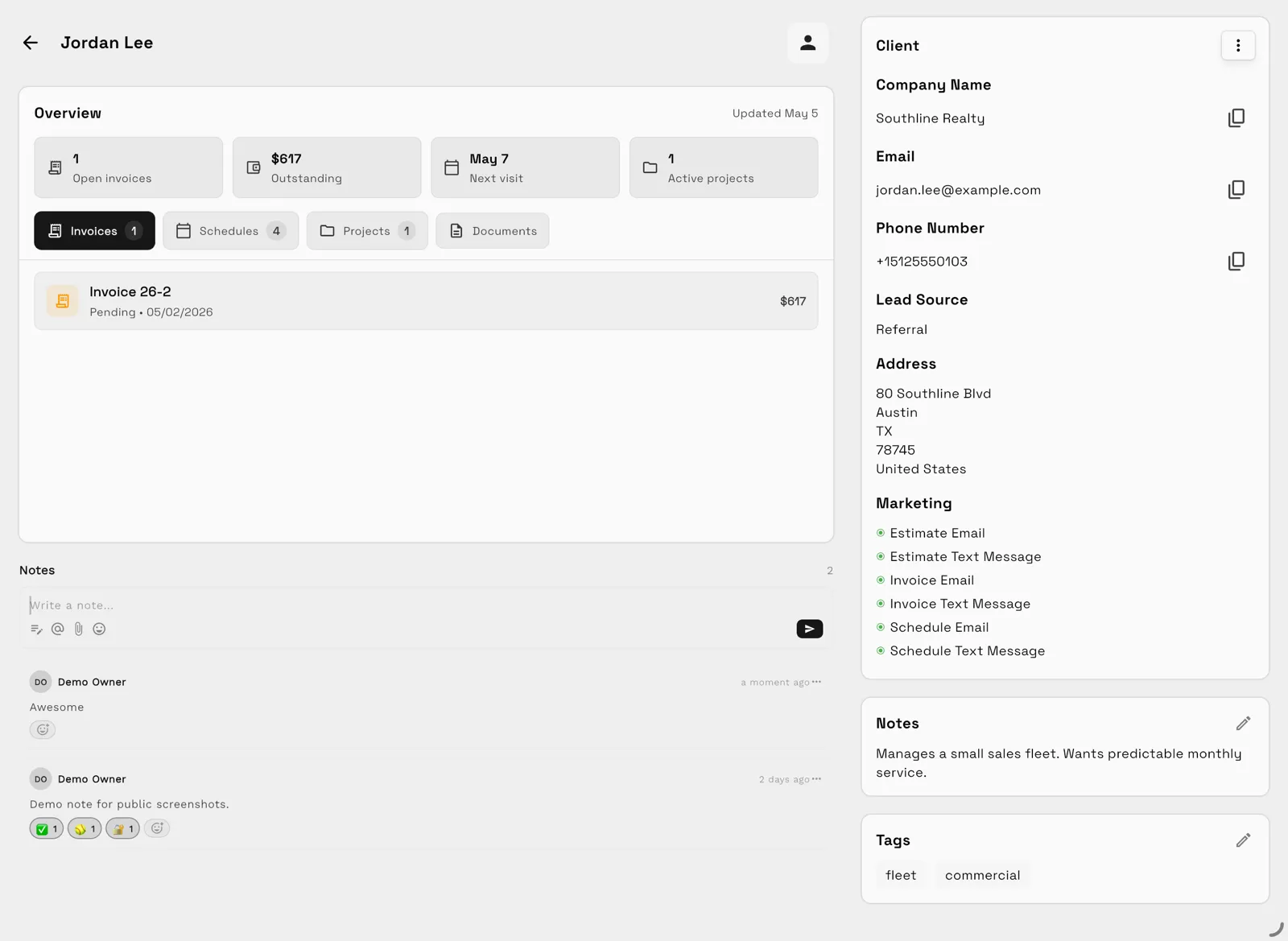
Workspace369 puts the client record, a proposal the client approves online, a retainer with payment schedules, content tasks on boards, time tracking with timesheets, a private client portal and invoices in one place. Cadet is $29 a month for one seat ($23.25 billed yearly); retainers, recurring invoices, dashboards and reports, and billable time that becomes invoice lines are on every plan. Voyager is $74 a month with two seats and a shared inbox, and extra seats are $10 a month, so a five-person team is $104 a month. Specialist is $149 a month with 10 seats; Commander is $299 with 20. The screenshot is a demo record, not a customer result.
Limitations: it does not schedule or publish posts, moderate comments or report on network analytics. Cadet allows 5 active projects and one seat. Approvals are proposal approval and client messages that record each decision; there is no image-markup proofing, so post-level sign-off belongs in a scheduler. Project profitability starts at Specialist. HighLevel Starter, ClickUp and Moxie list lower entry prices at some team sizes. The 14-day trial needs a card.
Best for: agencies of 1 to 15 selling monthly retainers who want scope, approvals, time and invoices on one record.
2. HighLevel, best for an all-in-one marketing platform
HighLevel's pricing page lists Starter at $97 a month (3 sub-accounts), Unlimited at $297 a month (unlimited sub-accounts and basic API access) and Agency Pro at $497 a month. All plans list unlimited contacts and unlimited users. Its core features include a CRM with pipelines, social media management, workflow automation, custom dashboards and reporting, payments and invoicing, and email and SMS marketing. The trial is 14 days, and HighLevel's CRM page says a credit card is required, and billing begins automatically after it unless canceled.
Limitations: each client usually needs a sub-account, so Starter covers three clients. Phone, SMS, email and AI carry usage-based charges. The branded client portal app is an add-on at $49 a month per sub-account. The page does not list retainer billing or time tracking, so confirm both for a retainer model.
Best for: agencies that want publishing, lead capture, automations and messaging in one platform and can absorb a longer setup.
3. ClickUp, best for content calendar tasks
ClickUp's Free Forever plan lists unlimited tasks, unlimited free plan members, Kanban boards, a calendar view and collaborative docs. Core is $9 per user a month billed yearly ($12 monthly) and adds native time tracking (a trial on Free), unlimited custom fields and forms and guests. Business is $17 per user a month billed yearly ($25 monthly) and adds advanced dashboards, resource management and 10,000 automations a month. For five users, Business is $85 a month on the yearly price.
Limitations: the pricing page lists no CRM pipeline, invoicing, retainers or client portal, so you would build the client side or add another tool. Guests are listed on Unlimited and up, and time tracking is not on Free Forever. AI credits are pooled and additional credits are sold separately.
Best for: agencies whose main problem is the production board, who will connect billing elsewhere.
4. Moxie, best for freelancers growing into a small team
Moxie's pricing page shows Starter at $12 a month, Pro at $25 and Teams at $40, and the page also offers a yearly discount. Starter lists client and project management, invoicing and payments, proposals, quotes and contracts, time tracking, a sales pipeline, forms and meeting schedulers. The white-labeled client portal, request management and workflow automations are in Pro. Teams adds up to five team members.
Limitations: the pricing page does not name recurring retainer billing or approval workflows, and Teams stops at five team members. Trial and card terms are not stated beyond "Try for free".
Best for: a solo social media manager or a team of up to five who want a low monthly price for proposals, time and invoices.
5. Productive, best for agency resource planning
Productive's Essential plan shows $10 per user a month billed yearly (about $50 for five users) and lists budgeting, resource planning, project and task management, time tracking, expense management and reporting. Professional shows $25 per user a month billed yearly and adds retainer invoicing, recurring budgets, billable time approvals and rate cards. The page offers a free 14-day trial with no credit card required (checked October 19, 2026).
Limitations: the pricing page lists a deals pipeline with proposal PDF export but no client portal. It is an operations and budgeting tool, and it is built for teams that plan hours across several people. A solo manager would use little of it.
Best for: agencies of five or more that must plan who works on which retainer and track budget burn.
6. HubSpot CRM, best as a free contact list
HubSpot's free tools are $0 a month for up to 2 users with no credit card required. Starter shows from $7 per seat a month in a promotion for new customers, against a struck-through $20 list price. The page lists Marketing Hub, Sales Hub and Service Hub Starter tools; it does not list retainers, time tracking, a client portal or invoicing.
Limitations: it is a sales and marketing platform, so delivery work, approvals and billing live elsewhere. Per-seat prices rise on higher tiers.
Best for: agencies that mostly need a pipeline and contact history for new business.
Also considered: Agency Handy, Planable and Sprout Social
Agency Handy's homepage lists a CRM, proposals, file feedback, forms, a white-label client portal and a 7-day trial with no credit card required. Its pricing page returned a 404 on October 17, 2026, so we quote no price. See site before you decide.
Planable is a content approval tool rather than a CRM. Its Basic plan is $33 per workspace a month with unlimited users, 60 posts per workspace a month and 2 types of approval; Pro is $49 per workspace a month with 3 types. The first 50 posts are free with no credit card required. Sprout Social lists Standard at $199 per seat a month and Essentials at $79 per seat a month billed annually, with a 30-day trial and no credit card required; its pricing page does not name an approval feature, so check that on a trial.
Side-by-side comparison
| Tool | Entry price | Five-person price | Retainers and time on entry plan | Main limit | Trial |
|---|---|---|---|---|---|
| Workspace369 | $29 (Cadet, 1 seat); $23.25 billed yearly | $104 a month (Voyager plus 3 seats) | Yes, both | No post scheduling or proofing | 14 days, card required |
| HighLevel | $97 (Starter) | $97 (unlimited users) | Not listed | 3 sub-accounts; usage charges | 14 days, card required |
| ClickUp | $0 (Free); $9 per user (Core, billed yearly) | $85 (Business, billed yearly) | Time tracking from Core; no retainers | No invoicing or portal listed | Free plan |
| Moxie | $12 (Starter) | $40 (Teams, up to five members) | Time yes; retainers not named | No approvals named | 14 days, no card |
| Productive | $10 per user (Essential, billed yearly) | $50 (Essential, billed yearly) | Time yes; invoices on all plans, retainer invoicing from Professional | Deals CRM; no portal listed | 14 days, no card |
| HubSpot CRM | $0 (free tools) | $100 (Starter at list price) | Not listed | 2 users on free tools | Free tools, no card |
Which tool fits your social media agency?
| If you mostly need | Start with | Why |
|---|---|---|
| Retainers, approvals, time and invoices on one record | Workspace369 | Retainers, timesheets and time-to-invoice from Cadet |
| Publishing, funnels and messaging in one platform | HighLevel | Social media management and CRM in the core feature list |
| A content production board | ClickUp | Free plan with unlimited tasks; time tracking from $9 a user |
| Proposals and invoices at a solo price | Moxie | Starter lists proposals, time tracking and invoicing |
| Planning hours across a bigger team | Productive | Resource planning and budgeting from Essential |
| Post-by-post client sign-off | Planable | Approval workflows, 2 types on Basic and 3 on Pro |
| Only a free contact list | HubSpot CRM | Free for up to 2 users |
Run a month-end approval test during the trial
Take one fictional client through a month in each tool you shortlist:
- Record the retainer: 12 posts, 4 reels and community replies, with the monthly fee.
- Create the content calendar as tasks with owners and due dates.
- Send a draft for approval, let it sit past the deadline, then record the client's reply.
- Log time against the work, then add an extra request that exceeds the scope.
- Turn the time and the retainer into an invoice and set up next month.
- Export the client's records and check what comes out.
The best tool keeps the tasks, the decision, the time and the invoice on one record, and the invoice matches your timesheet. Price the extra work first with the free scope-change request builder, and check your margin with the billable utilization calculator.

See the client record in action
Use the social media marketing agencies product overview to find the agreement, the responsible person, the related work and the invoice. Retainers and invoice schedules are covered on the retainer billing software for agencies page. Test permissions with sample records, and check that a teammate can find the latest creative and the client's reply without help.
Prepare the agreed scope with Proposals, keep follow-up in communications, and set reminders with Workflow Automations, which create tasks, send email or SMS and notify the right people. Email automations are on every plan, SMS steps start at Voyager, and webhooks and the API start at Specialist.
Before you choose
Review date: October 17, 2026 (Productive's page re-read October 19, 2026). Prices exclude tax, and billing toggles can change what a page shows. Start with the plan that fits your seat count, then try the 14-day Workspace369 trial, which requires a card.
Sources reviewed for this guide
- Workspace369 pricingPlan matrix reviewed October 17, 2026.
- HighLevel pricingOfficial pricing page reviewed October 17, 2026 for plan prices, sub-accounts, add-ons and trial terms.
- ClickUp pricingOfficial pricing page reviewed October 17, 2026 for Free Forever, Core and Business features and per-user prices; re-checked October 23, 2026.
- Moxie pricingOfficial pricing page reviewed October 17, 2026 for Starter, Pro and Teams prices and features.
- Productive pricingOfficial pricing page reviewed October 19, 2026 for Essential and Professional per-user prices and features.
- HubSpot CRM pricingOfficial pricing page reviewed October 18, 2026 for the free tools and Starter per-seat prices.
- Planable pricingOfficial pricing page reviewed October 17, 2026 for per-workspace prices, approval workflows and trial terms.
- Sprout Social pricingOfficial pricing page reviewed October 17, 2026 for per-seat prices and trial terms.
- Agency HandyOfficial homepage reviewed October 17, 2026 for features and trial terms; its pricing page returned a 404, so no price is quoted.
Workspace369 publishes this documentation-based comparison and is one of the options. It is not an independent ranking or a hands-on benchmark.
Run client follow-up in one workspace.
CRM, inbox, voice, invoicing, payments, projects, files, AI, and workflow automations — connected instead of exported.
14-day free trial. Card required. After the trial: from $29/month. Renews automatically every month until you cancel. Cancel anytime in Settings → Billing.