Best CRM for Freelance Developers in 2026: fixed-bid to retainer
Six CRM and billing tools compared for freelance developers: fixed-bid and hourly work, milestone deposits, change requests, retainers and time tracking.
We make Workspace369 and list it first here. Weigh our ranking with that in mind, and if another tool fits you better, use it.

By Simon Dziak, Founder, Workspace369 · LinkedIn
The best CRM for freelance developers handles two billing models on one client record: a fixed bid paid in milestones, and hourly or retainer work billed from tracked time. For developers who want both, plus a client portal and change requests, our pick is Workspace369, with proposals, time tracking and retainers from $29 a month. Bonsai, Plutio and Moxie suit solo contract work, and Harvest suits time and invoices alone. Pricing your retainer first? Try the free retainer pricing calculator.
Disclosure and method: Workspace369 publishes this guide and is one of the options. It is a documentation-based shortlist, not a hands-on benchmark. Official vendor pages were reviewed on October 22, 2026. Check current plans with each vendor before you buy.
Key takeaways
- A freelance developer CRM has to cover both billing models: a fixed bid with milestone deposits, and hourly or retainer work billed from tracked time.
- Workspace369 puts proposals approved by link, deposits, retainers and payment schedules, time tracking, a client portal and invoices on Cadet at $29 a month; Cadet is capped at 5 active projects and one seat.
- Bonsai and Plutio are strong solo options that list proposals, contracts, invoices and time tracking, but Plutio Core caps active clients at 9 and Bonsai charges per user.
- Moxie is the cheapest plan checked that lists proposals, invoicing and time tracking (from $10 a month billed yearly), and Harvest is strong for time and invoices but lists no proposals or CRM.
- Test one fixed-bid project and one maintenance retainer in each trial, and count how many times you retype scope, hours or amounts.
What's inside?
What a freelance developer CRM is (and what it is not)How we compared these toolsThe best CRMs for freelance developers in 2026Side-by-side comparisonWhich tool fits your freelance development business?Run a fixed-bid and retainer test during the trialWhen to keep it simple
What a freelance developer CRM is (and what it is not)
A freelance developer CRM is a client record that follows the commercial side of software work: the proposal and its milestones, the deposit, the change requests, the hours and the maintenance retainer that follows launch. It is not a code tracker, a bug board or a repository host, and it should not hold credentials or server secrets. If a tool stores contacts but leaves proposals, time and invoices to other apps, you rebuild every client's status by hand at the end of the month.
How we compared these tools
We compared each tool on the same five points, using only the vendor's own pricing and product pages:
- Entry price for one person, monthly and billed yearly, as listed on October 22, 2026.
- Proposal-to-invoice coverage on that plan: proposals or contracts, deposits or payment schedules, and invoicing.
- Time tracking on the entry plan, because hourly work and retainers depend on it.
- Hard limits on the entry plan: clients, projects, seats or contributors.
- Trial terms: length, and whether the vendor says a card is needed.
We did not test speed, support or reliability, and we did not use third-party ratings. Order reflects fit for a solo developer who bills both fixed-bid and hourly work.
The best CRMs for freelance developers in 2026
1. Workspace369, best for developers who bill fixed-bid, hourly and retainer work from one record
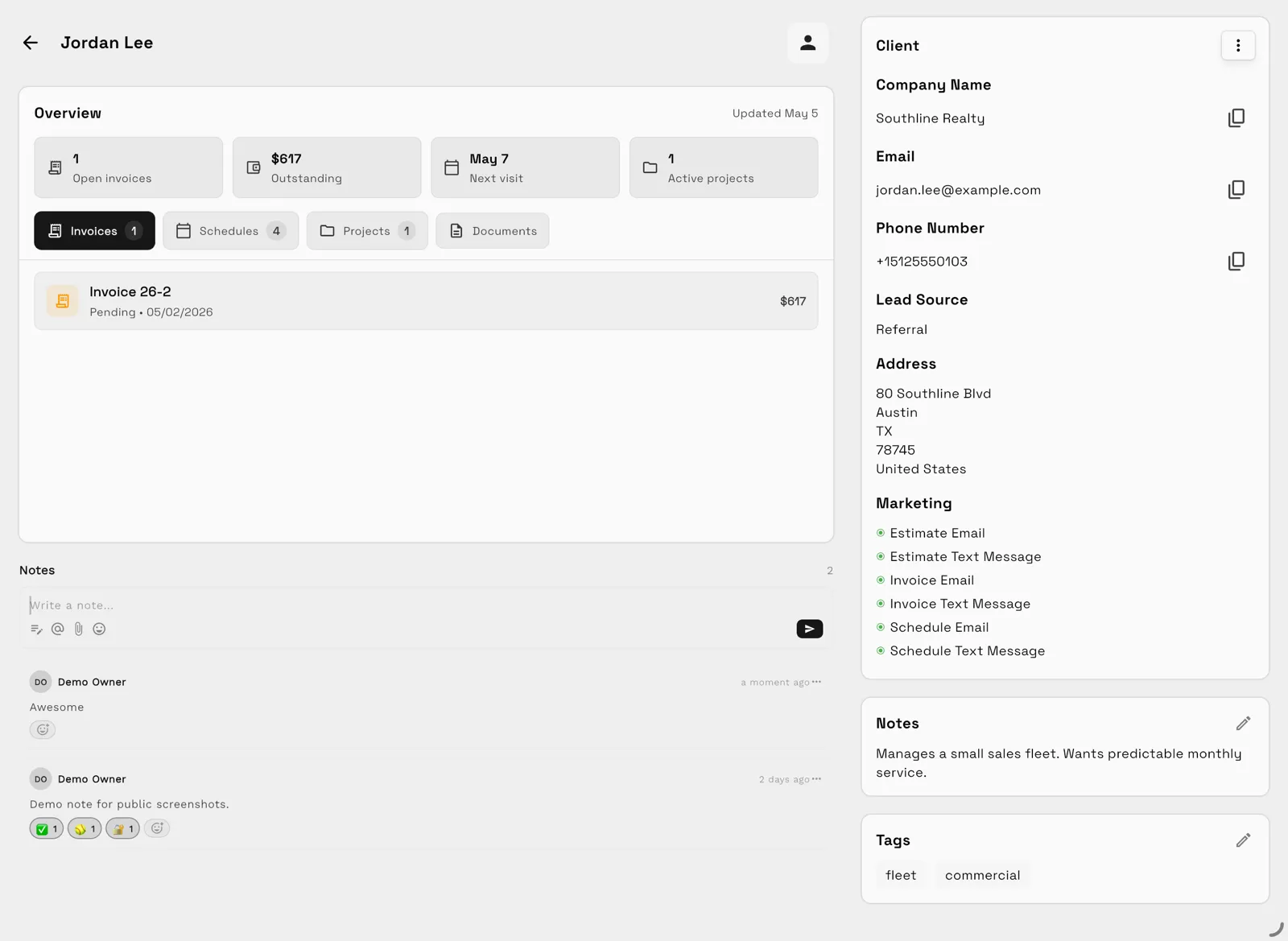
Workspace369 ties the client record to proposals that clients approve by link, deposits collected when a proposal is accepted, retainers and payment schedules, time tracking that turns into invoice lines, a client portal and invoices with online card payments through Stripe. All of that is on Cadet, $29 a month for one seat ($23.25 a month billed yearly), together with intake forms, recurring invoices and an automatic payment-reminder workflow. The screenshot is a demo record, not a customer result.
Limitations: Cadet allows up to 5 active projects and one seat. Voyager ($74 a month, two seats) removes the project cap, and webhooks and the API start at Specialist ($149 a month, 10 seats), as do payment plans and expense tracking. The 14-day trial needs a card, and there is no code or repository tooling.
Best for: solo developers and small studios who want a milestone-deposit proposal, a maintenance retainer and tracked hours to live in one place.
2. Bonsai, best for contract-led solo developers who want a per-user price
Bonsai's pricing page lists Basic at $15 a month ($9 billed yearly) and Essentials at $25 a month ($19 billed yearly). Basic has time tracking, tasks, a CRM and unlimited projects and clients. Proposals, contracts, invoices and payments, scheduling and the client portal start at Essentials. The trial is 7 days, and the page says card details are requested after it. If you run the test, trial Essentials, because Basic cannot send the proposal or the invoice.
Limitations: Pricing is per user, so each teammate adds a seat at the same rate. Integrations and a deals pipeline start at Premium ($39 a month, $29 billed yearly), and the page lists retainer invoices but not milestone deposits by name.
Best for: solo developers who lead with contracts and want to add collaborators one seat at a time.
3. Plutio, best for an everything-included solo plan with few clients
Plutio lists proposals, contracts, invoices, time tracking, a client portal, scheduling, forms and task management on every plan. Core is $19 a month ($190 a year, about $15.83 a month) with a 7-day trial and no card required, according to its pricing page. If you run the test, every step shows as included on Core. The cap is the question: count how many clients you billed in the past year, because Core allows 9 active clients.
Limitations: Core is solo, with no contributors, and Pro ($49 a month) is where unlimited clients and 30 included contributors start. The pricing page does not list recurring invoices or milestone payments, so confirm them in the trial.
Best for: a solo developer with a small, steady client list who wants every module from day one.
4. Moxie, best for the lowest checked price with proposals and invoicing
Moxie Starter is $12 a month, or $10 a month billed annually ($120 charged yearly). Its pricing page lists proposals, quotes and contracts, invoicing and payment tools, and time tracking on Starter. The page title mentions a 14-day trial; card terms are not stated. If you run the test, expect the proposal, time and invoice steps to be available at the lowest checked price, with clients getting no portal until Pro.
Limitations: The white-label client portal and workflow automation start at Pro ($20 a month billed yearly, $25 monthly). The page does not list deposits or retainers by name, and team members start at Teams ($32 a month billed yearly, up to five members).
Best for: newer freelancers who want proposals, time and invoices at the lowest monthly cost and can live without a portal.
5. Harvest, best for time tracking and invoices without a CRM
Harvest's free plan covers 1 seat and 2 projects, with time tracking, invoicing, project estimates and expense tracking. Teams is $11 a month per seat ($9 billed yearly) and adds billable and cost rates, team reporting and accounting and payment integrations, with a 30-day trial that the page says needs no card. If you run the test, hours-to-invoice should be quick, but nothing in the plan list covers a proposal, a client record or a portal.
Limitations: The pricing page lists no proposals, no CRM and no client portal, so you pair Harvest with other tools for the sales side. Online payment integrations are listed for Teams and above, not Free.
Best for: developers who already have a proposal process and only need clean hourly billing.
6. HubSpot free CRM, best for free lead and deal tracking
HubSpot's free CRM allows up to two users and 1,000 contacts, with deal and task management, email tracking, meeting scheduling and document sharing, according to its product page. Starter is $20 per seat a month at list price, with limited-time offers for new customers. If you run the test, lead capture and a quote should fit the free tier; the product page does not list invoicing, time tracking or a client portal, so the project, hours and invoice need other tools.
Limitations: Delivery, time and billing all live elsewhere, and any Starter discount is a new-customer offer that HubSpot says it can discontinue.
Best for: developers who mainly need to remember leads and follow up, and already have billing sorted.
Side-by-side comparison
| Tool | Entry price (monthly) | Billed yearly | Proposals and invoices on entry plan | Main entry-plan limit | Trial |
|---|---|---|---|---|---|
| Workspace369 | $29 (Cadet) | $23.25 a month | Yes, plus deposits and time tracking | 5 active projects, 1 seat | 14 days, card required |
| Bonsai | $25 (Essentials; Basic $15 lacks both) | $19 a month | Yes, from Essentials | Per-user pricing | 7 days, card requested after |
| Plutio | $19 (Core) | $15.83 a month | Yes | 9 active clients, solo | 7 days, no card |
| Moxie | $12 (Starter) | $10 a month | Yes | No portal or automations | 14 days, no card |
| Harvest | $11 per seat (Teams); free plan | $9 per seat a month | Invoices and project estimates, no proposals | Free: 1 seat, 2 projects | 30 days, no card |
| HubSpot | Free | Free | Neither listed on the free plan | 2 users, 1,000 contacts | Free plan, no card |
Which tool fits your freelance development business?
| If you mostly need | Start with | Why |
|---|---|---|
| Fixed-bid deposits, retainers and hours on one record | Workspace369 | Deposits, schedules, time-to-invoice and portal from Cadet |
| Contracts and invoices, billed per user | Bonsai | Proposals, contracts and invoices from Essentials |
| Every module for under ten clients | Plutio | All features on Core, capped at 9 active clients |
| The cheapest proposals-plus-invoices plan | Moxie | $10 a month billed yearly, portal later |
| Hourly billing only | Harvest | Time, project estimates and invoices, free for 2 projects |
| Free lead tracking | HubSpot free CRM | Free with 2 users and 1,000 contacts |
Run a fixed-bid and retainer test during the trial
Take one fictional client through both billing models in each tool you shortlist:
- Send a fixed-bid proposal with three milestones and accept it by link as the "client".
- Collect the deposit and check that it appears against the first milestone.
- Log four hours against a task and turn them into an invoice line.
- Add a change request as a separate priced item and approve it.
- Set up a monthly maintenance retainer and send its first invoice.
- Search the client's name a week later and find all of it.
If you run the test, expect the gaps to show at steps 2 and 5. Count tab switches and retyped amounts. The scope-change request builder can draft the wording for step 4.

When to keep it simple
If you bill one or two long-running clients by the hour, Harvest or even a spreadsheet and an invoice template can be enough. Move to a CRM when fixed-bid proposals, deposits and post-launch maintenance start to overlap. Keep source code, credentials and issue tracking in their own tools. The freelance developers page has Workspace369 plan details, and the fixed fee vs hourly vs retainer guide helps you pick a billing model first.
Keep your first milestone proposal and retainer on demo data, and confirm you can export records before you import clients. Compare current plans on the pricing page.
Sources reviewed for this guide
- Workspace369 pricingPlan matrix reviewed October 22, 2026.
- Bonsai pricingOfficial pricing page reviewed October 22, 2026 for per-user prices, plan features and trial terms.
- Plutio pricingOfficial pricing page reviewed October 22, 2026 for plan prices, client limits and trial terms.
- Moxie pricingOfficial pricing page reviewed October 22, 2026 for plan prices and features.
- Harvest pricingOfficial pricing page reviewed October 22, 2026 for seat prices, free plan limits and trial terms.
- HubSpot CRMOfficial product page reviewed October 22, 2026 for free CRM limits and Starter pricing.
- HubSpot pricingOfficial pricing page reviewed October 22, 2026 for the Starter list price ($20 per seat) and limited-time new-customer offers.
Workspace369 publishes this documentation-based comparison and is one of the options. It is not an independent ranking or a hands-on benchmark.
Run client follow-up in one workspace.
CRM, inbox, voice, invoicing, payments, projects, files, AI, and workflow automations — connected instead of exported.
14-day free trial. Card required. After the trial: from $29/month. Renews automatically every month until you cancel. Cancel anytime in Settings → Billing.